

Motmot

Flesh-footed Shearwater vs Wedge-tailed Shearwater

Ardenna carneipes versus Ardenna pacifica

Play a quiz with Flesh-footed Shearwater and Wedge-tailed Shearwater
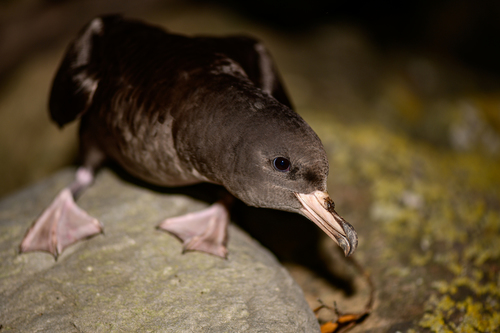
Flesh-footed Shearwater (Ardenna carneipes) Flesh-footed Shearwater
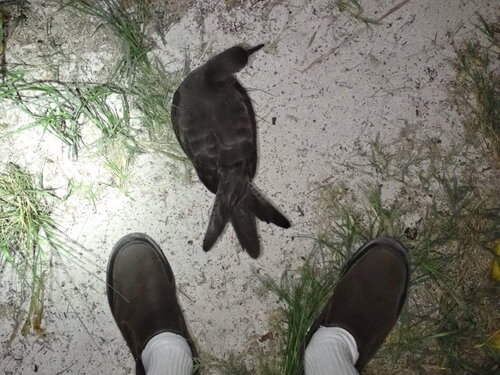
Wedge-tailed Shearwater (Ardenna pacifica) Wedge-tailed Shearwater

Media

Loading…

In short

The most reliable way to separate Flesh-footed Shearwater from Wedge-tailed Shearwater is by bill and foot color: Flesh-footed has a pale bill with a distinct black tip and pale pinkish feet, while Wedge-tailed always shows a dark bill and salmon-pink legs. In flight, both can appear dark overall, but Wedge-tailed comes in both dark and pale morphs, with the pale morph showing contrasting paler underparts. Tail shape is also key: Wedge-tailed has a long, wedge-shaped tail that is obvious in gliding flight, while Flesh-footed’s tail is shorter and less pointed. Size and structure differ subtly, with Flesh-footed being heavier-bodied and slightly bulkier. These species overlap widely in the Indo-Pacific, so careful attention to these field marks is essential.

Identification tips

  1. Bill color: Flesh-footed Shearwater always shows a pale bill with a distinct black tip; Wedge-tailed Shearwater has a uniformly dark bill. This is the single most reliable field mark at close range.
  2. Foot color: Flesh-footed has pale pinkish feet, often visible trailing behind in flight; Wedge-tailed has salmon-pink legs, but these are usually set far back and less obvious.
  3. Tail shape: Wedge-tailed Shearwater has a long, wedge-shaped tail that is especially prominent in gliding flight or when the tail is fanned. Flesh-footed’s tail is shorter and more squared off, rarely appearing wedge-shaped.
  4. Plumage (dark morphs): Both species can appear uniformly dark, but only Flesh-footed combines this with a pale bill and feet. Dark-morph Wedge-tailed can be very similar in overall darkness but always has a dark bill.
  5. Plumage (pale morph Wedge-tailed): If you see a shearwater with contrasting pale underparts and face, it is a pale-morph Wedge-tailed; Flesh-footed is never this pale below.
  6. Size and structure: Flesh-footed is heavier and bulkier, with a thicker neck and deeper chest. Wedge-tailed is slimmer and more elongated, especially in the tail and wings. This is subtle and best appreciated with direct comparison.
  7. Flight style: Wedge-tailed often appears more buoyant and glides with the tail fanned, emphasizing the wedge shape. Flesh-footed is steadier and heavier in flight.
  8. Habitat and context: Both species occur together in the Indo-Pacific, so do not rely on location alone. However, Wedge-tailed is more likely in strictly tropical waters, especially near breeding colonies.
  9. Voice: At colonies, Wedge-tailed is much more vocal, giving long moaning calls. Flesh-footed is generally silent.
  10. Pitfalls (dark morph confusion): Dark-morph Wedge-tailed is the main confusion risk; always check bill color and tail shape. At distance, these can be hard to judge, so multiple features should be used.
  11. Pitfalls (pale morph confusion): Pale-morph Wedge-tailed is distinctive and should not be confused with Flesh-footed, as Flesh-footed is never pale below.
  12. No age-specific wing pattern: Neither species shows distinctive juvenile or immature upperwing marks that help with separation; focus on bare parts and overall structure instead.
  13. Bare part visibility: In poor light or at distance, bill and foot color can be hard to see. In these cases, rely more on tail shape and overall structure.
  14. Colony behavior: If observed on land, Wedge-tailed is more likely to be seen calling or resting outside burrows; Flesh-footed is less conspicuous.
  15. Mixed flocks: Both species may occur together in feeding flocks, so careful individual scrutiny is required.

Size

Flesh-footed Shearwater is noticeably heavier (609 g vs. 465 g [wikidata]), giving it a bulkier, more robust impression compared to the more lightly built Wedge-tailed Shearwater. In direct comparison, Flesh-footed typically appears stockier, especially in the body and neck, while Wedge-tailed is slimmer and more elongated, especially in flight. However, size alone is rarely diagnostic at sea, as overlap and distance can make this subtle.

Plumage

No age-specific upperwing patterns are described for either species, so focus is on overall coloration and bare part contrasts. Adult Flesh-footed Shearwater is uniformly dark sooty-brown to blackish above and below, with no pale panels or contrasting underparts, and always shows pale pinkish feet and a pale bill with a black tip. Wedge-tailed Shearwater is variable: the dark morph is also uniformly dark (sometimes slightly browner), but always has a dark bill and salmon-pink legs; the pale morph shows much paler underparts and face, with grey-brown upperparts and upperwings, creating a strong contrast in flight. Both morphs of Wedge-tailed have the namesake long, wedge-shaped tail, which is especially obvious when the tail is fanned or in gliding flight. Flesh-footed’s tail is shorter and more squared off. No juvenile/immature-specific wing markings are noted for either species in the sources.

Behaviour

Both species are pelagic and often seen gliding low over the ocean, but Wedge-tailed Shearwater’s flight is more buoyant and the wedge-shaped tail is frequently visible in long glides. Flesh-footed Shearwater tends to appear heavier and more purposeful in flight. At colonies, Wedge-tailed is more likely to be seen on the surface or calling near burrows, while Flesh-footed is less conspicuous on land. Both species feed on fish and squid, often in mixed flocks with other shearwaters.

Habitat

Both species occur widely in the Indo-Pacific and can be found in the same offshore waters. Wedge-tailed Shearwater is more strictly tropical, while Flesh-footed Shearwater ranges into temperate zones. At breeding sites, Wedge-tailed is more likely to be found nesting in large, noisy colonies on tropical islands, while Flesh-footed prefers burrows on temperate islands. At sea, habitat does not reliably separate them.

Voice

Wedge-tailed Shearwater is notably vocal at colonies, giving long, moaning calls (the Hawaiian name 'ua'u kani refers to this sound), especially at night. Flesh-footed Shearwater is much quieter and less likely to be heard calling at sea or at colonies. Voice is rarely useful for separation at sea, but can help at breeding sites.

Submit a better description

Use the same sections as the comparison. Your text is published immediately.

The most reliable way to separate Flesh-footed Shearwater from Wedge-tailed Shearwater is by bill and foot color: Flesh-footed has a pale bill with a distinct black tip and pale pinkish feet, while Wedge-tailed always shows a dark bill and salmon-pink legs. In flight, both can appear dark overall, but Wedge-tailed comes in both dark and pale morphs, with the pale morph showing contrasting paler underparts. Tail shape is also key: Wedge-tailed has a long, wedge-shaped tail that is obvious in gliding flight, while Flesh-footed’s tail is shorter and less pointed. Size and structure differ subtly, with Flesh-footed being heavier-bodied and slightly bulkier. These species overlap widely in the Indo-Pacific, so careful attention to these field marks is essential.

  1. Bill color: Flesh-footed Shearwater always shows a pale bill with a distinct black tip; Wedge-tailed Shearwater has a uniformly dark bill. This is the single most reliable field mark at close range.
  2. Foot color: Flesh-footed has pale pinkish feet, often visible trailing behind in flight; Wedge-tailed has salmon-pink legs, but these are usually set far back and less obvious.
  3. Tail shape: Wedge-tailed Shearwater has a long, wedge-shaped tail that is especially prominent in gliding flight or when the tail is fanned. Flesh-footed’s tail is shorter and more squared off, rarely appearing wedge-shaped.
  4. Plumage (dark morphs): Both species can appear uniformly dark, but only Flesh-footed combines this with a pale bill and feet. Dark-morph Wedge-tailed can be very similar in overall darkness but always has a dark bill.
  5. Plumage (pale morph Wedge-tailed): If you see a shearwater with contrasting pale underparts and face, it is a pale-morph Wedge-tailed; Flesh-footed is never this pale below.
  6. Size and structure: Flesh-footed is heavier and bulkier, with a thicker neck and deeper chest. Wedge-tailed is slimmer and more elongated, especially in the tail and wings. This is subtle and best appreciated with direct comparison.
  7. Flight style: Wedge-tailed often appears more buoyant and glides with the tail fanned, emphasizing the wedge shape. Flesh-footed is steadier and heavier in flight.
  8. Habitat and context: Both species occur together in the Indo-Pacific, so do not rely on location alone. However, Wedge-tailed is more likely in strictly tropical waters, especially near breeding colonies.
  9. Voice: At colonies, Wedge-tailed is much more vocal, giving long moaning calls. Flesh-footed is generally silent.
  10. Pitfalls (dark morph confusion): Dark-morph Wedge-tailed is the main confusion risk; always check bill color and tail shape. At distance, these can be hard to judge, so multiple features should be used.
  11. Pitfalls (pale morph confusion): Pale-morph Wedge-tailed is distinctive and should not be confused with Flesh-footed, as Flesh-footed is never pale below.
  12. No age-specific wing pattern: Neither species shows distinctive juvenile or immature upperwing marks that help with separation; focus on bare parts and overall structure instead.
  13. Bare part visibility: In poor light or at distance, bill and foot color can be hard to see. In these cases, rely more on tail shape and overall structure.
  14. Colony behavior: If observed on land, Wedge-tailed is more likely to be seen calling or resting outside burrows; Flesh-footed is less conspicuous.
  15. Mixed flocks: Both species may occur together in feeding flocks, so careful individual scrutiny is required.

Flesh-footed Shearwater is noticeably heavier (609 g vs. 465 g [wikidata]), giving it a bulkier, more robust impression compared to the more lightly built Wedge-tailed Shearwater. In direct comparison, Flesh-footed typically appears stockier, especially in the body and neck, while Wedge-tailed is slimmer and more elongated, especially in flight. However, size alone is rarely diagnostic at sea, as overlap and distance can make this subtle.

No age-specific upperwing patterns are described for either species, so focus is on overall coloration and bare part contrasts. Adult Flesh-footed Shearwater is uniformly dark sooty-brown to blackish above and below, with no pale panels or contrasting underparts, and always shows pale pinkish feet and a pale bill with a black tip. Wedge-tailed Shearwater is variable: the dark morph is also uniformly dark (sometimes slightly browner), but always has a dark bill and salmon-pink legs; the pale morph shows much paler underparts and face, with grey-brown upperparts and upperwings, creating a strong contrast in flight. Both morphs of Wedge-tailed have the namesake long, wedge-shaped tail, which is especially obvious when the tail is fanned or in gliding flight. Flesh-footed’s tail is shorter and more squared off. No juvenile/immature-specific wing markings are noted for either species in the sources.

Both species are pelagic and often seen gliding low over the ocean, but Wedge-tailed Shearwater’s flight is more buoyant and the wedge-shaped tail is frequently visible in long glides. Flesh-footed Shearwater tends to appear heavier and more purposeful in flight. At colonies, Wedge-tailed is more likely to be seen on the surface or calling near burrows, while Flesh-footed is less conspicuous on land. Both species feed on fish and squid, often in mixed flocks with other shearwaters.

Both species occur widely in the Indo-Pacific and can be found in the same offshore waters. Wedge-tailed Shearwater is more strictly tropical, while Flesh-footed Shearwater ranges into temperate zones. At breeding sites, Wedge-tailed is more likely to be found nesting in large, noisy colonies on tropical islands, while Flesh-footed prefers burrows on temperate islands. At sea, habitat does not reliably separate them.

Wedge-tailed Shearwater is notably vocal at colonies, giving long, moaning calls (the Hawaiian name 'ua'u kani refers to this sound), especially at night. Flesh-footed Shearwater is much quieter and less likely to be heard calling at sea or at colonies. Voice is rarely useful for separation at sea, but can help at breeding sites.

Discard your changes?

You have unsaved edits. If you leave now, those changes will be lost.

Flesh-footed Shearwater · Wedge-tailed Shearwater · My Tricky Birds