

Motmot

Ferruginous Duck vs Tufted Duck

Aythya nyroca versus Aythya fuligula

Play a quiz with Ferruginous Duck and Tufted Duck
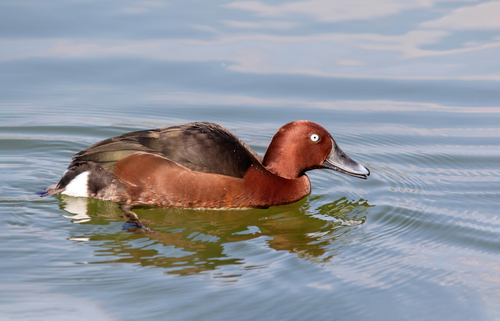
Ferruginous Duck (Aythya nyroca) Ferruginous Duck
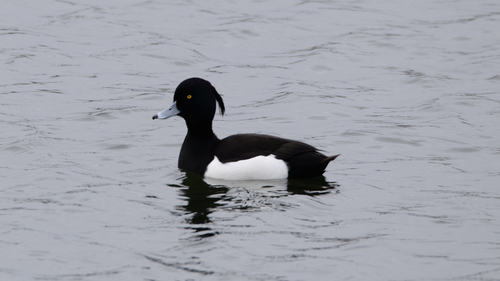
Tufted Duck (Aythya fuligula) Tufted Duck

Media

Loading…

In short

The most reliable field mark to separate Ferruginous Duck from Tufted Duck is the presence of a prominent head tuft in Tufted Duck males, which is always absent in Ferruginous Duck. In flight, Ferruginous Duck of all ages shows a distinctive white belly and underwing patch, while Tufted Duck males have striking white flanks and a black back, with no white underwing. Both species can occur together in mixed flocks, especially in winter, but careful attention to head shape, eye color, and undertail pattern will resolve most confusion, especially among females and immatures. Ferruginous males have a rich chestnut tone and pure white undertail coverts, while Tufted males are black and white with a blue-grey bill.

Identification tips

  1. Head tuft: Only Tufted Duck males have a prominent, drooping black head tuft; Ferruginous Duck never shows this feature. This is the quickest field check for adult males.
  2. Flight pattern (all ages): Ferruginous Duck shows a white belly and a distinct white underwing patch in flight, while Tufted Duck lacks these and shows a more uniform dark underwing.
  3. Flank color (adult males): Tufted Duck males have bright white flanks contrasting with a black back; Ferruginous Duck males are rich chestnut with no white on the flanks.
  4. Undertail coverts: Ferruginous Duck of both sexes shows pure white undertail coverts, especially obvious if the male curls his tail during display. Tufted Duck does not have this feature.
  5. Bill color: Tufted Duck males have a blue-grey bill; Ferruginous Duck's bill is less distinctive and not highlighted as a separator.
  6. Eye color: Male Ferruginous Ducks have a yellow eye, while females have a dark eye. Tufted Duck eye color is not specified as diagnostic in the sources, but yellow eyes in a chestnut duck point to Ferruginous.
  7. Female confusion: Female Tufted Ducks are brown with paler flanks and may show some white at the bill base, but never as much as scaup. Female Ferruginous Ducks are duller brown with a white undertail and dark eye. The undertail and overall warmer tone help separate them.
  8. Perched vs. swimming: On water, look for the head shape and tuft (Tufted Duck) versus the more rounded head and chestnut tone (Ferruginous). In flight, prioritize the underwing and belly pattern.
  9. Mixed flocks: Both species can occur together, especially in winter. Always check more than one feature, as hybrids and odd individuals occur.
  10. Courtship behavior: Ferruginous Duck males may curl the tail to show a triangular white undertail patch; Tufted Duck males do not display this way.
  11. Vocalizations: If heard, a harsh 'karr' call in flight points to female Tufted Duck. Ferruginous Duck is generally quiet.
  12. Age/season: Juvenile and immature Ferruginous Ducks still show the white underwing and belly in flight, so this mark is reliable year-round.
  13. Habitat context: Both species use similar habitats, so do not rely on location alone for separation.
  14. Size: Both are similar in size; do not use size as a primary separator.
  15. Common pitfalls: Beware of female Tufted Ducks with some white at the bill base, which can resemble scaup but not Ferruginous. Always check undertail and head shape.

Size

Ferruginous Duck averages about 551.5 g in body mass [wikidata], making it a medium-sized diving duck. Tufted Duck is described as small for an Aythya, but no direct mass is given in the sources. In the field, size difference is minimal and not a reliable separator between these two, especially in mixed flocks.

Plumage

Juvenile and immature Ferruginous Ducks, as well as adults, show a white belly and a white patch on the underwing in flight, which is not present in Tufted Duck. Adult male Ferruginous Ducks are a rich, dark chestnut overall with pure white undertail coverts, while females are duller brown but still show the white undertail. Tufted Duck adult males are black with white flanks and a prominent black head tuft; females are brown with paler flanks and may show some white at the bill base, but never as much as scaup. The key difference in perched birds is the head tuft of Tufted Duck males and the chestnut coloration and white undertail of Ferruginous. Female Ferruginous Ducks have a dark eye, while Tufted females' eye color is not specified as diagnostic. In flight, the white underwing and belly of Ferruginous is a strong mark at all ages.

Behaviour

Both species are diving ducks and often feed by diving or dabbling. Ferruginous Duck is less social than Tufted Duck but can form large winter flocks, sometimes mixed with Tufted Ducks. Ferruginous males may display by curling the tail to show a triangular white undertail patch during courtship, a behavior not noted for Tufted Duck. Both species may be seen feeding at night and upending for food.

Habitat

Both species are found in northern Eurasia and the Palearctic, often sharing the same lakes and wetlands, especially in winter. Ferruginous Duck tends to nest in more concealed or protected sites, sometimes in colonies with gulls, while Tufted Duck is widespread and partially migratory. Habitat alone is not a reliable separator where both occur.

Voice

Tufted Duck females give a harsh, growling "karr" call, especially in flight, and males whistle during courtship with a simple "wit-oo". Ferruginous Duck's vocalizations are not described in the sources, so voice is not a strong separator in this pair.

Submit a better description

Use the same sections as the comparison. Your text is published immediately.

The most reliable field mark to separate Ferruginous Duck from Tufted Duck is the presence of a prominent head tuft in Tufted Duck males, which is always absent in Ferruginous Duck. In flight, Ferruginous Duck of all ages shows a distinctive white belly and underwing patch, while Tufted Duck males have striking white flanks and a black back, with no white underwing. Both species can occur together in mixed flocks, especially in winter, but careful attention to head shape, eye color, and undertail pattern will resolve most confusion, especially among females and immatures. Ferruginous males have a rich chestnut tone and pure white undertail coverts, while Tufted males are black and white with a blue-grey bill.

  1. Head tuft: Only Tufted Duck males have a prominent, drooping black head tuft; Ferruginous Duck never shows this feature. This is the quickest field check for adult males.
  2. Flight pattern (all ages): Ferruginous Duck shows a white belly and a distinct white underwing patch in flight, while Tufted Duck lacks these and shows a more uniform dark underwing.
  3. Flank color (adult males): Tufted Duck males have bright white flanks contrasting with a black back; Ferruginous Duck males are rich chestnut with no white on the flanks.
  4. Undertail coverts: Ferruginous Duck of both sexes shows pure white undertail coverts, especially obvious if the male curls his tail during display. Tufted Duck does not have this feature.
  5. Bill color: Tufted Duck males have a blue-grey bill; Ferruginous Duck's bill is less distinctive and not highlighted as a separator.
  6. Eye color: Male Ferruginous Ducks have a yellow eye, while females have a dark eye. Tufted Duck eye color is not specified as diagnostic in the sources, but yellow eyes in a chestnut duck point to Ferruginous.
  7. Female confusion: Female Tufted Ducks are brown with paler flanks and may show some white at the bill base, but never as much as scaup. Female Ferruginous Ducks are duller brown with a white undertail and dark eye. The undertail and overall warmer tone help separate them.
  8. Perched vs. swimming: On water, look for the head shape and tuft (Tufted Duck) versus the more rounded head and chestnut tone (Ferruginous). In flight, prioritize the underwing and belly pattern.
  9. Mixed flocks: Both species can occur together, especially in winter. Always check more than one feature, as hybrids and odd individuals occur.
  10. Courtship behavior: Ferruginous Duck males may curl the tail to show a triangular white undertail patch; Tufted Duck males do not display this way.
  11. Vocalizations: If heard, a harsh 'karr' call in flight points to female Tufted Duck. Ferruginous Duck is generally quiet.
  12. Age/season: Juvenile and immature Ferruginous Ducks still show the white underwing and belly in flight, so this mark is reliable year-round.
  13. Habitat context: Both species use similar habitats, so do not rely on location alone for separation.
  14. Size: Both are similar in size; do not use size as a primary separator.
  15. Common pitfalls: Beware of female Tufted Ducks with some white at the bill base, which can resemble scaup but not Ferruginous. Always check undertail and head shape.

Ferruginous Duck averages about 551.5 g in body mass [wikidata], making it a medium-sized diving duck. Tufted Duck is described as small for an Aythya, but no direct mass is given in the sources. In the field, size difference is minimal and not a reliable separator between these two, especially in mixed flocks.

Juvenile and immature Ferruginous Ducks, as well as adults, show a white belly and a white patch on the underwing in flight, which is not present in Tufted Duck. Adult male Ferruginous Ducks are a rich, dark chestnut overall with pure white undertail coverts, while females are duller brown but still show the white undertail. Tufted Duck adult males are black with white flanks and a prominent black head tuft; females are brown with paler flanks and may show some white at the bill base, but never as much as scaup. The key difference in perched birds is the head tuft of Tufted Duck males and the chestnut coloration and white undertail of Ferruginous. Female Ferruginous Ducks have a dark eye, while Tufted females' eye color is not specified as diagnostic. In flight, the white underwing and belly of Ferruginous is a strong mark at all ages.

Both species are diving ducks and often feed by diving or dabbling. Ferruginous Duck is less social than Tufted Duck but can form large winter flocks, sometimes mixed with Tufted Ducks. Ferruginous males may display by curling the tail to show a triangular white undertail patch during courtship, a behavior not noted for Tufted Duck. Both species may be seen feeding at night and upending for food.

Both species are found in northern Eurasia and the Palearctic, often sharing the same lakes and wetlands, especially in winter. Ferruginous Duck tends to nest in more concealed or protected sites, sometimes in colonies with gulls, while Tufted Duck is widespread and partially migratory. Habitat alone is not a reliable separator where both occur.

Tufted Duck females give a harsh, growling "karr" call, especially in flight, and males whistle during courtship with a simple "wit-oo". Ferruginous Duck's vocalizations are not described in the sources, so voice is not a strong separator in this pair.

Discard your changes?

You have unsaved edits. If you leave now, those changes will be lost.

Ferruginous Duck · Tufted Duck · My Tricky Birds