

Motmot

European Honey-buzzard vs Rüppell's Griffon

Pernis apivorus versus Gyps rueppelli

Play a quiz with European Honey-buzzard and Rüppell's Griffon
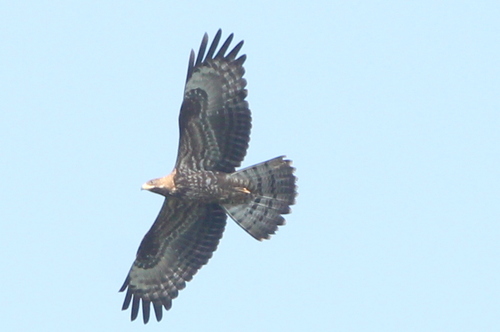
European Honey-buzzard (Pernis apivorus) European Honey-buzzard
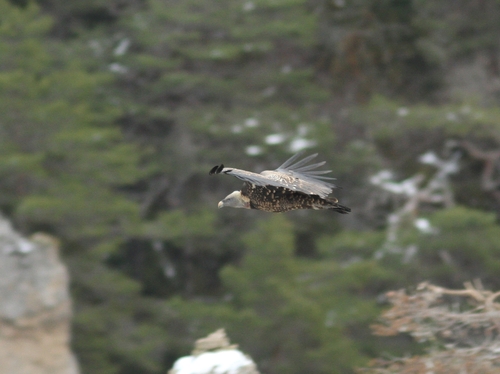
Rüppell's Griffon (Gyps rueppelli) Rüppell's Griffon

Media

Loading…

In short

The most reliable way to separate European Honey-buzzard from Rüppell's Griffon is by overall size and structure: Rüppell's Griffon is a massive, heavy-bodied vulture with a bare head and thick neck, while the Honey-buzzard is a slim, long-necked raptor with a small, feathered head and a long tail. In flight, Honey-buzzard shows flat, straight wings and a protruding head, while Rüppell's Griffon has extremely broad wings and a short, wedge-shaped tail. Juvenile Honey-buzzards can be confused with Buteo buzzards, but never with a vulture as large and heavy as Rüppell's. Plumage differences are also striking: Honey-buzzard is barred and subtle-toned, while Rüppell's is boldly mottled with a pale underbelly and a white neck ruff. Habitat and context are also strong clues: Honey-buzzard is a secretive woodland migrant, Rüppell's Griffon is a soaring scavenger of African savannas and cliffs.

Identification tips

  1. Size and bulk: Rüppell's Griffon is enormous, with a wingspan over 2.2 meters and a body mass of 7.5 kg. Honey-buzzard is slim, long-winged, and never approaches the vulture's size. If the bird looks as large as a small eagle or bigger, it's Rüppell's.
  2. Head and neck: Honey-buzzard has a small, feathered head and long, thin neck, often protruding in flight. Rüppell's Griffon has a thick, bare neck and a large, unfeathered head with a white ruff at the base—very obvious even at a distance.
  3. Tail shape and pattern: Honey-buzzard has a long, barred tail (two narrow bars plus a broad subterminal bar), often fanned in flight. Rüppell's Griffon has a short, wedge-shaped tail with no barring visible.
  4. Wing shape and flight style: Honey-buzzard soars on flat, straight wings with horizontal or slightly drooped tips, and the head sticks out. Rüppell's Griffon has extremely broad wings with deep 'fingers' at the tips, and flies with slow, heavy wingbeats or effortless soaring.
  5. Plumage pattern: Honey-buzzard is subtle, with brown and grey tones and fine barring; males have a blue-grey head, females brown. Rüppell's Griffon is boldly mottled dark brown above, pale below, with a white neck ruff and bare, pale head.
  6. Juvenile confusion: Juvenile Honey-buzzard can mimic Common Buzzard, but never shows the vulture's bare head or immense size. No vulture, juvenile or adult, has a feathered head or subtle barring.
  7. Perched appearance: Perched Honey-buzzard is slim, long-tailed, and upright. Rüppell's Griffon is massive, hunched, and shows a thick neck and large, bare head.
  8. Feeding behavior: Honey-buzzard is seen digging on the forest floor for wasp nests; Rüppell's Griffon is always at carcasses, often in groups.
  9. Habitat: Honey-buzzard in woodland or forest edge, Rüppell's Griffon in open savanna or mountainous cliffs.
  10. Vocalization: Any clear, whistled 'peee-lu' call is Honey-buzzard; vultures are mostly silent except for squabbling at food.
  11. Sex differences: Only Honey-buzzard shows sexual dimorphism (male blue-grey head, female brown); Rüppell's Griffon sexes are identical.
  12. Migration and season: Honey-buzzard is a migrant in Europe, seen mainly in spring and autumn; Rüppell's Griffon is resident in Africa.
  13. Social behavior: Honey-buzzard is solitary or in pairs; Rüppell's Griffon is highly gregarious, often in large flocks.
  14. Altitude of flight: Rüppell's Griffon can soar at extreme altitudes (up to 11,000 m), but this is rarely relevant in field views.
  15. General impression (jizz): If the bird looks like a huge, heavy, bare-headed scavenger, it's Rüppell's Griffon. If it looks like a slim, long-tailed, small-headed raptor, it's Honey-buzzard.

Size

Rüppell's Griffon is vastly larger than European Honey-buzzard. Rüppell's measures 85–103 cm in length with a wingspan of 2.26–2.6 m and a mass around 7.5 kg [wikidata], making it one of the largest flying birds. In contrast, European Honey-buzzard is 52–60 cm long with a 130–150 cm wingspan and is much lighter-bodied (440–1050 g). Even at a distance, the vulture's size and bulk are unmistakable compared to the slender, medium-sized Honey-buzzard.

Plumage

Juvenile European Honey-buzzards can superficially resemble Buteo buzzards, but not Rüppell's Griffon. Honey-buzzard of all ages has a feathered head, subtle brown and grey tones, and a long, barred tail (usually two narrow dark bars and a broad subterminal bar). Males have a blue-grey head, females brown. In flight, the wings are long and flat, with a straight trailing edge and a protruding head. Rüppell's Griffon, by contrast, is boldly mottled brown or black above with a pale, whitish-brown underbelly, a white neck ruff, and a bare, pale head and neck. The vulture's wings are extremely broad and show a two-tone effect with pale coverts and darker flight feathers. The head is always unfeathered and the neck thick, with a conspicuous white collar. No age or sex variation in plumage is noted for Rüppell's. The Honey-buzzard's subtle barring and small head are never matched by the vulture's striking pattern and bare skin.

Behaviour

European Honey-buzzard is secretive, often seen soaring over woodlands or gliding with flat wings during migration. It specializes in digging for wasp nests on the ground and is rarely seen at carrion. Rüppell's Griffon is a highly social, conspicuous scavenger, often seen soaring in large groups over savanna or circling above carcasses. It feeds exclusively on carrion, often at large gatherings, and is adapted to gorge at carcasses with its bare head and powerful build. The vulture's flight is heavy and majestic, often at great heights, while Honey-buzzard is more buoyant and agile.

Habitat

European Honey-buzzard breeds in European and western Asian woodlands and is a summer migrant, wintering in Africa. It is scarce and secretive, especially in Britain, and is rarely seen far from forested areas. Rüppell's Griffon is resident in the Sahel and East Africa, favoring open savanna, cliffs for nesting, and areas with abundant large mammals. It is never found in dense woodland and is absent from Europe. If seen in the same region, context is a strong clue: Honey-buzzard in forested or edge habitats, Rüppell's Griffon in open, arid, or mountainous terrain.

Voice

European Honey-buzzard gives a clear 'peee-lu' call, especially in spring display. Rüppell's Griffon is generally silent except for squealing at nests or carcasses. Voice is rarely useful for field separation, but any clear, whistled call points to Honey-buzzard.

Submit a better description

Use the same sections as the comparison. Your text is published immediately.

The most reliable way to separate European Honey-buzzard from Rüppell's Griffon is by overall size and structure: Rüppell's Griffon is a massive, heavy-bodied vulture with a bare head and thick neck, while the Honey-buzzard is a slim, long-necked raptor with a small, feathered head and a long tail. In flight, Honey-buzzard shows flat, straight wings and a protruding head, while Rüppell's Griffon has extremely broad wings and a short, wedge-shaped tail. Juvenile Honey-buzzards can be confused with Buteo buzzards, but never with a vulture as large and heavy as Rüppell's. Plumage differences are also striking: Honey-buzzard is barred and subtle-toned, while Rüppell's is boldly mottled with a pale underbelly and a white neck ruff. Habitat and context are also strong clues: Honey-buzzard is a secretive woodland migrant, Rüppell's Griffon is a soaring scavenger of African savannas and cliffs.

  1. Size and bulk: Rüppell's Griffon is enormous, with a wingspan over 2.2 meters and a body mass of 7.5 kg. Honey-buzzard is slim, long-winged, and never approaches the vulture's size. If the bird looks as large as a small eagle or bigger, it's Rüppell's.
  2. Head and neck: Honey-buzzard has a small, feathered head and long, thin neck, often protruding in flight. Rüppell's Griffon has a thick, bare neck and a large, unfeathered head with a white ruff at the base—very obvious even at a distance.
  3. Tail shape and pattern: Honey-buzzard has a long, barred tail (two narrow bars plus a broad subterminal bar), often fanned in flight. Rüppell's Griffon has a short, wedge-shaped tail with no barring visible.
  4. Wing shape and flight style: Honey-buzzard soars on flat, straight wings with horizontal or slightly drooped tips, and the head sticks out. Rüppell's Griffon has extremely broad wings with deep 'fingers' at the tips, and flies with slow, heavy wingbeats or effortless soaring.
  5. Plumage pattern: Honey-buzzard is subtle, with brown and grey tones and fine barring; males have a blue-grey head, females brown. Rüppell's Griffon is boldly mottled dark brown above, pale below, with a white neck ruff and bare, pale head.
  6. Juvenile confusion: Juvenile Honey-buzzard can mimic Common Buzzard, but never shows the vulture's bare head or immense size. No vulture, juvenile or adult, has a feathered head or subtle barring.
  7. Perched appearance: Perched Honey-buzzard is slim, long-tailed, and upright. Rüppell's Griffon is massive, hunched, and shows a thick neck and large, bare head.
  8. Feeding behavior: Honey-buzzard is seen digging on the forest floor for wasp nests; Rüppell's Griffon is always at carcasses, often in groups.
  9. Habitat: Honey-buzzard in woodland or forest edge, Rüppell's Griffon in open savanna or mountainous cliffs.
  10. Vocalization: Any clear, whistled 'peee-lu' call is Honey-buzzard; vultures are mostly silent except for squabbling at food.
  11. Sex differences: Only Honey-buzzard shows sexual dimorphism (male blue-grey head, female brown); Rüppell's Griffon sexes are identical.
  12. Migration and season: Honey-buzzard is a migrant in Europe, seen mainly in spring and autumn; Rüppell's Griffon is resident in Africa.
  13. Social behavior: Honey-buzzard is solitary or in pairs; Rüppell's Griffon is highly gregarious, often in large flocks.
  14. Altitude of flight: Rüppell's Griffon can soar at extreme altitudes (up to 11,000 m), but this is rarely relevant in field views.
  15. General impression (jizz): If the bird looks like a huge, heavy, bare-headed scavenger, it's Rüppell's Griffon. If it looks like a slim, long-tailed, small-headed raptor, it's Honey-buzzard.

Rüppell's Griffon is vastly larger than European Honey-buzzard. Rüppell's measures 85–103 cm in length with a wingspan of 2.26–2.6 m and a mass around 7.5 kg [wikidata], making it one of the largest flying birds. In contrast, European Honey-buzzard is 52–60 cm long with a 130–150 cm wingspan and is much lighter-bodied (440–1050 g). Even at a distance, the vulture's size and bulk are unmistakable compared to the slender, medium-sized Honey-buzzard.

Juvenile European Honey-buzzards can superficially resemble Buteo buzzards, but not Rüppell's Griffon. Honey-buzzard of all ages has a feathered head, subtle brown and grey tones, and a long, barred tail (usually two narrow dark bars and a broad subterminal bar). Males have a blue-grey head, females brown. In flight, the wings are long and flat, with a straight trailing edge and a protruding head. Rüppell's Griffon, by contrast, is boldly mottled brown or black above with a pale, whitish-brown underbelly, a white neck ruff, and a bare, pale head and neck. The vulture's wings are extremely broad and show a two-tone effect with pale coverts and darker flight feathers. The head is always unfeathered and the neck thick, with a conspicuous white collar. No age or sex variation in plumage is noted for Rüppell's. The Honey-buzzard's subtle barring and small head are never matched by the vulture's striking pattern and bare skin.

European Honey-buzzard is secretive, often seen soaring over woodlands or gliding with flat wings during migration. It specializes in digging for wasp nests on the ground and is rarely seen at carrion. Rüppell's Griffon is a highly social, conspicuous scavenger, often seen soaring in large groups over savanna or circling above carcasses. It feeds exclusively on carrion, often at large gatherings, and is adapted to gorge at carcasses with its bare head and powerful build. The vulture's flight is heavy and majestic, often at great heights, while Honey-buzzard is more buoyant and agile.

European Honey-buzzard breeds in European and western Asian woodlands and is a summer migrant, wintering in Africa. It is scarce and secretive, especially in Britain, and is rarely seen far from forested areas. Rüppell's Griffon is resident in the Sahel and East Africa, favoring open savanna, cliffs for nesting, and areas with abundant large mammals. It is never found in dense woodland and is absent from Europe. If seen in the same region, context is a strong clue: Honey-buzzard in forested or edge habitats, Rüppell's Griffon in open, arid, or mountainous terrain.

European Honey-buzzard gives a clear 'peee-lu' call, especially in spring display. Rüppell's Griffon is generally silent except for squealing at nests or carcasses. Voice is rarely useful for field separation, but any clear, whistled call points to Honey-buzzard.

Discard your changes?

You have unsaved edits. If you leave now, those changes will be lost.

European Honey-buzzard · Rüppell's Griffon · My Tricky Birds