

European Golden Plover vs Eurasian Dotterel
Pluvialis apricaria versus Eudromias morinellus
Play a quiz with European Golden Plover and Eurasian Dotterel
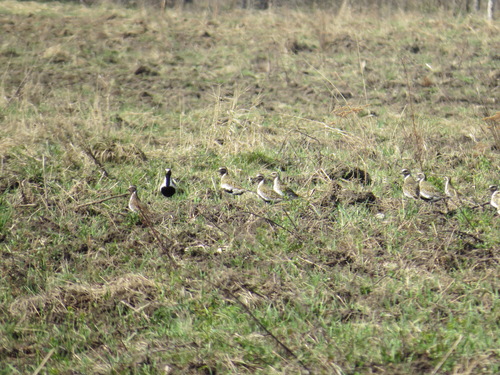 European Golden Plover
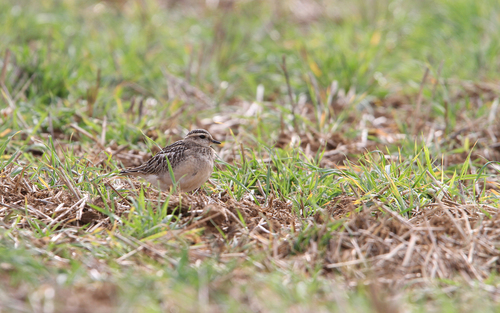 Eurasian Dotterel
In short
The most reliable field mark between European Golden Plover and Eurasian Dotterel is the underwing color in flight: European Golden Plover shows white axillaries (armpits), while Eurasian Dotterel has plain wings without this contrast. For perched birds, Dotterel always shows a bold white supercilium (eyebrow), lacking in Golden Plover. In breeding season, Dotterel is unmistakable with its chestnut breast and black belly, but in non-breeding and juvenile plumages, separation relies on structure and subtle plumage differences. Golden Plover is bulkier, with a thicker build and only slightly longer wings than tail, while Dotterel is smaller, more compact, and has yellow legs. Both species can be confused in duller plumages, especially immatures, but careful attention to wing pattern, face, and structure will resolve most field encounters.
Identification tips
- Underwing color in flight (all ages): European Golden Plover shows white axillaries (armpits) visible in flight or when stretching; Dotterel's underwing is plain and lacks this white patch. This is the single most reliable mark in flight.
- Supercilium (all ages): Dotterel always shows a bold white supercilium (eyebrow), even in juveniles and winter birds; Golden Plover lacks any strong facial stripe, instead showing a plain face or, in breeding, a white 'S' band but not a supercilium.
- Bill and leg color: Dotterel has a short black bill and yellow legs; Golden Plover has a longer bill and dark legs.
- Structure and jizz: Golden Plover is bulkier, with a thickset body and wings only slightly longer than the tail; Dotterel is smaller, more compact, and rounded.
- Breeding plumage (adults): Dotterel is unmistakable with chestnut breast, black belly, white breast band, and white supercilium; Golden Plover has a black face and belly with a white 'S' band but no supercilium or chestnut.
- Non-breeding/juvenile plumage: Dotterel juveniles are scaly above with a white supercilium; Golden Plover juveniles are golden-spotted above, lack a supercilium, and have a more uniform face.
- Flight action: Golden Plover has rapid, powerful wingbeats; Dotterel's flight is less forceful and not as distinctive.
- Behavior: Dotterel is notably tame and approachable, often allowing very close approach; Golden Plover is more wary and keeps its distance.
- Habitat: Dotterel prefers high, barren, or stony ground, especially on migration; Golden Plover is more flexible and can be found in lower, lusher habitats.
- Voice: Golden Plover's call is a plaintive 'tuu'; Dotterel gives a soft 'pyurr' and, in breeding, a simple whistle. These are helpful if heard well.
- Sex differences: Female Dotterel is brighter than the male, especially in breeding plumage; Golden Plover shows little sexual dimorphism.
- Pitfalls: In dull or distant views, Golden Plover's golden-spotted back can look plain, and Dotterel's supercilium can be missed if the head is turned. Always check multiple features.
- Leg color in poor light: Dotterel's yellow legs can appear dull in shadow, but Golden Plover's legs are always dark.
- Mixed flocks: Rare but possible on migration; use underwing and supercilium to separate individuals.
- Seasonal context: Dotterel is mostly seen on passage or in upland breeding areas; Golden Plover is more widespread year-round, especially in winter flocks.
Size
European Golden Plover is the larger and heavier species (average adult mass 175g [wikidata]), appearing thickset and robust. Eurasian Dotterel is distinctly smaller and more compact, with a shorter bill and noticeably yellow legs. In direct comparison, Golden Plover looks bulkier and longer-bodied, while Dotterel is more petite and rounded. These differences are most apparent when both species are seen together, but even singly, Dotterel's daintier proportions and shorter bill can be picked out with practice.
Plumage
- Juvenile/immature and non-breeding plumages: European Golden Plover lacks the bold white supercilium of Dotterel and shows a more uniform, scaly golden-spotted upperpart pattern. In flight, Golden Plover has white axillaries (armpits), which contrast with the rest of the underwing; Dotterel's underwing is plain and lacks this contrast. Dotterel juveniles have a scaly back and always show the white supercilium, even when otherwise dull.
- Adult breeding plumage: Dotterel is unmistakable, with a rich chestnut breast, black belly, white breast band, and a strong white supercilium. Golden Plover in breeding plumage has a striking white 'S'-shaped band from forehead to flanks, with a black face and belly but lacks the supercilium and chestnut tones.
- Adult non-breeding: Both species become duller, but Dotterel retains the white supercilium and yellow legs, while Golden Plover remains more golden-spotted above and lacks any strong facial stripe.
Behaviour
Dotterel is famously tame and approachable, often allowing close views and showing little fear of humans. Golden Plover is more wary and typically keeps a greater distance. In flight, Golden Plover is described as having rapid, powerful wingbeats, while Dotterel's flight is less often described but is not noted for the same strength or speed. Both species feed on open ground, but Dotterel's confiding nature is a useful behavioral clue.
Habitat
Both species breed in open upland or tundra habitats, but Dotterel is more strictly associated with high, barren ground and migrates through open, often stony or short-grass areas. Golden Plover is more widespread and can be found in a wider range of open habitats, including moorland, grassland, and sometimes agricultural fields, especially outside the breeding season. Dotterel is less likely to be found in lowland or lush grassy areas compared to Golden Plover.
Voice
Golden Plover gives a monosyllabic, slightly descending 'tuu', which is plaintive and melancholic. Dotterel's flight call is a soft 'pyurr', and the female's song is a simple, repetitive whistle. These calls are quite different, but both can be overlooked in mixed flocks or windy upland conditions. Voice is a useful supporting clue but not always diagnostic if only brief calls are heard.
European Golden Plover · Eurasian Dotterel · My Tricky Birds