

Motmot

Eurasian Wren vs Rose-coloured Starling

Troglodytes troglodytes versus Pastor roseus

Play a quiz with Eurasian Wren and Rose-coloured Starling
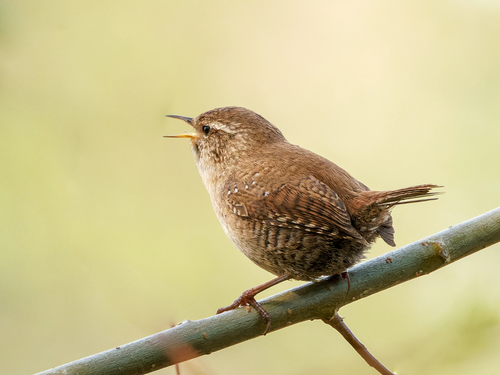
Eurasian Wren (Troglodytes troglodytes) Eurasian Wren
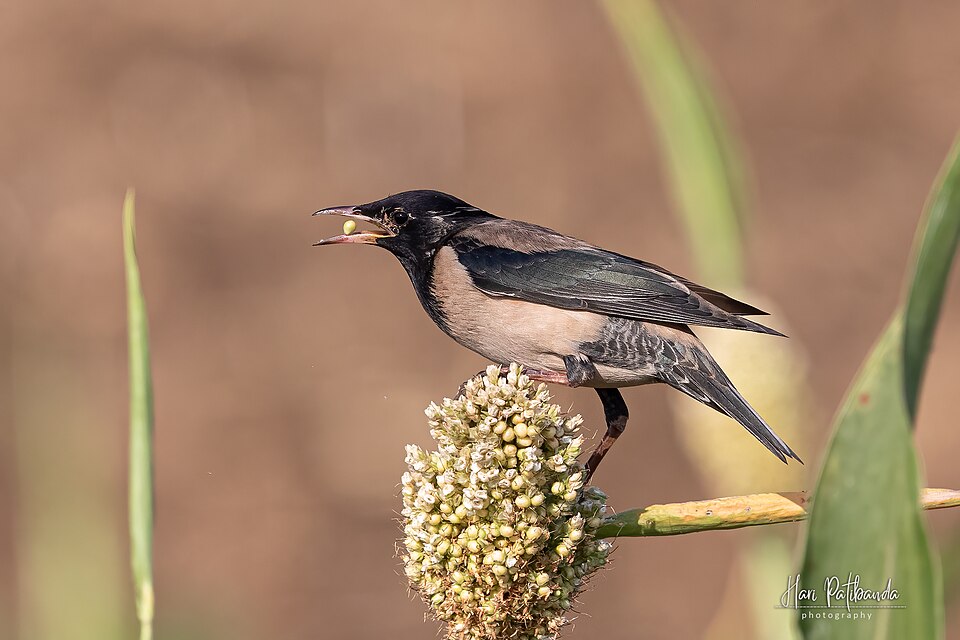
Rose-coloured Starling (Pastor roseus) Rose-coloured Starling

Media

Loading…

In short

The most reliable way to separate Eurasian Wren from Rose-coloured Starling is by overall structure and plumage: wrens are tiny, round, and warm brown with a cocked tail, while rose-coloured starlings are much larger, with a striking pink-and-black (adult) or pale buff (juvenile) plumage, and never show the wren’s short, perky tail or intricate barring. Juvenile starlings are pale and lack the wren’s fine barring or compact jizz. In flight, the wren’s tiny, whirring wings and mouse-like movement contrast sharply with the starling’s strong, direct flight. Even at a distance, the massive size difference and contrasting coloration are unmistakable.

Identification tips

  1. Size is the first check: Eurasian Wren is tiny and round, while Rose-coloured Starling is large and robust; if the bird looks even close to thrush-sized, it is not a wren.
  2. Tail shape and carriage: Wrens have a very short tail, often held cocked up at a sharp angle; starlings have a longer, straight tail, never cocked.
  3. Plumage in adults: Adult wrens are rufous-brown with fine barring and a subtle pale eyebrow; adult Rose-coloured Starlings are pink-bodied with glossy black wings, tail, and head (breeding), or duller grey-pink with dark wings (non-breeding), never brown or barred.
  4. Juvenile confusion: Juvenile starlings are pale buffy brown with a yellow bill, lacking any barring or rufous tones; juvenile wrens are brown with some mottling and faint barring, never pale buff all over.
  5. Bill structure: Wren’s bill is fine, thin, and slightly downcurved; starling’s bill is thicker, straight, and in adults, bicolored (black base, pink tip in breeding), yellowish in juveniles.
  6. Crest: Only Rose-coloured Starling males in breeding plumage show a wispy crest; wrens never have a crest.
  7. Wing and flight: Wrens have very short, rounded wings and a whirring, low, mouse-like flight; starlings have longer, pointed wings and fly strongly, often in flocks.
  8. Perching behavior: Wrens skulk low, rarely perching in the open; starlings perch on wires, trees, or rooftops, often in groups.
  9. Habitat context: If the bird is in dense undergrowth or tangled vegetation, wren is likely; in open fields or on wires, starling is likely.
  10. Vocalizations: Wren’s song is a loud, complex trill; starling’s is a mix of squeaks and rattles, less musical.
  11. Leg color: Wren has pale brown legs; starling’s legs are pink to pale orange.
  12. Seasonal context: Rose-coloured Starlings may irrupt into Western Europe in summer when grasshoppers are abundant; wrens are resident year-round in most of their range.
  13. Social behavior: Wrens are solitary or in pairs; starlings are highly gregarious, especially outside breeding.
  14. Feeding behavior: Wrens probe crevices and logs for insects; starlings forage openly, often on the ground, for insects, fruit, or grain.
  15. Confusion risk: At a distance, a pale juvenile starling might seem plain, but the size, structure, and lack of barring or tail-cocking will always distinguish it from a wren.

Size

Eurasian Wren is extremely small (9–10 cm length, 10 g mass [wikipedia]), appearing almost ball-like, with a very short tail and rounded wings. Rose-coloured Starling is nearly twice as long (19–22 cm) and over seven times heavier (average 73 g [wikidata]), with a much more robust, elongated body and longer tail. Through binoculars, the starling will look pigeon-sized compared to the wren’s mouse-like proportions.

Plumage

Juvenile and immature Rose-coloured Starlings are pale buffy brown with a short yellow bill, lacking any barring or rich rufous tones; they are much paler overall than juvenile Eurasian Wrens, which are brown with mottled underparts and less distinct barring than adults but still show some patterning. Adult Eurasian Wrens are rufous-brown above, greyer below, and intricately barred with darker brown and grey on wings and tail, with a short, cocked tail and fine, dark bill. Adult Rose-coloured Starlings in breeding plumage are unmistakable: pink body, glossy black head, wings, and tail, with a wispy crest in males. Non-breeding adults are duller greyish-pink but still show a strong contrast between pale body and dark wings. Female starlings have a shorter crest and less sharp color separation but never approach the wren’s earth-toned, barred look. No age or season of starling has the wren’s intricate barring or compact, rounded shape.

Behaviour

Eurasian Wrens are almost always seen low to the ground, darting in and out of crevices, logs, or dense vegetation, moving with quick, jerky hops and often holding their tails cocked upright. Their flight is short, low, and whirring, rarely sustained except on migration. Rose-coloured Starlings are highly gregarious, often in large flocks, and perch openly on wires or in trees. Their flight is strong, direct, and sustained, typical of starlings, and they do not show the wren’s mouse-like skulking or tail-cocking. Starlings may be seen foraging on open ground or flying in large, noisy groups.

Habitat

Eurasian Wrens are found in a wide range of habitats but typically prefer dense undergrowth, woodland edges, and gardens, often close to the ground or in tangled vegetation. Rose-coloured Starlings breed in open steppe, semi-desert, and agricultural land, often far from dense cover, and are most often seen in open country, sometimes irrupting into Western Europe in large numbers. In winter, starlings may be seen in open fields and agricultural areas, sometimes outnumbering local starlings and mynas in India. The wren’s preference for dense, low cover is a strong contrast to the starling’s open-country habits.

Voice

Eurasian Wren has a remarkably loud, complex song for its size: a gushing burst of clear, shrill trills and tinkling notes, often delivered from a low perch, and a sharp, repeated "tic-tic-tic" call. Rose-coloured Starling’s song is a typical starling mix of squeaks and rattles, often with much wing trembling, and is less musical or structured than the wren’s. The wren’s song is much more intricate and piercing, while the starling’s is noisy, mechanical, and less melodious.

Submit a better description

Use the same sections as the comparison. Your text is published immediately.

The most reliable way to separate Eurasian Wren from Rose-coloured Starling is by overall structure and plumage: wrens are tiny, round, and warm brown with a cocked tail, while rose-coloured starlings are much larger, with a striking pink-and-black (adult) or pale buff (juvenile) plumage, and never show the wren’s short, perky tail or intricate barring. Juvenile starlings are pale and lack the wren’s fine barring or compact jizz. In flight, the wren’s tiny, whirring wings and mouse-like movement contrast sharply with the starling’s strong, direct flight. Even at a distance, the massive size difference and contrasting coloration are unmistakable.

  1. Size is the first check: Eurasian Wren is tiny and round, while Rose-coloured Starling is large and robust; if the bird looks even close to thrush-sized, it is not a wren.
  2. Tail shape and carriage: Wrens have a very short tail, often held cocked up at a sharp angle; starlings have a longer, straight tail, never cocked.
  3. Plumage in adults: Adult wrens are rufous-brown with fine barring and a subtle pale eyebrow; adult Rose-coloured Starlings are pink-bodied with glossy black wings, tail, and head (breeding), or duller grey-pink with dark wings (non-breeding), never brown or barred.
  4. Juvenile confusion: Juvenile starlings are pale buffy brown with a yellow bill, lacking any barring or rufous tones; juvenile wrens are brown with some mottling and faint barring, never pale buff all over.
  5. Bill structure: Wren’s bill is fine, thin, and slightly downcurved; starling’s bill is thicker, straight, and in adults, bicolored (black base, pink tip in breeding), yellowish in juveniles.
  6. Crest: Only Rose-coloured Starling males in breeding plumage show a wispy crest; wrens never have a crest.
  7. Wing and flight: Wrens have very short, rounded wings and a whirring, low, mouse-like flight; starlings have longer, pointed wings and fly strongly, often in flocks.
  8. Perching behavior: Wrens skulk low, rarely perching in the open; starlings perch on wires, trees, or rooftops, often in groups.
  9. Habitat context: If the bird is in dense undergrowth or tangled vegetation, wren is likely; in open fields or on wires, starling is likely.
  10. Vocalizations: Wren’s song is a loud, complex trill; starling’s is a mix of squeaks and rattles, less musical.
  11. Leg color: Wren has pale brown legs; starling’s legs are pink to pale orange.
  12. Seasonal context: Rose-coloured Starlings may irrupt into Western Europe in summer when grasshoppers are abundant; wrens are resident year-round in most of their range.
  13. Social behavior: Wrens are solitary or in pairs; starlings are highly gregarious, especially outside breeding.
  14. Feeding behavior: Wrens probe crevices and logs for insects; starlings forage openly, often on the ground, for insects, fruit, or grain.
  15. Confusion risk: At a distance, a pale juvenile starling might seem plain, but the size, structure, and lack of barring or tail-cocking will always distinguish it from a wren.

Eurasian Wren is extremely small (9–10 cm length, 10 g mass [wikipedia]), appearing almost ball-like, with a very short tail and rounded wings. Rose-coloured Starling is nearly twice as long (19–22 cm) and over seven times heavier (average 73 g [wikidata]), with a much more robust, elongated body and longer tail. Through binoculars, the starling will look pigeon-sized compared to the wren’s mouse-like proportions.

Juvenile and immature Rose-coloured Starlings are pale buffy brown with a short yellow bill, lacking any barring or rich rufous tones; they are much paler overall than juvenile Eurasian Wrens, which are brown with mottled underparts and less distinct barring than adults but still show some patterning. Adult Eurasian Wrens are rufous-brown above, greyer below, and intricately barred with darker brown and grey on wings and tail, with a short, cocked tail and fine, dark bill. Adult Rose-coloured Starlings in breeding plumage are unmistakable: pink body, glossy black head, wings, and tail, with a wispy crest in males. Non-breeding adults are duller greyish-pink but still show a strong contrast between pale body and dark wings. Female starlings have a shorter crest and less sharp color separation but never approach the wren’s earth-toned, barred look. No age or season of starling has the wren’s intricate barring or compact, rounded shape.

Eurasian Wrens are almost always seen low to the ground, darting in and out of crevices, logs, or dense vegetation, moving with quick, jerky hops and often holding their tails cocked upright. Their flight is short, low, and whirring, rarely sustained except on migration. Rose-coloured Starlings are highly gregarious, often in large flocks, and perch openly on wires or in trees. Their flight is strong, direct, and sustained, typical of starlings, and they do not show the wren’s mouse-like skulking or tail-cocking. Starlings may be seen foraging on open ground or flying in large, noisy groups.

Eurasian Wrens are found in a wide range of habitats but typically prefer dense undergrowth, woodland edges, and gardens, often close to the ground or in tangled vegetation. Rose-coloured Starlings breed in open steppe, semi-desert, and agricultural land, often far from dense cover, and are most often seen in open country, sometimes irrupting into Western Europe in large numbers. In winter, starlings may be seen in open fields and agricultural areas, sometimes outnumbering local starlings and mynas in India. The wren’s preference for dense, low cover is a strong contrast to the starling’s open-country habits.

Eurasian Wren has a remarkably loud, complex song for its size: a gushing burst of clear, shrill trills and tinkling notes, often delivered from a low perch, and a sharp, repeated "tic-tic-tic" call. Rose-coloured Starling’s song is a typical starling mix of squeaks and rattles, often with much wing trembling, and is less musical or structured than the wren’s. The wren’s song is much more intricate and piercing, while the starling’s is noisy, mechanical, and less melodious.

Discard your changes?

You have unsaved edits. If you leave now, those changes will be lost.

Eurasian Wren · Rose-coloured Starling · My Tricky Birds