

Motmot

Eurasian Wigeon vs American Wigeon

Mareca penelope versus Mareca americana

Play a quiz with Eurasian Wigeon and American Wigeon
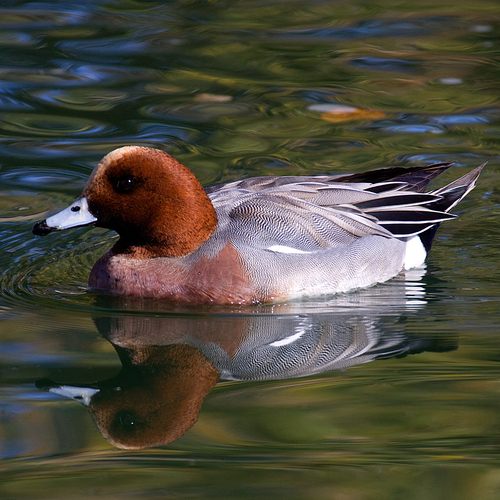
Eurasian Wigeon (Mareca penelope) Eurasian Wigeon
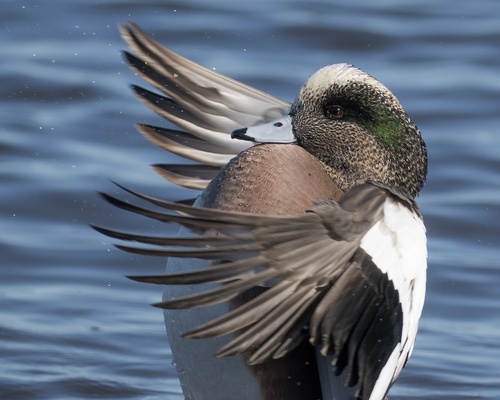
American Wigeon (Mareca americana) American Wigeon

Media

Loading…

In short

The most reliable field mark between Eurasian and American Wigeon is the head pattern in adult males: Eurasian Wigeon males show a rich chestnut head with a creamy crown, while American Wigeon males have a grayish or brownish head with a bold green eye patch and a white or cream forehead (the 'baldpate'). In flight, both species flash a white upperwing patch, but the American Wigeon’s is larger and more striking. Females and eclipse males are trickier: look for the American Wigeon’s paler, grayer head and the Eurasian’s warmer brown tones. Underwing color is also helpful—Eurasian Wigeon has all-gray underwings, while American Wigeon shows white axillaries. Separation is most challenging in female/immature plumages, especially at a distance or in poor light.

Identification tips

  1. Adult male head pattern: Eurasian Wigeon has a chestnut head with a creamy crown; American Wigeon has a grayish or brown head with a bold green eye patch and a white or cream crown running from the bill to the crown. This is the most reliable mark in spring and early summer.
  2. Upperwing in flight (all ages): Both species show a white patch, but American Wigeon's is larger and more prominent, especially in males. Eurasian Wigeon's is smaller but still visible.
  3. Underwing color (all ages): Eurasian Wigeon has all-gray underwings; American Wigeon has white axillaries. This is best seen in flight or preening birds.
  4. Female and eclipse male head color: American Wigeon females are paler and grayer-headed, while Eurasian Wigeon females are warmer brown or rufous. However, there is overlap, and some Eurasian females can appear grayish (gray morph).
  5. Bill color (both sexes): Both have a pale blue bill with a black tip, not a strong separator.
  6. Flank and back color (adult males): Eurasian Wigeon males have gray flanks and back; American Wigeon males have pinkish-buff flanks and a warmer brown back.
  7. Speculum and wing patch (all ages): Both have a dark green speculum, but the American Wigeon has a gray wing patch behind the speculum, while Eurasian Wigeon does not.
  8. Breast color (adult males): Eurasian Wigeon has a pinkish breast; American Wigeon is paler or buffy.
  9. Voice: American Wigeon males give a distinctive three-note whistle; Eurasian Wigeon is quieter and less likely to call in mixed flocks.
  10. Context and range: In North America, Eurasian Wigeon is rare and usually among American Wigeon flocks; in Europe, the reverse is true. Use this as supporting evidence, not a primary mark.
  11. Juvenile/first-winter birds: Separation is very difficult; look for underwing color and subtle head tone differences, but be cautious—many birds are not safely identified to species at this age unless seen very well.
  12. Flock composition: American Wigeon often associate with American Coots; Eurasian Wigeon less so. Not diagnostic, but may help in context.
  13. Overall jizz/structure: Both have a rounded head, short neck, and small bill. Structure is not a strong separator between these two.
  14. Tail and primary projection: No reliable differences noted in the sources.
  15. When in doubt: If you cannot see the head pattern, underwing, or hear the call, and the bird is a female or immature, it may not be safely separable in the field.

Size

Both species are very similar in size and structure, with only minor differences. Eurasian Wigeon averages 42–52 cm in length and a 71–80 cm wingspan, weighing 500–1,073 g. American Wigeon is slightly larger on average (42–59 cm long, 76–91 cm wingspan, 512–1,330 g), but this is not a reliable field mark. Both have a rounded head, short neck, and small bill compared to other dabbling ducks. Size alone is not diagnostic between these two.

Plumage

For adult breeding males, the head pattern is the key: Eurasian Wigeon males have a chestnut head with a creamy crown, gray flanks, and a pinkish breast, while American Wigeon males have a grayish or brownish head with a bold green eye patch and a white or cream crown running from the bill to the crown. Both show a white upperwing patch in flight, but the American Wigeon's is larger and more obvious. Underwing color differs: Eurasian Wigeon has all-gray underwings, while American Wigeon has white axillaries (the 'armpits'). Females and eclipse males are more similar, but American Wigeon females have a paler, grayer head and a gray wing patch behind the speculum, while Eurasian Wigeon females are warmer brown overall. Juvenile and first-winter birds are best separated by head and underwing color if seen well; otherwise, separation is difficult and may not be possible in the field.

Behaviour

Both species are dabbling ducks with similar feeding and flocking behaviors. American Wigeon is noted for associating with American Coots and for being vocal, especially the males. Eurasian Wigeon is less likely to be seen in mixed-species flocks in its native range. Both species are often found in large flocks outside the breeding season, grazing on land or dabbling in shallow water. Behavior is not a reliable separator between these two.

Habitat

Habitat preferences are broadly similar: both species favor wetlands, lakes, and marshes, often grazing on land nearby. Eurasian Wigeon is widespread in the Palearctic, while American Wigeon is found across North America. In Europe, American Wigeon is a rare vagrant, usually found among flocks of Eurasian Wigeon in autumn and winter. In North America, Eurasian Wigeon is the rare vagrant, typically found among American Wigeon flocks. Context of occurrence can help, but is not diagnostic on its own.

Voice

American Wigeon males are notably vocal, giving a distinctive three-note wheezy whistle ('whoee-whoe-whoe'), while females give low growls and quacks. Eurasian Wigeon is less vocal in the field, and its calls are less distinctive. If you hear the characteristic American Wigeon whistle, it is a strong clue, especially among mixed flocks.

Submit a better description

Use the same sections as the comparison. Your text is published immediately.

The most reliable field mark between Eurasian and American Wigeon is the head pattern in adult males: Eurasian Wigeon males show a rich chestnut head with a creamy crown, while American Wigeon males have a grayish or brownish head with a bold green eye patch and a white or cream forehead (the 'baldpate'). In flight, both species flash a white upperwing patch, but the American Wigeon’s is larger and more striking. Females and eclipse males are trickier: look for the American Wigeon’s paler, grayer head and the Eurasian’s warmer brown tones. Underwing color is also helpful—Eurasian Wigeon has all-gray underwings, while American Wigeon shows white axillaries. Separation is most challenging in female/immature plumages, especially at a distance or in poor light.

  1. Adult male head pattern: Eurasian Wigeon has a chestnut head with a creamy crown; American Wigeon has a grayish or brown head with a bold green eye patch and a white or cream crown running from the bill to the crown. This is the most reliable mark in spring and early summer.
  2. Upperwing in flight (all ages): Both species show a white patch, but American Wigeon's is larger and more prominent, especially in males. Eurasian Wigeon's is smaller but still visible.
  3. Underwing color (all ages): Eurasian Wigeon has all-gray underwings; American Wigeon has white axillaries. This is best seen in flight or preening birds.
  4. Female and eclipse male head color: American Wigeon females are paler and grayer-headed, while Eurasian Wigeon females are warmer brown or rufous. However, there is overlap, and some Eurasian females can appear grayish (gray morph).
  5. Bill color (both sexes): Both have a pale blue bill with a black tip, not a strong separator.
  6. Flank and back color (adult males): Eurasian Wigeon males have gray flanks and back; American Wigeon males have pinkish-buff flanks and a warmer brown back.
  7. Speculum and wing patch (all ages): Both have a dark green speculum, but the American Wigeon has a gray wing patch behind the speculum, while Eurasian Wigeon does not.
  8. Breast color (adult males): Eurasian Wigeon has a pinkish breast; American Wigeon is paler or buffy.
  9. Voice: American Wigeon males give a distinctive three-note whistle; Eurasian Wigeon is quieter and less likely to call in mixed flocks.
  10. Context and range: In North America, Eurasian Wigeon is rare and usually among American Wigeon flocks; in Europe, the reverse is true. Use this as supporting evidence, not a primary mark.
  11. Juvenile/first-winter birds: Separation is very difficult; look for underwing color and subtle head tone differences, but be cautious—many birds are not safely identified to species at this age unless seen very well.
  12. Flock composition: American Wigeon often associate with American Coots; Eurasian Wigeon less so. Not diagnostic, but may help in context.
  13. Overall jizz/structure: Both have a rounded head, short neck, and small bill. Structure is not a strong separator between these two.
  14. Tail and primary projection: No reliable differences noted in the sources.
  15. When in doubt: If you cannot see the head pattern, underwing, or hear the call, and the bird is a female or immature, it may not be safely separable in the field.

Both species are very similar in size and structure, with only minor differences. Eurasian Wigeon averages 42–52 cm in length and a 71–80 cm wingspan, weighing 500–1,073 g. American Wigeon is slightly larger on average (42–59 cm long, 76–91 cm wingspan, 512–1,330 g), but this is not a reliable field mark. Both have a rounded head, short neck, and small bill compared to other dabbling ducks. Size alone is not diagnostic between these two.

For adult breeding males, the head pattern is the key: Eurasian Wigeon males have a chestnut head with a creamy crown, gray flanks, and a pinkish breast, while American Wigeon males have a grayish or brownish head with a bold green eye patch and a white or cream crown running from the bill to the crown. Both show a white upperwing patch in flight, but the American Wigeon's is larger and more obvious. Underwing color differs: Eurasian Wigeon has all-gray underwings, while American Wigeon has white axillaries (the 'armpits'). Females and eclipse males are more similar, but American Wigeon females have a paler, grayer head and a gray wing patch behind the speculum, while Eurasian Wigeon females are warmer brown overall. Juvenile and first-winter birds are best separated by head and underwing color if seen well; otherwise, separation is difficult and may not be possible in the field.

Both species are dabbling ducks with similar feeding and flocking behaviors. American Wigeon is noted for associating with American Coots and for being vocal, especially the males. Eurasian Wigeon is less likely to be seen in mixed-species flocks in its native range. Both species are often found in large flocks outside the breeding season, grazing on land or dabbling in shallow water. Behavior is not a reliable separator between these two.

Habitat preferences are broadly similar: both species favor wetlands, lakes, and marshes, often grazing on land nearby. Eurasian Wigeon is widespread in the Palearctic, while American Wigeon is found across North America. In Europe, American Wigeon is a rare vagrant, usually found among flocks of Eurasian Wigeon in autumn and winter. In North America, Eurasian Wigeon is the rare vagrant, typically found among American Wigeon flocks. Context of occurrence can help, but is not diagnostic on its own.

American Wigeon males are notably vocal, giving a distinctive three-note wheezy whistle ('whoee-whoe-whoe'), while females give low growls and quacks. Eurasian Wigeon is less vocal in the field, and its calls are less distinctive. If you hear the characteristic American Wigeon whistle, it is a strong clue, especially among mixed flocks.

Discard your changes?

You have unsaved edits. If you leave now, those changes will be lost.

Eurasian Wigeon · American Wigeon · My Tricky Birds