
Eurasian Skylark vs Crested Lark
Alauda arvensis versus Galerida cristata
Play a quiz with Eurasian Skylark and Crested Lark
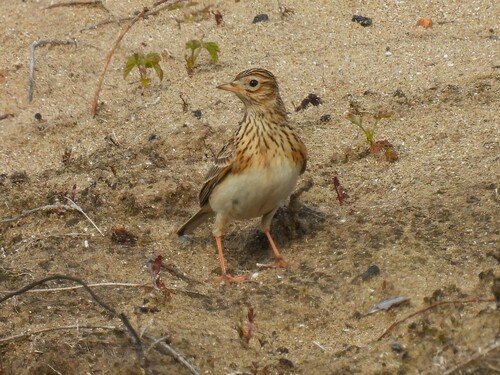 Eurasian Skylark
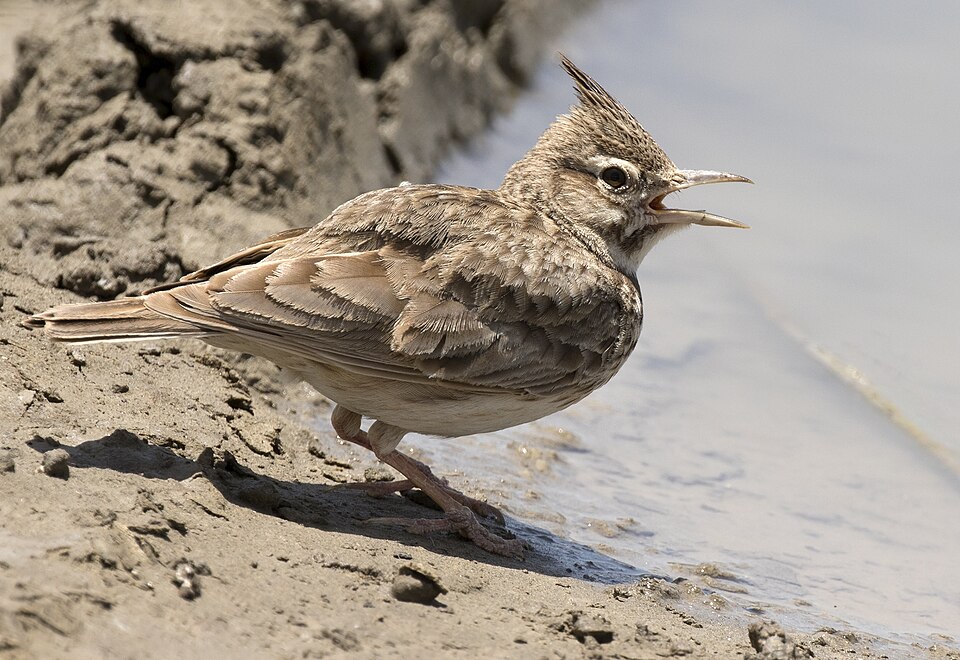 Crested Lark
In short
The most reliable field mark between Eurasian Skylark and Crested Lark is the presence of a strong, always-visible crest on the Crested Lark, compared to the Eurasian Skylark's shorter, often inconspicuous crest. In flight, Eurasian Skylark shows white edges to the tail and rear wing, visible when flying away, while Crested Lark lacks these white edges and instead shows reddish underwings. Structurally, Crested Lark appears bulkier with a heavier head and body, and a more pronounced crest, while Eurasian Skylark is longer and slimmer. Juvenile Crested Larks are more heavily spotted above than adults, but this is not a strong separation from Skylark immatures. Both species are brown and streaky, but careful attention to crest shape, tail and wing pattern in flight, and overall structure will separate them in most field situations.
Identification tips
- Crest shape and visibility: Crested Lark always shows a prominent, pointed crest, even when relaxed. Eurasian Skylark's crest is shorter, blunter, and often flattened, only raised when excited or alarmed.
- Tail and wing edges in flight: Eurasian Skylark shows white edges to the tail and rear wing, visible when flying away. Crested Lark lacks these white edges; its tail is short with light brown outer feathers.
- Underwing color in flight: Crested Lark shows reddish underwings in flight, a feature not present in Eurasian Skylark.
- Overall structure: Crested Lark appears bulkier, with a heavier head and body, and a shorter, chunkier look. Eurasian Skylark is longer, slimmer, and more streamlined.
- Head shape: The pronounced crest of Crested Lark gives it a peaked, angular head profile, while Eurasian Skylark's head is more rounded unless the crest is raised.
- Juvenile plumage: Young Crested Larks are more heavily spotted above than adults, but this is not a strong separator from Skylark juveniles, which are also streaky.
- Flight style: Eurasian Skylark's flight is buoyant and often involves long, sustained hovering during song. Crested Lark's flight is more undulating and less likely to hover for extended periods.
- Song behavior: Eurasian Skylark sings continuously during ascent and while hovering high overhead. Crested Lark sings from the ground or at altitude, not during ascent, and its song is shorter and more liquid.
- Habitat preference: Eurasian Skylark prefers open farmland and heath; Crested Lark is more likely in wastelands, roadsides, and urban edges.
- Sex differences: Eurasian Skylark males have broader wings than females (for hovering), but this is subtle in the field. Crested Lark shows no obvious sex differences.
- Bill shape: Not strongly diagnostic in these notes, but Crested Lark may show a slightly heavier bill, especially in North African populations.
- Perched posture: Crested Lark often appears upright with crest raised; Eurasian Skylark is more likely to crouch with crest flattened.
- Tail length: Eurasian Skylark has a slightly longer tail, but this is subtle and best judged in direct comparison.
- Context: If the bird is singing from a high hover, especially with a long, unbroken song, Eurasian Skylark is much more likely. If the bird is singing from the ground or a low perch, consider Crested Lark.
- Pitfalls: Both are brown, streaky larks of similar size; do not rely on color or general streaking. Focus on crest shape, tail/wing pattern in flight, and song behavior for reliable separation.
Size
Eurasian Skylark is slightly longer (18–19 cm) than Crested Lark (about 17 cm), but Crested Lark is bulkier, especially around the head and body. Wingspan overlaps (Crested Lark: 29–38 cm), and weights are similar (Crested Lark: 37–55 g). In the field, Skylark may look slimmer and more elongated, while Crested Lark gives a shorter, chunkier impression.
Plumage
- Juvenile/immature birds: Young Crested Larks have more spots on their back than adults, but this is not a strong separator from Eurasian Skylark, which is also streaky and brown above at all ages.
- Adults: Eurasian Skylark is brown above and paler below, with a short, blunt crest that is often flattened. In flight, it shows white edges to the tail and rear wing, but only when flying away. Crested Lark is also brown and streaky but always shows a prominent, pointed crest. Its tail is short with light brown outer feathers (not white), and in flight, the underwings are reddish (noted in all plumages). Both sexes are similar in both species.
- Flight views: Eurasian Skylark's white tail and wing edges are key when seen from behind; Crested Lark lacks these but shows reddish underwings. Crest is always obvious on Crested Lark, especially when singing or displaying.
Behaviour
Both species sing in flight, but Eurasian Skylark is famous for its long, hovering song flights, often rising high (50–100 m) and singing continuously while ascending, circling, or hovering. Crested Lark also sings in flight, but its song flights are typically lower (30–60 m), and it often sings from the ground or a perch. Crested Lark's flight is more undulating, while Skylark's is more buoyant and sustained. Skylark males have broader wings (for hovering), while Crested Lark is more likely to show its crest during display or song.
Habitat
Both species favor open country, but Eurasian Skylark is more associated with open farmland and heath, while Crested Lark is often found in wastelands, roadsides, and on the outskirts of towns. Crested Lark is more tolerant of disturbed, urban-edge habitats, whereas Eurasian Skylark prefers larger, uninterrupted open areas.
Voice
Eurasian Skylark's song is a long, bubbling, warbling sequence delivered in continuous flight, often lasting several minutes and sometimes up to 20 minutes. Crested Lark's song is shorter, described as a liquid, warbling 'whee-whee-wheeoo' or 'twee-tee-too', and is given both from the ground and in flight. Skylark sings during ascent and while hovering; Crested Lark sings either at altitude or on the ground, not during ascent.