
Motmot

Eurasian Nuthatch vs Eurasian Treecreeper

Sitta europaea versus Certhia familiaris

Play a quiz with Eurasian Nuthatch and Eurasian Treecreeper
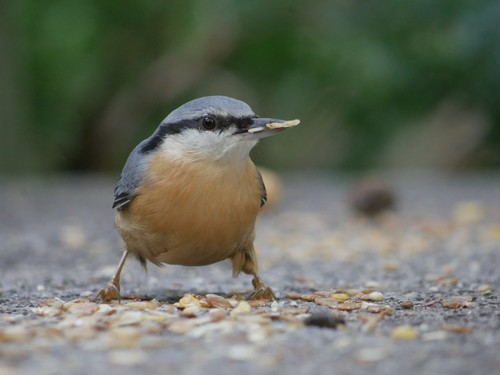
Eurasian Nuthatch (Sitta europaea) Eurasian Nuthatch
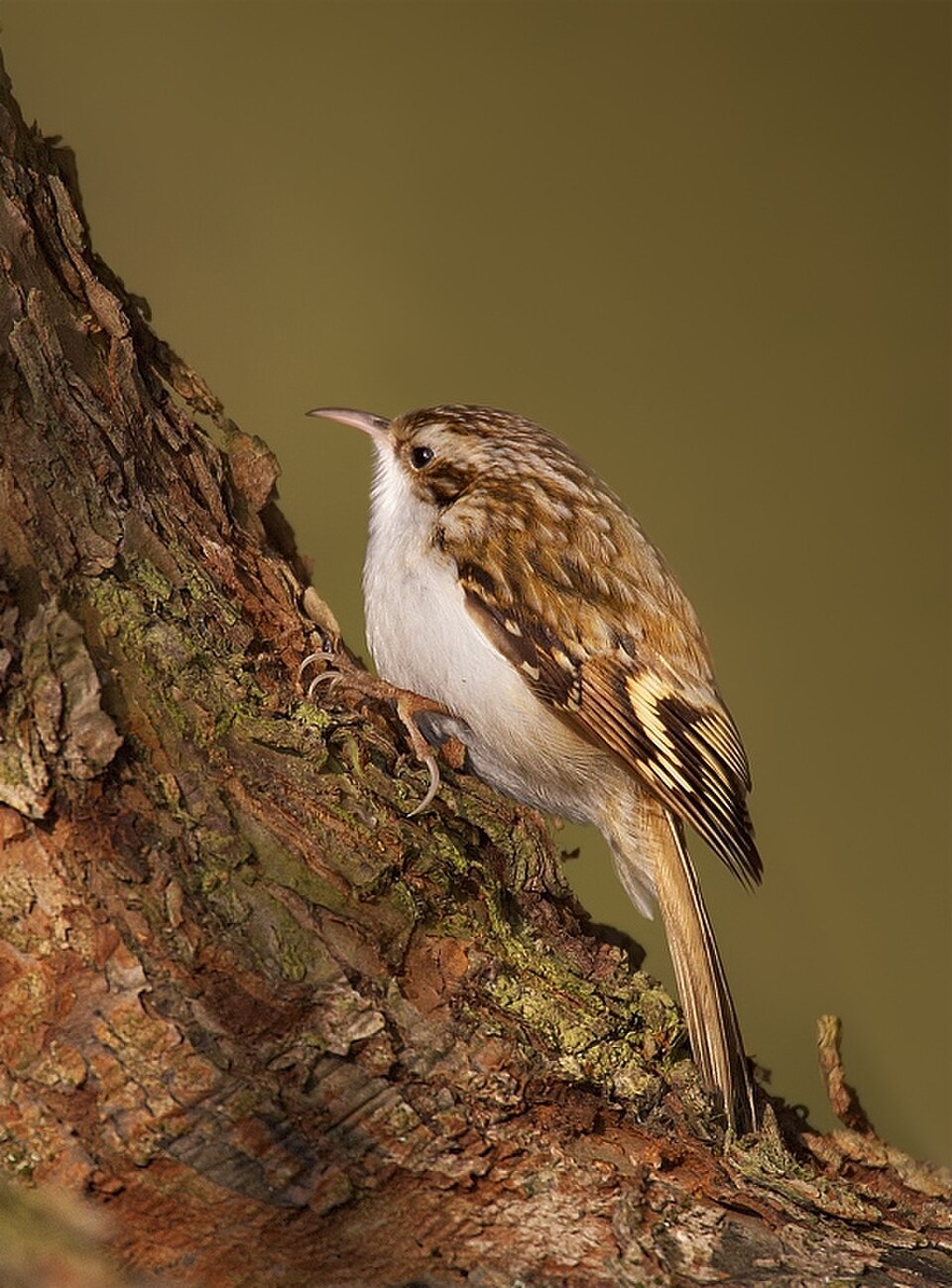
Eurasian Treecreeper (Certhia familiaris) Eurasian Treecreeper

Media

Loading…

In short

The most reliable field separation is structural: Eurasian Nuthatch is a robust, short-tailed, blue-grey bird with a strong, straight bill and a bold black eyestripe, while Eurasian Treecreeper is much slimmer, with a long, decurved bill, cryptic brown upperparts, and a long, stiff tail used for bracing against tree trunks. In flight, Nuthatch appears compact and pointed-headed with a short, square tail, whereas Treecreeper is more fluttery and erratic, with a plain brown tail. Juvenile and adult plumages are both distinctive if you focus on underpart color and wing pattern: Nuthatch shows blue-grey above and orange or buff flanks, Treecreeper is streaky brown above and white or buff below. Both species climb tree trunks, but their posture and movement differ markedly. Voice is also helpful: Nuthatch gives loud, repeated 'dwip' calls, while Treecreeper's calls are thin and high-pitched, and its song is more varied and complex.

Identification tips

  1. Tail structure and use: Nuthatch has a short, square tail and never uses it for support; Treecreeper has a long, stiff tail used as a prop when climbing. This is visible in all ages and seasons.
  2. Bill shape: Nuthatch's bill is strong, straight, and dagger-like; Treecreeper's is long, thin, and decurved. This difference is obvious in profile views.
  3. Body shape and posture: Nuthatch is robust, compact, and often sits horizontally or even head-down on trunks; Treecreeper is slim, delicate, and always moves upwards, pressed close to the bark.
  4. Upperparts color: Nuthatch is blue-grey above with a bold black eyestripe; Treecreeper is intricately streaked brown above with a white or buff supercilium and no eyestripe. Works for all ages.
  5. Underparts color: Nuthatch has white throat and cheeks, orange or buff flanks and lower belly; Treecreeper is white or buff below, sometimes with fine spotting on juvenile flanks, but never orange.
  6. Facial pattern: Nuthatch shows a strong black eyestripe through the eye; Treecreeper has a pale supercilium but no eyestripe. This is a key mark in all seasons.
  7. Flight style: Nuthatch flies fast and direct, with wings closed between beats and a pointed head; Treecreeper's flight is fluttery, erratic, and undulating, with a plain brown tail trailing behind.
  8. Perched jizz: Nuthatch perches boldly, often on exposed trunks or branches, sometimes head-down; Treecreeper hugs the bark, creeping upwards in a spiral.
  9. Vocalizations: Listen for Nuthatch's loud, repeated 'dwip' calls; Treecreeper's calls are thin, high-pitched, and quiet, with a more complex song if heard.
  10. Juvenile plumage: Young Nuthatch is duller but still blue-grey above and pale below with orange flanks; juvenile Treecreeper is dull brown above and white below with fine flank spots.
  11. Sex differences: Female Nuthatch is slightly paler and browner, but still shows the same structure and pattern as the male; Treecreeper sexes are similar and not separable in the field.
  12. Habitat context: In coniferous forests, Treecreeper is more likely; in mixed or broadleaf woods, both may occur, but Nuthatch is more versatile. Habitat is only a supporting clue.
  13. Behavior: Nuthatch often forages on branches as well as trunks, sometimes descending headfirst; Treecreeper only ascends trunks and rarely uses branches.
  14. Leg color: Nuthatch has pale brown or greyish legs; Treecreeper's legs are less distinctive but usually brownish.
  15. Size impression: Nuthatch appears much bulkier and heavier than Treecreeper, which is tiny and mouse-like in movement. This is especially clear in direct comparison or with experience.

Size

Eurasian Nuthatch is significantly heavier (23.0 g vs 9.95 g) and appears bulkier and more robust than Eurasian Treecreeper. Nuthatch is also longer overall, with a noticeably stouter build, while Treecreeper is smaller, lighter, and more delicate. In the field, Nuthatch's short, square tail and compact body contrast with Treecreeper's slim form and long, stiff tail. Both species are small, but the difference in mass and proportions is usually clear with good views.

Plumage

No age-specific upperwing pattern is described for either species that is diagnostic in flight. For all ages, Eurasian Nuthatch shows blue-grey upperparts, a bold black eyestripe, and white throat and cheeks, with orange or buff flanks (depending on subspecies). Juveniles resemble females but are duller, with paler legs. Eurasian Treecreeper of all ages is brown above with intricate streaks and spots, a white or buff supercilium, and white underparts tinged buff on the belly, flanks, and vent. Juveniles are duller above and have fine dark spotting on the flanks. The Treecreeper's tail is plain brown and long, used for support, while Nuthatch's tail is short and square. The Nuthatch's underparts are always more colorful (orange or buff) than the Treecreeper's mostly white or buff. Sexes are similar in both, but female Nuthatch is slightly paler and browner.

Behaviour

Both species climb tree trunks, but their movements and posture are different. Eurasian Nuthatch moves with short, powerful leaps and does not use its tail for support, often moving headfirst down trunks. Eurasian Treecreeper creeps up trunks in short, mouse-like hops, using its stiff tail as a prop. In flight, Nuthatch is fast and direct with closed wings between beats, while Treecreeper's flight is erratic, undulating, and fluttery. Treecreeper is solitary in winter but may roost in groups; Nuthatch is more vocal and conspicuous.

Habitat

Both species occur in woodlands, but Eurasian Nuthatch is found throughout the Palearctic in a variety of wooded habitats, while Eurasian Treecreeper is more often associated with coniferous forests (especially in areas where Short-toed Treecreeper prefers deciduous woods). Both may overlap in mixed forests, so habitat alone is not always diagnostic, but Treecreeper is more likely in pure conifer stands.

Voice

Eurasian Nuthatch is loud and vocal, with a repeated, sharp 'dwip' call that carries well. Eurasian Treecreeper's calls are thin, high-pitched, and quiet ('sit' or 'tsree'), easily overlooked. The Treecreeper's song is more varied and complex than that of Short-toed Treecreeper, but is not similar to Nuthatch; Nuthatch does not sing in the same way. In the field, the Nuthatch's calls are much more likely to be noticed.

Submit a better description

Use the same sections as the comparison. Your text is published immediately.

The most reliable field separation is structural: Eurasian Nuthatch is a robust, short-tailed, blue-grey bird with a strong, straight bill and a bold black eyestripe, while Eurasian Treecreeper is much slimmer, with a long, decurved bill, cryptic brown upperparts, and a long, stiff tail used for bracing against tree trunks. In flight, Nuthatch appears compact and pointed-headed with a short, square tail, whereas Treecreeper is more fluttery and erratic, with a plain brown tail. Juvenile and adult plumages are both distinctive if you focus on underpart color and wing pattern: Nuthatch shows blue-grey above and orange or buff flanks, Treecreeper is streaky brown above and white or buff below. Both species climb tree trunks, but their posture and movement differ markedly. Voice is also helpful: Nuthatch gives loud, repeated 'dwip' calls, while Treecreeper's calls are thin and high-pitched, and its song is more varied and complex.

  1. Tail structure and use: Nuthatch has a short, square tail and never uses it for support; Treecreeper has a long, stiff tail used as a prop when climbing. This is visible in all ages and seasons.
  2. Bill shape: Nuthatch's bill is strong, straight, and dagger-like; Treecreeper's is long, thin, and decurved. This difference is obvious in profile views.
  3. Body shape and posture: Nuthatch is robust, compact, and often sits horizontally or even head-down on trunks; Treecreeper is slim, delicate, and always moves upwards, pressed close to the bark.
  4. Upperparts color: Nuthatch is blue-grey above with a bold black eyestripe; Treecreeper is intricately streaked brown above with a white or buff supercilium and no eyestripe. Works for all ages.
  5. Underparts color: Nuthatch has white throat and cheeks, orange or buff flanks and lower belly; Treecreeper is white or buff below, sometimes with fine spotting on juvenile flanks, but never orange.
  6. Facial pattern: Nuthatch shows a strong black eyestripe through the eye; Treecreeper has a pale supercilium but no eyestripe. This is a key mark in all seasons.
  7. Flight style: Nuthatch flies fast and direct, with wings closed between beats and a pointed head; Treecreeper's flight is fluttery, erratic, and undulating, with a plain brown tail trailing behind.
  8. Perched jizz: Nuthatch perches boldly, often on exposed trunks or branches, sometimes head-down; Treecreeper hugs the bark, creeping upwards in a spiral.
  9. Vocalizations: Listen for Nuthatch's loud, repeated 'dwip' calls; Treecreeper's calls are thin, high-pitched, and quiet, with a more complex song if heard.
  10. Juvenile plumage: Young Nuthatch is duller but still blue-grey above and pale below with orange flanks; juvenile Treecreeper is dull brown above and white below with fine flank spots.
  11. Sex differences: Female Nuthatch is slightly paler and browner, but still shows the same structure and pattern as the male; Treecreeper sexes are similar and not separable in the field.
  12. Habitat context: In coniferous forests, Treecreeper is more likely; in mixed or broadleaf woods, both may occur, but Nuthatch is more versatile. Habitat is only a supporting clue.
  13. Behavior: Nuthatch often forages on branches as well as trunks, sometimes descending headfirst; Treecreeper only ascends trunks and rarely uses branches.
  14. Leg color: Nuthatch has pale brown or greyish legs; Treecreeper's legs are less distinctive but usually brownish.
  15. Size impression: Nuthatch appears much bulkier and heavier than Treecreeper, which is tiny and mouse-like in movement. This is especially clear in direct comparison or with experience.

Eurasian Nuthatch is significantly heavier (23.0 g vs 9.95 g) and appears bulkier and more robust than Eurasian Treecreeper. Nuthatch is also longer overall, with a noticeably stouter build, while Treecreeper is smaller, lighter, and more delicate. In the field, Nuthatch's short, square tail and compact body contrast with Treecreeper's slim form and long, stiff tail. Both species are small, but the difference in mass and proportions is usually clear with good views.

No age-specific upperwing pattern is described for either species that is diagnostic in flight. For all ages, Eurasian Nuthatch shows blue-grey upperparts, a bold black eyestripe, and white throat and cheeks, with orange or buff flanks (depending on subspecies). Juveniles resemble females but are duller, with paler legs. Eurasian Treecreeper of all ages is brown above with intricate streaks and spots, a white or buff supercilium, and white underparts tinged buff on the belly, flanks, and vent. Juveniles are duller above and have fine dark spotting on the flanks. The Treecreeper's tail is plain brown and long, used for support, while Nuthatch's tail is short and square. The Nuthatch's underparts are always more colorful (orange or buff) than the Treecreeper's mostly white or buff. Sexes are similar in both, but female Nuthatch is slightly paler and browner.

Both species climb tree trunks, but their movements and posture are different. Eurasian Nuthatch moves with short, powerful leaps and does not use its tail for support, often moving headfirst down trunks. Eurasian Treecreeper creeps up trunks in short, mouse-like hops, using its stiff tail as a prop. In flight, Nuthatch is fast and direct with closed wings between beats, while Treecreeper's flight is erratic, undulating, and fluttery. Treecreeper is solitary in winter but may roost in groups; Nuthatch is more vocal and conspicuous.

Both species occur in woodlands, but Eurasian Nuthatch is found throughout the Palearctic in a variety of wooded habitats, while Eurasian Treecreeper is more often associated with coniferous forests (especially in areas where Short-toed Treecreeper prefers deciduous woods). Both may overlap in mixed forests, so habitat alone is not always diagnostic, but Treecreeper is more likely in pure conifer stands.

Eurasian Nuthatch is loud and vocal, with a repeated, sharp 'dwip' call that carries well. Eurasian Treecreeper's calls are thin, high-pitched, and quiet ('sit' or 'tsree'), easily overlooked. The Treecreeper's song is more varied and complex than that of Short-toed Treecreeper, but is not similar to Nuthatch; Nuthatch does not sing in the same way. In the field, the Nuthatch's calls are much more likely to be noticed.

Discard your changes?

You have unsaved edits. If you leave now, those changes will be lost.

Eurasian Nuthatch · Eurasian Treecreeper · My Tricky Birds