
Eurasian Jay vs Eurasian Jackdaw
Garrulus glandarius versus Coloeus monedula
Play a quiz with Eurasian Jay and Eurasian Jackdaw
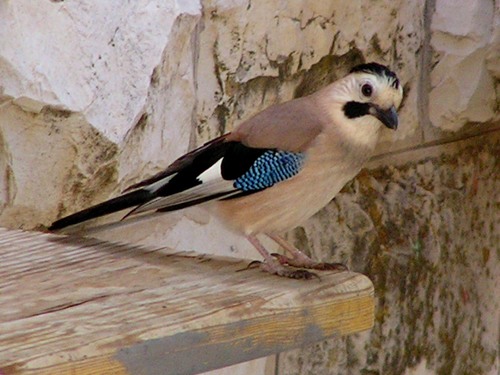 Eurasian Jay
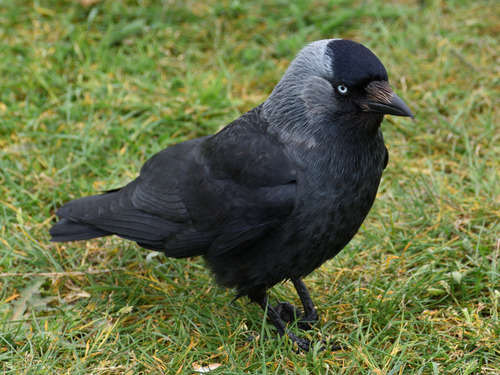 Eurasian Jackdaw
In short
The most reliable field mark to separate Eurasian Jay from Eurasian Jackdaw is the Jay’s striking blue-and-black barred wing patch, which is obvious on perched and flying birds of all ages, and is never present on Jackdaw. Jays are pinkish-brown overall with a black moustache and white rump, while Jackdaws are much darker, with a black body and contrasting pale grey nape and cheeks. Both are similar in size, but the Jay appears bulkier and more colorful, whereas the Jackdaw is sleeker, with a shorter bill and a silvery eye. In flight, Jackdaws show uniform dark wings and a compact, fast-flapping flight, while Jays display more white and blue in the wings and a slower, more undulating flight. If you see a pale, blue-barred panel in the wing, it’s a Jay; if the bird is mostly black with a pale nape and silvery eyes, it’s a Jackdaw.
Identification tips
- Blue-and-black barred wing panel (Jay): Only Eurasian Jay shows a bright blue patch with fine black bars on the upperwing, visible in all ages and especially obvious in flight or when perched with wings closed.
- White rump (Jay): In flight, the Jay’s white rump is conspicuous and contrasts with the black tail; Jackdaw lacks this feature.
- Overall coloration: Jay is pinkish-brown with complex markings; Jackdaw is mostly black with a pale grey nape and cheeks.
- Facial pattern: Jay has a black moustache and whitish throat bordered by black; Jackdaw has a black face with pale grey or silvery nape and cheeks, but no moustache.
- Eye color: Adult Jackdaws have striking pale silvery or greyish-white eyes, visible at close range; Jay’s eyes are dark.
- Bill shape: Jackdaw’s bill is short, stout, and black, about 75% the length of the head; Jay’s bill is longer and more pointed.
- Crown: Jay’s crown is whitish with black streaks; Jackdaw’s crown is shiny black with a purple or blue sheen.
- Flight pattern: Jay flies with slow, undulating wingbeats and shows white and blue in the wings; Jackdaw has fast, deep wingbeats, compact shape, and uniform dark wings.
- Tail: Jay’s tail is black and longer in proportion to body; Jackdaw’s tail is shorter and more squared off.
- Juvenile Jackdaws: Have duller, less sharply defined grey on nape and cheeks, and dark eyes (not silvery until adulthood), but still lack blue in the wing and white rump.
- Social behavior: Jackdaws are often in flocks, especially in open areas or towns; Jays are more solitary or in pairs, usually in woodland.
- Habitat: Jays are woodland specialists, rarely in open fields; Jackdaws are common in urban, farmland, and open habitats.
- Perched jizz: Jay appears bulkier and more upright, often partially hidden; Jackdaw is more compact, upright, and struts briskly in the open.
- Vocalizations (secondary): If heard, Jay gives harsh screeches; Jackdaw gives sharp 'jack' calls, but rely on visual marks first.
- Pitfalls: At a distance, Jackdaws can look uniformly dark and small, but lack any blue in the wing or white rump; Jays never show a pale nape or silvery eye.
Size
Both species are similar in length: Eurasian Jay measures 34–35 cm and Eurasian Jackdaw 34–39 cm. However, the Jay has a wingspan of 52–58 cm, while the Jackdaw’s is not specified here but is comparable. The Jay is slightly bulkier and more robust in build, while the Jackdaw is more compact and streamlined, with a noticeably shorter, stubbier bill. Jackdaws weigh around 240 g; Jay’s weight is not given but is similar. In the field, Jackdaws often look smaller due to their tighter, more upright posture and shorter bill.
Plumage
- Juvenile/Immature birds: There is no mention of distinctive juvenile upperwing marks for either species, but Jackdaw immatures are duller, with less sharply defined grey on the nape and cheeks, and dark eyes (light blue, turning brownish before whitening in adulthood). Jay juveniles resemble adults in overall coloration, retaining the blue wing panel and black moustache.
- Adult Eurasian Jay: Pinkish-brown body, black tail, white rump, black moustache, whitish throat bordered by black, and a complex upperwing with a bright blue-and-black barred panel and white patches. The crown is whitish with black streaks.
- Adult Eurasian Jackdaw: Shiny black overall with a purple or blue sheen on the crown and secondaries, green-blue sheen on throat, primaries, and tail. The cheeks, nape, and neck are pale grey to silvery, contrasting with the black face and underparts. Adults have pale silvery or greyish-white eyes (very distinctive at close range). No blue in the wings, no moustache, no white rump.
- Flight: Jay shows white rump and blue wing panel; Jackdaw is uniform dark with pale nape and no wing markings.
Behaviour
Eurasian Jay is usually solitary or in pairs, moving quietly through woodland or flying between trees with slow, undulating wingbeats. Jays often perch in cover and are less likely to be seen in open areas. Jackdaws are highly social, often seen in flocks, especially outside the breeding season. They walk with an upright, brisk gait and feed on the ground with heads held down. In flight, Jackdaws are agile, with fast, deep wingbeats and tight flocking behavior, often tumbling or gliding. Jays rarely join mixed corvid flocks, while Jackdaws frequently do.
Habitat
Eurasian Jay prefers mixed or deciduous woodland, especially with oaks, but can also be found in parks and large gardens, especially as they adapt to urban areas. They are rarely seen in open fields. Eurasian Jackdaw is much more adaptable, found in a wide range of habitats including farmland, towns, cities, cliffs, and woodland edges. Jackdaws are more likely to be seen in open country, on rooftops, or in urban settings, while Jays are more tied to wooded areas.
Voice
No direct vocalization details are provided for either species in these notes. Both are vocal corvids, but their calls are very different: Jays give harsh, screeching calls, while Jackdaws have a distinctive, sharp 'jack' or 'kya' call. However, use plumage and structure as primary separation tools.