
Eurasian Jay vs Common Magpie
Garrulus glandarius versus Pica pica
Play a quiz with Eurasian Jay and Common Magpie
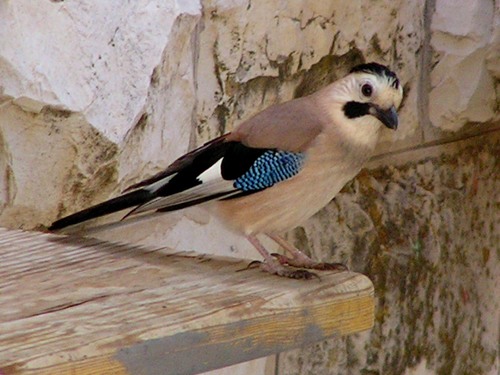 Eurasian Jay
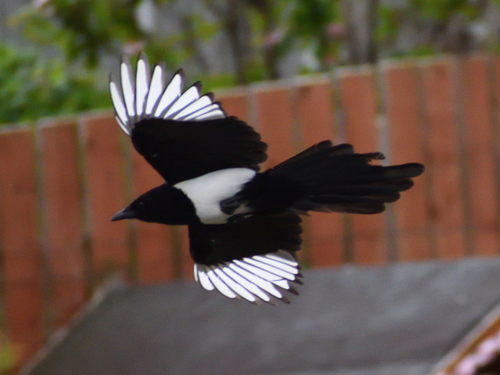 Common Magpie
In short
The most reliable field mark to separate Eurasian Jay from Common Magpie is the presence of a bright blue, finely barred patch on the upperwing of the jay, visible in both perched and flying birds of all ages. In contrast, the magpie's wing is black with a green or purple gloss and a bold white patch on the primaries, but never blue. Juvenile magpies lack the adult's gloss but still show the same black-and-white pattern. Jays have a pinkish-brown body with a black moustache and white rump, while magpies are sharply black and white with a very long, iridescent tail. Both are corvids, but their structure, flight style, and plumage are distinct if seen well.
Identification tips
- Blue upperwing panel (Jay only): Look for a bright blue, finely barred patch on the upperwing—unique to Eurasian Jay of all ages and never present on magpie.
- Black-and-white contrast (Magpie only): Magpies are sharply black and white, with a pure white belly and shoulder patch, black head, breast, and back, and a bold white patch on the primaries (visible in flight and at rest). Jays are never this starkly patterned.
- Tail length and shape: Magpie has an extremely long, graduated, iridescent black tail (often half its body length or more), which is obvious in flight and when perched. Jay's tail is shorter, black, and not iridescent.
- Body color: Jay is pinkish brown overall, with a whitish throat bordered by a black moustache. Magpie is never brown or pinkish—always black and white.
- Head pattern: Jay has a whitish forehead and crown with black streaks and a black moustache stripe. Magpie's head is entirely glossy black, lacking any pale or streaked areas.
- Rump color: Jay has a white rump, often visible in flight. Magpie's rump is black with a variable white stripe above (never all white like jay).
- Wing pattern in flight: Magpie shows a bold white patch on the primaries, forming a large white panel when the wing is open. Jay's wing panel is blue and black, never white.
- Juvenile confusion: Even young magpies have the same black-and-white pattern (though less glossy, shorter tail, and pinkish malar), while young jays already show the blue wing patch and pinkish brown body. No age-related overlap in key marks.
- Flight style: Magpie flies with slow, rowing wingbeats and a long, trailing tail. Jay's flight is more direct and undulating, with a compact shape and shorter tail.
- Perched jizz: Magpie appears elongated and slender due to its long tail; jay is more compact and rounded.
- Habitat context: In dense woodland, expect jay; in open fields, urban parks, or lawns, magpie is far more likely.
- Vocalizations: Magpie's harsh "chac-chac-chac" chatter is distinctive; jay's calls are more varied and screechy.
- Bill and legs: Both have black bills and legs, but magpie's bill is heavier and longer relative to head size.
- Sex and season: Both sexes are similar in plumage; seasonal variation is minimal in field marks for both species.
- Pitfalls: Poor light or distant views may obscure the jay's blue wing panel or the magpie's white wing patch, but overall structure and tail length are still useful. If only a silhouette is seen, the magpie's long tail is diagnostic.
Size
Common Magpie is noticeably larger and heavier than Eurasian Jay. Magpies measure 44–46 cm in length (over half of which is tail) and have a body mass around 206 g, while Eurasian Jays are smaller at 34–35 cm and lighter (no mass given, but distinctly less robust). Both have similar wingspans (52–62 cm for magpie, 52–58 cm for jay), but the magpie's long tail makes it look much bigger and more elongated, especially in flight or when perched. Jays appear more compact and rounded, with a shorter tail and stockier build.
Plumage
-
Juvenile/immature birds: Both species' juveniles resemble adults in pattern, but magpie juveniles lack the metallic gloss and have a shorter tail and a pinkish malar (cheek) area; their black-and-white contrast is still clear. Jay juveniles already show the blue wing panel and pinkish-brown body, so age does not erase the key field marks.
-
Adults: Eurasian Jay is pinkish brown overall with a striking blue-and-black barred patch on the upperwing, black tail, white rump, and a black moustache stripe bordering a whitish throat. The forehead and crown are whitish with black streaks. Common Magpie is sharply black and white: black head, neck, breast, and vent with a green/purple gloss, pure white belly and scapulars, black wings with green/purple gloss and a bold white patch on the primaries (conspicuous in flight), and a very long, iridescent black tail. The magpie's rump is black with a variable white stripe above. The jay never shows this stark black-and-white contrast or the long, iridescent tail.
Behaviour
Eurasian Jays are more secretive, often keeping to woodland edges or dense cover, and move with short, undulating flights. They are acorn hoarders and may be seen carrying food in their bill. Magpies are bolder, often seen in open areas, parks, and gardens, walking with a strutting gait and frequently perching in exposed spots. In flight, magpies have a distinctive, slow, rowing wingbeat and their long tail is very noticeable, often fanned or trailing behind. Jays appear more compact and less elongated in flight, with a shorter tail and less showy flight style.
Habitat
Eurasian Jay is primarily a woodland bird, especially favoring areas with oaks, but can also be found in parks and increasingly in urban settings. Common Magpie is much more adaptable and widespread in open country, farmland, urban parks, gardens, and even city centers. If seen in dense woodland, jay is more likely; in open fields or urban lawns, magpie is the default.
Voice
Magpie gives a harsh, repetitive "chac-chac-chac" or choking chatter, which is quite loud and carries far. Jays are also noisy but their calls are more varied and include harsh screeches, but the classic magpie chatter is distinctive and not matched by the jay.