

Eurasian Blue Tit vs Great Tit
Cyanistes caeruleus versus Parus major
Play a quiz with Eurasian Blue Tit and Great Tit
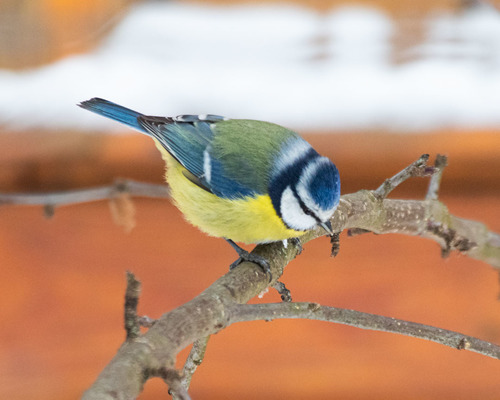 Eurasian Blue Tit
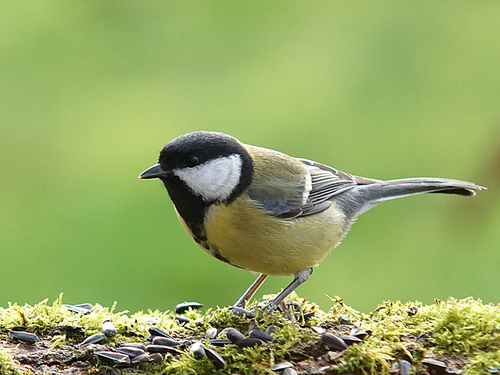 Great Tit
In short
The most reliable field mark to separate Eurasian Blue Tit from Great Tit is overall size and the presence of blue tones: Blue Tit is noticeably smaller and more brightly blue-crowned, with a neat white face and blue wings, while Great Tit is bulkier, with a black head, white cheeks, and a bold black central stripe down bright yellow underparts. Juvenile Blue Tits are yellower and less contrasting, but still show blue in the wings and crown, unlike the olive-tinged juvenile Great Tit. In flight or at a distance, Great Tit’s larger body, broader head, and heavier bill stand out, as does the broader black belly stripe. Both species share a basic tit shape and some behaviors, but careful attention to color and structure will resolve most confusion, even with immature birds.
Identification tips
- Size and structure: Great Tit is much larger and heavier, with a bulkier body, thicker neck, and stouter bill. Blue Tit is smaller, more compact, and has a finer bill. This is often the quickest field clue, especially if both are present.
- Crown color: Blue Tit always shows a bright blue crown, even in juveniles (though duller in young birds). Great Tit has a black crown and nape in all plumages.
- Face pattern: Blue Tit has a white face with a dark blue line through the eye and encircling the cheeks, creating a neat, masked look. Great Tit has a black head with large white cheek patches, giving a bolder, more contrasting appearance.
- Belly stripe: Great Tit shows a broad, solid black stripe running from the throat down the belly to the vent. In males, this stripe is wider and more solid; in females, it is narrower and may be broken. Blue Tit has, at most, a fine dark line down the belly, never a broad black stripe.
- Upperparts color: Blue Tit has blue wings and tail, and a yellowish-green back. Great Tit has greenish-olive upperparts, with bluish-grey wings and tail but never the intense blue of Blue Tit.
- Wing bar: Both species have a white wing bar, but Blue Tit’s is sharper and set against blue, while Great Tit’s is less distinct and set in a more olive-green context.
- Juvenile plumage: Juvenile Blue Tits are yellower overall, with duller blue in the wings and crown, but still show blue tones. Juvenile Great Tits are olive-brown above, with dull yellow underparts, a less distinct black belly stripe, and no blue in the plumage.
- Bill color and shape: Blue Tit has a fine, black bill; Great Tit’s bill is stouter and also black, but appears heavier in profile.
- Leg color: Blue Tit has bluish-grey legs; Great Tit’s legs are greyish, but this is rarely diagnostic in the field.
- Behavior at feeders: Great Tits are more dominant and may chase Blue Tits away; Blue Tits are more agile and acrobatic, often hanging upside-down.
- Foraging style: Blue Tits are more likely to probe buds and bark, rarely feeding on the ground. Great Tits forage at all levels, including the ground, and appear more deliberate.
- Sex differences: In Great Tit, males have a broader, more solid black belly stripe; females’ stripe is narrower and sometimes broken. Blue Tit shows little sexual dimorphism to the naked eye.
- Seasonal variation: Blue Tit juveniles are duller and yellower, but still show blue tones; Great Tit juveniles are more olive and lack blue. Both species molt into adult-like plumage by late summer/autumn.
- Pitfalls: In poor light, Blue Tit’s blue may look dull, and Great Tit’s black head may appear less intense. Juvenile Blue Tits can be confused with Great Tit if blue tones are missed, but the lack of a broad black belly stripe and the presence of blue in the wings/crown are key.
- Context: Both species often occur together, so direct comparison is possible. If only one is present, rely on structure, crown color, and belly stripe as the most reliable field marks.
Size
Great Tit is significantly larger and heavier than Eurasian Blue Tit. Blue Tit averages about 11.8g in body mass and measures 10.5–12 cm in length, while Great Tit averages 18.5g and is 12.5–14 cm long. In the field, Great Tit appears bulkier, with a proportionally larger head and thicker neck, and a stouter bill. Blue Tit is more petite and compact, with a finer bill and a more delicate, agile appearance. These size differences are usually obvious when both species are seen together, but even singly, the Great Tit’s robust structure is apparent.
Plumage
Juvenile Blue Tits are yellower overall, with less contrast and duller blue in the wings and crown compared to adults, but they still show a blue cap and wings, setting them apart from juvenile Great Tits, which are more olive-brown and lack blue tones. Juvenile Great Tits have dull olive-brown napes and necks, greyish rumps, and greyer tails, with less defined white tips, and their underparts are paler yellow with a less distinct black belly stripe. Adult Blue Tits have an intensely blue crown, blue wings and tail, white cheeks, and yellow underparts with a thin dark line down the belly. Great Tits (adults) show a black head, white cheeks, bright yellow underparts with a broad black central stripe, and greenish backs. Female Great Tits are duller than males, with a narrower, sometimes broken, belly stripe. Blue Tits are always blue-capped and never show the solid black head or broad black belly stripe of Great Tit. Both species have white wing bars, but Blue Tit’s is sharper and contrasts with blue, while Great Tit’s is set in a more olive-green context.
Behaviour
Both species are active, acrobatic foragers, often hanging upside-down in trees and shrubs. Blue Tits are more likely to probe buds and bark, rarely foraging on the ground, and often feed while hanging. Great Tits are more versatile, foraging at all levels, including the ground, and may appear more deliberate and less frenetic than Blue Tits. At feeders, Great Tits dominate Blue Tits due to their larger size and more assertive behavior. Both species will visit bird tables, but Blue Tits are more likely to take small seeds and perform acrobatic maneuvers.
Habitat
Both species are widespread and common in woodland, gardens, and parks throughout Europe. Blue Tits are slightly more associated with deciduous woodland and suburban gardens, while Great Tits are found in a wider range of wooded habitats, including coniferous forests and more open areas. In practice, their ranges and habitats overlap extensively, so habitat alone is not a reliable separator.