

Eurasian Blackcap vs Goldcrest
Sylvia atricapilla versus Regulus regulus
Play a quiz with Eurasian Blackcap and Goldcrest
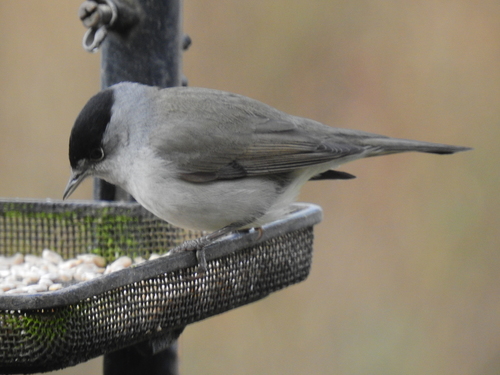 Eurasian Blackcap
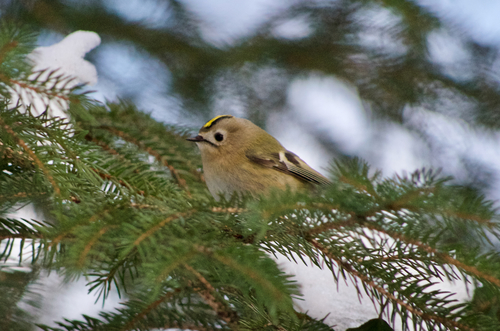 Goldcrest
In short
The most reliable field mark between Eurasian Blackcap and Goldcrest is the presence of a bold, colored crown patch on the Goldcrest (yellow with orange center in males, yellow in females), which is absent in Blackcap. Juvenile Goldcrests lack the colored crest but still show two white wingbars, while Blackcaps never show wingbars at any age. Blackcap males have a neat black cap, females and juveniles a rufous-brown cap, but never the bright, bordered crest of Goldcrest. Goldcrest is much smaller, more active, and shows a plain face with a tiny, thin bill, while Blackcap is larger, with a more robust warbler jizz and a plain, olive-grey appearance. In flight or perched, focus on the head pattern and wingbars for a quick separation.
Identification tips
- Head Pattern (All Ages): Goldcrest always shows a colored crest (yellow/orange in males, yellow in females) bordered by black, or a plain crown in juveniles. Blackcap has a neat black (male) or chestnut-brown (female/juvenile) cap on a plain grey head, never a crest or black border.
- Wingbars (All Ages): Goldcrest has two clear white wingbars on each wing, visible in all plumages and especially obvious in flight or when perched. Blackcap never shows wingbars at any age.
- Size and Structure: Goldcrest is much smaller (half the length and less than half the weight of Blackcap), with a tiny, fine bill and a compact, round body. Blackcap is a medium-sized warbler, with a longer tail and a more robust, elongated shape.
- Bill Shape: Goldcrest's bill is very short, thin, and needle-like, suited for picking insects from needles. Blackcap has a longer, stouter warbler bill.
- Face Pattern: Goldcrest has a plain face with black irises and no eyering or supercilium. Blackcap also has a plain face but is set off by the contrasting cap; never shows a crest or black-bordered crown.
- Tail: Goldcrest has a short, square tail, often flicked. Blackcap's tail is longer and darker, with olive edges.
- Upperparts: Both are olive-grey/greenish above, but Goldcrest is brighter and more yellowish-olive, while Blackcap is plainer olive-grey.
- Underparts: Goldcrest is buff-white below, Blackcap is pale grey to silvery white, but this is rarely diagnostic alone.
- Juvenile Confusion: Juvenile Goldcrest lacks the colored crest but still has wingbars; juvenile Blackcap has a brownish cap and no wingbars. If you see a plain-crowned, tiny bird with wingbars, it's a Goldcrest juvenile, not a Blackcap.
- Flight Style: Goldcrest is extremely active, with whirring, erratic flight and frequent hovering. Blackcap flies with slower, more direct wingbeats and is less likely to hover.
- Habitat Context: In dense conifers, especially spruce/fir, expect Goldcrest; in broadleaf scrub or hedgerows, Blackcap is more likely, though overlap occurs.
- Sex Differences: Only male Blackcap has a black cap; female/juvenile caps are chestnut-brown. Goldcrest males have an orange center to the crest, females all yellow. Both sexes of Goldcrest show wingbars and crest (except juveniles).
- No Wing Pattern in Blackcap: If you see any wingbars or panel, it's not a Blackcap.
- No Cap in Goldcrest: If you see a neat, solid cap (black or brown), it's a Blackcap, not a Goldcrest.
- Behavioral Clues: Goldcrest is almost always moving, rarely still for more than a second or two; Blackcap is more likely to perch quietly or move slowly through cover.
Size
Goldcrest is dramatically smaller than Eurasian Blackcap. Blackcap weighs about 18.1 g and is around 13 cm long, while Goldcrest is only 4.5–7.0 g and 8.5–9.5 cm long. Goldcrest is the smallest European bird, with a delicate, compact build and a noticeably shorter, finer bill. Blackcap appears as a medium-sized warbler, bulkier and longer-tailed compared to the tiny, round-bodied Goldcrest.
Plumage
- Juvenile/First-winter: Goldcrest juveniles lack the colored crest but still have two clear white wingbars and a plain face. Blackcap juveniles have a brownish cap and no wingbars; their underparts and upperparts are more olive, with a slight rufous tinge, but never show any wing pattern.
- Adult male Blackcap: Olive-grey upperparts, pale grey underparts, and a neat black cap. No wingbars or colored crest. Tail is dark grey with olive edges.
- Adult female Blackcap: Similar to male but with a chestnut-brown cap and slightly browner upperparts. No wingbars or crest.
- Adult Goldcrest: Olive-green upperparts, buff-white underparts, two prominent white wingbars, and a striking crown patch (yellow with orange center in males, yellow in females) bordered by black. Plain face, black irises, and a very small, thin black bill. Crest is raised in display, making the orange stripe of males obvious. No cap as in Blackcap.
- All ages: Goldcrest always shows two white wingbars and a plain face; Blackcap never has wingbars and always has a contrasting cap (black or brown) on an otherwise plain head.
Behaviour
Goldcrest is extremely active, often seen flitting restlessly among foliage, hovering, and creeping along branches and trunks. Its flight is a mix of whirring wingbeats and sudden changes of direction, with frequent hovering. Blackcap is more deliberate, often perching in dense cover, moving less frenetically, and showing typical warbler behavior such as tail flicking and short, flapping flights. Goldcrest's constant movement and tiny size make it appear almost insect-like compared to the more robust, slower-moving Blackcap.
Habitat
Both species are widespread, but Goldcrest is more closely associated with coniferous and mixed woodlands, especially spruce and fir, though it can occur in gardens and parks. Blackcap is a generalist, commonly found in broadleaf woodlands, scrub, hedgerows, and gardens. Overlap is possible in mixed habitats, but a dense conifer stand is more likely to host Goldcrest, while Blackcap prefers denser, leafy cover and is more often found in shrubby undergrowth.
Voice
No detailed vocalization notes are provided for either species in the sources. Both species have distinctive songs, but these are not described here and should not be relied on for separation based on the provided information.