

Eurasian Blackcap vs Garden Warbler
Sylvia atricapilla versus Sylvia borin
Play a quiz with Eurasian Blackcap and Garden Warbler
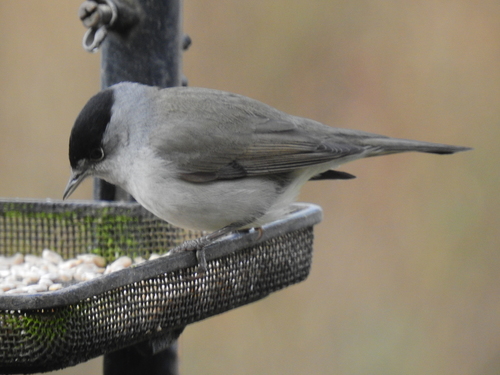 Eurasian Blackcap
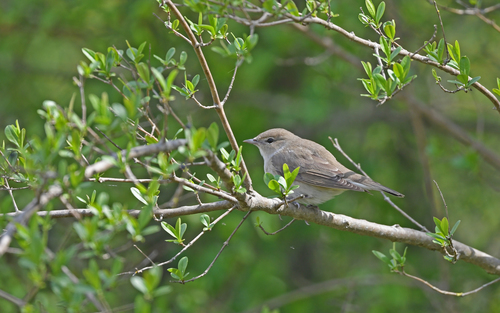 Garden Warbler
In short
The most reliable field mark for separating Eurasian Blackcap from Garden Warbler is the presence of a distinct cap: male Blackcaps have a black crown, females and juveniles a chestnut-brown cap, while Garden Warblers always lack any cap and appear plain-headed. Both species are similar in size and shape, but the Blackcap's contrasting head pattern and slightly greyer plumage stand out against the Garden Warbler's uniform, plain brown look. Juvenile and female Blackcaps can be confused with Garden Warblers, but the subtle cap is usually visible with careful observation. In all ages and seasons, the Garden Warbler is notably featureless and lacks any head markings, making it look more nondescript. Structure and behavior are similar, so focus on head pattern and overall color tone for reliable ID.
Identification tips
- Cap presence is key: Always look for a cap on the head. Blackcap males have a black cap, females and juveniles a chestnut-brown cap. Garden Warbler never shows any cap—its head is plain and uniform with the rest of the upperparts.
- Cap color and age: Juvenile Blackcaps (both sexes) have a brownish cap, with young males tending darker. Even in fresh juvenile plumage, the cap is visible if seen well.
- Uniformity of Garden Warbler: Garden Warbler is plain brown above and dull white below, with no head markings. Its face is featureless except for a faint eyering and sometimes a weak supercilium, which can be hard to see.
- Upperparts color: Blackcap is olive-grey above, especially in adults, while Garden Warbler is more olive-brown. This difference is subtle and best used in good light.
- Underparts: Blackcap's underparts are pale grey, becoming silvery white on chin, throat, and upper breast. Garden Warbler's underparts are dull white with a buff wash to throat and flanks.
- Tail and wing: Both species have longish tails and wings, but no distinctive wing or tail pattern is noted for either, so these are not reliable for separation.
- Bill and legs: Both have greyish bills and legs, though Garden Warbler's bill is described as strong and bicolored (grey above, paler below), and legs bluish-grey. These are subtle differences and not usually diagnostic at a distance.
- Eye color: Blackcap has a reddish-brown iris, while Garden Warbler's eye is black. This is rarely visible in the field.
- Sex differences: Only Blackcap shows sexual dimorphism in the cap; Garden Warbler sexes are identical.
- Juvenile confusion: Juvenile Blackcaps may look more olive and less contrasting, but the cap is still present. Juvenile Garden Warblers are even plainer than adults, with paler upperparts and buffier underparts, but still lack any cap.
- Song similarity: If relying on song, be cautious—both species sound similar, and song alone is not safe for separation unless you are very familiar with both.
- Habitat context: If in a true garden or urban park, Blackcap is more likely; Garden Warbler prefers wilder, denser woodland or scrub.
- Behavior: Both skulk in dense cover, but if you see a bird displaying by raising its crown feathers, it's likely a Blackcap male.
- When in doubt: If the bird is truly featureless and plain brown with no head markings, suspect Garden Warbler. If any suggestion of a cap, even faint, consider Blackcap.
- Season: Both species undergo moults at similar times; plumage wear is not a reliable separator. Focus on structural and head pattern differences year-round.
Size
Both species are very similar in size and mass, with the Eurasian Blackcap averaging about 18.1 g in body mass [wikidata], and the Garden Warbler typically ranging from 16–22 g. Blackcap is about 13 cm in length with a 7–8 cm wing, while Garden Warbler is slightly longer at 14 cm with a 7.6–8.4 cm wing. In the field, these differences are subtle and not usually diagnostic. Both are small, slim warblers with longish wings and tails.
Plumage
Juvenile and adult Blackcaps are best recognized by their distinct cap: black in adult males, chestnut-brown in females and juveniles (though young males may show a darker brown cap). This cap is always sharply defined and contrasts with the otherwise olive-grey upperparts and pale grey underparts. Juvenile Blackcaps may show a rufous tinge to the upperparts and more olive on the breast/flanks, but the cap remains a key feature. Garden Warblers, regardless of age or sex, are plain and lack any cap or head markings. Their upperparts are unstreaked olive-brown, underparts dull white with a buff wash to throat and flanks, and the face is uniformly plain with only a faint pale eyering and sometimes a weak supercilium. Juvenile Garden Warblers are even plainer, with paler, greyer upperparts and a buffier tone below, but still no cap. In all ages, the Garden Warbler's lack of head pattern and overall uniformity are distinctive when compared to any Blackcap.
Behaviour
Both species behave similarly, foraging in dense foliage and often remaining hidden. They are active, moving through shrubs and low trees, and both can be seen flitting between cover. Display behaviors are not typically diagnostic in the field. Blackcap males may occasionally raise their crown feathers in display, making the cap even more obvious.
Habitat
Both species breed in a wide range of woodland and scrubby habitats across Europe and western Asia. The Blackcap is common and widespread, as is the Garden Warbler, though the latter is less likely to be found in gardens despite its name. Both prefer areas with dense low cover for nesting. Habitat alone is not a reliable separator, but Garden Warbler is less likely in urban or garden settings compared to Blackcap.
Voice
Both species have rich, melodic songs that are quite similar and can be difficult to separate by ear, especially for beginners. The Blackcap's song is slightly more varied and flutey, while the Garden Warbler's is a continuous, bubbling warble. Calls are not described in detail in the provided notes, so voice is not a primary field mark for separation in this context.