

Motmot

Eurasian Bittern vs Least Bittern

Botaurus stellaris versus Botaurus exilis

Play a quiz with Eurasian Bittern and Least Bittern
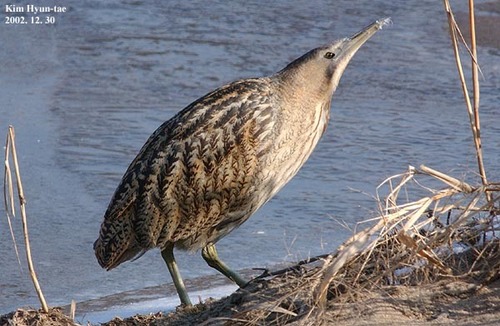
Eurasian Bittern (Botaurus stellaris) Eurasian Bittern
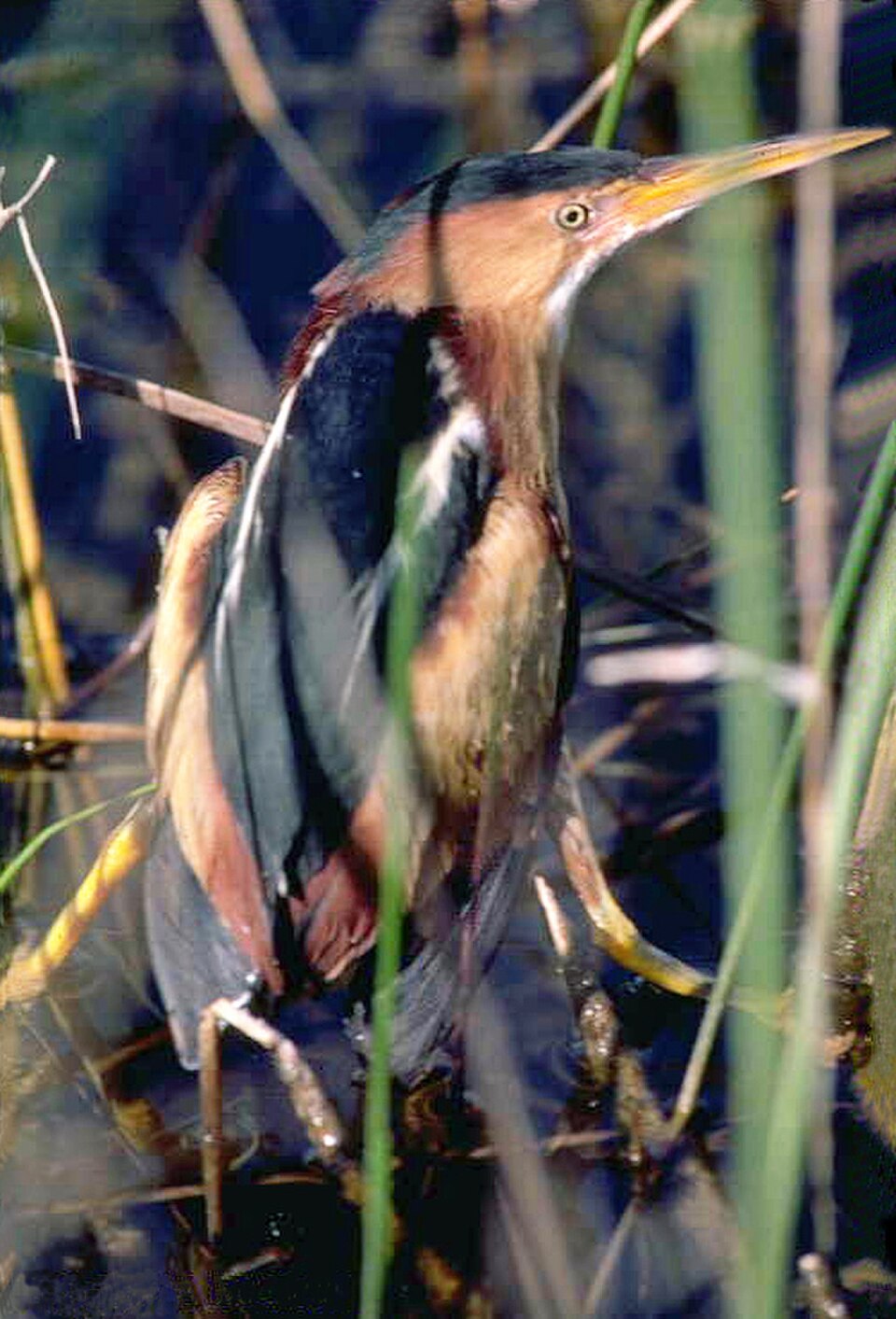
Least Bittern (Botaurus exilis) Least Bittern

Media

Loading…

In short

The most reliable way to separate Eurasian Bittern from Least Bittern is by size: Eurasian Bittern is a massive, thickset heron, while Least Bittern is tiny and slender, barely a thirtieth the mass. In flight or perched, Eurasian Bittern shows broad, rounded wings and a heavy, powerful build, whereas Least Bittern is dainty, with a much shorter wingspan and compact body. Plumage differences are also strong: Eurasian Bittern is boldly streaked and barred buff and black, while Least Bittern is clean white below with chestnut and dark upperparts, and males show a distinctive glossy greenish-black crown and back. Both species freeze with bill pointed upward when alarmed, but their proportions and coloration are unmistakable when seen well.

Identification tips

  1. Size is the single most decisive mark: Eurasian Bittern is a huge, heavy heron; Least Bittern is tiny, barely starling-sized. If you see both in the same marsh, the difference is unmistakable.
  2. Structure in flight: Eurasian Bittern shows broad, rounded wings and a thick, heavy body with trailing legs; Least Bittern is compact, with a much shorter wingspan and a daintier, more agile appearance.
  3. Perched jizz: Eurasian Bittern stands tall and thickset, with a long neck and heavy bill; Least Bittern is much more slender, often straddling reeds, and can compress its body to fit through narrow gaps.
  4. Crown and back color (adults): Eurasian Bittern has a black crown and nape, with a buffy supercilium; Least Bittern males have a glossy greenish-black crown and back, females glossy brown.
  5. Underparts: Eurasian Bittern is yellowish-buff with dense brown streaks and stripes; Least Bittern is white below with only light brown streaking.
  6. Wing pattern in flight: Eurasian Bittern's wings are pale rusty-brown, heavily barred and mottled with black; Least Bittern shows light brown wing coverts and darker flight feathers, with a much cleaner, less mottled look.
  7. Facial pattern: Eurasian Bittern has a strong brownish-black moustachial stripe and yellowish-buff supercilium; Least Bittern's face is plain light brown with yellow eyes and bill.
  8. Leg and bill color: Eurasian Bittern has greenish legs with yellow at the joints and a greenish-yellow bill; Least Bittern has yellow eyes and bill, and greenish legs.
  9. Juvenile confusion: Juvenile Eurasian Bitterns are paler but still streaked and barred; Least Bittern juveniles are not described here, but the size and structure difference remains decisive.
  10. Behavior when alarmed: Both freeze with bill up, but Eurasian Bittern's bulk and streaked plumage stand out, while Least Bittern is much smaller and cleaner below.
  11. Habitat context: If in the Americas, Eurasian Bittern is extremely unlikely; in Europe/Asia/Africa, Least Bittern does not occur.
  12. Flight frequency: Eurasian Bittern is reluctant to fly and prefers to walk; Least Bittern is more agile and often perches above water.
  13. Plumage texture: Eurasian Bittern has loose, elongated feathers on crown, neck, and breast that can be erected; Least Bittern lacks such pronounced feathering.
  14. Shoulder lines: Least Bittern has white lines on the shoulders (adults), absent in Eurasian Bittern.
  15. If only a brief glimpse: Use size and underpart color first; a large, streaky, buff-and-black bird is Eurasian Bittern, a tiny, white-bellied, chestnut-and-black bird is Least Bittern.

Size

Eurasian Bittern is enormous compared to Least Bittern: body mass averages about 2460 g for Eurasian Bittern versus only 80 g for Least Bittern [wikidata]. In length, Eurasian Bittern reaches 69–81 cm (27–32 in) with a wingspan of 100–130 cm (40–50 in), while Least Bittern is just 28–36 cm (11–14 in) long with a 41–46 cm (16–18 in) wingspan [wikipedia]. Even at a distance, Eurasian Bittern appears as a large, thickset heron, while Least Bittern is sparrow-sized and much more delicate.

Plumage

No age-specific upperwing pattern is described for either species, but overall coloration is highly diagnostic. Eurasian Bittern (all ages) is buffy-brown, densely streaked and barred with black, with a black crown and nape, yellowish-buff supercilium, and brownish-black moustachial stripe. The wings are pale rusty-brown with irregular black barring and mottling; juveniles are paler with less distinct markings but still streaked and barred. Least Bittern (adult male) has a glossy greenish-black crown and back, white underparts with light brown streaks, and conspicuous white shoulder lines; females are similar but with glossy brown (not black) upperparts. In flight, Least Bittern shows light brown wing coverts contrasting with darker flight feathers. The underparts of Least Bittern are much cleaner and whiter than the heavily streaked and barred Eurasian Bittern. Juvenile Least Bitterns are not described in detail here, but the adult contrast is strong enough for reliable separation.

Behaviour

Both species are secretive and freeze with bill pointed upward when alarmed, blending into reeds. Eurasian Bittern is usually solitary, moves slowly and deliberately, and prefers to walk or clamber through dense reedbeds, rarely flying except when necessary. Least Bittern is also elusive but spends much time straddling reeds, and can compress its body to fit through very narrow spaces. Least Bittern often perches among reeds above water too deep for wading, while Eurasian Bittern is more likely to be seen walking at water's edge or hidden in thick vegetation. Both are most active at dawn and dusk.

Habitat

Both species inhabit large marshes with dense vegetation, but their ranges do not overlap: Eurasian Bittern is found in the Old World (Europe, Asia, Africa), while Least Bittern is restricted to the Americas. Eurasian Bittern prefers extensive reedbeds and is rarely seen away from cover, sometimes venturing to the water's edge in winter. Least Bittern nests in marshes with cattails, rushes, or saw grass, and is more likely to perch among reeds above deeper water. Both require dense emergent vegetation for nesting and foraging.

Submit a better description

Use the same sections as the comparison. Your text is published immediately.

The most reliable way to separate Eurasian Bittern from Least Bittern is by size: Eurasian Bittern is a massive, thickset heron, while Least Bittern is tiny and slender, barely a thirtieth the mass. In flight or perched, Eurasian Bittern shows broad, rounded wings and a heavy, powerful build, whereas Least Bittern is dainty, with a much shorter wingspan and compact body. Plumage differences are also strong: Eurasian Bittern is boldly streaked and barred buff and black, while Least Bittern is clean white below with chestnut and dark upperparts, and males show a distinctive glossy greenish-black crown and back. Both species freeze with bill pointed upward when alarmed, but their proportions and coloration are unmistakable when seen well.

  1. Size is the single most decisive mark: Eurasian Bittern is a huge, heavy heron; Least Bittern is tiny, barely starling-sized. If you see both in the same marsh, the difference is unmistakable.
  2. Structure in flight: Eurasian Bittern shows broad, rounded wings and a thick, heavy body with trailing legs; Least Bittern is compact, with a much shorter wingspan and a daintier, more agile appearance.
  3. Perched jizz: Eurasian Bittern stands tall and thickset, with a long neck and heavy bill; Least Bittern is much more slender, often straddling reeds, and can compress its body to fit through narrow gaps.
  4. Crown and back color (adults): Eurasian Bittern has a black crown and nape, with a buffy supercilium; Least Bittern males have a glossy greenish-black crown and back, females glossy brown.
  5. Underparts: Eurasian Bittern is yellowish-buff with dense brown streaks and stripes; Least Bittern is white below with only light brown streaking.
  6. Wing pattern in flight: Eurasian Bittern's wings are pale rusty-brown, heavily barred and mottled with black; Least Bittern shows light brown wing coverts and darker flight feathers, with a much cleaner, less mottled look.
  7. Facial pattern: Eurasian Bittern has a strong brownish-black moustachial stripe and yellowish-buff supercilium; Least Bittern's face is plain light brown with yellow eyes and bill.
  8. Leg and bill color: Eurasian Bittern has greenish legs with yellow at the joints and a greenish-yellow bill; Least Bittern has yellow eyes and bill, and greenish legs.
  9. Juvenile confusion: Juvenile Eurasian Bitterns are paler but still streaked and barred; Least Bittern juveniles are not described here, but the size and structure difference remains decisive.
  10. Behavior when alarmed: Both freeze with bill up, but Eurasian Bittern's bulk and streaked plumage stand out, while Least Bittern is much smaller and cleaner below.
  11. Habitat context: If in the Americas, Eurasian Bittern is extremely unlikely; in Europe/Asia/Africa, Least Bittern does not occur.
  12. Flight frequency: Eurasian Bittern is reluctant to fly and prefers to walk; Least Bittern is more agile and often perches above water.
  13. Plumage texture: Eurasian Bittern has loose, elongated feathers on crown, neck, and breast that can be erected; Least Bittern lacks such pronounced feathering.
  14. Shoulder lines: Least Bittern has white lines on the shoulders (adults), absent in Eurasian Bittern.
  15. If only a brief glimpse: Use size and underpart color first; a large, streaky, buff-and-black bird is Eurasian Bittern, a tiny, white-bellied, chestnut-and-black bird is Least Bittern.

Eurasian Bittern is enormous compared to Least Bittern: body mass averages about 2460 g for Eurasian Bittern versus only 80 g for Least Bittern [wikidata]. In length, Eurasian Bittern reaches 69–81 cm (27–32 in) with a wingspan of 100–130 cm (40–50 in), while Least Bittern is just 28–36 cm (11–14 in) long with a 41–46 cm (16–18 in) wingspan [wikipedia]. Even at a distance, Eurasian Bittern appears as a large, thickset heron, while Least Bittern is sparrow-sized and much more delicate.

No age-specific upperwing pattern is described for either species, but overall coloration is highly diagnostic. Eurasian Bittern (all ages) is buffy-brown, densely streaked and barred with black, with a black crown and nape, yellowish-buff supercilium, and brownish-black moustachial stripe. The wings are pale rusty-brown with irregular black barring and mottling; juveniles are paler with less distinct markings but still streaked and barred. Least Bittern (adult male) has a glossy greenish-black crown and back, white underparts with light brown streaks, and conspicuous white shoulder lines; females are similar but with glossy brown (not black) upperparts. In flight, Least Bittern shows light brown wing coverts contrasting with darker flight feathers. The underparts of Least Bittern are much cleaner and whiter than the heavily streaked and barred Eurasian Bittern. Juvenile Least Bitterns are not described in detail here, but the adult contrast is strong enough for reliable separation.

Both species are secretive and freeze with bill pointed upward when alarmed, blending into reeds. Eurasian Bittern is usually solitary, moves slowly and deliberately, and prefers to walk or clamber through dense reedbeds, rarely flying except when necessary. Least Bittern is also elusive but spends much time straddling reeds, and can compress its body to fit through very narrow spaces. Least Bittern often perches among reeds above water too deep for wading, while Eurasian Bittern is more likely to be seen walking at water's edge or hidden in thick vegetation. Both are most active at dawn and dusk.

Both species inhabit large marshes with dense vegetation, but their ranges do not overlap: Eurasian Bittern is found in the Old World (Europe, Asia, Africa), while Least Bittern is restricted to the Americas. Eurasian Bittern prefers extensive reedbeds and is rarely seen away from cover, sometimes venturing to the water's edge in winter. Least Bittern nests in marshes with cattails, rushes, or saw grass, and is more likely to perch among reeds above deeper water. Both require dense emergent vegetation for nesting and foraging.

Discard your changes?

You have unsaved edits. If you leave now, those changes will be lost.

Eurasian Bittern · Least Bittern · My Tricky Birds