

Motmot

Egyptian Vulture vs Griffon Vulture

Neophron percnopterus versus Gyps fulvus

Play a quiz with Egyptian Vulture and Griffon Vulture
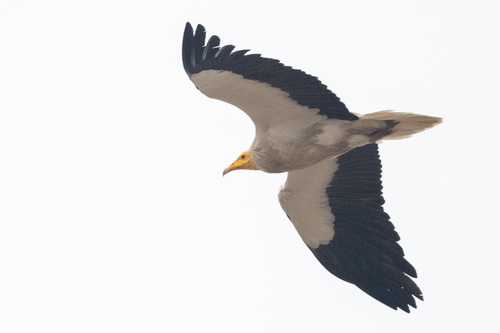
Egyptian Vulture (Neophron percnopterus) Egyptian Vulture
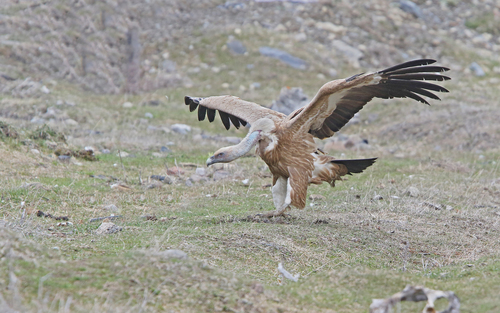
Griffon Vulture (Gyps fulvus) Griffon Vulture

Media

Loading…

In short

The most reliable field mark between Egyptian Vulture and Griffon Vulture is their striking difference in size and flight silhouette: Griffon Vulture is a massive, heavy-bodied bird with broad wings and a short, squared tail, while Egyptian Vulture is much smaller, with pointed wings and a distinctive wedge-shaped tail. In flight, adult Egyptian Vultures show a sharp contrast between white coverts and black flight feathers, whereas Griffon Vultures display buffy body and wing coverts against dark flight feathers, but lack the clean white-and-black contrast. Juvenile Egyptian Vultures are dark brown and can be confused with other dark raptors, but Griffon Vulture juveniles are always much larger and bulkier. Structural features like bill shape and tail outline are also key for separation, especially at a distance or in mixed-age flocks.

Identification tips

  1. Size is the first and most obvious clue: Griffon Vulture is four times heavier than Egyptian Vulture and appears gigantic in any direct comparison. If you see both together, the difference is unmistakable.
  2. Flight silhouette: Griffon Vulture has broad, rectangular wings with 'fingers' and a short, squared tail; Egyptian Vulture has narrower, pointed wings and a long, wedge-shaped tail that is often fanned in flight.
  3. Underwing pattern (adults): Egyptian Vulture adults show a bold contrast between white underwing coverts and black flight feathers, creating a sharp two-tone effect. Griffon Vulture has pale buff coverts and dark flight feathers, but the contrast is muted and never white.
  4. Juvenile confusion: Juvenile Egyptian Vultures are dark brown or blackish and lack the white-and-black contrast, but are still much smaller and slimmer than any Griffon Vulture. Juvenile Griffon Vultures are large, dark brown, and very bulky.
  5. Tail shape: Egyptian Vulture's tail is wedge-shaped and often appears long and pointed, especially in flight. Griffon Vulture's tail is short and squared off.
  6. Bill shape and color: Egyptian Vulture has a slender, long bill with a hooked tip, and the facial skin is yellow and bare. Griffon Vulture has a much heavier, yellow bill and a feathered head with a white ruff at the base of the neck.
  7. Head and neck: Egyptian Vulture has a small, bare yellow face and a thin neck with long hackles. Griffon Vulture has a large, pale, downy head and a conspicuous white neck ruff.
  8. Leg color: Adult Egyptian Vultures have pink legs; juveniles have grey legs. Griffon Vulture's leg color is not a major field mark.
  9. Soiled plumage: Wild Egyptian Vultures often look rusty or brownish due to soil staining, but retain the white-and-black pattern. Griffon Vultures never appear white overall.
  10. Perched posture: Griffon Vulture is massive and hunches with a thick neck and broad chest. Egyptian Vulture is much more slender and upright.
  11. Behavior at carcasses: Griffon Vultures dominate and feed in large groups; Egyptian Vultures are more peripheral and may arrive later or feed on scraps.
  12. Habitat context: Egyptian Vultures are more likely near villages, farmland, or rubbish dumps; Griffon Vultures prefer remote mountains and open country.
  13. Flight behavior: Griffon Vultures soar slowly and steadily, often in large kettles. Egyptian Vultures are more agile, with quicker wingbeats and more erratic gliding.
  14. Sex and age confusion: Both species are sexually monomorphic in plumage, but Egyptian Vulture males may have deeper orange facial skin in breeding season. This is subtle and not a primary field mark.
  15. Bill color variation: Some Egyptian Vultures (especially in India) have a paler or yellowish bill, but this is not a reliable separation from Griffon Vulture, which always has a heavy yellow bill.

Size

Griffon Vulture is dramatically larger, with an average body mass of 8328 g compared to just 1977 g for Egyptian Vulture [wikidata]. In the field, Griffon Vulture appears huge, with a wingspan often exceeding 2.5 m, broad wings, and a heavy, barrel-chested body. Egyptian Vulture is noticeably smaller, slimmer, and lighter in flight, with a much narrower wingspan and a more agile, buoyant flight style. When perched, Griffon Vulture towers over Egyptian Vulture, with a thick neck and massive bill, while Egyptian Vulture looks slight and almost crow-sized by comparison.

Plumage

Juvenile and immature Egyptian Vultures are dark brown or blackish with scattered pale patches, lacking the white-and-black contrast of adults; they can resemble other dark raptors but are always much smaller than any Griffon Vulture. Adult Egyptian Vultures are white overall with black flight feathers, but often appear stained rusty or brownish due to soil, especially in wild birds. Their underwing in flight is strikingly white with sharply contrasting black primaries and secondaries, and the wedge-shaped tail is obvious. Griffon Vultures, both adult and juvenile, have a buffy or pale brown body and wing coverts, with dark flight feathers but never the clean white-and-black contrast. Their head and neck are pale and covered in down, with a distinctive white neck ruff in adults. The tail is short and squared, not wedge-shaped. Bill color is yellow in Griffon Vulture, black or yellowish in Egyptian Vulture depending on subspecies and age. Juvenile Griffon Vultures are generally darker and browner overall, but still much larger and bulkier than any Egyptian Vulture.

Behaviour

Both species soar on thermals, but their flight styles differ: Griffon Vulture is ponderous, with slow, deep wingbeats and long, steady glides, often soaring at great heights in large groups. Egyptian Vulture is more agile and buoyant, with quicker, more flexible wingbeats and a lighter, less laborious flight. On the ground, Griffon Vulture dominates carcasses and is often seen in large flocks, while Egyptian Vulture is more solitary or in pairs, often foraging at the edges of gatherings or on smaller scraps. Egyptian Vulture may be seen walking or running on the ground, and is known for using tools to break eggs, a behavior not seen in Griffon Vulture.

Habitat

Both species are found in open country, cliffs, and mountainous regions, but Griffon Vulture prefers higher mountains and vast open landscapes, often far from human habitation. Egyptian Vulture is more tolerant of human presence and can be found near villages, agricultural land, and even rubbish dumps. In areas where both occur, Griffon Vulture is usually seen soaring higher and in larger numbers, while Egyptian Vulture is more likely to be spotted at lower elevations or near settlements.

Submit a better description

Use the same sections as the comparison. Your text is published immediately.

The most reliable field mark between Egyptian Vulture and Griffon Vulture is their striking difference in size and flight silhouette: Griffon Vulture is a massive, heavy-bodied bird with broad wings and a short, squared tail, while Egyptian Vulture is much smaller, with pointed wings and a distinctive wedge-shaped tail. In flight, adult Egyptian Vultures show a sharp contrast between white coverts and black flight feathers, whereas Griffon Vultures display buffy body and wing coverts against dark flight feathers, but lack the clean white-and-black contrast. Juvenile Egyptian Vultures are dark brown and can be confused with other dark raptors, but Griffon Vulture juveniles are always much larger and bulkier. Structural features like bill shape and tail outline are also key for separation, especially at a distance or in mixed-age flocks.

  1. Size is the first and most obvious clue: Griffon Vulture is four times heavier than Egyptian Vulture and appears gigantic in any direct comparison. If you see both together, the difference is unmistakable.
  2. Flight silhouette: Griffon Vulture has broad, rectangular wings with 'fingers' and a short, squared tail; Egyptian Vulture has narrower, pointed wings and a long, wedge-shaped tail that is often fanned in flight.
  3. Underwing pattern (adults): Egyptian Vulture adults show a bold contrast between white underwing coverts and black flight feathers, creating a sharp two-tone effect. Griffon Vulture has pale buff coverts and dark flight feathers, but the contrast is muted and never white.
  4. Juvenile confusion: Juvenile Egyptian Vultures are dark brown or blackish and lack the white-and-black contrast, but are still much smaller and slimmer than any Griffon Vulture. Juvenile Griffon Vultures are large, dark brown, and very bulky.
  5. Tail shape: Egyptian Vulture's tail is wedge-shaped and often appears long and pointed, especially in flight. Griffon Vulture's tail is short and squared off.
  6. Bill shape and color: Egyptian Vulture has a slender, long bill with a hooked tip, and the facial skin is yellow and bare. Griffon Vulture has a much heavier, yellow bill and a feathered head with a white ruff at the base of the neck.
  7. Head and neck: Egyptian Vulture has a small, bare yellow face and a thin neck with long hackles. Griffon Vulture has a large, pale, downy head and a conspicuous white neck ruff.
  8. Leg color: Adult Egyptian Vultures have pink legs; juveniles have grey legs. Griffon Vulture's leg color is not a major field mark.
  9. Soiled plumage: Wild Egyptian Vultures often look rusty or brownish due to soil staining, but retain the white-and-black pattern. Griffon Vultures never appear white overall.
  10. Perched posture: Griffon Vulture is massive and hunches with a thick neck and broad chest. Egyptian Vulture is much more slender and upright.
  11. Behavior at carcasses: Griffon Vultures dominate and feed in large groups; Egyptian Vultures are more peripheral and may arrive later or feed on scraps.
  12. Habitat context: Egyptian Vultures are more likely near villages, farmland, or rubbish dumps; Griffon Vultures prefer remote mountains and open country.
  13. Flight behavior: Griffon Vultures soar slowly and steadily, often in large kettles. Egyptian Vultures are more agile, with quicker wingbeats and more erratic gliding.
  14. Sex and age confusion: Both species are sexually monomorphic in plumage, but Egyptian Vulture males may have deeper orange facial skin in breeding season. This is subtle and not a primary field mark.
  15. Bill color variation: Some Egyptian Vultures (especially in India) have a paler or yellowish bill, but this is not a reliable separation from Griffon Vulture, which always has a heavy yellow bill.

Griffon Vulture is dramatically larger, with an average body mass of 8328 g compared to just 1977 g for Egyptian Vulture [wikidata]. In the field, Griffon Vulture appears huge, with a wingspan often exceeding 2.5 m, broad wings, and a heavy, barrel-chested body. Egyptian Vulture is noticeably smaller, slimmer, and lighter in flight, with a much narrower wingspan and a more agile, buoyant flight style. When perched, Griffon Vulture towers over Egyptian Vulture, with a thick neck and massive bill, while Egyptian Vulture looks slight and almost crow-sized by comparison.

Juvenile and immature Egyptian Vultures are dark brown or blackish with scattered pale patches, lacking the white-and-black contrast of adults; they can resemble other dark raptors but are always much smaller than any Griffon Vulture. Adult Egyptian Vultures are white overall with black flight feathers, but often appear stained rusty or brownish due to soil, especially in wild birds. Their underwing in flight is strikingly white with sharply contrasting black primaries and secondaries, and the wedge-shaped tail is obvious. Griffon Vultures, both adult and juvenile, have a buffy or pale brown body and wing coverts, with dark flight feathers but never the clean white-and-black contrast. Their head and neck are pale and covered in down, with a distinctive white neck ruff in adults. The tail is short and squared, not wedge-shaped. Bill color is yellow in Griffon Vulture, black or yellowish in Egyptian Vulture depending on subspecies and age. Juvenile Griffon Vultures are generally darker and browner overall, but still much larger and bulkier than any Egyptian Vulture.

Both species soar on thermals, but their flight styles differ: Griffon Vulture is ponderous, with slow, deep wingbeats and long, steady glides, often soaring at great heights in large groups. Egyptian Vulture is more agile and buoyant, with quicker, more flexible wingbeats and a lighter, less laborious flight. On the ground, Griffon Vulture dominates carcasses and is often seen in large flocks, while Egyptian Vulture is more solitary or in pairs, often foraging at the edges of gatherings or on smaller scraps. Egyptian Vulture may be seen walking or running on the ground, and is known for using tools to break eggs, a behavior not seen in Griffon Vulture.

Both species are found in open country, cliffs, and mountainous regions, but Griffon Vulture prefers higher mountains and vast open landscapes, often far from human habitation. Egyptian Vulture is more tolerant of human presence and can be found near villages, agricultural land, and even rubbish dumps. In areas where both occur, Griffon Vulture is usually seen soaring higher and in larger numbers, while Egyptian Vulture is more likely to be spotted at lower elevations or near settlements.

Discard your changes?

You have unsaved edits. If you leave now, those changes will be lost.

Egyptian Vulture · Griffon Vulture · My Tricky Birds