

Motmot

エジプトハゲワシ 対 シロエリハゲワシ

Neophron percnopterus 対 Gyps fulvus

エジプトハゲワシとシロエリハゲワシのクイズ
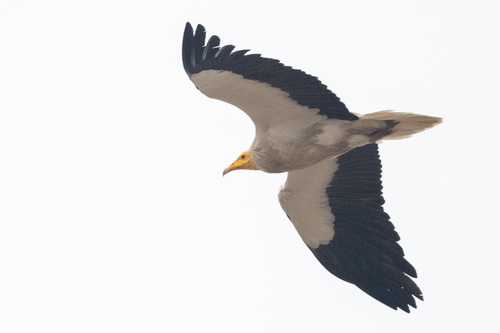
エジプトハゲワシ (Neophron percnopterus) エジプトハゲワシ
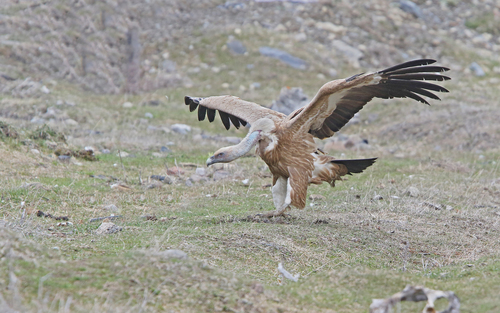
シロエリハゲワシ (Gyps fulvus) シロエリハゲワシ

メディア

読み込み中…

要点

エジプトハゲワシとシロエリハゲワシの最も信頼できるフィールドマークは、サイズと飛行シルエットの際立った違いです:シロエリハゲワシは、広い翼と短く四角い尾を持つ巨大で重い体の鳥ですが、エジプトハゲワシはずっと小さく、尖った翼と特徴的なくさび形の尾を持っています。飛行中、成鳥のエジプトハゲワシは白い覆羽と黒い飛行羽の間に鋭いコントラストを示しますが、シロエリハゲワシは暗い飛行羽に対して淡い体と翼の覆羽を示し、クリーンな白と黒のコントラストはありません。幼鳥のエジプトハゲワシは暗褐色で、他の暗い猛禽類と混同されることがありますが、シロエリハゲワシの幼鳥は常にずっと大きくてがっしりしています。くちばしの形や尾の輪郭などの構造的特徴も、特に距離がある場合や混成年齢の群れの中での識別に重要です。

識別のコツ

  1. Size is the first and most obvious clue: シロエリハゲワシはエジプトハゲワシの4倍の重さがあり、直接比較すると巨大に見えます。両方を一緒に見ると、その違いは明らかです。
  2. Flight silhouette: シロエリハゲワシは「指」を持つ広く長方形の翼と短く四角い尾を持ち、エジプトハゲワシは狭く尖った翼と、飛行中によく扇状になる長くくさび形の尾を持っています。
  3. Underwing pattern (adults): エジプトハゲワシの成鳥は、白い下翼覆羽と黒い飛行羽の間に大胆なコントラストを示し、鋭い二色効果を生み出します。シロエリハゲワシは淡い覆羽と暗い飛行羽を持っていますが、コントラストは控えめで、決して白ではありません。
  4. Juvenile confusion: 幼鳥のエジプトハゲワシは暗褐色または黒っぽく、白と黒のコントラストがありませんが、シロエリハゲワシよりもずっと小さくてスリムです。幼鳥のシロエリハゲワシは大きく、暗褐色で非常にがっしりしています。
  5. Tail shape: エジプトハゲワシの尾はくさび形で、特に飛行中は長く尖って見えることがよくあります。シロエリハゲワシの尾は短く四角いです。
  6. Bill shape and color: エジプトハゲワシはフック状の先端を持つ細長いくちばしを持ち、顔の皮膚は黄色で裸です。シロエリハゲワシはずっと重い黄色のくちばしを持ち、首の基部に白い襟羽がある羽毛の頭を持っています。
  7. Head and neck: エジプトハゲワシは小さく裸の黄色い顔と長いハックルを持つ細い首を持っています。シロエリハゲワシは大きく淡い羽毛の頭と目立つ白い首の襟羽を持っています。
  8. Leg color: 成鳥のエジプトハゲワシはピンクの脚を持ち、幼鳥は灰色の脚を持っています。シロエリハゲワシの脚の色は主要なフィールドマークではありません。
  9. Soiled plumage: 野生のエジプトハゲワシは土汚れのためにしばしばさび色または褐色に見えますが、白と黒のパターンは保持します。シロエリハゲワシは全体的に白に見えることはありません。
  10. Perched posture: シロエリハゲワシは巨大で、太い首と広い胸を持ってうずくまります。エジプトハゲワシはずっとスリムで直立しています。
  11. Behavior at carcasses: シロエリハゲワシは大きな群れで支配し、餌を食べますが、エジプトハゲワシはより周辺的で、後から到着したり、残り物を食べることがあります。
  12. Habitat context: エジプトハゲワシは村、農地、またはゴミ捨て場の近くにいることが多いですが、シロエリハゲワシは遠くの山や開けた国を好みます。
  13. Flight behavior: シロエリハゲワシはゆっくりと安定して上昇し、大きな群れでよく見られます。エジプトハゲワシはより機敏で、翼の拍動が速く、より不規則に滑空します。
  14. Sex and age confusion: 両種は羽毛において性別が同じですが、エジプトハゲワシのオスは繁殖期に顔の皮膚がより深いオレンジ色になることがあります。これは微妙で、主要なフィールドマークではありません。
  15. Bill color variation: 一部のエジプトハゲワシ(特にインドのもの)は、より淡いまたは黄色がかったくちばしを持っていますが、これは常に重い黄色のくちばしを持つシロエリハゲワシとの信頼できる識別にはなりません。

大きさ

シロエリハゲワシは劇的に大きく、平均体重は8328gで、エジプトハゲワシの1977gと比較されます [wikidata]。フィールドでは、シロエリハゲワシは巨大に見え、翼幅はしばしば2.5mを超え、広い翼と重いバレル型の体を持っています。エジプトハゲワシは明らかに小さく、スリムで、飛行中はずっと軽やかで、翼幅もずっと狭く、より機敏で浮遊感のある飛行スタイルを持っています。止まっているとき、シロエリハゲワシはエジプトハゲワシの上にそびえ立ち、太い首と巨大なくちばしを持ち、エジプトハゲワシは比較すると細く、ほぼカラスのサイズに見えます。

羽色

幼鳥と未熟なエジプトハゲワシは暗褐色または黒っぽく、散発的に淡い斑点があり、成鳥の白と黒のコントラストが欠けています;他の暗い猛禽類に似ることがありますが、常にシロエリハゲワシよりもずっと小さいです。成鳥のエジプトハゲワシは全体的に白で、黒い飛行羽を持っていますが、土のためにしばしばさび色または褐色に見えます、特に野生の鳥では。飛行中の下翼は非常に白く、黒い一次羽と二次羽との間に鋭いコントラストがあり、くさび形の尾が目立ちます。シロエリハゲワシは、成鳥と幼鳥の両方が淡いまたは薄い褐色の体と翼の覆羽を持ち、暗い飛行羽を持っていますが、決してクリーンな白と黒のコントラストはありません。彼らの頭と首は淡く、羽毛で覆われており、成鳥には特徴的な白い首の襟羽があります。尾は短く四角く、くさび形ではありません。シロエリハゲワシのくちばしの色は黄色で、エジプトハゲワシは亜種や年齢によって黒または黄色がかった色を持っています。幼鳥のシロエリハゲワシは全体的に一般的に暗く、褐色ですが、エジプトハゲワシよりもずっと大きくてがっしりしています。

行動

両種は熱上昇気流で滑空しますが、飛行スタイルは異なります:シロエリハゲワシは重々しく、遅く深い翼拍動と長く安定した滑空を持ち、大きな群れで高いところを滑空することがよくあります。エジプトハゲワシはより機敏で浮遊感があり、より速く柔軟な翼拍動と軽やかで労力の少ない飛行を持っています。地上では、シロエリハゲワシは死骸を支配し、大きな群れで見られることが多いですが、エジプトハゲワシはより孤独またはペアで、集まりの端や小さな残り物を探すことがよくあります。エジプトハゲワシは地面を歩いたり走ったりしているのが見られることがあり、卵を割るために道具を使うことで知られていますが、この行動はシロエリハゲワシでは見られません。

生息環境

両種は開けた国、崖、山岳地域に見られますが、シロエリハゲワシはより高い山や広大な開けた風景を好み、人間の居住地から遠く離れた場所にしばしば見られます。エジプトハゲワシは人間の存在に対してより寛容で、村、農地、さらにはゴミ捨て場の近くに見られることがあります。両方が生息する地域では、シロエリハゲワシは通常、より高いところで、より多くの数で滑空しているのが見られ、エジプトハゲワシはより低い標高や集落の近くで見られる可能性が高いです。

より良い説明を送る

比較と同じ項目を使ってください。文章はすぐに公開されます。

The most reliable field mark between Egyptian Vulture and Griffon Vulture is their striking difference in size and flight silhouette: Griffon Vulture is a massive, heavy-bodied bird with broad wings and a short, squared tail, while Egyptian Vulture is much smaller, with pointed wings and a distinctive wedge-shaped tail. In flight, adult Egyptian Vultures show a sharp contrast between white coverts and black flight feathers, whereas Griffon Vultures display buffy body and wing coverts against dark flight feathers, but lack the clean white-and-black contrast. Juvenile Egyptian Vultures are dark brown and can be confused with other dark raptors, but Griffon Vulture juveniles are always much larger and bulkier. Structural features like bill shape and tail outline are also key for separation, especially at a distance or in mixed-age flocks.

  1. Size is the first and most obvious clue: Griffon Vulture is four times heavier than Egyptian Vulture and appears gigantic in any direct comparison. If you see both together, the difference is unmistakable.
  2. Flight silhouette: Griffon Vulture has broad, rectangular wings with 'fingers' and a short, squared tail; Egyptian Vulture has narrower, pointed wings and a long, wedge-shaped tail that is often fanned in flight.
  3. Underwing pattern (adults): Egyptian Vulture adults show a bold contrast between white underwing coverts and black flight feathers, creating a sharp two-tone effect. Griffon Vulture has pale buff coverts and dark flight feathers, but the contrast is muted and never white.
  4. Juvenile confusion: Juvenile Egyptian Vultures are dark brown or blackish and lack the white-and-black contrast, but are still much smaller and slimmer than any Griffon Vulture. Juvenile Griffon Vultures are large, dark brown, and very bulky.
  5. Tail shape: Egyptian Vulture's tail is wedge-shaped and often appears long and pointed, especially in flight. Griffon Vulture's tail is short and squared off.
  6. Bill shape and color: Egyptian Vulture has a slender, long bill with a hooked tip, and the facial skin is yellow and bare. Griffon Vulture has a much heavier, yellow bill and a feathered head with a white ruff at the base of the neck.
  7. Head and neck: Egyptian Vulture has a small, bare yellow face and a thin neck with long hackles. Griffon Vulture has a large, pale, downy head and a conspicuous white neck ruff.
  8. Leg color: Adult Egyptian Vultures have pink legs; juveniles have grey legs. Griffon Vulture's leg color is not a major field mark.
  9. Soiled plumage: Wild Egyptian Vultures often look rusty or brownish due to soil staining, but retain the white-and-black pattern. Griffon Vultures never appear white overall.
  10. Perched posture: Griffon Vulture is massive and hunches with a thick neck and broad chest. Egyptian Vulture is much more slender and upright.
  11. Behavior at carcasses: Griffon Vultures dominate and feed in large groups; Egyptian Vultures are more peripheral and may arrive later or feed on scraps.
  12. Habitat context: Egyptian Vultures are more likely near villages, farmland, or rubbish dumps; Griffon Vultures prefer remote mountains and open country.
  13. Flight behavior: Griffon Vultures soar slowly and steadily, often in large kettles. Egyptian Vultures are more agile, with quicker wingbeats and more erratic gliding.
  14. Sex and age confusion: Both species are sexually monomorphic in plumage, but Egyptian Vulture males may have deeper orange facial skin in breeding season. This is subtle and not a primary field mark.
  15. Bill color variation: Some Egyptian Vultures (especially in India) have a paler or yellowish bill, but this is not a reliable separation from Griffon Vulture, which always has a heavy yellow bill.

Griffon Vulture is dramatically larger, with an average body mass of 8328 g compared to just 1977 g for Egyptian Vulture [wikidata]. In the field, Griffon Vulture appears huge, with a wingspan often exceeding 2.5 m, broad wings, and a heavy, barrel-chested body. Egyptian Vulture is noticeably smaller, slimmer, and lighter in flight, with a much narrower wingspan and a more agile, buoyant flight style. When perched, Griffon Vulture towers over Egyptian Vulture, with a thick neck and massive bill, while Egyptian Vulture looks slight and almost crow-sized by comparison.

Juvenile and immature Egyptian Vultures are dark brown or blackish with scattered pale patches, lacking the white-and-black contrast of adults; they can resemble other dark raptors but are always much smaller than any Griffon Vulture. Adult Egyptian Vultures are white overall with black flight feathers, but often appear stained rusty or brownish due to soil, especially in wild birds. Their underwing in flight is strikingly white with sharply contrasting black primaries and secondaries, and the wedge-shaped tail is obvious. Griffon Vultures, both adult and juvenile, have a buffy or pale brown body and wing coverts, with dark flight feathers but never the clean white-and-black contrast. Their head and neck are pale and covered in down, with a distinctive white neck ruff in adults. The tail is short and squared, not wedge-shaped. Bill color is yellow in Griffon Vulture, black or yellowish in Egyptian Vulture depending on subspecies and age. Juvenile Griffon Vultures are generally darker and browner overall, but still much larger and bulkier than any Egyptian Vulture.

Both species soar on thermals, but their flight styles differ: Griffon Vulture is ponderous, with slow, deep wingbeats and long, steady glides, often soaring at great heights in large groups. Egyptian Vulture is more agile and buoyant, with quicker, more flexible wingbeats and a lighter, less laborious flight. On the ground, Griffon Vulture dominates carcasses and is often seen in large flocks, while Egyptian Vulture is more solitary or in pairs, often foraging at the edges of gatherings or on smaller scraps. Egyptian Vulture may be seen walking or running on the ground, and is known for using tools to break eggs, a behavior not seen in Griffon Vulture.

Both species are found in open country, cliffs, and mountainous regions, but Griffon Vulture prefers higher mountains and vast open landscapes, often far from human habitation. Egyptian Vulture is more tolerant of human presence and can be found near villages, agricultural land, and even rubbish dumps. In areas where both occur, Griffon Vulture is usually seen soaring higher and in larger numbers, while Egyptian Vulture is more likely to be spotted at lower elevations or near settlements.

変更を破棄しますか?

保存していない編集があります。今離れると失われます。

エジプトハゲワシ · シロエリハゲワシ · 苦手な鳥