
Motmot

Eastern Olivaceous Warbler vs Marsh Warbler

Iduna pallida versus Acrocephalus palustris

Play a quiz with Eastern Olivaceous Warbler and Marsh Warbler
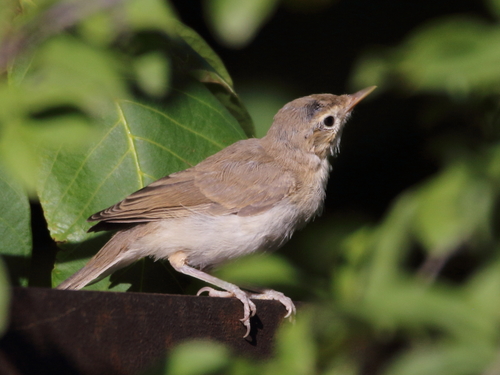
Eastern Olivaceous Warbler (Iduna pallida) Eastern Olivaceous Warbler
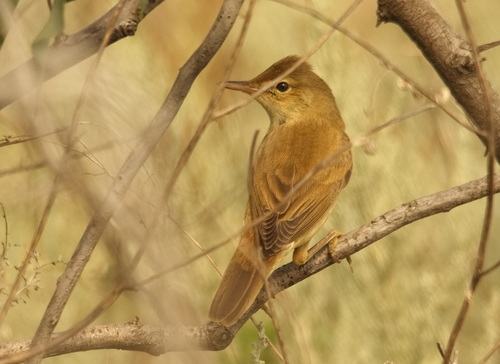
Marsh Warbler (Acrocephalus palustris) Marsh Warbler

Media

Loading…

In short

The most reliable field mark between Eastern Olivaceous Warbler and Marsh Warbler is structure: Eastern Olivaceous Warbler has a noticeably stronger, longer, and more pointed bill, while Marsh Warbler's bill is finer and more delicate. In the field, Eastern Olivaceous Warbler appears plainer and paler overall, with a pale brown back and whitish underparts, while Marsh Warbler is subtly warmer-toned above and lacks the strong contrast. Juvenile Eastern Olivaceous Warblers show a buffier belly, but both species are fairly plain in all ages. Marsh Warbler's song is highly imitative of other birds, which is unique among warblers in the region and a clincher if heard. Habitat can help: Eastern Olivaceous Warbler prefers drier scrub and open woodland, while Marsh Warbler is tied to lush, tall herbaceous vegetation in damper sites.

Identification tips

  1. Bill shape and strength: Eastern Olivaceous Warbler has a noticeably longer, stronger, and more pointed bill than Marsh Warbler. Look for this especially on perched birds; Marsh Warbler's bill is finer and more delicate.
  2. Tail movement: Eastern Olivaceous Warbler frequently flicks its tail downward in a characteristic way, which Marsh Warbler does not do. Watch for this behavior when the bird is active or foraging.
  3. Overall coloration: Eastern Olivaceous Warbler is plainer, with a pale brown back and whitish underparts. Marsh Warbler is subtly warmer or more olive-brown above, with less contrast between upper- and underparts.
  4. Juvenile plumage: Young Eastern Olivaceous Warblers show a buffier belly, but this is subtle and not always reliable. Both species are relatively plain in juvenile plumage.
  5. Greenish tinge: Eastern Olivaceous Warbler can sometimes show a faint greenish wash to the upperparts, especially in fresh plumage. Marsh Warbler never shows greenish or greyish tones.
  6. Wing pattern: Neither species shows strong wing bars or panels; both are plain-winged, so do not rely on upperwing pattern for separation.
  7. Leg color: Eastern Olivaceous Warbler has grey legs, but this is not always easy to see in the field and is not a strong separator.
  8. Song: Marsh Warbler's song is a long, varied, and highly imitative sequence, often mimicking many other bird species. If you hear a warbler mimicking other birds, it is Marsh Warbler. Eastern Olivaceous Warbler's song is a fast, nasal babble without mimicry.
  9. Habitat: In breeding season, Eastern Olivaceous Warbler is found in dry scrub, open woodland, and sometimes cultivated areas. Marsh Warbler is tied to lush, tall herbaceous vegetation in damp or seasonally flooded sites. Use habitat as a supporting clue, especially in the breeding range.
  10. Posture and jizz: Eastern Olivaceous Warbler may appear longer and more slender, with a more upright stance. Marsh Warbler is more compact and often sits lower in vegetation.
  11. Location and range: Eastern Olivaceous Warbler breeds further southeast (southeastern Europe, Middle East, western Asia), while Marsh Warbler is more widespread in temperate Europe and western Asia. Overlap is possible in migration, so do not rely solely on range.
  12. Perched vs. in flight: Both species are best identified when perched; flight views are challenging due to lack of distinctive wing pattern. Focus on structure and behavior if flight views are all you have.
  13. Sex differences: Both species are sexually monomorphic; do not attempt to separate by sex.
  14. Hybridization: Marsh Warbler can hybridize with Reed Warbler and Blyth's Reed Warbler, but not with Eastern Olivaceous Warbler. If a bird shows intermediate features with those species, consider hybrid possibilities, but not between these two.
  15. Pitfalls: Both species are plain and can be confused with other acrocephaline warblers. Always use a combination of structure, behavior, song, and habitat for reliable identification.

Size

Both species are medium-sized warblers and are similar in overall length and mass, so size alone is not a reliable separator in the field. If anything, Eastern Olivaceous Warbler may appear slightly more slender and longer-billed, but this is subtle and easily masked by posture or viewing angle. Use structure, not size, for separation.

Plumage

No distinctive age-specific upperwing or flight patterns are described for either species, so focus is on overall coloration and subtle differences. Adult Eastern Olivaceous Warbler is plain pale brown above and whitish below, with a strong, pointed bill and grey legs; juveniles are similar but with a buffier belly. Marsh Warbler is also plain, but upperparts are subtly warmer or more olive-brown, and underparts are less starkly white. Both sexes are alike in both species. Eastern Olivaceous Warbler may show a faint greenish tinge above, but this is variable and not always visible. Marsh Warbler lacks any greenish or grey tones and never shows a strong contrast between upper- and underparts. Both species lack strong wing bars or obvious markings, making separation by plumage alone difficult, especially in worn or immature birds.

Behaviour

Eastern Olivaceous Warbler often flicks its tail downward in a distinctive manner, which can be a useful behavioral clue if seen well. Marsh Warbler does not show this tail-flicking behavior. Both species are active and move through vegetation, but Marsh Warbler is more likely to be seen in dense, tall herbs or low woody plants, while Eastern Olivaceous Warbler prefers more open, drier scrub. Marsh Warbler males sing from exposed perches during the breeding season, often in the middle of lush vegetation.

Habitat

Habitat is a helpful context clue. Eastern Olivaceous Warbler breeds in southeastern Europe, the Middle East, and adjacent western Asia, favoring dry scrub, open woodland, and sometimes cultivated areas. Marsh Warbler breeds in temperate Europe and western Asia, almost always in rank, damp vegetation—tall herbs, nettles, meadowsweet, and young willows—often near water or on seasonally flooded soils. Marsh Warbler can also occur in urban brownfields with suitable vegetation, but is rarely found in dry, open habitats favored by Eastern Olivaceous Warbler. In migration and winter, both can be found in a wider range of habitats, but these preferences are most useful in the breeding season.

Voice

Vocalizations are a key separator. Marsh Warbler males produce a remarkable, highly imitative song, incorporating phrases from dozens of other bird species (often 75+), with a mix of African and European birds. This mimicry is unique among warblers in the region and is a clincher if heard. Eastern Olivaceous Warbler's song is a fast, nasal babbling, lacking mimicry and much less varied. Females of both species are quieter, but Marsh Warbler females may give a simple, non-imitative song. Calls are less distinctive, but the song is diagnostic when heard.

Submit a better description

Use the same sections as the comparison. Your text is published immediately.

The most reliable field mark between Eastern Olivaceous Warbler and Marsh Warbler is structure: Eastern Olivaceous Warbler has a noticeably stronger, longer, and more pointed bill, while Marsh Warbler's bill is finer and more delicate. In the field, Eastern Olivaceous Warbler appears plainer and paler overall, with a pale brown back and whitish underparts, while Marsh Warbler is subtly warmer-toned above and lacks the strong contrast. Juvenile Eastern Olivaceous Warblers show a buffier belly, but both species are fairly plain in all ages. Marsh Warbler's song is highly imitative of other birds, which is unique among warblers in the region and a clincher if heard. Habitat can help: Eastern Olivaceous Warbler prefers drier scrub and open woodland, while Marsh Warbler is tied to lush, tall herbaceous vegetation in damper sites.

  1. Bill shape and strength: Eastern Olivaceous Warbler has a noticeably longer, stronger, and more pointed bill than Marsh Warbler. Look for this especially on perched birds; Marsh Warbler's bill is finer and more delicate.
  2. Tail movement: Eastern Olivaceous Warbler frequently flicks its tail downward in a characteristic way, which Marsh Warbler does not do. Watch for this behavior when the bird is active or foraging.
  3. Overall coloration: Eastern Olivaceous Warbler is plainer, with a pale brown back and whitish underparts. Marsh Warbler is subtly warmer or more olive-brown above, with less contrast between upper- and underparts.
  4. Juvenile plumage: Young Eastern Olivaceous Warblers show a buffier belly, but this is subtle and not always reliable. Both species are relatively plain in juvenile plumage.
  5. Greenish tinge: Eastern Olivaceous Warbler can sometimes show a faint greenish wash to the upperparts, especially in fresh plumage. Marsh Warbler never shows greenish or greyish tones.
  6. Wing pattern: Neither species shows strong wing bars or panels; both are plain-winged, so do not rely on upperwing pattern for separation.
  7. Leg color: Eastern Olivaceous Warbler has grey legs, but this is not always easy to see in the field and is not a strong separator.
  8. Song: Marsh Warbler's song is a long, varied, and highly imitative sequence, often mimicking many other bird species. If you hear a warbler mimicking other birds, it is Marsh Warbler. Eastern Olivaceous Warbler's song is a fast, nasal babble without mimicry.
  9. Habitat: In breeding season, Eastern Olivaceous Warbler is found in dry scrub, open woodland, and sometimes cultivated areas. Marsh Warbler is tied to lush, tall herbaceous vegetation in damp or seasonally flooded sites. Use habitat as a supporting clue, especially in the breeding range.
  10. Posture and jizz: Eastern Olivaceous Warbler may appear longer and more slender, with a more upright stance. Marsh Warbler is more compact and often sits lower in vegetation.
  11. Location and range: Eastern Olivaceous Warbler breeds further southeast (southeastern Europe, Middle East, western Asia), while Marsh Warbler is more widespread in temperate Europe and western Asia. Overlap is possible in migration, so do not rely solely on range.
  12. Perched vs. in flight: Both species are best identified when perched; flight views are challenging due to lack of distinctive wing pattern. Focus on structure and behavior if flight views are all you have.
  13. Sex differences: Both species are sexually monomorphic; do not attempt to separate by sex.
  14. Hybridization: Marsh Warbler can hybridize with Reed Warbler and Blyth's Reed Warbler, but not with Eastern Olivaceous Warbler. If a bird shows intermediate features with those species, consider hybrid possibilities, but not between these two.
  15. Pitfalls: Both species are plain and can be confused with other acrocephaline warblers. Always use a combination of structure, behavior, song, and habitat for reliable identification.

Both species are medium-sized warblers and are similar in overall length and mass, so size alone is not a reliable separator in the field. If anything, Eastern Olivaceous Warbler may appear slightly more slender and longer-billed, but this is subtle and easily masked by posture or viewing angle. Use structure, not size, for separation.

No distinctive age-specific upperwing or flight patterns are described for either species, so focus is on overall coloration and subtle differences. Adult Eastern Olivaceous Warbler is plain pale brown above and whitish below, with a strong, pointed bill and grey legs; juveniles are similar but with a buffier belly. Marsh Warbler is also plain, but upperparts are subtly warmer or more olive-brown, and underparts are less starkly white. Both sexes are alike in both species. Eastern Olivaceous Warbler may show a faint greenish tinge above, but this is variable and not always visible. Marsh Warbler lacks any greenish or grey tones and never shows a strong contrast between upper- and underparts. Both species lack strong wing bars or obvious markings, making separation by plumage alone difficult, especially in worn or immature birds.

Eastern Olivaceous Warbler often flicks its tail downward in a distinctive manner, which can be a useful behavioral clue if seen well. Marsh Warbler does not show this tail-flicking behavior. Both species are active and move through vegetation, but Marsh Warbler is more likely to be seen in dense, tall herbs or low woody plants, while Eastern Olivaceous Warbler prefers more open, drier scrub. Marsh Warbler males sing from exposed perches during the breeding season, often in the middle of lush vegetation.

Habitat is a helpful context clue. Eastern Olivaceous Warbler breeds in southeastern Europe, the Middle East, and adjacent western Asia, favoring dry scrub, open woodland, and sometimes cultivated areas. Marsh Warbler breeds in temperate Europe and western Asia, almost always in rank, damp vegetation—tall herbs, nettles, meadowsweet, and young willows—often near water or on seasonally flooded soils. Marsh Warbler can also occur in urban brownfields with suitable vegetation, but is rarely found in dry, open habitats favored by Eastern Olivaceous Warbler. In migration and winter, both can be found in a wider range of habitats, but these preferences are most useful in the breeding season.

Vocalizations are a key separator. Marsh Warbler males produce a remarkable, highly imitative song, incorporating phrases from dozens of other bird species (often 75+), with a mix of African and European birds. This mimicry is unique among warblers in the region and is a clincher if heard. Eastern Olivaceous Warbler's song is a fast, nasal babbling, lacking mimicry and much less varied. Females of both species are quieter, but Marsh Warbler females may give a simple, non-imitative song. Calls are less distinctive, but the song is diagnostic when heard.

Discard your changes?

You have unsaved edits. If you leave now, those changes will be lost.

Eastern Olivaceous Warbler · Marsh Warbler · My Tricky Birds