
Motmot

Dunlin vs Little Stint

Calidris alpina versus Calidris minuta

Play a quiz with Dunlin and Little Stint
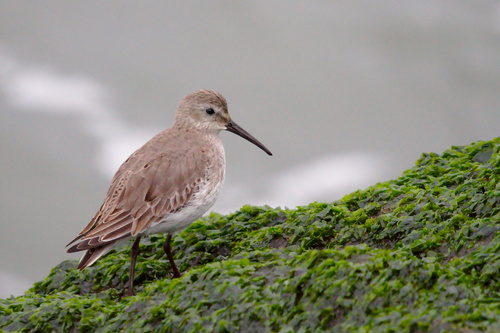
Dunlin (Calidris alpina) Dunlin
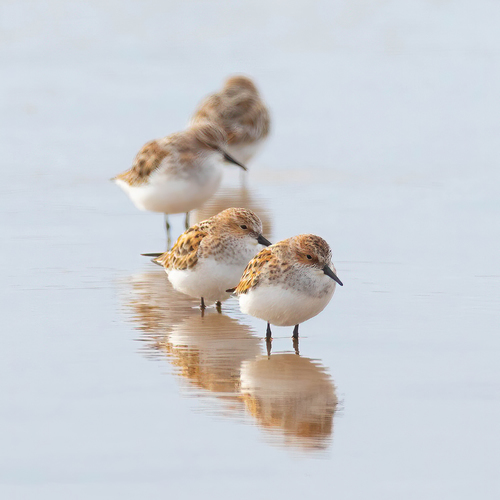
Little Stint (Calidris minuta) Little Stint

Media

Loading…

In short

The most reliable field mark between Dunlin and Little Stint is the Dunlin's distinctive black belly patch in breeding plumage, which Little Stint never shows. For juveniles and non-breeding birds, focus on structure: Dunlin is noticeably larger and heavier-bodied, with a longer, thicker, and slightly decurved bill, while Little Stint is tiny, daintier, and has a fine, straight bill and longer primary projection. In flight, both show a narrow white wingbar, but juvenile Little Stint has a strong white 'V' on the back, which is much less obvious and weaker in Dunlin juveniles. Both species can form mixed flocks, especially on migration and in winter, so careful attention to size and bill shape is crucial when plumage is ambiguous.

Identification tips

  1. Breeding plumage adults: Dunlin always shows a bold black belly patch; Little Stint never does. This is the single most reliable mark in spring and early summer.
  2. Juvenile/first-autumn birds: Look for the strong white 'V' on the back of Little Stint, which is much less obvious in Dunlin. Also, check for pale crown stripes (Little Stint) and black marks on the flanks or belly (Dunlin).
  3. Bill shape: Dunlin has a longer, thicker, and slightly decurved bill, especially obvious in females; Little Stint's bill is fine, straight, and needle-like. This is useful at all ages and seasons.
  4. Primary projection: Little Stint shows a long primary projection beyond the tertials, making the wings look long and pointed at rest. Dunlin's primaries project less, giving a blunter wingtip.
  5. Size and structure: Dunlin is much larger, bulkier, and stouter, with a rounder body and thicker neck. Little Stint is tiny, slim, and delicate, with a shorter neck and more compact appearance.
  6. Feeding action: Dunlin feeds with a steady, methodical 'sewing machine' motion; Little Stint is quicker and more darting.
  7. Leg color: Both have dark legs, so this is not helpful for separation.
  8. Wingbar in flight: Both species show a narrow white wingbar, so do not rely on this feature.
  9. Winter plumage: Both become drab and grey-brown above and white below, making separation more difficult. Structural differences (size, bill, primary projection) become more important.
  10. Mixed flocks: When both species are present, compare directly. Little Stint will always be the smallest, most delicate bird in the group.
  11. Voice: Dunlin's call is a 'chreep', Little Stint's a sharp 'stit', but these are not always easy to distinguish in the field.
  12. Pitfalls: Beware of juvenile Dunlin with faint whitish 'V' shapes on the back—these are never as bold as in Little Stint. Also, female Dunlin can have a longer bill, overlapping with some stints, but always thicker and more decurved.
  13. Context: Both species are highly gregarious and often found together, especially outside the breeding season. Use multiple features for confident identification.
  14. Sex differences: Only Dunlin shows significant sexual dimorphism in bill length, with females having longer bills; this does not apply to Little Stint.
  15. Hybrid confusion: Rare hybrids exist but are exceptional; focus on the main field marks above for nearly all field encounters.

Size

Dunlin is substantially larger and bulkier than Little Stint. Dunlin measures 16–20 cm in length with a wingspan of 38–43 cm and a weight range of 34–77 g, while Little Stint is much smaller, with an average adult mass of 25.55 g [wikidata]. In the field, Dunlin appears stouter and more robust, often compared to a starling in size, whereas Little Stint is noticeably petite and delicate. This size difference is often apparent in mixed flocks, where Dunlin stands out as the larger bird.

Plumage

Juvenile and first-autumn birds are best separated by upperpart and back pattern. Juvenile Little Stint shows a strong white 'V' on the mantle and back, along with pale crown stripes and a pinkish breast; this 'V' is much more pronounced than the weak, often broken whitish 'V' seen on juvenile Dunlin. Dunlin juveniles also tend to show black marks on the flanks or belly, which are not present in Little Stint. In breeding plumage, adult Dunlin is unmistakable with its black belly patch, while Little Stint has an orange wash to the breast and a white throat, lacking any black on the belly. In winter, both species become drabber: Dunlin turns grey-brown above and white below, while Little Stint also loses most color, making separation more challenging. Both species show a narrow white wingbar in flight, so this is not a useful separator. Bill and leg color are similar (both dark), but the bill shape differs: Dunlin's is longer and decurved, Little Stint's is fine and straight.

Behaviour

Dunlin often feeds with a 'sewing machine' action, methodically picking at the substrate, and is highly gregarious, forming large swirling flocks, especially on migration and in winter. Little Stint is also gregarious and often mixes with Dunlin, but moves more quickly and nimbly, with a lighter, more energetic feeding style. In mixed flocks, Little Stints are often seen darting around the feet of Dunlin, emphasizing their smaller size and more frenetic movement.

Habitat

Both species use similar habitats on migration and in winter, frequenting coastal mudflats, sandy beaches, and the edges of inland pools. Little Stint breeds in arctic tundra near wetlands, while Dunlin has a broader breeding range but also favors wet, open ground. In the non-breeding season, both can be found together in large flocks, especially in Eurasia and Africa. Habitat alone is not diagnostic when both are present.

Voice

Dunlin gives a typical sandpiper 'chreep' call and a harsh trilling display song. Little Stint's call is a sharp 'stit'. These calls are subtly different but can be difficult to separate without experience; both are high-pitched and easily lost in mixed flocks. Vocalization is rarely diagnostic unless heard well and in isolation.

Submit a better description

Use the same sections as the comparison. Your text is published immediately.

The most reliable field mark between Dunlin and Little Stint is the Dunlin's distinctive black belly patch in breeding plumage, which Little Stint never shows. For juveniles and non-breeding birds, focus on structure: Dunlin is noticeably larger and heavier-bodied, with a longer, thicker, and slightly decurved bill, while Little Stint is tiny, daintier, and has a fine, straight bill and longer primary projection. In flight, both show a narrow white wingbar, but juvenile Little Stint has a strong white 'V' on the back, which is much less obvious and weaker in Dunlin juveniles. Both species can form mixed flocks, especially on migration and in winter, so careful attention to size and bill shape is crucial when plumage is ambiguous.

  1. Breeding plumage adults: Dunlin always shows a bold black belly patch; Little Stint never does. This is the single most reliable mark in spring and early summer.
  2. Juvenile/first-autumn birds: Look for the strong white 'V' on the back of Little Stint, which is much less obvious in Dunlin. Also, check for pale crown stripes (Little Stint) and black marks on the flanks or belly (Dunlin).
  3. Bill shape: Dunlin has a longer, thicker, and slightly decurved bill, especially obvious in females; Little Stint's bill is fine, straight, and needle-like. This is useful at all ages and seasons.
  4. Primary projection: Little Stint shows a long primary projection beyond the tertials, making the wings look long and pointed at rest. Dunlin's primaries project less, giving a blunter wingtip.
  5. Size and structure: Dunlin is much larger, bulkier, and stouter, with a rounder body and thicker neck. Little Stint is tiny, slim, and delicate, with a shorter neck and more compact appearance.
  6. Feeding action: Dunlin feeds with a steady, methodical 'sewing machine' motion; Little Stint is quicker and more darting.
  7. Leg color: Both have dark legs, so this is not helpful for separation.
  8. Wingbar in flight: Both species show a narrow white wingbar, so do not rely on this feature.
  9. Winter plumage: Both become drab and grey-brown above and white below, making separation more difficult. Structural differences (size, bill, primary projection) become more important.
  10. Mixed flocks: When both species are present, compare directly. Little Stint will always be the smallest, most delicate bird in the group.
  11. Voice: Dunlin's call is a 'chreep', Little Stint's a sharp 'stit', but these are not always easy to distinguish in the field.
  12. Pitfalls: Beware of juvenile Dunlin with faint whitish 'V' shapes on the back—these are never as bold as in Little Stint. Also, female Dunlin can have a longer bill, overlapping with some stints, but always thicker and more decurved.
  13. Context: Both species are highly gregarious and often found together, especially outside the breeding season. Use multiple features for confident identification.
  14. Sex differences: Only Dunlin shows significant sexual dimorphism in bill length, with females having longer bills; this does not apply to Little Stint.
  15. Hybrid confusion: Rare hybrids exist but are exceptional; focus on the main field marks above for nearly all field encounters.

Dunlin is substantially larger and bulkier than Little Stint. Dunlin measures 16–20 cm in length with a wingspan of 38–43 cm and a weight range of 34–77 g, while Little Stint is much smaller, with an average adult mass of 25.55 g [wikidata]. In the field, Dunlin appears stouter and more robust, often compared to a starling in size, whereas Little Stint is noticeably petite and delicate. This size difference is often apparent in mixed flocks, where Dunlin stands out as the larger bird.

Juvenile and first-autumn birds are best separated by upperpart and back pattern. Juvenile Little Stint shows a strong white 'V' on the mantle and back, along with pale crown stripes and a pinkish breast; this 'V' is much more pronounced than the weak, often broken whitish 'V' seen on juvenile Dunlin. Dunlin juveniles also tend to show black marks on the flanks or belly, which are not present in Little Stint. In breeding plumage, adult Dunlin is unmistakable with its black belly patch, while Little Stint has an orange wash to the breast and a white throat, lacking any black on the belly. In winter, both species become drabber: Dunlin turns grey-brown above and white below, while Little Stint also loses most color, making separation more challenging. Both species show a narrow white wingbar in flight, so this is not a useful separator. Bill and leg color are similar (both dark), but the bill shape differs: Dunlin's is longer and decurved, Little Stint's is fine and straight.

Dunlin often feeds with a 'sewing machine' action, methodically picking at the substrate, and is highly gregarious, forming large swirling flocks, especially on migration and in winter. Little Stint is also gregarious and often mixes with Dunlin, but moves more quickly and nimbly, with a lighter, more energetic feeding style. In mixed flocks, Little Stints are often seen darting around the feet of Dunlin, emphasizing their smaller size and more frenetic movement.

Both species use similar habitats on migration and in winter, frequenting coastal mudflats, sandy beaches, and the edges of inland pools. Little Stint breeds in arctic tundra near wetlands, while Dunlin has a broader breeding range but also favors wet, open ground. In the non-breeding season, both can be found together in large flocks, especially in Eurasia and Africa. Habitat alone is not diagnostic when both are present.

Dunlin gives a typical sandpiper 'chreep' call and a harsh trilling display song. Little Stint's call is a sharp 'stit'. These calls are subtly different but can be difficult to separate without experience; both are high-pitched and easily lost in mixed flocks. Vocalization is rarely diagnostic unless heard well and in isolation.

Discard your changes?

You have unsaved edits. If you leave now, those changes will be lost.

Dunlin · Little Stint · My Tricky Birds