

Bonte strandloper vs Kleine strandloper
Calidris alpina versus Calidris minuta
Speel een quiz met Bonte strandloper en Kleine strandloper
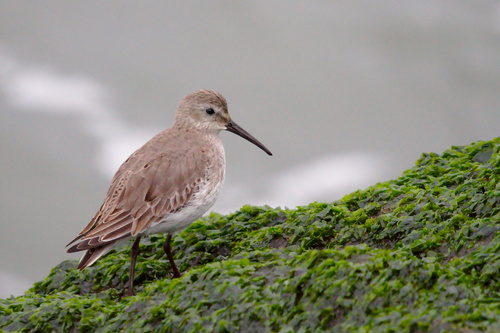 Bonte strandloper
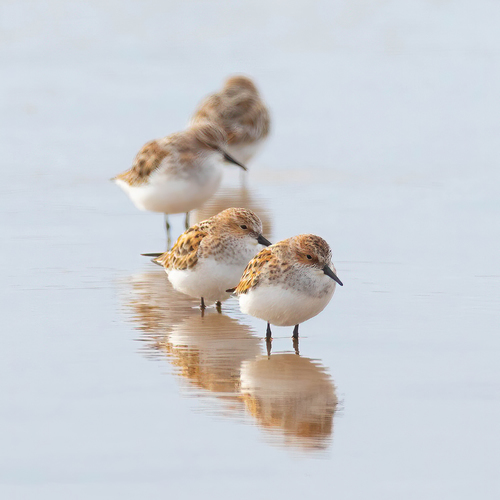 Kleine strandloper
Kort gezegd
Het meest betrouwbare veldkenmerk tussen Bonte strandloper en Kleine strandloper is het kenmerkende zwarte buikvlekje van de Bonte strandloper in broedkleed, dat de Kleine strandloper nooit vertoont. Voor juvenielen en niet-broedende vogels, richt je op de structuur: Bonte strandloper is merkbaar groter en zwaarder, met een langere, dikkere en iets gebogen snavel, terwijl de Kleine strandloper klein, verfijnd is en een fijne, rechte snavel en langere primaire projectie heeft. In de vlucht tonen beide een smalle witte vleugelstreep, maar de juvenile Kleine strandloper heeft een sterke witte 'V' op de rug, die veel minder opvallend en zwakker is bij juvenile Bonte strandlopers. Beide soorten kunnen gemengde groepen vormen, vooral tijdens de migratie en in de winter, dus aandacht voor grootte en snavelvorm is cruciaal wanneer het verenkleed ambigu is.
Herkenningstips
- Broedkleed volwassenen: Bonte strandloper toont altijd een gedurfde zwarte buikvlek; Kleine strandloper doet dit nooit. Dit is het enige meest betrouwbare kenmerk in de lente en het vroege zomer.
- Juveniele/eerste-herfst vogels: Let op de sterke witte 'V' op de rug van de Kleine strandloper, die veel minder opvallend is bij de Bonte strandloper. Controleer ook op lichte kroonstrepen (Kleine strandloper) en zwarte vlekken op de flanken of buik (Bonte strandloper).
- Snavelvorm: Bonte strandloper heeft een langere, dikkere en iets gebogen snavel, vooral duidelijk bij vrouwtjes; de snavel van de Kleine strandloper is fijn, recht en naaldachtig. Dit is nuttig in alle leeftijden en seizoenen.
- Primaire projectie: Kleine strandloper toont een lange primaire projectie voorbij de tertials, waardoor de vleugels lang en puntig lijken in rust. De primairen van de Bonte strandloper steken minder uit, wat een stompere vleugelpunt geeft.
- Grootte en structuur: Bonte strandloper is veel groter, robuuster en steviger, met een ronder lichaam en dikkere nek. Kleine strandloper is klein, slank en delicaat, met een kortere nek en een compactere uitstraling.
- Voedingsactie: Bonte strandloper voedt met een constante, methodische 'naaimachine'-beweging; Kleine strandloper is sneller en beweeglijker.
- Pootkleur: Beide hebben donkere poten, dus dit is niet nuttig voor scheiding.
- Vleugelstreep in vlucht: Beide soorten tonen een smalle witte vleugelstreep, dus vertrouw niet op deze eigenschap.
- Winterkleed: Beide worden saai en grijsbruin boven en wit onder, waardoor scheiding moeilijker wordt. Structurele verschillen (grootte, snavel, primaire projectie) worden belangrijker.
- Gemengde groepen: Wanneer beide soorten aanwezig zijn, vergelijk dan direct. Kleine strandloper zal altijd de kleinste, meest delicate vogel in de groep zijn.
- Stem: De roep van de Bonte strandloper is een 'chreep', die van de Kleine strandloper een scherpe 'stit', maar deze zijn niet altijd gemakkelijk te onderscheiden in het veld.
- Valkuilen: Pas op voor juvenile Bonte strandlopers met vage witachtige 'V'-vormen op de rug—deze zijn nooit zo gedurfd als bij de Kleine strandloper. Ook kunnen vrouwelijke Bonte strandlopers een langere snavel hebben, die overlapt met sommige strandlopers, maar altijd dikker en meer gebogen.
- Context: Beide soorten zijn zeer sociaal en vaak samen te vinden, vooral buiten het broedseizoen. Gebruik meerdere kenmerken voor een zekere identificatie.
- Geslachtsverschillen: Alleen de Bonte strandloper vertoont significante seksuele dimorfie in snavel lengte, waarbij vrouwtjes langere snavels hebben; dit geldt niet voor de Kleine strandloper.
- Hybride verwarring: Zeldzame hybriden bestaan, maar zijn uitzonderlijk; richt je op de belangrijkste veldkenmerken hierboven voor bijna alle veldontmoetingen.
Grootte
Bonte strandloper is aanzienlijk groter en robuuster dan Kleine strandloper. Bonte strandloper meet 16–20 cm in lengte met een spanwijdte van 38–43 cm en een gewicht van 34–77 g, terwijl de Kleine strandloper veel kleiner is, met een gemiddelde volwassen massa van 25,55 g [wikidata]. In het veld lijkt de Bonte strandloper steviger en robuuster, vaak vergeleken met een spreeuw in grootte, terwijl de Kleine strandloper merkbaar klein en delicaat is. Dit grootteverschil is vaak duidelijk in gemengde groepen, waar de Bonte strandloper opvalt als de grotere vogel.
Verenkleed
Juveniele en eerste-herfst vogels worden het beste gescheiden op basis van het patroon van de bovenkant en rug. Juveniele Kleine strandloper toont een sterke witte 'V' op de mantel en rug, samen met lichte kroonstrepen en een roze borst; deze 'V' is veel meer uitgesproken dan de zwakke, vaak gebroken witachtige 'V' die te zien is bij juvenile Bonte strandlopers. Juveniele Bonte strandlopers vertonen ook vaak zwarte vlekken op de flanken of buik, die niet aanwezig zijn bij de Kleine strandloper. In broedkleed is de volwassen Bonte strandloper onmiskenbaar met zijn zwarte buikvlek, terwijl de Kleine strandloper een oranje was op de borst en een witte keel heeft, zonder zwart op de buik. In de winter worden beide soorten saaier: de Bonte strandloper wordt grijsbruin boven en wit onder, terwijl de Kleine strandloper ook het meeste kleur verliest, waardoor scheiding moeilijker wordt. Beide soorten tonen een smalle witte vleugelstreep in de vlucht, dus dit is geen nuttige scheider. Snavel- en pootkleur zijn vergelijkbaar (beide donker), maar de snavelvorm verschilt: die van de Bonte strandloper is langer en gebogen, die van de Kleine strandloper is fijn en recht.
Gedrag
Bonte strandloper voedt vaak met een 'naaimachine'-actie, methodisch pickend op het substraat, en is zeer sociaal, waarbij grote zwermende groepen worden gevormd, vooral tijdens de migratie en in de winter. Kleine strandloper is ook sociaal en mengt zich vaak met Bonte strandlopers, maar beweegt sneller en behendiger, met een lichtere, energieker voedingsstijl. In gemengde groepen worden Kleine strandlopers vaak gezien die rond de voeten van Bonte strandlopers dartelen, wat hun kleinere formaat en meer zenuwachtige beweging benadrukt.
Habitat
Beide soorten gebruiken vergelijkbare habitats tijdens migratie en in de winter, frequenteren kustmoddervlaktes, zandstranden en de randen van binnenlandse poelen. Kleine strandloper broedt in arctische toendra nabij wetlands, terwijl Bonte strandloper een breder broedgebied heeft maar ook de voorkeur geeft aan nat, open terrein. In het niet-broedseizoen kunnen beide samen worden gevonden in grote groepen, vooral in Eurazië en Afrika. Habitat alleen is niet diagnostisch wanneer beide aanwezig zijn.
Geluid
Bonte strandloper geeft een typische strandloper 'chreep' roep en een harde trillende vertoningslied. De roep van de Kleine strandloper is een scherpe 'stit'. Deze roepen zijn subtiel verschillend maar kunnen moeilijk te scheiden zijn zonder ervaring; beide zijn hoog en gemakkelijk verloren in gemengde groepen. Vocalisatie is zelden diagnostisch tenzij goed en in isolatie gehoord.
Bonte strandloper · Kleine strandloper · Mijn lastige vogels