

Motmot

Desert Wheatear vs Western Black-eared Wheatear

Oenanthe deserti versus Oenanthe hispanica

Play a quiz with Desert Wheatear and Western Black-eared Wheatear
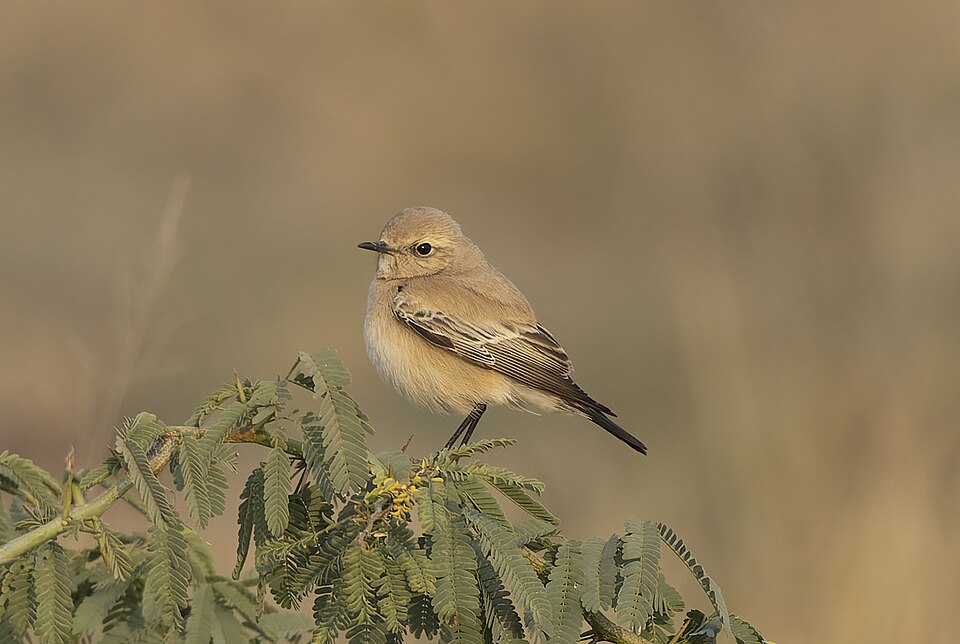
Desert Wheatear (Oenanthe deserti) Desert Wheatear
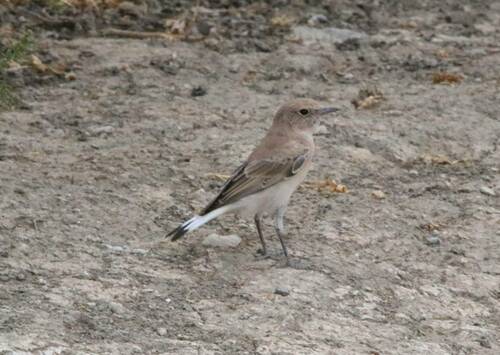
Western Black-eared Wheatear (Oenanthe hispanica) Western Black-eared Wheatear

Media

Loading…

In short

The most reliable field mark between Desert Wheatear and Western Black-eared Wheatear is the tail pattern: Desert Wheatear of all ages and sexes shows a tail that is entirely black up to the level of the upper tail-coverts, while Western Black-eared Wheatear has a mostly white tail with only the central pair of feathers dark. In perched or flight views, this difference is often decisive. Adult male Desert Wheatear also shows extensive black on the throat and sometimes shoulders, while Western Black-eared Wheatear males have a black mask but either a white or less extensive black throat. Females and immatures are trickier, but the tail pattern remains the best separator. Both species are similar in size and general structure, so focus on tail and face/throat pattern for confident identification.

Identification tips

  1. Tail pattern is key: Desert Wheatear always shows a tail that is black right up to the upper tail-coverts, with only the base of the feathers white; Western Black-eared Wheatear has a mostly white tail with only the central pair of feathers dark. This works for all ages and sexes, perched or in flight.
  2. Adult male throat and face: Breeding male Desert Wheatear has an extensive black throat and face, sometimes extending onto the shoulders, with a clear pale supercilium. Western Black-eared Wheatear males have a black mask from bill to ear coverts, but the throat may be black or white; the black mask does not extend above the bill, and the black is less extensive than in Desert Wheatear.
  3. Female and immature confusion: Female Desert Wheatear is greyer above and buffer below, with no black on the throat; female Western Black-eared Wheatear is warmer brown overall and has a white lower back and tail. Tail pattern remains the best mark for females and immatures.
  4. Juvenile plumage: Juvenile Desert Wheatear is speckled above due to pale-centered, brown-tipped feathers; Western Black-eared Wheatear juveniles are less distinctly patterned but always show the white tail base.
  5. Supercilium: Desert Wheatear (especially males) shows a distinct pale buff supercilium; Western Black-eared Wheatear has a less prominent supercilium, often overwhelmed by the black mask in males.
  6. Upperparts color: Desert Wheatear males are sandy-grey to buff above; Western Black-eared Wheatear males have a white or nearly white crown and forehead, with a buff mantle. Females of both are duller, but Western Black-eared Wheatear is warmer brown.
  7. Underparts: Both species have white underparts tinged with buff, but Desert Wheatear's breast and flanks are more sandy-buff, while Western Black-eared Wheatear is whiter with a buff tinge.
  8. Seasonal changes: In winter, male Desert Wheatear's black throat is partially obscured by white feather tips, making the throat appear less dark. Western Black-eared Wheatear males become more buff on the head, mantle, and underparts in autumn and winter, and the throat is buff unless black-throated.
  9. Tail in flight: In flight, Desert Wheatear shows a mostly black tail with a narrow white base; Western Black-eared Wheatear flashes a mostly white tail with only the central feathers dark. This is the fastest way to separate the two in flight.
  10. Habitat context: Desert Wheatear is expected in true desert or semi-desert; Western Black-eared Wheatear is found in Mediterranean scrub, rocky slopes, and fields. Out of range, use plumage not habitat.
  11. Bill, legs, and iris: Both species have black bills and legs and dark eyes; these are not useful for separation.
  12. Wing pattern: No distinctive wing panel or upperwing pattern is described for either species that is diagnostic in the field.
  13. Size and structure: Both are similar in size and structure; do not rely on size for separation.
  14. Voice: No distinctive vocal differences are noted in the sources provided; do not use voice for separation.
  15. Pitfalls: Beware of abraded or worn plumage, especially in spring, which can obscure some color differences; always check the tail pattern as it is the most consistent mark.

Size

Both species are small, upright wheatears with similar proportions. Desert Wheatear is 14.5–15 cm in length, while Western Black-eared Wheatear is comparable and not noticeably larger or smaller in the field. Weight overlaps (Desert Wheatear 15–34 g), and there is no reliable structural difference in bill or wing length noted. Size is not a useful separator between these two.

Plumage

Tail pattern is the most diagnostic feature at all ages: Desert Wheatear always shows a tail that is black from the tip up to the upper tail-coverts, with only the basal third of the feathers white; Western Black-eared Wheatear has a mostly white tail with only the central pair of feathers dark, and the white often extends to the tip of the outer feathers. In adult males, Desert Wheatear has a pale sandy-grey head and nape, buff back, and a distinctive black throat and face (in breeding plumage), sometimes extending onto the shoulders, with a clear pale supercilium. Western Black-eared Wheatear males have a white or nearly white crown and forehead, buff mantle, and a black mask from bill to ear coverts, but the throat may be black or white; the black mask does not extend above the bill. Females of both are duller: Desert Wheatear females are greyer above, buffer below, and lack black on the throat; Western Black-eared Wheatear females are warmer brown overall but always show a white lower back and tail. Juvenile Desert Wheatear is speckled above due to pale-centered, brown-tipped feathers, while Western Black-eared Wheatear juveniles are less distinctly marked but still show the white tail base. In all plumages, Desert Wheatear's tail is more extensively black, and Western Black-eared Wheatear's tail is more extensively white.

Behaviour

Both species perch upright on exposed rocks, bushes, or tussocks and sally to the ground for insects. Desert Wheatear is noted for sometimes hovering briefly and for perching on the most prominent available spot. Western Black-eared Wheatear behaves similarly, but there are no strong behavioral distinctions in the notes. Both are typical open-country wheatears, so behavior is not a reliable separator.

Habitat

Desert Wheatear favors arid, open, sandy or stony semi-desert and desert habitats, often with sparse vegetation. Western Black-eared Wheatear is also found in open country but is more typical of Mediterranean scrub, rocky slopes, and cultivated fields, not true desert. If seen in a true desert, Desert Wheatear is much more likely; in Mediterranean or cultivated landscapes, Western Black-eared Wheatear is expected. However, both can appear as vagrants outside their core range.

Submit a better description

Use the same sections as the comparison. Your text is published immediately.

The most reliable field mark between Desert Wheatear and Western Black-eared Wheatear is the tail pattern: Desert Wheatear of all ages and sexes shows a tail that is entirely black up to the level of the upper tail-coverts, while Western Black-eared Wheatear has a mostly white tail with only the central pair of feathers dark. In perched or flight views, this difference is often decisive. Adult male Desert Wheatear also shows extensive black on the throat and sometimes shoulders, while Western Black-eared Wheatear males have a black mask but either a white or less extensive black throat. Females and immatures are trickier, but the tail pattern remains the best separator. Both species are similar in size and general structure, so focus on tail and face/throat pattern for confident identification.

  1. Tail pattern is key: Desert Wheatear always shows a tail that is black right up to the upper tail-coverts, with only the base of the feathers white; Western Black-eared Wheatear has a mostly white tail with only the central pair of feathers dark. This works for all ages and sexes, perched or in flight.
  2. Adult male throat and face: Breeding male Desert Wheatear has an extensive black throat and face, sometimes extending onto the shoulders, with a clear pale supercilium. Western Black-eared Wheatear males have a black mask from bill to ear coverts, but the throat may be black or white; the black mask does not extend above the bill, and the black is less extensive than in Desert Wheatear.
  3. Female and immature confusion: Female Desert Wheatear is greyer above and buffer below, with no black on the throat; female Western Black-eared Wheatear is warmer brown overall and has a white lower back and tail. Tail pattern remains the best mark for females and immatures.
  4. Juvenile plumage: Juvenile Desert Wheatear is speckled above due to pale-centered, brown-tipped feathers; Western Black-eared Wheatear juveniles are less distinctly patterned but always show the white tail base.
  5. Supercilium: Desert Wheatear (especially males) shows a distinct pale buff supercilium; Western Black-eared Wheatear has a less prominent supercilium, often overwhelmed by the black mask in males.
  6. Upperparts color: Desert Wheatear males are sandy-grey to buff above; Western Black-eared Wheatear males have a white or nearly white crown and forehead, with a buff mantle. Females of both are duller, but Western Black-eared Wheatear is warmer brown.
  7. Underparts: Both species have white underparts tinged with buff, but Desert Wheatear's breast and flanks are more sandy-buff, while Western Black-eared Wheatear is whiter with a buff tinge.
  8. Seasonal changes: In winter, male Desert Wheatear's black throat is partially obscured by white feather tips, making the throat appear less dark. Western Black-eared Wheatear males become more buff on the head, mantle, and underparts in autumn and winter, and the throat is buff unless black-throated.
  9. Tail in flight: In flight, Desert Wheatear shows a mostly black tail with a narrow white base; Western Black-eared Wheatear flashes a mostly white tail with only the central feathers dark. This is the fastest way to separate the two in flight.
  10. Habitat context: Desert Wheatear is expected in true desert or semi-desert; Western Black-eared Wheatear is found in Mediterranean scrub, rocky slopes, and fields. Out of range, use plumage not habitat.
  11. Bill, legs, and iris: Both species have black bills and legs and dark eyes; these are not useful for separation.
  12. Wing pattern: No distinctive wing panel or upperwing pattern is described for either species that is diagnostic in the field.
  13. Size and structure: Both are similar in size and structure; do not rely on size for separation.
  14. Voice: No distinctive vocal differences are noted in the sources provided; do not use voice for separation.
  15. Pitfalls: Beware of abraded or worn plumage, especially in spring, which can obscure some color differences; always check the tail pattern as it is the most consistent mark.

Both species are small, upright wheatears with similar proportions. Desert Wheatear is 14.5–15 cm in length, while Western Black-eared Wheatear is comparable and not noticeably larger or smaller in the field. Weight overlaps (Desert Wheatear 15–34 g), and there is no reliable structural difference in bill or wing length noted. Size is not a useful separator between these two.

Tail pattern is the most diagnostic feature at all ages: Desert Wheatear always shows a tail that is black from the tip up to the upper tail-coverts, with only the basal third of the feathers white; Western Black-eared Wheatear has a mostly white tail with only the central pair of feathers dark, and the white often extends to the tip of the outer feathers. In adult males, Desert Wheatear has a pale sandy-grey head and nape, buff back, and a distinctive black throat and face (in breeding plumage), sometimes extending onto the shoulders, with a clear pale supercilium. Western Black-eared Wheatear males have a white or nearly white crown and forehead, buff mantle, and a black mask from bill to ear coverts, but the throat may be black or white; the black mask does not extend above the bill. Females of both are duller: Desert Wheatear females are greyer above, buffer below, and lack black on the throat; Western Black-eared Wheatear females are warmer brown overall but always show a white lower back and tail. Juvenile Desert Wheatear is speckled above due to pale-centered, brown-tipped feathers, while Western Black-eared Wheatear juveniles are less distinctly marked but still show the white tail base. In all plumages, Desert Wheatear's tail is more extensively black, and Western Black-eared Wheatear's tail is more extensively white.

Both species perch upright on exposed rocks, bushes, or tussocks and sally to the ground for insects. Desert Wheatear is noted for sometimes hovering briefly and for perching on the most prominent available spot. Western Black-eared Wheatear behaves similarly, but there are no strong behavioral distinctions in the notes. Both are typical open-country wheatears, so behavior is not a reliable separator.

Desert Wheatear favors arid, open, sandy or stony semi-desert and desert habitats, often with sparse vegetation. Western Black-eared Wheatear is also found in open country but is more typical of Mediterranean scrub, rocky slopes, and cultivated fields, not true desert. If seen in a true desert, Desert Wheatear is much more likely; in Mediterranean or cultivated landscapes, Western Black-eared Wheatear is expected. However, both can appear as vagrants outside their core range.

Discard your changes?

You have unsaved edits. If you leave now, those changes will be lost.

Desert Wheatear · Western Black-eared Wheatear · My Tricky Birds