

Motmot

Demoiselle Crane vs Common Crane

Grus virgo versus Grus grus

Play a quiz with Demoiselle Crane and Common Crane
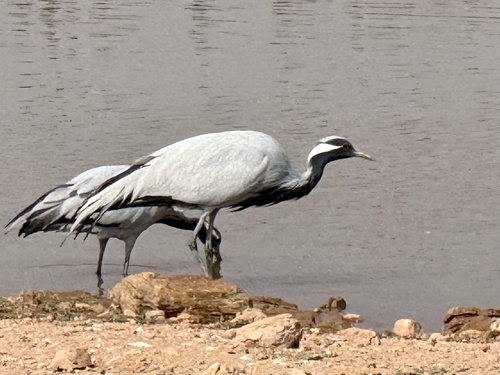
Demoiselle Crane (Grus virgo) Demoiselle Crane
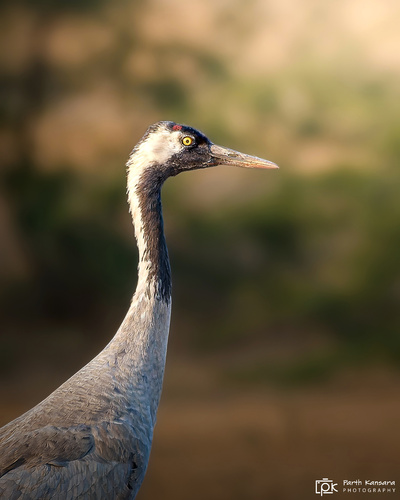
Common Crane (Grus grus) Common Crane

Media

Loading…

In short

The most reliable way to separate Demoiselle Crane from Common Crane is by size and head/neck pattern: Demoiselle is noticeably smaller, with a long white neck stripe and a black foreneck that extends down the chest in a plume, while Common Crane is larger, with a red crown patch and a white facial streak running from behind the eye to the upper back. Juvenile Common Cranes lack the adult's bold neck and crown patterns, which can lead to confusion, but Demoiselle juveniles still show the characteristic white neck stripe. In flight or at rest, Demoiselle appears more delicate and compact, while Common Crane is bulkier and longer-winged. Both species can occur together in Eurasia, so careful attention to these features is essential.

Identification tips

  1. Size: Demoiselle Crane is much smaller and lighter than Common Crane. Use this only when you have a direct comparison or good context, as size can be deceptive at a distance.
  2. Head and Neck Pattern (Adults and Juveniles): Demoiselle always shows a long white stripe from the eye down the neck and a black foreneck plume. Common Crane has a white facial streak from behind the eye to the upper back, a bare red crown patch, and black on the forehead/lores, but lacks the Demoiselle's neck stripe and plume.
  3. Juvenile Plumage: Juvenile Common Cranes are duller, with yellowish-brown feather tips, no red crown, and no white facial streak; Demoiselle juveniles still show the white neck stripe and black foreneck, making this a key mark for immatures.
  4. Chest and Foreneck: Demoiselle's black foreneck extends down over the chest in a plume, unique among Eurasian cranes. Common Crane's neck is mostly grey with a white streak, and the black is limited to the forehead/lores.
  5. Crown Patch: Only adult Common Crane has a bare red crown. Demoiselle never shows red on the crown.
  6. Bill Structure: Demoiselle has a proportionally shorter, finer bill; Common's bill is longer and heavier, but this is subtle and best used at close range.
  7. Wing Shape in Flight: Demoiselle's wings are shorter and more pointed, matching its smaller size; Common Crane's wings are broader and longer, giving a more powerful impression in flight.
  8. Greater Coverts: Common Crane's greater coverts droop into explosive plumes over the tertials; Demoiselle's wing coverts are less pronounced, and the chest plume is the main feature.
  9. Body Structure: Demoiselle is more slender and upright, with a compact build; Common is bulkier, taller, and more robust.
  10. Habitat Context: Demoiselle prefers dry steppe or grassland, Common prefers wetlands and marshes, but both can be found in agricultural fields during migration.
  11. Vocalization: Demoiselle's call is higher-pitched and less resonant; Common's is deeper and more trumpeting. Use with caution unless familiar with both.
  12. Flock Structure: Both species are gregarious, but Demoiselle flocks may appear more tightly packed and agile in flight.
  13. Seasonal Overlap: Both species migrate, but Demoiselle is more likely in central Asia and eastern Europe, Common is widespread in Europe.
  14. Sex Differences: Both species show little sexual dimorphism in the field; size is slightly greater in male Common Cranes, but this is not reliable for separation.
  15. Pitfalls: Juvenile Common Cranes lacking adult head/neck pattern can be confused with Demoiselle, but check for the white neck stripe and black foreneck, which are always present in Demoiselle of any age.

Size

Demoiselle Crane is the smallest crane species, measuring 85–100 cm in length, standing about 76 cm tall, and with a wingspan of 155–180 cm, weighing 2–3 kg. Common Crane is significantly larger: 100–130 cm long, with a wingspan of 180–240 cm, and weighing 3–6.1 kg (most adults average 4.6–5.4 kg). Even at a distance, Demoiselle appears more slender and compact, while Common Crane has a heavier, taller, and longer-winged profile. This size difference is often apparent when both species are seen together, but can be harder to judge in isolation or at long range.

Plumage

Juvenile and immature Common Cranes are duller than adults, with yellowish-brown feather tips and lacking the adult's red crown and white facial streak; their plumage is overall more uniform and lacks the strong contrast of adults. Demoiselle Crane, even as a juvenile, shows the long white neck stripe and black foreneck plume, which are absent in Common Crane of any age. Adult Demoiselle is pale grey with a striking white line running from the eye down the neck, and a black foreneck extending into a chest plume. Adult Common Crane is slate-grey with a bare red crown, white facial streak from behind the eye to the upper back, and black on the forehead, lores, and drooping greater coverts. In flight, both species show black primaries and secondaries, but Demoiselle's smaller size and more compact wings are noticeable. There are no distinctive upperwing patterns in juveniles of either species that are diagnostic, but the overall contrast and head/neck pattern remain the best clues.

Behaviour

Both species are social and often seen in flocks, especially during migration. Demoiselle Cranes tend to appear more delicate and agile, with a lighter, more buoyant flight style. Common Cranes are heavier and their flight is more powerful and steady. Both species perform elaborate courtship dances, but these are not usually useful for field separation. When feeding or standing, Demoiselle often appears more upright and slender, while Common is bulkier and more robust.

Habitat

Both species can overlap in Eurasia, but Demoiselle Crane prefers more open, arid steppe and grassland habitats, often away from large wetlands. Common Crane is more often found in marshes, bogs, and wet meadows, though it also uses agricultural fields during migration and winter. In Europe, Common Crane is the default large crane in most wetland habitats, while Demoiselle is more likely in drier, open country, especially further east.

Voice

Common Crane has a loud, trumpeting call that is piercing and carries over long distances, often heard in flight or during display. Demoiselle Crane's call is higher-pitched and less resonant, but this difference is subtle and not always diagnostic unless both species are heard together. Voice is a supporting, not primary, field mark.

Submit a better description

Use the same sections as the comparison. Your text is published immediately.

The most reliable way to separate Demoiselle Crane from Common Crane is by size and head/neck pattern: Demoiselle is noticeably smaller, with a long white neck stripe and a black foreneck that extends down the chest in a plume, while Common Crane is larger, with a red crown patch and a white facial streak running from behind the eye to the upper back. Juvenile Common Cranes lack the adult's bold neck and crown patterns, which can lead to confusion, but Demoiselle juveniles still show the characteristic white neck stripe. In flight or at rest, Demoiselle appears more delicate and compact, while Common Crane is bulkier and longer-winged. Both species can occur together in Eurasia, so careful attention to these features is essential.

  1. Size: Demoiselle Crane is much smaller and lighter than Common Crane. Use this only when you have a direct comparison or good context, as size can be deceptive at a distance.
  2. Head and Neck Pattern (Adults and Juveniles): Demoiselle always shows a long white stripe from the eye down the neck and a black foreneck plume. Common Crane has a white facial streak from behind the eye to the upper back, a bare red crown patch, and black on the forehead/lores, but lacks the Demoiselle's neck stripe and plume.
  3. Juvenile Plumage: Juvenile Common Cranes are duller, with yellowish-brown feather tips, no red crown, and no white facial streak; Demoiselle juveniles still show the white neck stripe and black foreneck, making this a key mark for immatures.
  4. Chest and Foreneck: Demoiselle's black foreneck extends down over the chest in a plume, unique among Eurasian cranes. Common Crane's neck is mostly grey with a white streak, and the black is limited to the forehead/lores.
  5. Crown Patch: Only adult Common Crane has a bare red crown. Demoiselle never shows red on the crown.
  6. Bill Structure: Demoiselle has a proportionally shorter, finer bill; Common's bill is longer and heavier, but this is subtle and best used at close range.
  7. Wing Shape in Flight: Demoiselle's wings are shorter and more pointed, matching its smaller size; Common Crane's wings are broader and longer, giving a more powerful impression in flight.
  8. Greater Coverts: Common Crane's greater coverts droop into explosive plumes over the tertials; Demoiselle's wing coverts are less pronounced, and the chest plume is the main feature.
  9. Body Structure: Demoiselle is more slender and upright, with a compact build; Common is bulkier, taller, and more robust.
  10. Habitat Context: Demoiselle prefers dry steppe or grassland, Common prefers wetlands and marshes, but both can be found in agricultural fields during migration.
  11. Vocalization: Demoiselle's call is higher-pitched and less resonant; Common's is deeper and more trumpeting. Use with caution unless familiar with both.
  12. Flock Structure: Both species are gregarious, but Demoiselle flocks may appear more tightly packed and agile in flight.
  13. Seasonal Overlap: Both species migrate, but Demoiselle is more likely in central Asia and eastern Europe, Common is widespread in Europe.
  14. Sex Differences: Both species show little sexual dimorphism in the field; size is slightly greater in male Common Cranes, but this is not reliable for separation.
  15. Pitfalls: Juvenile Common Cranes lacking adult head/neck pattern can be confused with Demoiselle, but check for the white neck stripe and black foreneck, which are always present in Demoiselle of any age.

Demoiselle Crane is the smallest crane species, measuring 85–100 cm in length, standing about 76 cm tall, and with a wingspan of 155–180 cm, weighing 2–3 kg. Common Crane is significantly larger: 100–130 cm long, with a wingspan of 180–240 cm, and weighing 3–6.1 kg (most adults average 4.6–5.4 kg). Even at a distance, Demoiselle appears more slender and compact, while Common Crane has a heavier, taller, and longer-winged profile. This size difference is often apparent when both species are seen together, but can be harder to judge in isolation or at long range.

Juvenile and immature Common Cranes are duller than adults, with yellowish-brown feather tips and lacking the adult's red crown and white facial streak; their plumage is overall more uniform and lacks the strong contrast of adults. Demoiselle Crane, even as a juvenile, shows the long white neck stripe and black foreneck plume, which are absent in Common Crane of any age. Adult Demoiselle is pale grey with a striking white line running from the eye down the neck, and a black foreneck extending into a chest plume. Adult Common Crane is slate-grey with a bare red crown, white facial streak from behind the eye to the upper back, and black on the forehead, lores, and drooping greater coverts. In flight, both species show black primaries and secondaries, but Demoiselle's smaller size and more compact wings are noticeable. There are no distinctive upperwing patterns in juveniles of either species that are diagnostic, but the overall contrast and head/neck pattern remain the best clues.

Both species are social and often seen in flocks, especially during migration. Demoiselle Cranes tend to appear more delicate and agile, with a lighter, more buoyant flight style. Common Cranes are heavier and their flight is more powerful and steady. Both species perform elaborate courtship dances, but these are not usually useful for field separation. When feeding or standing, Demoiselle often appears more upright and slender, while Common is bulkier and more robust.

Both species can overlap in Eurasia, but Demoiselle Crane prefers more open, arid steppe and grassland habitats, often away from large wetlands. Common Crane is more often found in marshes, bogs, and wet meadows, though it also uses agricultural fields during migration and winter. In Europe, Common Crane is the default large crane in most wetland habitats, while Demoiselle is more likely in drier, open country, especially further east.

Common Crane has a loud, trumpeting call that is piercing and carries over long distances, often heard in flight or during display. Demoiselle Crane's call is higher-pitched and less resonant, but this difference is subtle and not always diagnostic unless both species are heard together. Voice is a supporting, not primary, field mark.

Discard your changes?

You have unsaved edits. If you leave now, those changes will be lost.

Demoiselle Crane · Common Crane · My Tricky Birds