

Motmot

Delicate Prinia vs Upcher's Warbler

Prinia lepida versus Hippolais languida

Play a quiz with Delicate Prinia and Upcher's Warbler
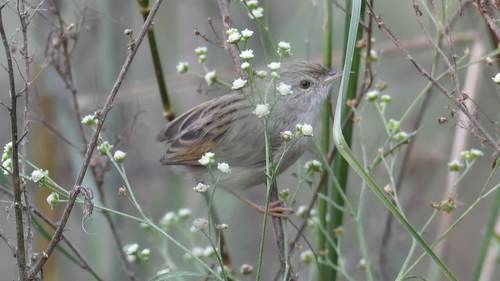
Delicate Prinia (Prinia lepida) Delicate Prinia
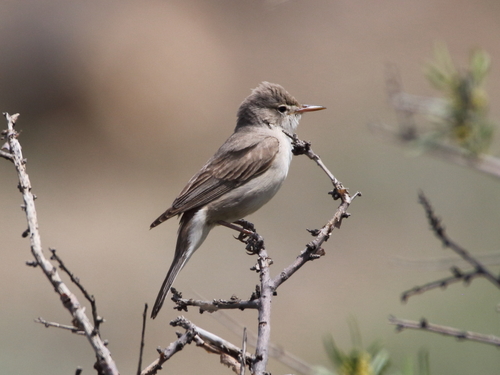
Upcher's Warbler (Hippolais languida) Upcher's Warbler

Media

Loading…

In short

The most reliable field mark to separate Delicate Prinia from Upcher's Warbler is structure and overall jizz: Upcher's Warbler is distinctly larger, with a noticeably longer tail and bill, and shows frequent, strong tail movements reminiscent of Sylvia warblers or chats. Delicate Prinia is much smaller and more compact, with a short tail and a typical prinia silhouette. In flight or perched, Upcher’s Warbler’s greyish plumage and tail-flicking behavior are key, while Delicate Prinia is more delicate and less animated. If you see a medium-sized, long-tailed warbler with persistent tail movement, you are likely looking at Upcher’s Warbler.

Identification tips

  1. Size and Structure: Upcher’s Warbler is much larger and longer-tailed than Delicate Prinia. If the bird looks small and compact, Delicate Prinia is more likely.
  2. Tail Length and Shape: Upcher’s Warbler has a noticeably long tail, often held at an angle and moved frequently. Delicate Prinia’s tail is short and fits its small, rounded body.
  3. Tail Movement: Watch for frequent, strong tail flicking in Upcher’s Warbler—this is a key behavioral mark and is not typical of Delicate Prinia.
  4. Bill Shape: Upcher’s Warbler has a longer, slightly heavier bill than Delicate Prinia, which has a fine, delicate bill suited to its small size.
  5. Plumage Tone: Upcher’s Warbler appears rather grey overall, lacking strong color contrasts. Delicate Prinia is generally warmer and browner above, though this is subtle and can be affected by light.
  6. General Jizz: Upcher’s Warbler often appears upright, elongated, and active, while Delicate Prinia is more compact and less animated.
  7. Flight View: No distinctive upperwing or flight pattern marks are described for either species, so rely on structure and size in flight.
  8. Habitat Context: If in a dry, bushy area during migration season, consider Upcher’s Warbler; in grassland or scrub, especially outside migration, Delicate Prinia is more likely.
  9. Vocalization: If you hear a distinctive Hippolais warbler song, it may indicate Upcher’s Warbler, but do not rely on this unless familiar with both species’ calls.
  10. Range and Season: Upcher’s Warbler is migratory and may be absent outside the breeding or migration season, while Delicate Prinia is resident.
  11. Pitfall—Greyish Prinias: Be careful not to mistake a worn or pale Delicate Prinia for Upcher’s Warbler; structure and tail movement are more reliable than subtle color differences.
  12. Pitfall—Active Foraging: Both species may forage in bushes, but only Upcher’s Warbler combines this with persistent tail flicking and a stretched posture.
  13. Sex and Age: No strong sexual or age-related plumage differences are noted for field separation in these sources; focus on structure and behavior.
  14. Perched vs. In Flight: Both species can be seen perched or in flight, but Upcher’s Warbler’s long tail and tail movement are visible in both situations.
  15. When in Doubt: If you cannot judge size or see tail movement, be cautious—wait for a better view or note habitat and season for supporting clues.

Size

Upcher's Warbler is a medium-sized warbler, similar in size to Icterine Warbler, and is much larger than Delicate Prinia. Delicate Prinia is a small, compact warbler, typical of prinias, and will appear noticeably smaller and daintier through binoculars. Upcher’s Warbler also has a longer bill and tail, and shorter wings relative to its body, giving it a stretched look compared to the stubby, short-tailed Delicate Prinia.

Plumage

No detailed age-specific wing or flight pattern marks are described for either species. Upcher’s Warbler is described as rather grey overall, similar to Olivaceous Warbler, while Delicate Prinia is not described in detail here but is generally warmer and browner above in most field guides. The key contrast is Upcher’s Warbler’s uniform greyish tones and lack of strong pattern, versus Delicate Prinia’s warmer, browner hues and more delicate appearance. No distinctive juvenile or immature upperwing marks are noted for either species in these sources.

Behaviour

Upcher’s Warbler is highly distinctive in its behavior, frequently flicking and moving its long tail in a way reminiscent of Sylvia warblers or chats. This tail action is a strong behavioral clue and is not shared by Delicate Prinia, which typically moves more quietly and does not show persistent tail flicking. Upcher’s Warbler also tends to be more upright and active, while Delicate Prinia is more skulking and less conspicuous in its movements.

Habitat

Both species can occur in overlapping regions (Turkey to Pakistan/India), but Upcher’s Warbler is migratory and breeds in drier, often bushy habitats, while Delicate Prinia is a resident breeder in southern Asia and may be found in more varied habitats including grasslands and scrub. However, habitat alone is not always diagnostic where ranges overlap.

Voice

Upcher’s Warbler’s song is described as distinctive and unmistakable among Hippolais warblers, and is entirely different from Olivaceous Warbler, but there is no direct comparison to Delicate Prinia’s vocalizations in these notes. Vocalization is not detailed for Delicate Prinia here, so use caution relying on song unless you know both species’ calls well.

Submit a better description

Use the same sections as the comparison. Your text is published immediately.

The most reliable field mark to separate Delicate Prinia from Upcher's Warbler is structure and overall jizz: Upcher's Warbler is distinctly larger, with a noticeably longer tail and bill, and shows frequent, strong tail movements reminiscent of Sylvia warblers or chats. Delicate Prinia is much smaller and more compact, with a short tail and a typical prinia silhouette. In flight or perched, Upcher’s Warbler’s greyish plumage and tail-flicking behavior are key, while Delicate Prinia is more delicate and less animated. If you see a medium-sized, long-tailed warbler with persistent tail movement, you are likely looking at Upcher’s Warbler.

  1. Size and Structure: Upcher’s Warbler is much larger and longer-tailed than Delicate Prinia. If the bird looks small and compact, Delicate Prinia is more likely.
  2. Tail Length and Shape: Upcher’s Warbler has a noticeably long tail, often held at an angle and moved frequently. Delicate Prinia’s tail is short and fits its small, rounded body.
  3. Tail Movement: Watch for frequent, strong tail flicking in Upcher’s Warbler—this is a key behavioral mark and is not typical of Delicate Prinia.
  4. Bill Shape: Upcher’s Warbler has a longer, slightly heavier bill than Delicate Prinia, which has a fine, delicate bill suited to its small size.
  5. Plumage Tone: Upcher’s Warbler appears rather grey overall, lacking strong color contrasts. Delicate Prinia is generally warmer and browner above, though this is subtle and can be affected by light.
  6. General Jizz: Upcher’s Warbler often appears upright, elongated, and active, while Delicate Prinia is more compact and less animated.
  7. Flight View: No distinctive upperwing or flight pattern marks are described for either species, so rely on structure and size in flight.
  8. Habitat Context: If in a dry, bushy area during migration season, consider Upcher’s Warbler; in grassland or scrub, especially outside migration, Delicate Prinia is more likely.
  9. Vocalization: If you hear a distinctive Hippolais warbler song, it may indicate Upcher’s Warbler, but do not rely on this unless familiar with both species’ calls.
  10. Range and Season: Upcher’s Warbler is migratory and may be absent outside the breeding or migration season, while Delicate Prinia is resident.
  11. Pitfall—Greyish Prinias: Be careful not to mistake a worn or pale Delicate Prinia for Upcher’s Warbler; structure and tail movement are more reliable than subtle color differences.
  12. Pitfall—Active Foraging: Both species may forage in bushes, but only Upcher’s Warbler combines this with persistent tail flicking and a stretched posture.
  13. Sex and Age: No strong sexual or age-related plumage differences are noted for field separation in these sources; focus on structure and behavior.
  14. Perched vs. In Flight: Both species can be seen perched or in flight, but Upcher’s Warbler’s long tail and tail movement are visible in both situations.
  15. When in Doubt: If you cannot judge size or see tail movement, be cautious—wait for a better view or note habitat and season for supporting clues.

Upcher's Warbler is a medium-sized warbler, similar in size to Icterine Warbler, and is much larger than Delicate Prinia. Delicate Prinia is a small, compact warbler, typical of prinias, and will appear noticeably smaller and daintier through binoculars. Upcher’s Warbler also has a longer bill and tail, and shorter wings relative to its body, giving it a stretched look compared to the stubby, short-tailed Delicate Prinia.

No detailed age-specific wing or flight pattern marks are described for either species. Upcher’s Warbler is described as rather grey overall, similar to Olivaceous Warbler, while Delicate Prinia is not described in detail here but is generally warmer and browner above in most field guides. The key contrast is Upcher’s Warbler’s uniform greyish tones and lack of strong pattern, versus Delicate Prinia’s warmer, browner hues and more delicate appearance. No distinctive juvenile or immature upperwing marks are noted for either species in these sources.

Upcher’s Warbler is highly distinctive in its behavior, frequently flicking and moving its long tail in a way reminiscent of Sylvia warblers or chats. This tail action is a strong behavioral clue and is not shared by Delicate Prinia, which typically moves more quietly and does not show persistent tail flicking. Upcher’s Warbler also tends to be more upright and active, while Delicate Prinia is more skulking and less conspicuous in its movements.

Both species can occur in overlapping regions (Turkey to Pakistan/India), but Upcher’s Warbler is migratory and breeds in drier, often bushy habitats, while Delicate Prinia is a resident breeder in southern Asia and may be found in more varied habitats including grasslands and scrub. However, habitat alone is not always diagnostic where ranges overlap.

Upcher’s Warbler’s song is described as distinctive and unmistakable among Hippolais warblers, and is entirely different from Olivaceous Warbler, but there is no direct comparison to Delicate Prinia’s vocalizations in these notes. Vocalization is not detailed for Delicate Prinia here, so use caution relying on song unless you know both species’ calls well.

Discard your changes?

You have unsaved edits. If you leave now, those changes will be lost.

Delicate Prinia · Upcher's Warbler · My Tricky Birds