

Motmot

Delicate Prinia 対 アレチウタムシクイ

Prinia lepida 対 Hippolais languida

Delicate Priniaとアレチウタムシクイのクイズ
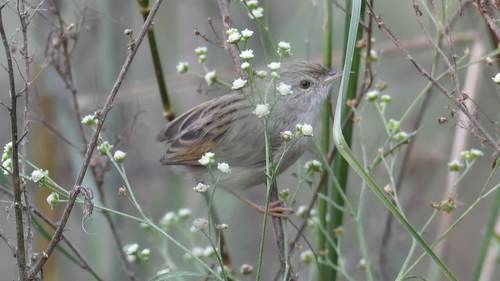
Delicate Prinia (Prinia lepida) Delicate Prinia
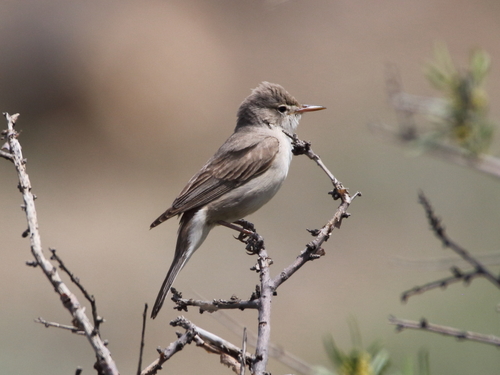
アレチウタムシクイ (Hippolais languida) アレチウタムシクイ

メディア

読み込み中…

要点

Delicate Priniaとアレチウタムシクイを区別する最も信頼できるフィールドマークは、構造と全体的な印象です:アレチウタムシクイは明らかに大きく、尾とくちばしが目立って長く、Sylviaのウタムシクイやチャットを思わせる頻繁で強い尾の動きを示します。Delicate Priniaははるかに小さく、よりコンパクトで、短い尾と典型的なプリニアのシルエットを持っています。飛んでいるときや止まっているとき、Upcher’s Warblerの灰色がかった羽毛と尾を振る行動が重要であり、Delicate Priniaはより繊細であまり動きがありません。中型で長尾のウタムシクイが持続的に尾を動かしているのを見たら、Upcher’s Warblerを見ている可能性が高いです。

識別のコツ

  1. Size and Structure: Upcher’s WarblerはDelicate Priniaよりもはるかに大きく、尾も長いです。もし鳥が小さくてコンパクトに見えるなら、Delicate Priniaの可能性が高いです。
  2. Tail Length and Shape: Upcher’s Warblerは目立って長い尾を持ち、しばしば角度をつけて保持し、頻繁に動かします。Delicate Priniaの尾は短く、小さく丸い体に合っています。
  3. Tail Movement: Upcher’s Warblerの頻繁で強い尾の振りに注意してください—これは重要な行動マークで、Delicate Priniaには典型的ではありません。
  4. Bill Shape: Upcher’s WarblerはDelicate Priniaよりも長く、やや重いくちばしを持ち、Delicate Priniaはその小さなサイズに適した細く繊細なくちばしを持っています。
  5. Plumage Tone: Upcher’s Warblerは全体的に灰色に見え、強い色のコントラストがありません。Delicate Priniaは一般的に上面がより暖かく茶色がかっていますが、これは微妙で光の影響を受けることがあります。
  6. General Jizz: Upcher’s Warblerはしばしば直立していて、細長く、活発に見えますが、Delicate Priniaはよりコンパクトであまり動きがありません。
  7. Flight View: どちらの種にも特有の上翼や飛行パターンのマークは記載されていないため、飛行中は構造とサイズに頼ってください。
  8. Habitat Context: 渡りの季節に乾燥した茂みのある地域にいる場合はUpcher’s Warblerを考慮してください;草原や低木の中、特に渡りの外ではDelicate Priniaの可能性が高いです。
  9. Vocalization: 特徴的なHippolaisのウタムシクイの歌が聞こえたら、Upcher’s Warblerを示すかもしれませんが、両種の鳴き声に慣れていない限り、これに頼らないでください。
  10. Range and Season: Upcher’s Warblerは渡り鳥で、繁殖や渡りの季節以外は不在の可能性がありますが、Delicate Priniaは常駐しています。
  11. Pitfall—Greyish Prinias: 使い古したり淡いDelicate PriniaをUpcher’s Warblerと間違えないように注意してください;構造と尾の動きは微妙な色の違いよりも信頼性があります。
  12. Pitfall—Active Foraging: 両種は茂みの中で採餌することがありますが、Upcher’s Warblerだけが持続的な尾の振りと伸びた姿勢を組み合わせます。
  13. Sex and Age: これらの情報源では、フィールドでの区別において強い性別や年齢に関連する羽毛の違いは記載されていません;構造と行動に焦点を当ててください。
  14. Perched vs. In Flight: 両種は止まっているか飛んでいるのを見ることができますが、Upcher’s Warblerの長い尾と尾の動きは両方の状況で見えます。
  15. When in Doubt: サイズを判断できない場合や尾の動きを見ることができない場合は注意してください—より良い視界を待つか、支持する手がかりのために生息地と季節をメモしてください。

大きさ

アレチウタムシクイは中型のウタムシクイで、キイロウタムシクイと同じくらいの大きさで、Delicate Priniaよりもはるかに大きいです。Delicate Priniaは小さく、コンパクトなウタムシクイで、プリニアの典型的なものであり、双眼鏡で見ると明らかに小さく、華奢に見えます。Upcher’s Warblerはまた、相対的に体に対して長いくちばしと尾を持ち、短い翼を持つため、Delicate Priniaの太くて短い尾と比較して伸びたように見えます。

羽色

どちらの種にも年齢特有の翼や飛行パターンのマークは詳細に記載されていません。Upcher’s Warblerは全体的にかなり灰色で、Olivaceous Warblerに似ていると記載されていますが、Delicate Priniaはここでは詳細に記載されていませんが、一般的にほとんどのフィールドガイドで上面がより暖かく茶色がかっています。主な対比は、Upcher’s Warblerの均一な灰色がかったトーンと強いパターンの欠如、対してDelicate Priniaのより暖かく茶色がかった色合いとより繊細な外観です。これらの情報源では、どちらの種にも特有の幼鳥や未熟な上翼のマークは記載されていません。

行動

Upcher’s Warblerはその行動において非常に特徴的で、Sylviaのウタムシクイやチャットを思わせるように、頻繁に長い尾を振ったり動かしたりします。この尾の動きは強い行動の手がかりであり、Delicate Priniaには共有されていません。Delicate Priniaは通常、より静かに動き、持続的な尾の振りを示しません。Upcher’s Warblerはまた、より直立していて活発である傾向がありますが、Delicate Priniaはより隠れるように動き、目立たないことが多いです。

生息環境

両種は重複する地域(トルコからパキスタン/インド)に生息することがありますが、Upcher’s Warblerは渡り鳥で、乾燥した茂みのある生息地で繁殖し、Delicate Priniaは南アジアの常駐繁殖者であり、草原や低木など、より多様な生息地に見られることがあります。しかし、生息地だけでは、範囲が重なる場合には常に診断的ではありません。

声

Upcher’s Warblerの歌は、Hippolaisのウタムシクイの中で特徴的で間違いのないと記載されており、Olivaceous Warblerとは全く異なりますが、これらのメモではDelicate Priniaの鳴き声との直接的な比較はありません。Delicate Priniaの鳴き声はここでは詳細に記載されていないため、両種の鳴き声をよく知っていない限り、歌に頼る際は注意してください。

より良い説明を送る

比較と同じ項目を使ってください。文章はすぐに公開されます。

The most reliable field mark to separate Delicate Prinia from Upcher's Warbler is structure and overall jizz: Upcher's Warbler is distinctly larger, with a noticeably longer tail and bill, and shows frequent, strong tail movements reminiscent of Sylvia warblers or chats. Delicate Prinia is much smaller and more compact, with a short tail and a typical prinia silhouette. In flight or perched, Upcher’s Warbler’s greyish plumage and tail-flicking behavior are key, while Delicate Prinia is more delicate and less animated. If you see a medium-sized, long-tailed warbler with persistent tail movement, you are likely looking at Upcher’s Warbler.

  1. Size and Structure: Upcher’s Warbler is much larger and longer-tailed than Delicate Prinia. If the bird looks small and compact, Delicate Prinia is more likely.
  2. Tail Length and Shape: Upcher’s Warbler has a noticeably long tail, often held at an angle and moved frequently. Delicate Prinia’s tail is short and fits its small, rounded body.
  3. Tail Movement: Watch for frequent, strong tail flicking in Upcher’s Warbler—this is a key behavioral mark and is not typical of Delicate Prinia.
  4. Bill Shape: Upcher’s Warbler has a longer, slightly heavier bill than Delicate Prinia, which has a fine, delicate bill suited to its small size.
  5. Plumage Tone: Upcher’s Warbler appears rather grey overall, lacking strong color contrasts. Delicate Prinia is generally warmer and browner above, though this is subtle and can be affected by light.
  6. General Jizz: Upcher’s Warbler often appears upright, elongated, and active, while Delicate Prinia is more compact and less animated.
  7. Flight View: No distinctive upperwing or flight pattern marks are described for either species, so rely on structure and size in flight.
  8. Habitat Context: If in a dry, bushy area during migration season, consider Upcher’s Warbler; in grassland or scrub, especially outside migration, Delicate Prinia is more likely.
  9. Vocalization: If you hear a distinctive Hippolais warbler song, it may indicate Upcher’s Warbler, but do not rely on this unless familiar with both species’ calls.
  10. Range and Season: Upcher’s Warbler is migratory and may be absent outside the breeding or migration season, while Delicate Prinia is resident.
  11. Pitfall—Greyish Prinias: Be careful not to mistake a worn or pale Delicate Prinia for Upcher’s Warbler; structure and tail movement are more reliable than subtle color differences.
  12. Pitfall—Active Foraging: Both species may forage in bushes, but only Upcher’s Warbler combines this with persistent tail flicking and a stretched posture.
  13. Sex and Age: No strong sexual or age-related plumage differences are noted for field separation in these sources; focus on structure and behavior.
  14. Perched vs. In Flight: Both species can be seen perched or in flight, but Upcher’s Warbler’s long tail and tail movement are visible in both situations.
  15. When in Doubt: If you cannot judge size or see tail movement, be cautious—wait for a better view or note habitat and season for supporting clues.

Upcher's Warbler is a medium-sized warbler, similar in size to Icterine Warbler, and is much larger than Delicate Prinia. Delicate Prinia is a small, compact warbler, typical of prinias, and will appear noticeably smaller and daintier through binoculars. Upcher’s Warbler also has a longer bill and tail, and shorter wings relative to its body, giving it a stretched look compared to the stubby, short-tailed Delicate Prinia.

No detailed age-specific wing or flight pattern marks are described for either species. Upcher’s Warbler is described as rather grey overall, similar to Olivaceous Warbler, while Delicate Prinia is not described in detail here but is generally warmer and browner above in most field guides. The key contrast is Upcher’s Warbler’s uniform greyish tones and lack of strong pattern, versus Delicate Prinia’s warmer, browner hues and more delicate appearance. No distinctive juvenile or immature upperwing marks are noted for either species in these sources.

Upcher’s Warbler is highly distinctive in its behavior, frequently flicking and moving its long tail in a way reminiscent of Sylvia warblers or chats. This tail action is a strong behavioral clue and is not shared by Delicate Prinia, which typically moves more quietly and does not show persistent tail flicking. Upcher’s Warbler also tends to be more upright and active, while Delicate Prinia is more skulking and less conspicuous in its movements.

Both species can occur in overlapping regions (Turkey to Pakistan/India), but Upcher’s Warbler is migratory and breeds in drier, often bushy habitats, while Delicate Prinia is a resident breeder in southern Asia and may be found in more varied habitats including grasslands and scrub. However, habitat alone is not always diagnostic where ranges overlap.

Upcher’s Warbler’s song is described as distinctive and unmistakable among Hippolais warblers, and is entirely different from Olivaceous Warbler, but there is no direct comparison to Delicate Prinia’s vocalizations in these notes. Vocalization is not detailed for Delicate Prinia here, so use caution relying on song unless you know both species’ calls well.

変更を破棄しますか?

保存していない編集があります。今離れると失われます。

Delicate Prinia · アレチウタムシクイ · 苦手な鳥