

Motmot

Dark-sided Thrush vs Purple Cochoa

Zoothera marginata versus Cochoa purpurea

Play a quiz with Dark-sided Thrush and Purple Cochoa
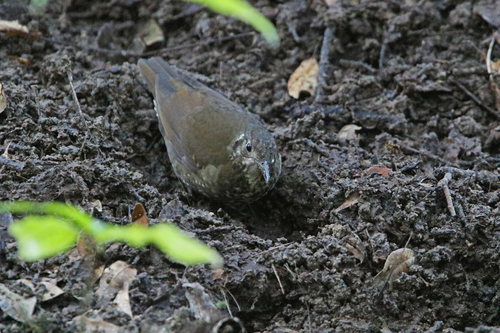
Dark-sided Thrush (Zoothera marginata) Dark-sided Thrush
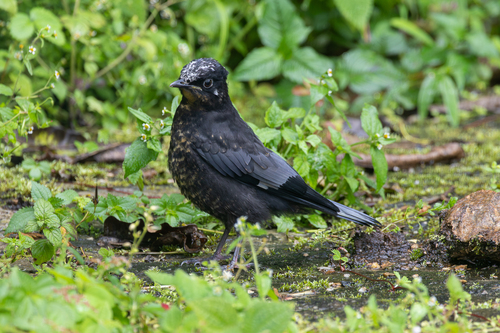
Purple Cochoa (Cochoa purpurea) Purple Cochoa

Media

Loading…

In short

The most reliable way to separate Dark-sided Thrush from Purple Cochoa is by overall plumage and bill structure: the thrush is a cryptic, earth-toned bird with a long, blackish bill and strong facial markings, while the cochoa is strikingly patterned with silvery blue, black, and purple or rufous, and has a shorter, less robust bill. The thrush is typically seen on or near the ground in dense, damp forest, whereas the cochoa prefers to perch motionless high in the canopy. In poor light, the cochoa can appear dark, but its bold wing and tail patches are diagnostic when seen well. Both species are elusive, but their preferred perching height and posture differ markedly.

Identification tips

  1. Bill shape and length: Dark-sided Thrush has a long, blackish bill that is noticeably more robust and downcurved than the shorter, less prominent bill of Purple Cochoa. This is a key structural difference, especially at close range.
  2. Facial markings: The thrush shows a distinct white loral stripe and a white eyering, along with a whitish throat and chin. Purple Cochoa has a black mask over the eye and lacks the thrush's strong white facial marks.
  3. Crown and head color: Purple Cochoa (male) has a silvery blue crown, while the thrush's head is dark brown. In females, the cochoa's crown is less blue but still lacks the thrush's uniform dark brown.
  4. Wing pattern: Cochoa has a prominent grey carpal patch and a bold wing patch at the base of the black wing feathers, visible in good light. The thrush's wings are plain rufous-brown with no patches or contrasting marks.
  5. Tail pattern: Purple Cochoa's tail is silvery blue with a black terminal band, a striking feature when seen well. The thrush's tail is plain and brown, matching the rest of its plumage.
  6. Body color: Dark-sided Thrush is overall brown and rufous, with no blue, silver, or purple tones. Purple Cochoa males are greyish with purplish-grey secondaries and coverts; females have rufous instead of purple.
  7. Sex differences in cochoa: Only the cochoa shows strong sexual dimorphism: males have purple-grey tones, females replace these with rufous. The thrush is monomorphic.
  8. Perching behavior: Thrushes are usually seen on the ground or low in dense cover, often moving quietly. Cochoas are typically perched motionless high in the canopy.
  9. Habitat context: If you find the bird near a rocky stream, in reeds, or low in damp forest, suspect thrush. If high in the canopy, especially in temperate forest, suspect cochoa.
  10. Light conditions: Cochoa can appear dark in shade, so do not rely solely on brightness; look for the blue, silver, and wing patch when the bird is sunlit.
  11. Voice: If you hear a series of monotone thin whistles, this supports Dark-sided Thrush. Cochoa's vocalizations are not described here.
  12. Flight views: No distinctive flight or upperwing pattern is described for either species, so focus on perched birds and structural/plumage clues.
  13. Size: Both are medium-sized, but the thrush may appear slightly heavier and longer-billed. Do not rely on size alone.
  14. Potential pitfalls: In poor light, cochoa may look plain and dark, but the lack of strong facial markings and the presence of any blue or silvery tones should point to cochoa. Thrush never shows blue, silver, or a wing patch.
  15. Age/season: No age-specific or seasonal plumage differences are described for the thrush; cochoa females and males differ, but both are more colorful and patterned than the thrush.

Size

The Dark-sided Thrush weighs about 81 g and measures 24–25 cm in length [wikidata][wikipedia]. No direct mass is given for Purple Cochoa, but both are medium-sized forest birds. The thrush may appear slightly heavier-bodied and longer-billed, but size alone is not a reliable separator in the field.

Plumage

Age-specific upperwing patterns are not described for either species, so focus is on adult and sex-based differences. The Dark-sided Thrush is a study in browns: it has a dark brown head, rufous-brown wings, a white loral stripe, white eyering, and a whitish throat and chin. Its bill is long and blackish, contributing to a strong, ground-thrush look. In contrast, the Purple Cochoa is much more colorful when seen in good light: males have a silvery blue crown, black mask, grey carpal patch, prominent wing patch, silvery blue tail with a black terminal band, and dull purplish-grey secondaries and coverts; the body is greyish. Females replace the purple with rufous tones. In shade, the cochoa can look dark, but the blue and wing patches become obvious in sunlight. The thrush lacks any blue or silvery tones and never shows a contrasting wing patch or tail band.

Behaviour

Dark-sided Thrush is typically found on or near the ground, especially in damp, rocky, or reedy areas of broadleaf forest. It is shy and often overlooked due to its retiring behavior and cryptic plumage. In contrast, Purple Cochoa is most often seen perched motionless in the canopy, rarely descending to the ground. Its tendency to sit quietly and remain still can make it hard to spot, but its preference for higher perches is a strong behavioral clue.

Habitat

Both species inhabit forested areas in Asia, but their microhabitat preferences differ. Dark-sided Thrush favors damp broadleaf forests, often near streams or in bamboo/reed patches, and ranges from 750–2,100 m in elevation. It is more likely to be encountered at lower levels, especially in dense undergrowth. Purple Cochoa prefers temperate forests and is almost always found in the canopy, rarely coming down. If you see a bird foraging on the ground or low in dense cover, it is almost certainly the thrush; a bird perched high and still in the canopy is much more likely to be a cochoa.

Voice

The Dark-sided Thrush gives a series of monotone thin whistles. No vocal description is provided for Purple Cochoa, so voice is only useful if the thrush's call is heard.

Submit a better description

Use the same sections as the comparison. Your text is published immediately.

The most reliable way to separate Dark-sided Thrush from Purple Cochoa is by overall plumage and bill structure: the thrush is a cryptic, earth-toned bird with a long, blackish bill and strong facial markings, while the cochoa is strikingly patterned with silvery blue, black, and purple or rufous, and has a shorter, less robust bill. The thrush is typically seen on or near the ground in dense, damp forest, whereas the cochoa prefers to perch motionless high in the canopy. In poor light, the cochoa can appear dark, but its bold wing and tail patches are diagnostic when seen well. Both species are elusive, but their preferred perching height and posture differ markedly.

  1. Bill shape and length: Dark-sided Thrush has a long, blackish bill that is noticeably more robust and downcurved than the shorter, less prominent bill of Purple Cochoa. This is a key structural difference, especially at close range.
  2. Facial markings: The thrush shows a distinct white loral stripe and a white eyering, along with a whitish throat and chin. Purple Cochoa has a black mask over the eye and lacks the thrush's strong white facial marks.
  3. Crown and head color: Purple Cochoa (male) has a silvery blue crown, while the thrush's head is dark brown. In females, the cochoa's crown is less blue but still lacks the thrush's uniform dark brown.
  4. Wing pattern: Cochoa has a prominent grey carpal patch and a bold wing patch at the base of the black wing feathers, visible in good light. The thrush's wings are plain rufous-brown with no patches or contrasting marks.
  5. Tail pattern: Purple Cochoa's tail is silvery blue with a black terminal band, a striking feature when seen well. The thrush's tail is plain and brown, matching the rest of its plumage.
  6. Body color: Dark-sided Thrush is overall brown and rufous, with no blue, silver, or purple tones. Purple Cochoa males are greyish with purplish-grey secondaries and coverts; females have rufous instead of purple.
  7. Sex differences in cochoa: Only the cochoa shows strong sexual dimorphism: males have purple-grey tones, females replace these with rufous. The thrush is monomorphic.
  8. Perching behavior: Thrushes are usually seen on the ground or low in dense cover, often moving quietly. Cochoas are typically perched motionless high in the canopy.
  9. Habitat context: If you find the bird near a rocky stream, in reeds, or low in damp forest, suspect thrush. If high in the canopy, especially in temperate forest, suspect cochoa.
  10. Light conditions: Cochoa can appear dark in shade, so do not rely solely on brightness; look for the blue, silver, and wing patch when the bird is sunlit.
  11. Voice: If you hear a series of monotone thin whistles, this supports Dark-sided Thrush. Cochoa's vocalizations are not described here.
  12. Flight views: No distinctive flight or upperwing pattern is described for either species, so focus on perched birds and structural/plumage clues.
  13. Size: Both are medium-sized, but the thrush may appear slightly heavier and longer-billed. Do not rely on size alone.
  14. Potential pitfalls: In poor light, cochoa may look plain and dark, but the lack of strong facial markings and the presence of any blue or silvery tones should point to cochoa. Thrush never shows blue, silver, or a wing patch.
  15. Age/season: No age-specific or seasonal plumage differences are described for the thrush; cochoa females and males differ, but both are more colorful and patterned than the thrush.

The Dark-sided Thrush weighs about 81 g and measures 24–25 cm in length [wikidata][wikipedia]. No direct mass is given for Purple Cochoa, but both are medium-sized forest birds. The thrush may appear slightly heavier-bodied and longer-billed, but size alone is not a reliable separator in the field.

Age-specific upperwing patterns are not described for either species, so focus is on adult and sex-based differences. The Dark-sided Thrush is a study in browns: it has a dark brown head, rufous-brown wings, a white loral stripe, white eyering, and a whitish throat and chin. Its bill is long and blackish, contributing to a strong, ground-thrush look. In contrast, the Purple Cochoa is much more colorful when seen in good light: males have a silvery blue crown, black mask, grey carpal patch, prominent wing patch, silvery blue tail with a black terminal band, and dull purplish-grey secondaries and coverts; the body is greyish. Females replace the purple with rufous tones. In shade, the cochoa can look dark, but the blue and wing patches become obvious in sunlight. The thrush lacks any blue or silvery tones and never shows a contrasting wing patch or tail band.

Dark-sided Thrush is typically found on or near the ground, especially in damp, rocky, or reedy areas of broadleaf forest. It is shy and often overlooked due to its retiring behavior and cryptic plumage. In contrast, Purple Cochoa is most often seen perched motionless in the canopy, rarely descending to the ground. Its tendency to sit quietly and remain still can make it hard to spot, but its preference for higher perches is a strong behavioral clue.

Both species inhabit forested areas in Asia, but their microhabitat preferences differ. Dark-sided Thrush favors damp broadleaf forests, often near streams or in bamboo/reed patches, and ranges from 750–2,100 m in elevation. It is more likely to be encountered at lower levels, especially in dense undergrowth. Purple Cochoa prefers temperate forests and is almost always found in the canopy, rarely coming down. If you see a bird foraging on the ground or low in dense cover, it is almost certainly the thrush; a bird perched high and still in the canopy is much more likely to be a cochoa.

The Dark-sided Thrush gives a series of monotone thin whistles. No vocal description is provided for Purple Cochoa, so voice is only useful if the thrush's call is heard.

Discard your changes?

You have unsaved edits. If you leave now, those changes will be lost.

Dark-sided Thrush · Purple Cochoa · My Tricky Birds