

Motmot

Crow-billed Drongo vs Greater Racket-tailed Drongo

Dicrurus annectens versus Dicrurus paradiseus

Play a quiz with Crow-billed Drongo and Greater Racket-tailed Drongo
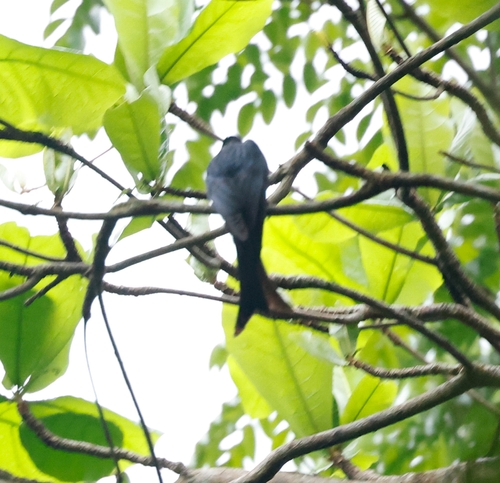
Crow-billed Drongo (Dicrurus annectens) Crow-billed Drongo
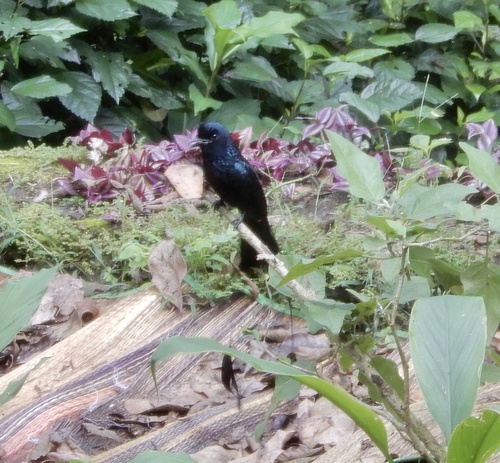
Greater Racket-tailed Drongo (Dicrurus paradiseus) Greater Racket-tailed Drongo

Media

Loading…

In short

The most reliable field mark to separate these two drongos is the tail: Greater Racket-tailed Drongo has dramatically elongated outer tail feathers ending in 'rackets' (spatulate tips), while Crow-billed Drongo has a shallowly forked, normal-length tail with no rackets. Both species are glossy black and can appear similar at a distance, but the unique tail of the Greater Racket-tailed Drongo is unmistakable in adults and most immatures. Bill shape and overall structure also help: Crow-billed has a notably stouter, crow-like bill. Juvenile and moulting Greater Racket-tailed Drongos may lack full rackets, making separation trickier—then, bill shape and subtle differences in posture and jizz become more important.

Identification tips

  1. Tail shape is the key field mark: Greater Racket-tailed Drongo (adult and most immatures) has very long, bare-shafted outer tail feathers ending in 'rackets' (spatulate tips). Crow-billed Drongo has a normal-length, shallowly forked tail with no rackets. This is diagnostic at all ages except for juvenile/moulting Greater Racket-tailed Drongos.
  2. Juvenile and moulting Greater Racket-tailed Drongo may lack full rackets: In these cases, check for a longer tail overall and a more elongated, slender look compared to Crow-billed Drongo. Be cautious, as confusion is possible.
  3. Bill structure: Crow-billed Drongo has a notably stout, crow-like bill, thicker and deeper than the slenderer bill of Greater Racket-tailed Drongo. This is visible in good views and can help when tail rackets are missing.
  4. Crest and hackles: Some Greater Racket-tailed Drongos (especially adults and some subspecies) show a prominent crest and long neck hackles, while Crow-billed Drongo lacks a crest. However, some juvenile or island forms of Greater Racket-tailed Drongo may lack a crest, so this is not always reliable.
  5. Plumage gloss: Both are glossy black as adults; do not rely on color shade or gloss for separation.
  6. Posture and jizz: Greater Racket-tailed Drongo often appears longer and more elongated, especially when tail rackets are present. Crow-billed Drongo is more compact and 'crow-like' in structure.
  7. Vocalizations: If you hear a drongo giving a wide variety of calls, especially imitating other birds or making complex whistles and metallic notes, it is almost certainly Greater Racket-tailed Drongo. Crow-billed Drongo is much less vocal and does not mimic.
  8. Behavior: Greater Racket-tailed Drongo is more likely to perch conspicuously in the open and participate in mixed-species flocks, sometimes stealing food from other birds. Crow-billed Drongo is less conspicuous and more typical in behavior.
  9. Habitat: Both occur in similar forest habitats; do not use habitat alone for separation.
  10. Size: Greater Racket-tailed Drongo is generally larger and more elongated, but size overlap and posture can make this unreliable in the field.
  11. Seasonal variation: During moult, Greater Racket-tailed Drongo may lack full tail rackets, increasing the risk of confusion. In these cases, rely on bill shape, posture, and any residual tail length difference.
  12. Age: Juvenile Greater Racket-tailed Drongos can be duller and lack crest and rackets, but the tail is still often longer and the structure more elongated than Crow-billed Drongo.
  13. Sex: No reliable sexual dimorphism for field separation in either species.
  14. Flight views: No distinctive upperwing or flight pattern marks are described for either species at any age; tail shape is still the best mark in flight.
  15. Common pitfalls: Immature or moulting Greater Racket-tailed Drongos without rackets are the main source of confusion. Always check bill thickness and overall structure if the tail is not diagnostic.

Size

Crow-billed Drongo is a medium-sized drongo with a body mass around 56g [wikidata]. The Greater Racket-tailed Drongo is generally larger, especially in some subspecies (e.g., grandis), but precise mass data is not provided here. In the field, the Greater Racket-tailed Drongo often appears larger and more elongated, especially when the tail rackets are present, but body bulk is not always a reliable separator due to overlap and posture.

Plumage

Both species are glossy black as adults, which can cause confusion. The Crow-billed Drongo is uniformly jet-black with a shallowly forked tail and a stout bill. The Greater Racket-tailed Drongo is also black but is distinctive in adults and most immatures for its extremely long outer tail feathers with bare shafts and spatulate 'rackets' at the tips. Juvenile Greater Racket-tailed Drongos can be duller, lack a crest, and may temporarily lack the full tail rackets during moult, making them more similar to Crow-billed Drongo. However, even then, the tail is often longer and the overall structure more elongated. Crest and neck hackle development varies by subspecies and age, with some young or island forms lacking a crest entirely. No age-specific upperwing or flight pattern marks are described for either species.

Behaviour

Greater Racket-tailed Drongo is highly conspicuous, often perching in the open and drawing attention with its varied and loud vocalizations, including imitations of many other birds. It is also known for participating in mixed-species flocks and sometimes kleptoparasitizing other birds. Crow-billed Drongo is less conspicuous in behavior, tending to be more typical of drongos in its habits and not noted for the same level of vocal mimicry or flock leadership. Both species are forest birds, but Greater Racket-tailed Drongo is especially likely to be noticed due to its behavior.

Habitat

Both species occur in moist tropical forests across southeastern Asia, sometimes overlapping in range. Greater Racket-tailed Drongo is especially associated with forested areas and is often seen in the open within forest habitats. Crow-billed Drongo also inhabits similar forests but is not noted for the same degree of conspicuousness or open perching. Habitat alone is not a reliable separator where ranges overlap, but Greater Racket-tailed Drongo may be more visible within its habitat.

Voice

Greater Racket-tailed Drongo is famous for its extremely varied and loud calls, including perfect imitations of many other birds, especially in mixed-species flocks. Its repertoire includes whistles, metallic and nasal sounds, and complex notes, and it can mimic alarm calls contextually. Crow-billed Drongo is not noted for such vocal mimicry or variety; its vocalizations are more typical of drongos and less likely to draw attention. If you hear a drongo imitating other species, especially in a mixed flock, it is almost certainly the Greater Racket-tailed.

Submit a better description

Use the same sections as the comparison. Your text is published immediately.

The most reliable field mark to separate these two drongos is the tail: Greater Racket-tailed Drongo has dramatically elongated outer tail feathers ending in 'rackets' (spatulate tips), while Crow-billed Drongo has a shallowly forked, normal-length tail with no rackets. Both species are glossy black and can appear similar at a distance, but the unique tail of the Greater Racket-tailed Drongo is unmistakable in adults and most immatures. Bill shape and overall structure also help: Crow-billed has a notably stouter, crow-like bill. Juvenile and moulting Greater Racket-tailed Drongos may lack full rackets, making separation trickier—then, bill shape and subtle differences in posture and jizz become more important.

  1. Tail shape is the key field mark: Greater Racket-tailed Drongo (adult and most immatures) has very long, bare-shafted outer tail feathers ending in 'rackets' (spatulate tips). Crow-billed Drongo has a normal-length, shallowly forked tail with no rackets. This is diagnostic at all ages except for juvenile/moulting Greater Racket-tailed Drongos.
  2. Juvenile and moulting Greater Racket-tailed Drongo may lack full rackets: In these cases, check for a longer tail overall and a more elongated, slender look compared to Crow-billed Drongo. Be cautious, as confusion is possible.
  3. Bill structure: Crow-billed Drongo has a notably stout, crow-like bill, thicker and deeper than the slenderer bill of Greater Racket-tailed Drongo. This is visible in good views and can help when tail rackets are missing.
  4. Crest and hackles: Some Greater Racket-tailed Drongos (especially adults and some subspecies) show a prominent crest and long neck hackles, while Crow-billed Drongo lacks a crest. However, some juvenile or island forms of Greater Racket-tailed Drongo may lack a crest, so this is not always reliable.
  5. Plumage gloss: Both are glossy black as adults; do not rely on color shade or gloss for separation.
  6. Posture and jizz: Greater Racket-tailed Drongo often appears longer and more elongated, especially when tail rackets are present. Crow-billed Drongo is more compact and 'crow-like' in structure.
  7. Vocalizations: If you hear a drongo giving a wide variety of calls, especially imitating other birds or making complex whistles and metallic notes, it is almost certainly Greater Racket-tailed Drongo. Crow-billed Drongo is much less vocal and does not mimic.
  8. Behavior: Greater Racket-tailed Drongo is more likely to perch conspicuously in the open and participate in mixed-species flocks, sometimes stealing food from other birds. Crow-billed Drongo is less conspicuous and more typical in behavior.
  9. Habitat: Both occur in similar forest habitats; do not use habitat alone for separation.
  10. Size: Greater Racket-tailed Drongo is generally larger and more elongated, but size overlap and posture can make this unreliable in the field.
  11. Seasonal variation: During moult, Greater Racket-tailed Drongo may lack full tail rackets, increasing the risk of confusion. In these cases, rely on bill shape, posture, and any residual tail length difference.
  12. Age: Juvenile Greater Racket-tailed Drongos can be duller and lack crest and rackets, but the tail is still often longer and the structure more elongated than Crow-billed Drongo.
  13. Sex: No reliable sexual dimorphism for field separation in either species.
  14. Flight views: No distinctive upperwing or flight pattern marks are described for either species at any age; tail shape is still the best mark in flight.
  15. Common pitfalls: Immature or moulting Greater Racket-tailed Drongos without rackets are the main source of confusion. Always check bill thickness and overall structure if the tail is not diagnostic.

Crow-billed Drongo is a medium-sized drongo with a body mass around 56g [wikidata]. The Greater Racket-tailed Drongo is generally larger, especially in some subspecies (e.g., grandis), but precise mass data is not provided here. In the field, the Greater Racket-tailed Drongo often appears larger and more elongated, especially when the tail rackets are present, but body bulk is not always a reliable separator due to overlap and posture.

Both species are glossy black as adults, which can cause confusion. The Crow-billed Drongo is uniformly jet-black with a shallowly forked tail and a stout bill. The Greater Racket-tailed Drongo is also black but is distinctive in adults and most immatures for its extremely long outer tail feathers with bare shafts and spatulate 'rackets' at the tips. Juvenile Greater Racket-tailed Drongos can be duller, lack a crest, and may temporarily lack the full tail rackets during moult, making them more similar to Crow-billed Drongo. However, even then, the tail is often longer and the overall structure more elongated. Crest and neck hackle development varies by subspecies and age, with some young or island forms lacking a crest entirely. No age-specific upperwing or flight pattern marks are described for either species.

Greater Racket-tailed Drongo is highly conspicuous, often perching in the open and drawing attention with its varied and loud vocalizations, including imitations of many other birds. It is also known for participating in mixed-species flocks and sometimes kleptoparasitizing other birds. Crow-billed Drongo is less conspicuous in behavior, tending to be more typical of drongos in its habits and not noted for the same level of vocal mimicry or flock leadership. Both species are forest birds, but Greater Racket-tailed Drongo is especially likely to be noticed due to its behavior.

Both species occur in moist tropical forests across southeastern Asia, sometimes overlapping in range. Greater Racket-tailed Drongo is especially associated with forested areas and is often seen in the open within forest habitats. Crow-billed Drongo also inhabits similar forests but is not noted for the same degree of conspicuousness or open perching. Habitat alone is not a reliable separator where ranges overlap, but Greater Racket-tailed Drongo may be more visible within its habitat.

Greater Racket-tailed Drongo is famous for its extremely varied and loud calls, including perfect imitations of many other birds, especially in mixed-species flocks. Its repertoire includes whistles, metallic and nasal sounds, and complex notes, and it can mimic alarm calls contextually. Crow-billed Drongo is not noted for such vocal mimicry or variety; its vocalizations are more typical of drongos and less likely to draw attention. If you hear a drongo imitating other species, especially in a mixed flock, it is almost certainly the Greater Racket-tailed.

Discard your changes?

You have unsaved edits. If you leave now, those changes will be lost.

Crow-billed Drongo · Greater Racket-tailed Drongo · My Tricky Birds