

Crested Myna vs Common Linnet
Acridotheres cristatellus versus Linaria cannabina
Play a quiz with Crested Myna and Common Linnet
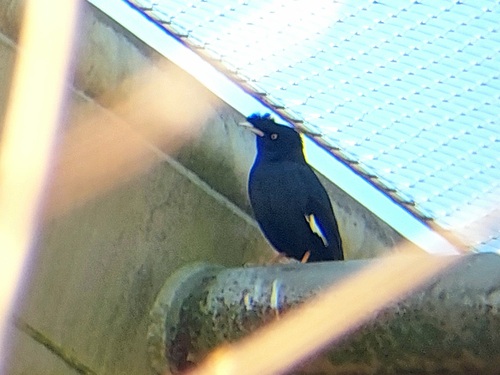 Crested Myna
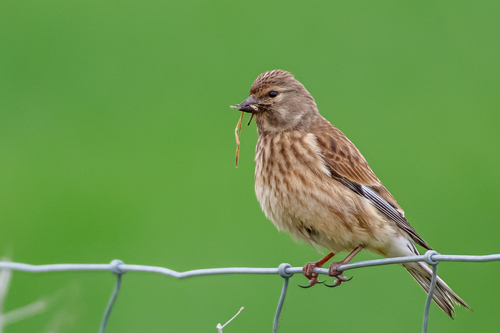 Common Linnet
In short
The most reliable field mark to separate Crested Myna from Common Linnet is the myna’s prominent black crest on the forehead, which is never present on linnet of any age or sex. In flight, Crested Myna shows bold white wing patches and white-tipped tail feathers, while Common Linnet lacks any white in the wings or tail. Juvenile mynas may have a less developed crest and blue-gray eyes, but still show a dark, glossy body and white in the wings when flying. Linnets are slim, brown-backed finches with a long tail and, in breeding males, a red crown and breast—features never seen on myna. Even at a distance, the myna’s glossy black plumage and stocky build contrast sharply with the linnet’s streaky, earth-toned appearance.
Identification tips
- Crested forehead tuft: Only Crested Myna has a prominent black crest on the forehead, visible at rest and in most postures; linnet never shows a crest at any age.
- White wing patches in flight: Crested Myna (all ages) shows bold white patches on the wings and white-tipped tail feathers (except central pair) when flying; Common Linnet always lacks white in wings or tail.
- Glossy black vs. brown plumage: Crested Myna is glossy black with a green sheen; Common Linnet is brown above and white below, with streaked underparts in females and juveniles.
- Bill color and shape: Myna has a pale yellow, slender, and sharp bill; linnet has a grey, conical finch bill. This is especially useful at close range.
- Eye color (age-specific): Adult mynas have orange eyes; immatures have blue-gray eyes. Linnet eyes are dark and not distinctive.
- Red on head/breast (male linnet): Only adult male linnets in breeding plumage show red on the crown and breast; mynas never show any red.
- Size and build: Crested Myna is much larger and chunkier, with a stocky, starling-like build; linnet is slim, delicate, and sparrow-sized.
- Tail shape: Linnet has a long, narrow tail; myna’s tail is shorter and broader, with white tips (except central feathers).
- Perching posture: Mynas often perch upright and conspicuously; linnets are more likely to perch low or on thin stems, with a more horizontal posture.
- Habitat context: Mynas are common in urban/agricultural areas; linnets prefer open countryside, hedges, and weedy fields.
- Juvenile confusion: Young mynas may look browner and lack a full crest, but still show white in wings and tail in flight; juvenile linnets are streaky and never show white patches.
- Group behavior: Mynas may form noisy, tight groups; linnets form loose, quiet flocks, often feeding on the ground or in low vegetation.
- Bill size relative to head: Myna’s bill appears longer and more pointed; linnet’s is short and thick.
- Leg color: Myna’s legs are dull dark yellow; linnet’s are not distinctive.
- Flight style: Mynas fly with strong, direct wingbeats, often flashing white; linnets have a more undulating, bounding flight and never show white in the wings.
Size
Crested Myna is substantially larger and bulkier than Common Linnet. While the linnet averages about 19 grams in body mass, the myna is much heavier and has a more robust, starling-like structure. The myna’s bill is pale yellow and slender, whereas the linnet’s is grey and more finch-like. In the field, the myna will appear crow-sized compared to the sparrow-sized linnet, making size a useful supporting clue when both are seen together or with familiar species.
Plumage
- Juvenile/Immature: Young Crested Mynas are brownish but quickly acquire the dark, glossy body and white wing patches; their crest is less developed and eyes are blue-gray. Juvenile linnets are streaky brown above and below, with no crest, no gloss, and no white in the wings or tail.
- Adult (all seasons): Crested Myna is overall black with a green sheen, a prominent crest, and bold white patches on the wings and tail (especially obvious in flight). Common Linnet is brown above, white below, with a long tail; males in summer have a red crown and breast, but females and immatures are streaked buff and lack any red or white patches.
- Flight views: Crested Myna flashes white in the wings and tail; Common Linnet shows plain brown wings and tail with no white.
Behaviour
Crested Mynas are often seen in urban or agricultural settings, foraging on the ground or perching conspicuously on wires, rooftops, or trees; they may gather in noisy groups. Their flight is direct and strong, often with bursts of white flashing from the wings. Common Linnets are more likely to be found in open countryside, hedgerows, or weedy fields, moving in loose, undulating flocks. Linnets perch more delicately, often on thin stems or wires, and feed mostly on seeds.
Habitat
Crested Mynas favor open spaces near human habitation—cities, towns, farms—using artificial structures for nesting and roosting. They are rarely found far from buildings or disturbed areas. Common Linnets prefer open, weedy fields, hedgerows, and scrubby countryside, avoiding dense urban areas. If you see a bird in a city park or on a building, it is much more likely to be a myna; in rural, brushy settings, linnet is more probable.