

Motmot

Crested Francolin vs Harlequin Quail

Ortygornis sephaena versus Coturnix delegorguei

Play a quiz with Crested Francolin and Harlequin Quail
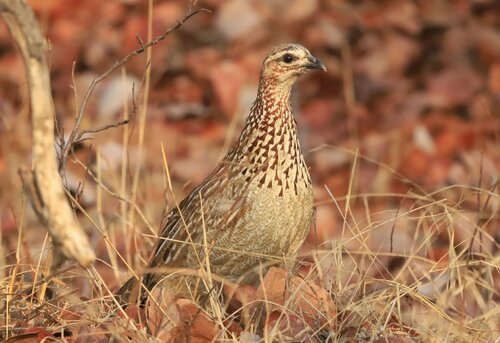
Crested Francolin (Ortygornis sephaena) Crested Francolin
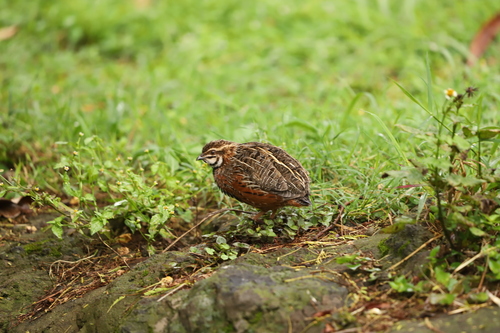
Harlequin Quail (Coturnix delegorguei) Harlequin Quail

Media

Loading…

In short

The most reliable way to separate Crested Francolin from Harlequin Quail in the field is by overall structure and jizz: Crested Francolin is a larger, longer-bodied bird with a more upright stance, while Harlequin Quail is distinctly smaller and more compact. Both species can overlap in southern Africa, but the francolin is bulkier and often seen walking in open woodland, whereas the quail is much more likely to flush from grassland or cultivated fields. If you see a small, round, fast-flushing bird, it's likely a Harlequin Quail; a larger, longer-tailed, and more upright bird is likely a Crested Francolin. Plumage differences are subtle at a distance, so focus on size, shape, and habitat first.

Identification tips

  1. Size and structure are the most reliable field marks: Crested Francolin is much larger and bulkier than Harlequin Quail. If the bird appears quail-sized, it is almost certainly not a francolin.
  2. Crested Francolin has a distinctive crest: Look for a small, pointed crest on the head, especially when the bird is alert. Harlequin Quail never shows a crest.
  3. Posture and stance: Francolin stands more upright and walks with a deliberate gait; quail is lower to the ground and scurries quickly.
  4. Tail length: Francolin has a longer, more obvious tail; quail's tail is very short and often hard to see in the field.
  5. Facial pattern: Francolin has a paler throat and more contrasting facial markings; quail's face is plainer and lacks strong contrast.
  6. Plumage complexity: Francolin is more streaked and mottled, especially on the upperparts and breast; quail is more uniformly brownish.
  7. Behavior when approached: Francolin may walk away or freeze, only flushing when closely pressed; quail explodes into flight at the last moment and flies low and fast.
  8. Habitat context: Francolin is typical of woodland and bushveld; quail is found in grassland, open fields, and agricultural land.
  9. Group size: Francolin is usually seen singly or in pairs; quail is often in small groups.
  10. Flight style: Francolin has a slower, more labored flight with deeper wingbeats; quail's flight is rapid and direct, often hugging the ground.
  11. No age-specific wing pattern differences: Neither species shows distinctive juvenile or immature upperwing marks that aid separation.
  12. No reliable vocal separation in the available notes: If you hear calls, consult a local field guide for details, but do not rely on voice based on these sources.
  13. Geographic overlap: Both can occur in southern Africa, so do not use range alone for separation.
  14. Sexual dimorphism is not a major pitfall: Both sexes are similar enough that sex is not a primary source of confusion.
  15. If in doubt, use a combination of size, structure, and habitat for the most reliable ID.

Size

Harlequin Quail is significantly smaller than Crested Francolin, with an average body mass of about 75 g [wikidata]. The francolin is noticeably bulkier and longer-bodied, giving a more robust impression both on the ground and in flight. If you see a bird that looks quail-sized, it is almost certainly not a Crested Francolin.

Plumage

No age-specific wing or upperwing pattern differences are documented in the sources for these species, so separation relies on overall plumage and structure. Crested Francolin has a streaked and mottled appearance with a distinctive crest on the head, which is absent in Harlequin Quail. The francolin's plumage is generally browner and more patterned, with a paler throat and more contrast on the face. Harlequin Quail is more uniformly colored, with less obvious facial markings and no crest. Both species are cryptically colored, but the francolin's patterning is more complex and its head shape is distinctive.

Behaviour

Crested Francolin tends to walk openly on the ground, often singly or in pairs, and is less likely to flush unless closely approached. It adopts a more upright posture and can be seen foraging in woodland edges or clearings. Harlequin Quail is much more secretive, usually remaining hidden in grass or crops until flushed, when it explodes into rapid, low flight. Quail are more likely to be seen in small groups and rarely linger in the open.

Habitat

Crested Francolin is most often found in open woodland, bushveld, and thickets in southern Africa, favoring areas with some tree cover. Harlequin Quail prefers grasslands, cultivated fields, and open country, often in more open or agricultural settings. If you are in dense woodland, francolin is more likely; in open fields or grassland, especially with crops, expect quail.

Submit a better description

Use the same sections as the comparison. Your text is published immediately.

The most reliable way to separate Crested Francolin from Harlequin Quail in the field is by overall structure and jizz: Crested Francolin is a larger, longer-bodied bird with a more upright stance, while Harlequin Quail is distinctly smaller and more compact. Both species can overlap in southern Africa, but the francolin is bulkier and often seen walking in open woodland, whereas the quail is much more likely to flush from grassland or cultivated fields. If you see a small, round, fast-flushing bird, it's likely a Harlequin Quail; a larger, longer-tailed, and more upright bird is likely a Crested Francolin. Plumage differences are subtle at a distance, so focus on size, shape, and habitat first.

  1. Size and structure are the most reliable field marks: Crested Francolin is much larger and bulkier than Harlequin Quail. If the bird appears quail-sized, it is almost certainly not a francolin.
  2. Crested Francolin has a distinctive crest: Look for a small, pointed crest on the head, especially when the bird is alert. Harlequin Quail never shows a crest.
  3. Posture and stance: Francolin stands more upright and walks with a deliberate gait; quail is lower to the ground and scurries quickly.
  4. Tail length: Francolin has a longer, more obvious tail; quail's tail is very short and often hard to see in the field.
  5. Facial pattern: Francolin has a paler throat and more contrasting facial markings; quail's face is plainer and lacks strong contrast.
  6. Plumage complexity: Francolin is more streaked and mottled, especially on the upperparts and breast; quail is more uniformly brownish.
  7. Behavior when approached: Francolin may walk away or freeze, only flushing when closely pressed; quail explodes into flight at the last moment and flies low and fast.
  8. Habitat context: Francolin is typical of woodland and bushveld; quail is found in grassland, open fields, and agricultural land.
  9. Group size: Francolin is usually seen singly or in pairs; quail is often in small groups.
  10. Flight style: Francolin has a slower, more labored flight with deeper wingbeats; quail's flight is rapid and direct, often hugging the ground.
  11. No age-specific wing pattern differences: Neither species shows distinctive juvenile or immature upperwing marks that aid separation.
  12. No reliable vocal separation in the available notes: If you hear calls, consult a local field guide for details, but do not rely on voice based on these sources.
  13. Geographic overlap: Both can occur in southern Africa, so do not use range alone for separation.
  14. Sexual dimorphism is not a major pitfall: Both sexes are similar enough that sex is not a primary source of confusion.
  15. If in doubt, use a combination of size, structure, and habitat for the most reliable ID.

Harlequin Quail is significantly smaller than Crested Francolin, with an average body mass of about 75 g [wikidata]. The francolin is noticeably bulkier and longer-bodied, giving a more robust impression both on the ground and in flight. If you see a bird that looks quail-sized, it is almost certainly not a Crested Francolin.

No age-specific wing or upperwing pattern differences are documented in the sources for these species, so separation relies on overall plumage and structure. Crested Francolin has a streaked and mottled appearance with a distinctive crest on the head, which is absent in Harlequin Quail. The francolin's plumage is generally browner and more patterned, with a paler throat and more contrast on the face. Harlequin Quail is more uniformly colored, with less obvious facial markings and no crest. Both species are cryptically colored, but the francolin's patterning is more complex and its head shape is distinctive.

Crested Francolin tends to walk openly on the ground, often singly or in pairs, and is less likely to flush unless closely approached. It adopts a more upright posture and can be seen foraging in woodland edges or clearings. Harlequin Quail is much more secretive, usually remaining hidden in grass or crops until flushed, when it explodes into rapid, low flight. Quail are more likely to be seen in small groups and rarely linger in the open.

Crested Francolin is most often found in open woodland, bushveld, and thickets in southern Africa, favoring areas with some tree cover. Harlequin Quail prefers grasslands, cultivated fields, and open country, often in more open or agricultural settings. If you are in dense woodland, francolin is more likely; in open fields or grassland, especially with crops, expect quail.

Discard your changes?

You have unsaved edits. If you leave now, those changes will be lost.

Crested Francolin · Harlequin Quail · My Tricky Birds