

Motmot

カミナガシャコ 対 ヤクシャウズラ

Ortygornis sephaena 対 Coturnix delegorguei

カミナガシャコとヤクシャウズラのクイズ
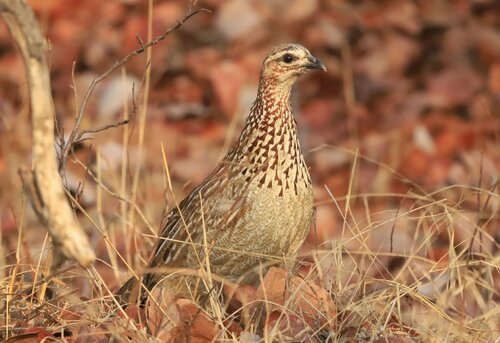
カミナガシャコ (Ortygornis sephaena) カミナガシャコ
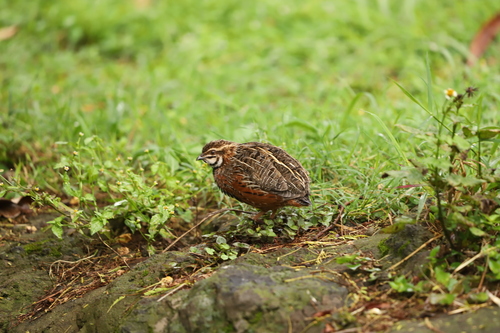
ヤクシャウズラ (Coturnix delegorguei) ヤクシャウズラ

メディア

読み込み中…

要点

フィールドでカミナガシャコとヤクシャウズラを区別する最も信頼できる方法は、全体的な構造と印象によるものです:カミナガシャコは、より直立した姿勢を持つ大きく、長い体の鳥であり、ヤクシャウズラは明らかに小さく、よりコンパクトです。両種は南アフリカで重なることがありますが、カミナガシャコはよりがっしりしており、オープンな森林を歩いていることが多いのに対し、ヤクシャウズラは草地や耕作された畑から飛び立つ可能性が高いです。小さくて丸い、素早く飛び立つ鳥を見たら、それはおそらくヤクシャウズラです;大きくて長い尾を持ち、より直立した鳥はおそらくカミナガシャコです。羽毛の違いは遠くから見ると微妙なので、まずはサイズ、形、そして生息地に注目してください。

識別のコツ

  1. サイズと構造が最も信頼できるフィールドマークです: カミナガシャコはヤクシャウズラよりもはるかに大きく、がっしりしています。もし鳥がウズラサイズに見えるなら、それはほぼ確実にカミナガシャコではありません。
  2. カミナガシャコには特徴的な冠があります: 鳥が警戒しているときに特に、頭に小さく尖った冠を探してください。ヤクシャウズラは決して冠を見せません。
  3. 姿勢と立ち方: カミナガシャコはより直立しており、意図的な歩き方をします;ヤクシャウズラは地面に近く、素早く走ります。
  4. 尾の長さ: カミナガシャコはより長く、明らかな尾を持っています;ヤクシャウズラの尾は非常に短く、フィールドでは見るのが難しいことが多いです。
  5. 顔の模様: カミナガシャコは喉が淡い色で、顔の模様がより対照的です;ヤクシャウズラの顔はより地味で、強い対比がありません。
  6. 羽毛の複雑さ: カミナガシャコは特に上面と胸において、より縞模様でまだらです;ヤクシャウズラはより均一に茶色です。
  7. 接近時の行動: カミナガシャコは歩き去ったり、動かずにいることがあり、近づかれたときにのみ飛び立ちます;ヤクシャウズラは最後の瞬間に飛び立ち、低く速く飛びます。
  8. 生息地の文脈: カミナガシャコは森林やブッシュヴェルトに典型的です;ヤクシャウズラは草地、オープンフィールド、農地に見られます。
  9. 群れのサイズ: カミナガシャコは通常、単独またはペアで見られます;ヤクシャウズラはしばしば小さな群れで見られます。
  10. 飛行スタイル: カミナガシャコはより遅く、重い飛行をし、翼の拍動が深いです;ヤクシャウズラの飛行は迅速で直接的で、しばしば地面に沿って飛びます。
  11. 年齢特有の翼の模様の違いはありません: どちらの種も、区別を助ける特有の幼鳥や未熟な上翼のマークを示しません。
  12. 利用可能なメモにおいて信頼できる音声の区別はありません: 呼び声を聞いた場合は、地元のフィールドガイドを参照してくださいが、これらの情報源に基づいて声に頼らないでください。
  13. 地理的重複: 両種は南アフリカで発生する可能性があるため、範囲だけで区別しないでください。
  14. 性的二形性は大きな落とし穴ではありません: 両性は十分に似ているため、性別は主要な混乱の原因ではありません。
  15. 疑わしい場合は、最も信頼できる識別のためにサイズ、構造、生息地の組み合わせを使用してください。

大きさ

ヤクシャウズラはカミナガシャコよりもかなり小さく、平均体重は約75gです [wikidata]。カミナガシャコは明らかにがっしりしており、長い体を持っており、地面でも飛行中でもより頑丈な印象を与えます。ウズラサイズに見える鳥を見たら、それはほぼ確実にカミナガシャコではありません。

羽色

これらの種に関する情報源には年齢特有の翼や上翼の模様の違いは文書化されていないため、区別は全体的な羽毛と構造に依存します。カミナガシャコは、頭に特徴的な冠を持つ縞模様でまだらな外観をしていますが、ヤクシャウズラにはそれがありません。カミナガシャコの羽毛は一般的により茶色で、模様が多く、喉が淡く、顔により対照があります。ヤクシャウズラはより均一な色合いで、顔の模様が目立たず、冠もありません。両種は隠蔽色ですが、カミナガシャコの模様はより複雑で、頭の形が特徴的です。

行動

カミナガシャコは地面をオープンに歩く傾向があり、しばしば単独またはペアで見られ、近づかれない限り飛び立つ可能性は低いです。より直立した姿勢を取り、森林の端や空き地で餌を探しているのが見られます。ヤクシャウズラは非常に秘密主義で、通常は草や作物の中に隠れており、飛び立つときに急速で低い飛行に突入します。ウズラは小さな群れで見られることが多く、オープンな場所に長く留まることは稀です。

生息環境

カミナガシャコは南アフリカのオープンな森林、ブッシュヴェルト、茂みで最もよく見られ、木の覆いがある場所を好みます。ヤクシャウズラは草地、耕作された畑、オープンな国を好み、よりオープンまたは農業的な環境で見られます。もし密な森林にいるなら、カミナガシャコの可能性が高いです;オープンフィールドや草地、特に作物がある場合は、ヤクシャウズラを期待してください。

より良い説明を送る

比較と同じ項目を使ってください。文章はすぐに公開されます。

The most reliable way to separate Crested Francolin from Harlequin Quail in the field is by overall structure and jizz: Crested Francolin is a larger, longer-bodied bird with a more upright stance, while Harlequin Quail is distinctly smaller and more compact. Both species can overlap in southern Africa, but the francolin is bulkier and often seen walking in open woodland, whereas the quail is much more likely to flush from grassland or cultivated fields. If you see a small, round, fast-flushing bird, it's likely a Harlequin Quail; a larger, longer-tailed, and more upright bird is likely a Crested Francolin. Plumage differences are subtle at a distance, so focus on size, shape, and habitat first.

  1. Size and structure are the most reliable field marks: Crested Francolin is much larger and bulkier than Harlequin Quail. If the bird appears quail-sized, it is almost certainly not a francolin.
  2. Crested Francolin has a distinctive crest: Look for a small, pointed crest on the head, especially when the bird is alert. Harlequin Quail never shows a crest.
  3. Posture and stance: Francolin stands more upright and walks with a deliberate gait; quail is lower to the ground and scurries quickly.
  4. Tail length: Francolin has a longer, more obvious tail; quail's tail is very short and often hard to see in the field.
  5. Facial pattern: Francolin has a paler throat and more contrasting facial markings; quail's face is plainer and lacks strong contrast.
  6. Plumage complexity: Francolin is more streaked and mottled, especially on the upperparts and breast; quail is more uniformly brownish.
  7. Behavior when approached: Francolin may walk away or freeze, only flushing when closely pressed; quail explodes into flight at the last moment and flies low and fast.
  8. Habitat context: Francolin is typical of woodland and bushveld; quail is found in grassland, open fields, and agricultural land.
  9. Group size: Francolin is usually seen singly or in pairs; quail is often in small groups.
  10. Flight style: Francolin has a slower, more labored flight with deeper wingbeats; quail's flight is rapid and direct, often hugging the ground.
  11. No age-specific wing pattern differences: Neither species shows distinctive juvenile or immature upperwing marks that aid separation.
  12. No reliable vocal separation in the available notes: If you hear calls, consult a local field guide for details, but do not rely on voice based on these sources.
  13. Geographic overlap: Both can occur in southern Africa, so do not use range alone for separation.
  14. Sexual dimorphism is not a major pitfall: Both sexes are similar enough that sex is not a primary source of confusion.
  15. If in doubt, use a combination of size, structure, and habitat for the most reliable ID.

Harlequin Quail is significantly smaller than Crested Francolin, with an average body mass of about 75 g [wikidata]. The francolin is noticeably bulkier and longer-bodied, giving a more robust impression both on the ground and in flight. If you see a bird that looks quail-sized, it is almost certainly not a Crested Francolin.

No age-specific wing or upperwing pattern differences are documented in the sources for these species, so separation relies on overall plumage and structure. Crested Francolin has a streaked and mottled appearance with a distinctive crest on the head, which is absent in Harlequin Quail. The francolin's plumage is generally browner and more patterned, with a paler throat and more contrast on the face. Harlequin Quail is more uniformly colored, with less obvious facial markings and no crest. Both species are cryptically colored, but the francolin's patterning is more complex and its head shape is distinctive.

Crested Francolin tends to walk openly on the ground, often singly or in pairs, and is less likely to flush unless closely approached. It adopts a more upright posture and can be seen foraging in woodland edges or clearings. Harlequin Quail is much more secretive, usually remaining hidden in grass or crops until flushed, when it explodes into rapid, low flight. Quail are more likely to be seen in small groups and rarely linger in the open.

Crested Francolin is most often found in open woodland, bushveld, and thickets in southern Africa, favoring areas with some tree cover. Harlequin Quail prefers grasslands, cultivated fields, and open country, often in more open or agricultural settings. If you are in dense woodland, francolin is more likely; in open fields or grassland, especially with crops, expect quail.

変更を破棄しますか?

保存していない編集があります。今離れると失われます。

カミナガシャコ · ヤクシャウズラ · 苦手な鳥