

Cream-coloured Courser vs Peregrine Falcon
Cursorius cursor versus Falco peregrinus
Play a quiz with Cream-coloured Courser and Peregrine Falcon
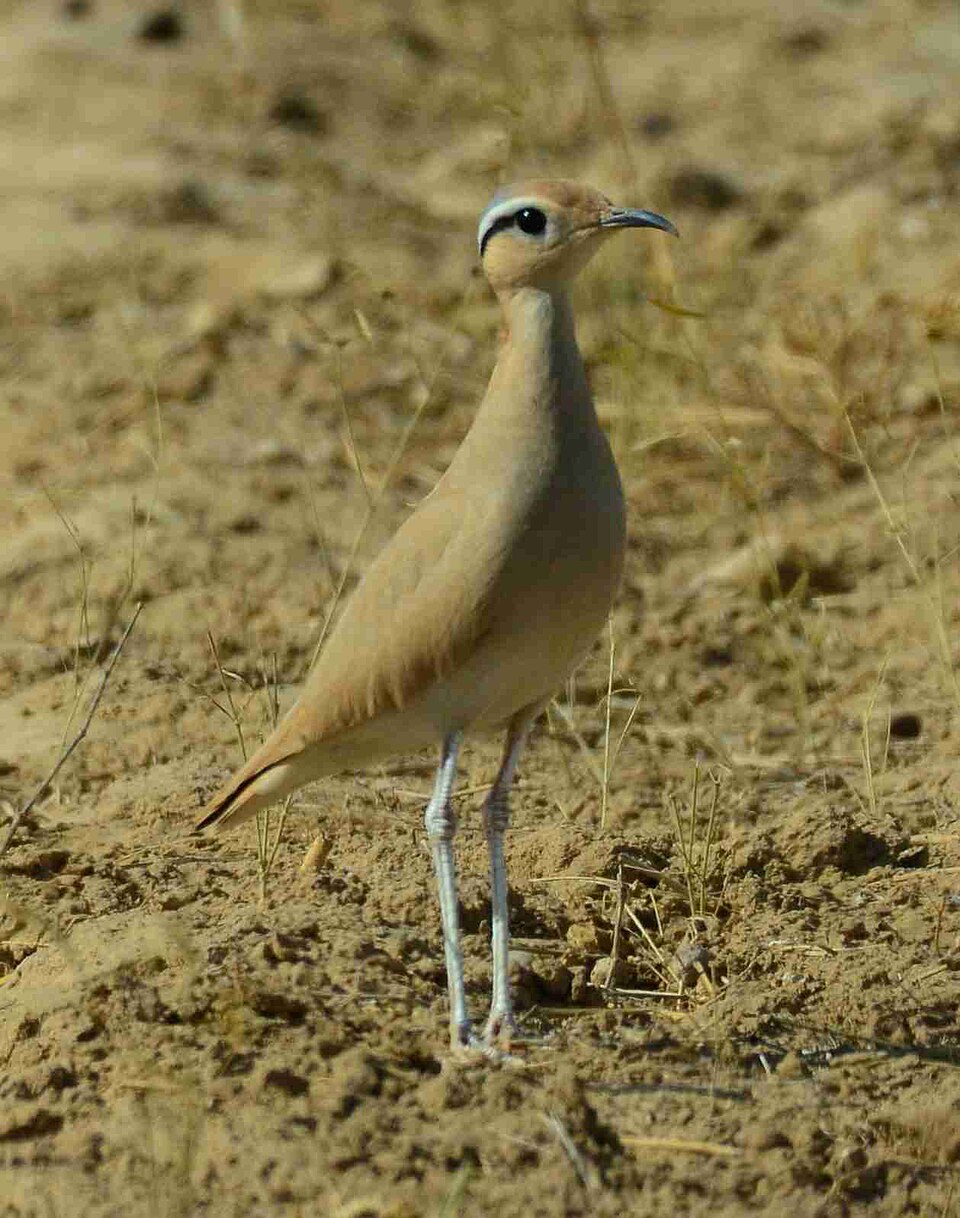 Cream-coloured Courser
 Peregrine Falcon
In short
The most reliable way to separate Cream-coloured Courser from Peregrine Falcon is by overall structure and flight style: coursers are long-legged, ground-running birds with sandy plumage and black underwings, while peregrines are robust, broad-chested raptors with pointed wings and a blue-grey, barred appearance. Juvenile coursers are mottled above and have a duller head pattern, but still show the distinctive black underwing in flight, which is never matched by the falcon. Peregrine Falcons are much bulkier, with a strong, hooked bill and a black hood, and are typically seen soaring or stooping rather than running. Even at a distance, the courser's upright stance and terrestrial habits contrast sharply with the falcon's predatory, aerial jizz.
Identification tips
- Black underwing in flight (all ages, courser only): Cream-coloured Courser shows black underwings and black outer upperwings in flight, a feature never seen in Peregrine Falcon.
- Leg length and stance: Courser has very long, pale grey legs and stands upright, often running on the ground; Peregrine Falcon has much shorter legs, perches rather than runs, and never shows the same upright, ground-dwelling posture.
- Bill shape: Courser's bill is slightly downcurved and slender, suited for picking insects; Peregrine's bill is robust, hooked, and clearly raptorial.
- Head pattern: Courser has a pale face with a strong white supercilium and black eyestripe, plus a grey to blue-grey crown; Peregrine has a black hood and bold moustachial stripe, with no pale supercilium.
- Upperpart color: Courser is sandy above, blending with arid ground; Peregrine is blue-grey (adult) or brownish (juvenile) above, never sandy.
- Underpart color: Courser is whitish below with no barring; Peregrine is white with strong dark barring (adult) or streaking (juvenile).
- Juvenile pattern: Juvenile courser is mottled above and has a duller head, but still sandy and pale-faced; juvenile peregrine is browner and streaked below, with the same dark facial mask as adults.
- Flight style: Courser flies with relaxed, pratincole-like wingbeats and pointed wings; Peregrine is powerful, with deep wingbeats and often soars or stoops.
- Perched vs. running: Courser is almost always seen running or standing on the ground; Peregrine is usually perched high or in flight, rarely on the ground except at kills.
- Habitat: Courser is strictly in dry, open, semi-desert or steppe; Peregrine is found in a wide range of open habitats, including urban areas and cliffs.
- Size impression: Courser is slender and delicate; Peregrine is robust, broad-chested, and much heavier.
- Supercilium: Courser's white supercilium is bold and diagnostic; Peregrine lacks this feature.
- Eyestripe vs. moustache: Courser's black eyestripe is thin and horizontal; Peregrine's black 'moustache' is thick, vertical, and extends from the bill.
- Behavior at prey: Courser picks insects from the ground; Peregrine catches birds in flight with a stoop, rarely seen feeding on the ground except with large prey.
- Confusion risk: At a distance, a flying courser may look vaguely falcon-like due to pointed wings, but the black underwing and sandy coloration are reliable separators. If you see the bird running, it's a courser; if you see a powerful, stooping flight, it's a falcon.
Size
Cream-coloured Courser is a medium-sized wader, with a body mass around 129 g, and a length cited between 19–27 cm, with a wingspan of 51–57 cm. Peregrine Falcon is significantly larger and bulkier, described as 'crow-sized' and sexually dimorphic (females much larger than males), but no exact mass is given here. The falcon's body is more powerfully built, with a deeper chest and heavier proportions, while the courser is slender, with long legs and a lighter, more delicate frame.
Plumage
- Juvenile Cream-coloured Coursers are mottled dark above and have a duller head pattern than adults, but all ages show sandy upperparts, a grey crown, black eyestripe, and a conspicuous white supercilium. In flight, both adults and juveniles reveal black outer upperwings and black underwings, a key feature.
- Peregrine Falcons (all ages) have a blue-grey back, black head, and barred white underparts. Juveniles are browner above and streaked below, but never show the courser's sandy tones or black underwing. Instead, peregrines in flight show a strong contrast between dark upperparts and pale underparts, with no black underwing. The facial pattern is a bold black hood and moustachial stripe, unlike the courser's pale face and supercilium.
Behaviour
Cream-coloured Coursers are almost always seen on the ground, running rapidly in open, dry areas as they hunt insects. Their flight is described as relaxed, with pointed wings and pratincole-like jizz, but they rarely perch up high. Peregrine Falcons are aerial predators, most often seen flying powerfully, soaring, or performing high-speed stoops to catch prey in mid-air. They may perch on cliffs or tall structures, but never run on the ground like a courser. If seen hunting, the falcon's stoop and mid-air strike are unmistakable and never matched by the courser.
Habitat
Cream-coloured Coursers are specialists of dry, open, semi-desert regions, often in the Middle East and North Africa, and are rarely found away from bare ground. Peregrine Falcons require open space for hunting but are much more flexible, found over water, marshes, fields, tundra, and even urban areas. If you see the bird running on open, sandy ground, it's almost certainly a courser; if soaring over varied terrain or perched on a high vantage, it's likely a falcon.