

Corrione biondo vs Falco pellegrino
Cursorius cursor contro Falco peregrinus
Fai un quiz con Corrione biondo e Falco pellegrino
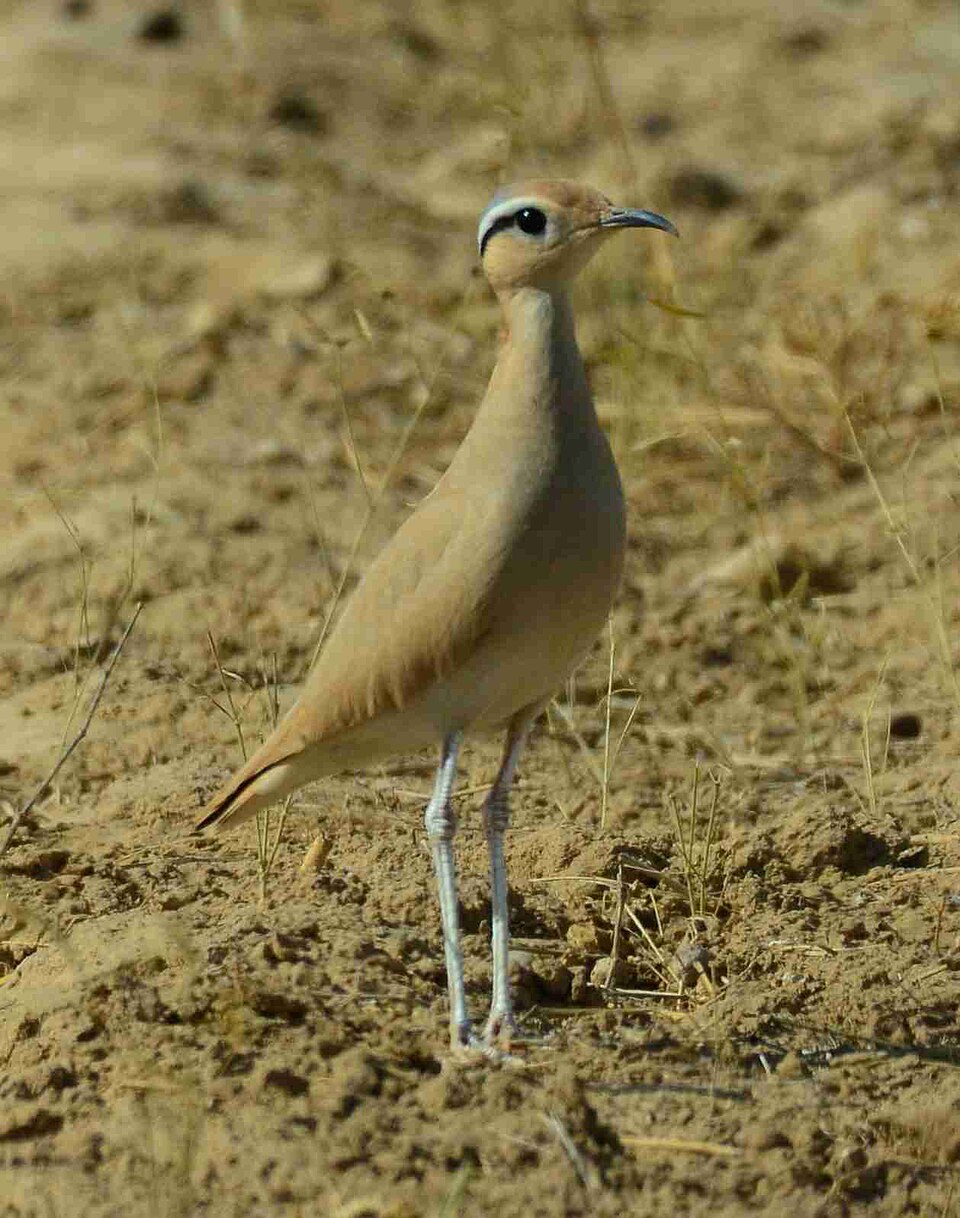 Corrione biondo
 Falco pellegrino
In breve
Il modo più affidabile per separare il Corrione biondo dal Falco pellegrino è attraverso la struttura generale e lo stile di volo: i corrioni sono uccelli a lungo gambe, che corrono a terra, con piumaggio sabbioso e sottocostole nere, mentre i pellegrini sono rapaci robusti, dal petto largo, con ali appuntite e un aspetto blu-grigio striato. I corrioni juvenili sono maculati sopra e hanno un motivo della testa più opaco, ma mostrano comunque il distintivo sottocostola nera in volo, che non è mai eguagliato dal falco. I Falchi pellegrini sono molto più massicci, con un becco forte e ricurvo e un cappuccio nero, e vengono tipicamente visti planare o tuffarsi piuttosto che correre. Anche da lontano, la postura eretta del corrione e le abitudini terrestri contrastano nettamente con il comportamento predatorio e aereo del falco.
Consigli di identificazione
- Sottocostola nera in volo (tutte le età, solo corrione): Il Corrione biondo mostra sottocostole nere e esterne superiori nere in volo, una caratteristica mai vista nel Falco pellegrino.
- Lunghezza delle gambe e postura: Il corrione ha gambe molto lunghe e grigie chiare e sta eretto, spesso correndo a terra; il Falco pellegrino ha gambe molto più corte, si appollaia piuttosto che correre e non mostra mai la stessa postura eretta e terrestre.
- Forma del becco: Il becco del corrione è leggermente ricurvo verso il basso e sottile, adatto per raccogliere insetti; il becco del pellegrino è robusto, ricurvo e chiaramente rapace.
- Motivo della testa: Il corrione ha un volto chiaro con un forte sopracciglio bianco e una striscia nera sugli occhi, oltre a una corona grigia a blu-grigia; il pellegrino ha un cappuccio nero e una striscia moustachiale audace, senza sopracciglio chiaro.
- Colore della parte superiore: Il corrione è sabbioso sopra, mimetizzandosi con il terreno arido; il pellegrino è blu-grigio (adulto) o marrone (juvenile) sopra, mai sabbioso.
- Colore della parte inferiore: Il corrione è biancastro sotto senza striature; il pellegrino è bianco con forti striature scure (adulto) o striature (juvenile).
- Motivo juvenile: Il corrione juvenile è maculato sopra e ha una testa più opaca, ma è comunque sabbioso e con un volto chiaro; il pellegrino juvenile è più marrone e striato sotto, con la stessa maschera facciale scura degli adulti.
- Stile di volo: Il corrione vola con battiti d'ala rilassati, simili a quelli di un pratincole, e ali appuntite; il pellegrino è potente, con battiti d'ala profondi e spesso plana o tuffa.
- Appollaiato vs. correre: Il corrione è quasi sempre visto correre o in piedi a terra; il pellegrino è solitamente appollaiato in alto o in volo, raramente a terra tranne che durante le uccisioni.
- Habitat: Il corrione si trova esclusivamente in regioni secche, aperte, semi-desertiche o steppose; il pellegrino si trova in una vasta gamma di habitat aperti, comprese le aree urbane e le scogliere.
- Impressione di dimensione: Il corrione è snodato e delicato; il pellegrino è robusto, dal petto largo e molto più pesante.
- Sopracciglio: Il sopracciglio bianco del corrione è audace e diagnostico; il pellegrino non ha questa caratteristica.
- Striscia sugli occhi vs. moustache: La striscia nera sugli occhi del corrione è sottile e orizzontale; la 'moustache' nera del pellegrino è spessa, verticale e si estende dal becco.
- Comportamento verso la preda: Il corrione raccoglie insetti da terra; il pellegrino cattura uccelli in volo con un tuffo, raramente visto nutrirsi a terra tranne che con prede grandi.
- Rischio di confusione: Da lontano, un corrione in volo può sembrare vagamente simile a un falco a causa delle ali appuntite, ma la sottocostola nera e la colorazione sabbiosa sono separatori affidabili. Se vedi l'uccello correre, è un corrione; se vedi un volo potente e tuffante, è un falco.
Taglia
Il Corrione biondo è un wader di dimensioni medie, con una massa corporea di circa 129 g e una lunghezza citata tra 19–27 cm, con un'apertura alare di 51–57 cm. Il Falco pellegrino è significativamente più grande e massiccio, descritto come 'delle dimensioni di un corvo' e sessualmente dimorfico (femmine molto più grandi dei maschi), ma non viene fornita qui una massa esatta. Il corpo del falco è costruito in modo più potente, con un torace più profondo e proporzioni più pesanti, mentre il corrione è snodato, con lunghe gambe e una struttura più leggera e delicata.
Piumaggio
- I corrioni biondi juvenili sono maculati scuri sopra e hanno un motivo della testa più opaco rispetto agli adulti, ma tutte le età mostrano parti superiori sabbiose, una corona grigia, una striscia nera sugli occhi e un sopracciglio bianco evidente. In volo, sia gli adulti che i juvenili rivelano ali superiori esterne nere e sottocostole nere, una caratteristica chiave.
- I Falchi pellegrini (tutte le età) hanno un dorso blu-grigio, una testa nera e parti inferiori bianche striate. I juvenili sono più marroni sopra e striati sotto, ma non mostrano mai le tonalità sabbiose o la sottocostola nera del corrione. Invece, i pellegrini in volo mostrano un forte contrasto tra le parti superiori scure e le parti inferiori chiare, senza sottocostola nera. Il motivo facciale è un audace cappuccio nero e una striscia moustachiale, a differenza del volto chiaro e del sopracciglio del corrione.
Comportamento
I Corrioni biondi sono quasi sempre visti a terra, correndo rapidamente in aree aperte e secche mentre cacciano insetti. Il loro volo è descritto come rilassato, con ali appuntite e un comportamento simile a quello di un pratincole, ma raramente si appollaiano in alto. I Falchi pellegrini sono predatori aerei, più spesso visti volare potentemente, planare o eseguire tuffi ad alta velocità per catturare prede in volo. Possono appollaiarsi su scogliere o strutture alte, ma non corrono mai a terra come un corrione. Se visti mentre cacciano, il tuffo e l'attacco in volo del falco sono inconfondibili e mai eguagliati dal corrione.
Habitat
I Corrioni biondi sono specialisti di regioni secche, aperte e semi-desertiche, spesso in Medio Oriente e Nord Africa, e raramente si trovano lontano dal terreno nudo. I Falchi pellegrini richiedono spazi aperti per la caccia ma sono molto più flessibili, trovandosi sopra l'acqua, nelle paludi, nei campi, nella tundra e persino nelle aree urbane. Se vedi l'uccello correre su terreno sabbioso aperto, è quasi certamente un corrione; se sta planando su un terreno variegato o appollaiato su un punto elevato, è probabilmente un falco.
Corrione biondo · Falco pellegrino · I miei uccelli difficili