

Motmot

Cream-coloured Courser vs Great Skua

Cursorius cursor versus Stercorarius skua

Play a quiz with Cream-coloured Courser and Great Skua
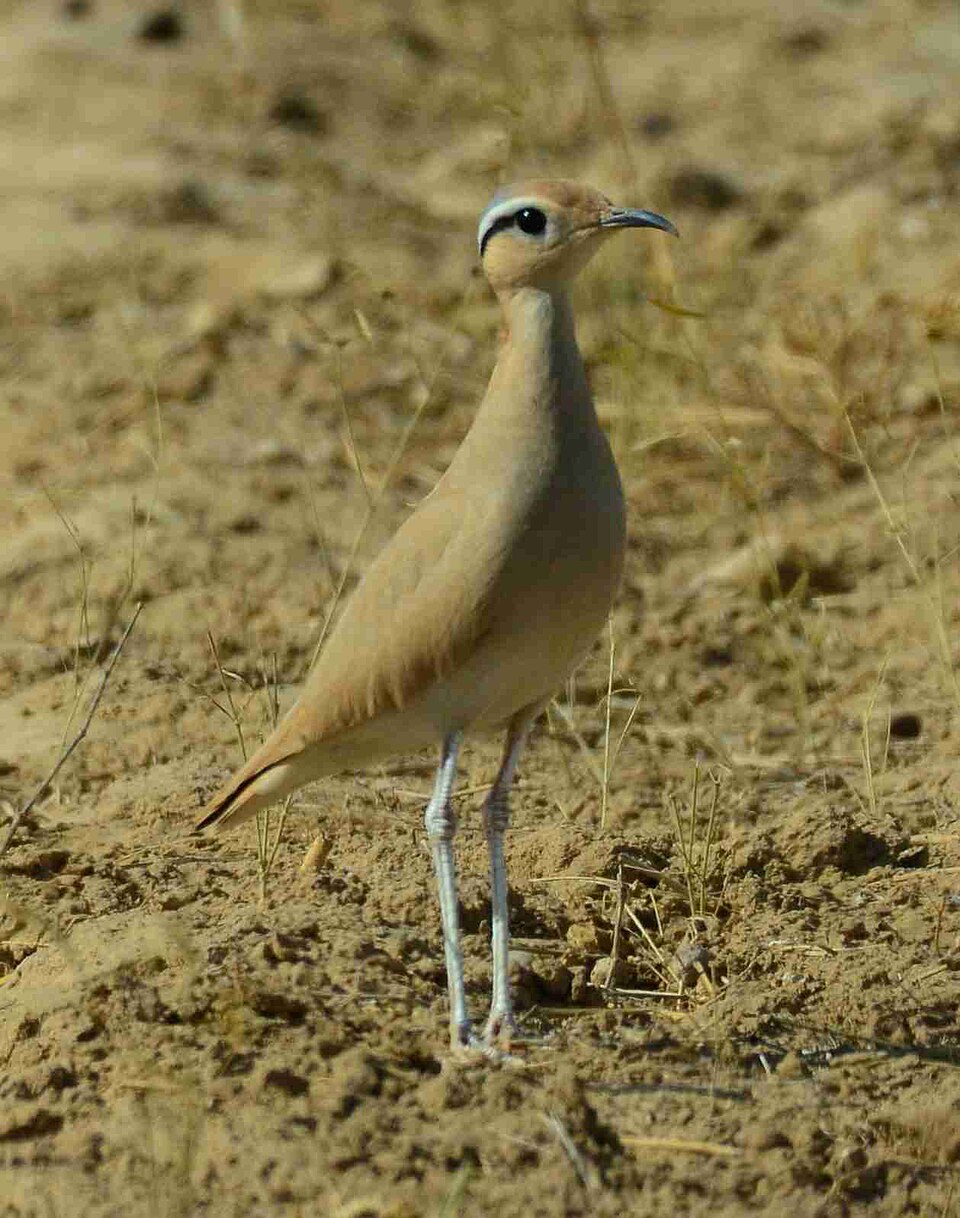
Cream-coloured Courser (Cursorius cursor) Cream-coloured Courser
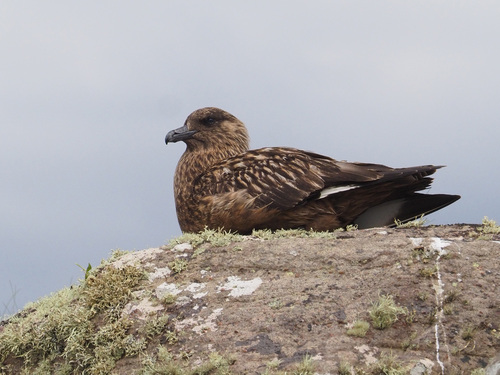
Great Skua (Stercorarius skua) Great Skua

Media

Loading…

In short

The most reliable way to separate Cream-coloured Courser from Great Skua is by overall structure and flight style: coursers are slim, long-legged, sandy birds of dry ground, while great skuas are massive, barrel-chested, dark seabirds with powerful, broad wings. Juvenile coursers show a mottled dark upperwing and a duller head pattern, but even immatures never approach the skua’s bulky build or dark, streaked plumage. In flight, coursers display black outer upperwings and underwings, while great skuas show white wing flashes on otherwise brownish wings. Habitat is also a strong clue: coursers are found in open, arid land, while skuas are strictly coastal or pelagic.

Identification tips

  1. Size and bulk: Great Skua is enormous compared to Cream-coloured Courser—if the bird is gull-sized or larger, it cannot be a courser. This mark is reliable at any distance and for all ages.
  2. Leg length and structure: Coursers have very long, pale grey legs and a slim, upright stance. Skuas have short, dark legs and a heavy, hunched posture. If you see the legs clearly, this is diagnostic.
  3. Flight style: Coursers fly with relaxed, pratincole-like wingbeats and pointed wings; skuas fly powerfully with deep wingbeats and broad wings, often looking heavy and purposeful.
  4. Wing pattern in flight: Adult and juvenile coursers show black outer upperwings and underwings, never white. Great Skuas show bold white flashes on the primaries of otherwise brown wings—this is a key mark for skua of any age.
  5. Tail shape: Skua has a short, blunt tail; courser’s tail is longer relative to body and never appears stubby.
  6. Body and head pattern: Coursers are sandy above, whitish below, with a grey crown, black eyestripe, and white supercilium. Skuas are streaked brown with a black cap and lack any pale facial markings.
  7. Juvenile confusion: Juvenile coursers are mottled above but still sandy and pale, with a duller head pattern; juvenile skuas are warmer brown and unstreaked below, but always much darker and bulkier than any courser.
  8. Bill shape: Courser’s bill is slender and slightly downcurved; skua’s bill is thick, heavy, and hooked—adapted for predation and piracy.
  9. Habitat context: If the bird is in dry, open, inland habitat, it is almost certainly a courser; if it is at sea or on a rocky coastal island, it is a skua.
  10. Behavior: Coursers run on the ground and rarely fly unless flushed; skuas are almost always seen flying, harassing other birds, or loafing on the water or rocky ground.
  11. Voice: Only skua is likely to be heard calling, with harsh, repeated notes; courser is generally silent or unobtrusive.
  12. Underwing color: In flight, courser’s underwing is black; skua’s is brown with white flashes—check this if you see the bird banking or overhead.
  13. Supercilium: Only courser has a conspicuous white supercilium; skua never shows this feature.
  14. Overall impression: If the bird gives the impression of a pratincole or small plover, it is a courser; if it recalls a large gull or buzzard, it is a skua.
  15. Season and range: While both can be migratory, their ranges rarely overlap outside of vagrancy—always consider the expected species for the location and habitat.

Size

Great Skua is vastly larger and heavier than Cream-coloured Courser. The skua averages around 1835 g, with a length of 50–58 cm and a wingspan of 125–140 cm—comparable to a herring gull. In contrast, the courser weighs only about 129 g, measures 19–27 cm in length, and has a wingspan of 51–57 cm. Even at a distance, the skua’s bulk, barrel chest, and broad wings are unmistakable compared to the courser’s slim, delicate build and long legs.

Plumage

Juvenile Cream-coloured Coursers are mottled dark above with a duller head pattern, but always show a sandy body, pale underparts, and a distinctive black outer upperwing and underwing in flight. Adults have a sandy back, grey crown, black eyestripe, and white supercilium. By contrast, Great Skuas of all ages are streaked greyish brown above, with a blackish cap; juveniles are warmer brown and lack streaking below. In flight, skuas show bold white flashes on the primaries and a short, blunt tail, while coursers never show white in the wing but have black outer upperwings and underwings. The courser’s legs are always pale grey and long, while the skua’s are short and dark. No age of skua ever shows the sandy, pale look of a courser.

Behaviour

Cream-coloured Coursers are terrestrial runners, often seen dashing across open ground in search of insects, with a pratincole-like, relaxed flight and pointed wings. Great Skuas are powerful, aggressive fliers, often seen harassing other seabirds, flying with deep, heavy wingbeats, and rarely if ever seen running on land. Skuas may attack intruders near their nests and are notorious for kleptoparasitism, while coursers are shy and unobtrusive.

Habitat

Habitat is a major separator: Cream-coloured Coursers inhabit dry, open semi-desert and arid plains, often far from water. Great Skuas are strictly coastal or pelagic, breeding on rocky islands or coastal moorland and spending most of the year at sea. Finding either species outside its typical habitat is extremely unlikely.

Voice

Great Skua has a harsh, repeated 'hah-hah-hah-hah' call, with additional quacking and croaking notes. Cream-coloured Courser’s voice is not described in the provided notes, but vocalizations are not a primary field mark for separation between these two species.

Submit a better description

Use the same sections as the comparison. Your text is published immediately.

The most reliable way to separate Cream-coloured Courser from Great Skua is by overall structure and flight style: coursers are slim, long-legged, sandy birds of dry ground, while great skuas are massive, barrel-chested, dark seabirds with powerful, broad wings. Juvenile coursers show a mottled dark upperwing and a duller head pattern, but even immatures never approach the skua’s bulky build or dark, streaked plumage. In flight, coursers display black outer upperwings and underwings, while great skuas show white wing flashes on otherwise brownish wings. Habitat is also a strong clue: coursers are found in open, arid land, while skuas are strictly coastal or pelagic.

  1. Size and bulk: Great Skua is enormous compared to Cream-coloured Courser—if the bird is gull-sized or larger, it cannot be a courser. This mark is reliable at any distance and for all ages.
  2. Leg length and structure: Coursers have very long, pale grey legs and a slim, upright stance. Skuas have short, dark legs and a heavy, hunched posture. If you see the legs clearly, this is diagnostic.
  3. Flight style: Coursers fly with relaxed, pratincole-like wingbeats and pointed wings; skuas fly powerfully with deep wingbeats and broad wings, often looking heavy and purposeful.
  4. Wing pattern in flight: Adult and juvenile coursers show black outer upperwings and underwings, never white. Great Skuas show bold white flashes on the primaries of otherwise brown wings—this is a key mark for skua of any age.
  5. Tail shape: Skua has a short, blunt tail; courser’s tail is longer relative to body and never appears stubby.
  6. Body and head pattern: Coursers are sandy above, whitish below, with a grey crown, black eyestripe, and white supercilium. Skuas are streaked brown with a black cap and lack any pale facial markings.
  7. Juvenile confusion: Juvenile coursers are mottled above but still sandy and pale, with a duller head pattern; juvenile skuas are warmer brown and unstreaked below, but always much darker and bulkier than any courser.
  8. Bill shape: Courser’s bill is slender and slightly downcurved; skua’s bill is thick, heavy, and hooked—adapted for predation and piracy.
  9. Habitat context: If the bird is in dry, open, inland habitat, it is almost certainly a courser; if it is at sea or on a rocky coastal island, it is a skua.
  10. Behavior: Coursers run on the ground and rarely fly unless flushed; skuas are almost always seen flying, harassing other birds, or loafing on the water or rocky ground.
  11. Voice: Only skua is likely to be heard calling, with harsh, repeated notes; courser is generally silent or unobtrusive.
  12. Underwing color: In flight, courser’s underwing is black; skua’s is brown with white flashes—check this if you see the bird banking or overhead.
  13. Supercilium: Only courser has a conspicuous white supercilium; skua never shows this feature.
  14. Overall impression: If the bird gives the impression of a pratincole or small plover, it is a courser; if it recalls a large gull or buzzard, it is a skua.
  15. Season and range: While both can be migratory, their ranges rarely overlap outside of vagrancy—always consider the expected species for the location and habitat.

Great Skua is vastly larger and heavier than Cream-coloured Courser. The skua averages around 1835 g, with a length of 50–58 cm and a wingspan of 125–140 cm—comparable to a herring gull. In contrast, the courser weighs only about 129 g, measures 19–27 cm in length, and has a wingspan of 51–57 cm. Even at a distance, the skua’s bulk, barrel chest, and broad wings are unmistakable compared to the courser’s slim, delicate build and long legs.

Juvenile Cream-coloured Coursers are mottled dark above with a duller head pattern, but always show a sandy body, pale underparts, and a distinctive black outer upperwing and underwing in flight. Adults have a sandy back, grey crown, black eyestripe, and white supercilium. By contrast, Great Skuas of all ages are streaked greyish brown above, with a blackish cap; juveniles are warmer brown and lack streaking below. In flight, skuas show bold white flashes on the primaries and a short, blunt tail, while coursers never show white in the wing but have black outer upperwings and underwings. The courser’s legs are always pale grey and long, while the skua’s are short and dark. No age of skua ever shows the sandy, pale look of a courser.

Cream-coloured Coursers are terrestrial runners, often seen dashing across open ground in search of insects, with a pratincole-like, relaxed flight and pointed wings. Great Skuas are powerful, aggressive fliers, often seen harassing other seabirds, flying with deep, heavy wingbeats, and rarely if ever seen running on land. Skuas may attack intruders near their nests and are notorious for kleptoparasitism, while coursers are shy and unobtrusive.

Habitat is a major separator: Cream-coloured Coursers inhabit dry, open semi-desert and arid plains, often far from water. Great Skuas are strictly coastal or pelagic, breeding on rocky islands or coastal moorland and spending most of the year at sea. Finding either species outside its typical habitat is extremely unlikely.

Great Skua has a harsh, repeated 'hah-hah-hah-hah' call, with additional quacking and croaking notes. Cream-coloured Courser’s voice is not described in the provided notes, but vocalizations are not a primary field mark for separation between these two species.

Discard your changes?

You have unsaved edits. If you leave now, those changes will be lost.

Cream-coloured Courser · Great Skua · My Tricky Birds