

Motmot

Common Woodpigeon vs Namaqua Dove

Columba palumbus versus Oena capensis

Play a quiz with Common Woodpigeon and Namaqua Dove
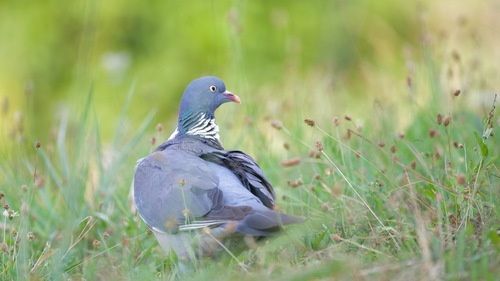
Common Woodpigeon (Columba palumbus) Common Woodpigeon
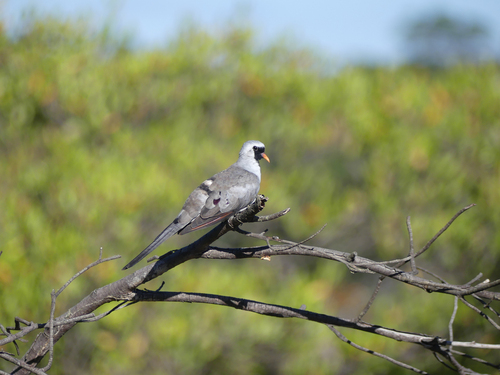
Namaqua Dove (Oena capensis) Namaqua Dove

Media

Loading…

In short

The most reliable way to separate Common Woodpigeon from Namaqua Dove is size and structure: Woodpigeon is a huge, heavy-bodied pigeon with broad wings and a short tail, while Namaqua Dove is tiny and extremely long-tailed, almost budgerigar-like. In flight, Woodpigeon shows broad white wing bars and a large, rounded shape; Namaqua Dove flashes chestnut primaries and a thin, black-tipped tail. Adult male Namaqua Doves have a distinctive black face and throat, never seen in Woodpigeon. Juvenile Woodpigeons lack the white neck patches but are still much bulkier than any Namaqua Dove. If you see a small, long-tailed dove with a white belly and chestnut in the wing, it's Namaqua Dove; a large, pale pigeon with white on the neck and wing is Woodpigeon.

Identification tips

  1. Size and bulk: Woodpigeon is huge and heavy-bodied, never approached by the tiny, delicate Namaqua Dove. If the bird looks sparrow-sized or smaller than a collared dove, it's not a Woodpigeon.
  2. Tail shape and length: Namaqua Dove has an extremely long, thin, black-tipped tail, often held straight out in flight or slightly cocked when perched. Woodpigeon has a broad, rounded tail with no black tip.
  3. Flight pattern and wing markings: In flight, Woodpigeon shows broad white wing bars and a white trailing edge on the wing, visible in all ages. Namaqua Dove flashes chestnut primaries and a long, narrow tail; no white wing markings.
  4. Adult male Namaqua Dove: Shows a black face, throat, and breast, with a yellow-and-red bill—never seen in Woodpigeon of any age or sex.
  5. Neck patches: Adult Woodpigeons have green and white neck patches; juveniles lack these but never show black on the face or chestnut in the wings.
  6. Breast color: Woodpigeon has a pinkish breast; Namaqua Dove's breast is white (female/immature) or black (male).
  7. Bill color: Namaqua Dove males have a yellow-and-red bill; females have a red-based grey bill. Woodpigeon has a plain bill, grey in juveniles, not bicolored.
  8. Eye color: Woodpigeon has pale yellow eyes (adults); Namaqua Dove's eye color is not distinctive for separation.
  9. Juvenile confusion: Juvenile Woodpigeons lack neck patches but are still large, pale, and uniform grey, with no chestnut or black. Juvenile Namaqua Doves have dark blotches on wings/shoulders and a white belly, with a long tail.
  10. Perched posture: Woodpigeon perches upright, often high in trees; Namaqua Dove perches low or on the ground, with a horizontal stance and long tail trailing.
  11. Flock size: Large groups suggest Woodpigeon; Namaqua Dove is usually alone or in pairs.
  12. Habitat: Woodpigeon in temperate woodlands, parks, and farmland; Namaqua Dove in dry, open, or semi-arid country.
  13. Takeoff and flight sound: Woodpigeon takes off with a loud clatter; Namaqua Dove is silent and unobtrusive.
  14. Voice: Woodpigeon is loud and repetitive; Namaqua Dove is quiet and mournful.
  15. Season and location: If in Europe or temperate woodland, expect Woodpigeon; in arid Africa or Arabia, expect Namaqua Dove.

Size

Size is the single most obvious difference: Common Woodpigeon is among the largest pigeons in the region, with a length of 38–44.5 cm and a mass of 300–615 g. Namaqua Dove is minute by comparison, only about 22 cm long and 36–40 g in mass. Even at a distance, Woodpigeon looks massive and heavy, while Namaqua Dove appears delicate and sparrow-sized, with a disproportionately long tail. Wingspan also differs greatly: Woodpigeon 68–80 cm, Namaqua Dove 28–33 cm. There is no overlap.

Plumage

Juvenile and immature birds are a common source of confusion, but the age-specific wing and tail patterns are diagnostic. Juvenile Woodpigeons lack the adult's white neck patches but retain a uniform, pale grey appearance with no chestnut or black on the face or wings. Juvenile Namaqua Doves resemble adult females, with no black on the face or throat, but show dark blotches on the wings and shoulders and a white belly. In flight, Woodpigeon of all ages shows broad white wing bars and a white trailing edge, while Namaqua Dove of all ages flashes chestnut primaries and a very long, thin, black-tipped tail. Adult male Namaqua Doves have a striking black face, throat, and breast, and a yellow-and-red bill, never matched by Woodpigeon. Females and juveniles lack the black but still show the long tail and chestnut primaries. Woodpigeon adults have green and white neck patches and a pinkish breast, with pale yellow eyes; Namaqua Dove lacks neck patches and has a plain grey face (female/immature) or black (male).

Behaviour

Woodpigeon is gregarious outside the breeding season, often forming large flocks, and perches high in trees or on buildings. Its flight is heavy, with deep wingbeats and occasional sharp flicks, and it takes off with a loud clatter. Namaqua Dove is typically solitary or in pairs, rarely in groups, and spends much time on the ground or low perches. Its flight is light, fast, and direct, with rapid wingbeats and a distinctive long tail trailing behind. Woodpigeon often displays by walking along branches with wings down and tail out, while Namaqua Dove is more secretive and less likely to display conspicuously.

Habitat

Woodpigeon favors woodlands, parks, gardens, and agricultural areas, often near trees, roads, or rivers. It is common in temperate regions and is considered an agricultural pest. Namaqua Dove is found in dry, open country, savannas, and semi-arid regions, often near water but avoiding dense woodland. It is widespread in sub-Saharan Africa, Arabia, and Madagascar, and is not found in the same temperate forests as Woodpigeon. Overlap in range is minimal except in some arid zones.

Voice

Woodpigeon has a loud, repetitive cooing call, often heard before the bird is seen. Namaqua Dove's song is a quiet, short, double 'hoo', with the second note longer and higher: 'kuh-whooo', repeated mournfully. Woodpigeon's call is much more powerful and carries farther, while Namaqua Dove's is soft and easily missed.

Submit a better description

Use the same sections as the comparison. Your text is published immediately.

The most reliable way to separate Common Woodpigeon from Namaqua Dove is size and structure: Woodpigeon is a huge, heavy-bodied pigeon with broad wings and a short tail, while Namaqua Dove is tiny and extremely long-tailed, almost budgerigar-like. In flight, Woodpigeon shows broad white wing bars and a large, rounded shape; Namaqua Dove flashes chestnut primaries and a thin, black-tipped tail. Adult male Namaqua Doves have a distinctive black face and throat, never seen in Woodpigeon. Juvenile Woodpigeons lack the white neck patches but are still much bulkier than any Namaqua Dove. If you see a small, long-tailed dove with a white belly and chestnut in the wing, it's Namaqua Dove; a large, pale pigeon with white on the neck and wing is Woodpigeon.

  1. Size and bulk: Woodpigeon is huge and heavy-bodied, never approached by the tiny, delicate Namaqua Dove. If the bird looks sparrow-sized or smaller than a collared dove, it's not a Woodpigeon.
  2. Tail shape and length: Namaqua Dove has an extremely long, thin, black-tipped tail, often held straight out in flight or slightly cocked when perched. Woodpigeon has a broad, rounded tail with no black tip.
  3. Flight pattern and wing markings: In flight, Woodpigeon shows broad white wing bars and a white trailing edge on the wing, visible in all ages. Namaqua Dove flashes chestnut primaries and a long, narrow tail; no white wing markings.
  4. Adult male Namaqua Dove: Shows a black face, throat, and breast, with a yellow-and-red bill—never seen in Woodpigeon of any age or sex.
  5. Neck patches: Adult Woodpigeons have green and white neck patches; juveniles lack these but never show black on the face or chestnut in the wings.
  6. Breast color: Woodpigeon has a pinkish breast; Namaqua Dove's breast is white (female/immature) or black (male).
  7. Bill color: Namaqua Dove males have a yellow-and-red bill; females have a red-based grey bill. Woodpigeon has a plain bill, grey in juveniles, not bicolored.
  8. Eye color: Woodpigeon has pale yellow eyes (adults); Namaqua Dove's eye color is not distinctive for separation.
  9. Juvenile confusion: Juvenile Woodpigeons lack neck patches but are still large, pale, and uniform grey, with no chestnut or black. Juvenile Namaqua Doves have dark blotches on wings/shoulders and a white belly, with a long tail.
  10. Perched posture: Woodpigeon perches upright, often high in trees; Namaqua Dove perches low or on the ground, with a horizontal stance and long tail trailing.
  11. Flock size: Large groups suggest Woodpigeon; Namaqua Dove is usually alone or in pairs.
  12. Habitat: Woodpigeon in temperate woodlands, parks, and farmland; Namaqua Dove in dry, open, or semi-arid country.
  13. Takeoff and flight sound: Woodpigeon takes off with a loud clatter; Namaqua Dove is silent and unobtrusive.
  14. Voice: Woodpigeon is loud and repetitive; Namaqua Dove is quiet and mournful.
  15. Season and location: If in Europe or temperate woodland, expect Woodpigeon; in arid Africa or Arabia, expect Namaqua Dove.

Size is the single most obvious difference: Common Woodpigeon is among the largest pigeons in the region, with a length of 38–44.5 cm and a mass of 300–615 g. Namaqua Dove is minute by comparison, only about 22 cm long and 36–40 g in mass. Even at a distance, Woodpigeon looks massive and heavy, while Namaqua Dove appears delicate and sparrow-sized, with a disproportionately long tail. Wingspan also differs greatly: Woodpigeon 68–80 cm, Namaqua Dove 28–33 cm. There is no overlap.

Juvenile and immature birds are a common source of confusion, but the age-specific wing and tail patterns are diagnostic. Juvenile Woodpigeons lack the adult's white neck patches but retain a uniform, pale grey appearance with no chestnut or black on the face or wings. Juvenile Namaqua Doves resemble adult females, with no black on the face or throat, but show dark blotches on the wings and shoulders and a white belly. In flight, Woodpigeon of all ages shows broad white wing bars and a white trailing edge, while Namaqua Dove of all ages flashes chestnut primaries and a very long, thin, black-tipped tail. Adult male Namaqua Doves have a striking black face, throat, and breast, and a yellow-and-red bill, never matched by Woodpigeon. Females and juveniles lack the black but still show the long tail and chestnut primaries. Woodpigeon adults have green and white neck patches and a pinkish breast, with pale yellow eyes; Namaqua Dove lacks neck patches and has a plain grey face (female/immature) or black (male).

Woodpigeon is gregarious outside the breeding season, often forming large flocks, and perches high in trees or on buildings. Its flight is heavy, with deep wingbeats and occasional sharp flicks, and it takes off with a loud clatter. Namaqua Dove is typically solitary or in pairs, rarely in groups, and spends much time on the ground or low perches. Its flight is light, fast, and direct, with rapid wingbeats and a distinctive long tail trailing behind. Woodpigeon often displays by walking along branches with wings down and tail out, while Namaqua Dove is more secretive and less likely to display conspicuously.

Woodpigeon favors woodlands, parks, gardens, and agricultural areas, often near trees, roads, or rivers. It is common in temperate regions and is considered an agricultural pest. Namaqua Dove is found in dry, open country, savannas, and semi-arid regions, often near water but avoiding dense woodland. It is widespread in sub-Saharan Africa, Arabia, and Madagascar, and is not found in the same temperate forests as Woodpigeon. Overlap in range is minimal except in some arid zones.

Woodpigeon has a loud, repetitive cooing call, often heard before the bird is seen. Namaqua Dove's song is a quiet, short, double 'hoo', with the second note longer and higher: 'kuh-whooo', repeated mournfully. Woodpigeon's call is much more powerful and carries farther, while Namaqua Dove's is soft and easily missed.

Discard your changes?

You have unsaved edits. If you leave now, those changes will be lost.

Common Woodpigeon · Namaqua Dove · My Tricky Birds