

Common Woodpigeon vs Common Cuckoo
Columba palumbus versus Cuculus canorus
Play a quiz with Common Woodpigeon and Common Cuckoo
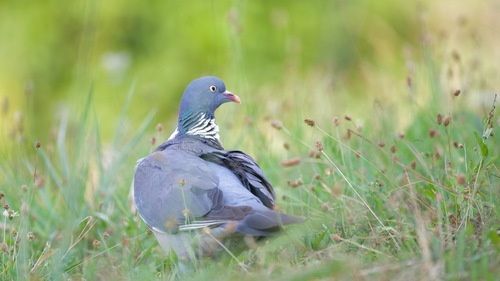 Common Woodpigeon
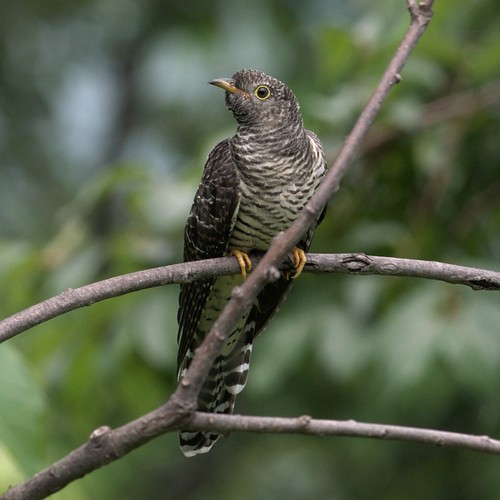 Common Cuckoo
In short
The most reliable field mark is the white neck and wing patches of adult Common Woodpigeon, which are never shown by Common Cuckoo of any age. Juvenile Woodpigeons lack the neck patch, but still appear bulkier and plainer than Common Cuckoo, which shows a distinctive barred underpart pattern and, in juveniles, a white nape patch and white feather fringes. In flight, Woodpigeon is broad-winged and heavy, while Cuckoo is slim, long-tailed, and often reminiscent of a small raptor. If you see a large, greyish bird with a pinkish breast and white wing flashes, it's a Woodpigeon; a slimmer, hawk-like bird with barred underparts and no white in the wing is a Cuckoo.
Identification tips
- White neck patch (adult Woodpigeon): Look for the bold white patch on either side of the neck—present only in adult Woodpigeon, never in Cuckoo of any age.
- White wing bar (Woodpigeon): In flight, Woodpigeon shows a broad, white wing band; Cuckoo never shows white in the wing.
- Barred underparts (Cuckoo): All Cuckoos (except some plain grey juveniles) have distinct dark barring across the belly and flanks, sharply demarcated from the grey throat—Woodpigeon is never barred below.
- Juvenile Cuckoo white nape patch: Juvenile Cuckoo shows a white nape patch and white feather fringes, especially obvious in fresh plumage—Woodpigeon juveniles are plain grey with no such marks.
- Overall structure: Woodpigeon is bulky, deep-chested, and broad-winged, with a short neck and rounded tail. Cuckoo is slim, long-tailed, and has pointed wings, often recalling a small raptor in flight.
- Bill and bare parts: Woodpigeon has a pale yellow eye and a greyish bill (juveniles) or pale bill (adults). Cuckoo has yellow iris, orbital ring, base of bill, and feet—look for these in good light.
- Tail shape: Cuckoo's tail is long and graduated, often with white spots at the tip; Woodpigeon has a shorter, more rounded tail with a broad dark terminal band.
- Flight style: Woodpigeon takes off with a loud clatter and flies with steady, strong wingbeats and occasional flicks. Cuckoo flies directly with regular wingbeats and glides, often looking hawk-like.
- Plumage pitfalls: Juvenile Woodpigeon lacks the white neck patch, so don't rely on this alone; check for bulk, plainness, and lack of barring. Female and juvenile Cuckoos can be rufous, but still show barring and lack white wing or neck patches.
- Voice: Woodpigeon's deep cooing is very different from the Cuckoo's "cuck-oo" call; hearing either is instantly diagnostic.
- Season: Cuckoo is present only in spring and summer (as a migrant); Woodpigeon is resident year-round.
- Habitat: Woodpigeon is common in urban parks, gardens, and farmland; Cuckoo prefers open country, woodland edge, and is rarely seen in dense urban settings.
- Social behavior: Large flocks suggest Woodpigeon; a solitary bird, especially in summer, may be a Cuckoo.
- Perching posture: Woodpigeon perches upright; Cuckoo often perches with drooped wings and raised tail, especially when singing.
- Age-specific checks: If you see a plain, pale grey, bulky bird with no white neck patch, it's likely a juvenile Woodpigeon. If you see a slim, barred bird with a white nape patch, it's a juvenile Cuckoo.
Size
Common Woodpigeon is substantially larger and heavier than Common Cuckoo. Woodpigeon measures 38–44.5 cm in length with a wingspan of 68–80 cm and is very bulky (300–615 g, though no AVONET value is given here) [wikipedia]. In contrast, Common Cuckoo is 32–34 cm long, with a wingspan of 55–60 cm and a much lighter build (adult mass ~111.5 g) [wikidata]. Woodpigeon appears broad and deep-chested, while Cuckoo is slender, with a long tail and short legs.
Plumage
- Juvenile/immature birds: Juvenile Woodpigeon is a plain, pale grey bird lacking the white neck patch, with a greyer bill and overall lighter grey than adults. Juvenile Cuckoo is much more patterned, with a white nape patch, white feather fringes, and heavily barred underparts; upperparts may be rufous-brown with strong barring and creamy-white feather edges, or plain grey. These juvenile Cuckoo marks are diagnostic and never shown by Woodpigeon at any age.
- Adults: Adult Woodpigeon is grey with a pinkish breast, prominent white patches on the neck and a broad white wing bar visible in flight. Adult Cuckoo is slate-grey above, with a sharply demarcated grey throat and barred underparts; the iris, orbital ring, base of bill, and feet are yellow. Female Cuckoos may be rufous morph, with reddish-brown upperparts and dark barring, but still show the barred underparts and lack any white wing or neck patches. Woodpigeon never shows barred underparts or yellow bare parts.
- In flight: Woodpigeon shows broad white wing bands and a generally uniform grey upperwing. Cuckoo shows no white in the wing, but has a long, graduated tail and pointed wings, with a barred underwing and underparts.
Behaviour
Woodpigeon is gregarious outside the breeding season, often seen in large flocks, and perches upright on trees or buildings. Its flight is strong, with regular wingbeats and occasional sharp flicks, and it takes off with a loud clatter. Display flights involve wing clapping and gliding on stiff wings. Cuckoo is typically solitary, perching openly with drooped wings and raised tail, and its flight is direct, with regular wingbeats and a hawk-like gliding profile. Cuckoo often perches conspicuously when singing, and its behavior is more furtive and less social than Woodpigeon.
Habitat
Woodpigeon breeds in trees in woodlands, parks, and gardens, and is common in agricultural landscapes, often near roads and rivers. It is a year-round resident in much of its range. Cuckoo is a summer migrant, found in a variety of open and semi-open habitats, including farmland, heath, and woodland edges, but is less likely to be seen in dense urban parks. Cuckoo is usually encountered singly, especially in areas with abundant small passerines for brood parasitism.
Voice
Woodpigeon has a deep, rhythmic cooing call, often heard before the bird is seen. The call is repeated and carries far, typical of pigeons. Cuckoo's male song is the familiar two-note "goo-ko" (cuck-oo), repeated in series, and is usually given from an open perch. The female has a loud bubbling call. The two species' vocalizations are completely different and diagnostic when heard.