

Common Starling vs Rose-coloured Starling
Sturnus vulgaris versus Pastor roseus
Play a quiz with Common Starling and Rose-coloured Starling
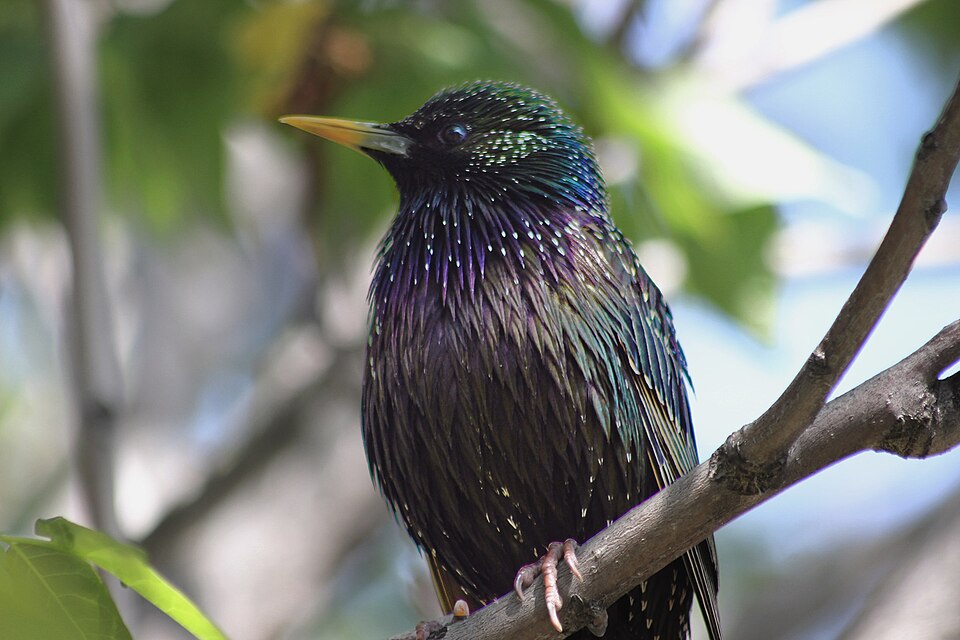 Common Starling
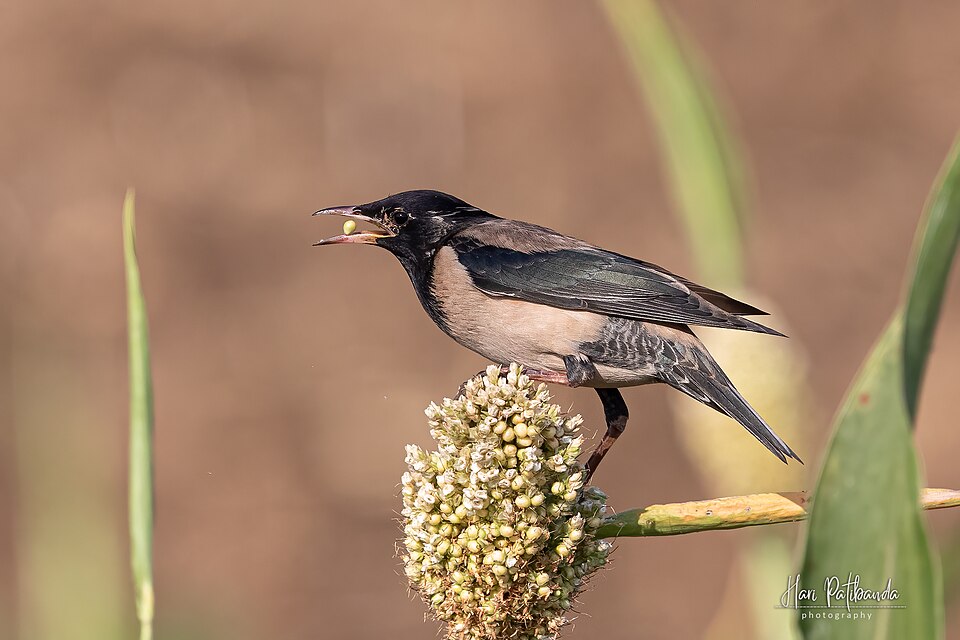 Rose-coloured Starling
In short
The most reliable field mark between Common Starling and Rose-coloured Starling is the adult breeding plumage: Rose-coloured Starling shows a striking pink body with glossy black wings, tail, and head, while Common Starling is entirely iridescent black with variable white spotting. Juveniles are a common source of confusion, but juvenile Rose-coloured Starlings are much paler and buffier than the brownish-grey young Common Starlings, and have a short yellow bill. In flight, both species are similar in size and shape, but the bold color contrast of adult Rose-coloured Starling is distinctive when seen well. Non-breeding and immature birds require close attention to bill color, overall tone, and crest presence. Both species are highly gregarious and can occur in large flocks, but their habitat preferences and seasonal abundance may help in context.
Identification tips
- Adult breeding plumage: Rose-coloured Starling is unmistakable with a pink body and glossy black head, wings, and tail, plus a wispy crest in males. Common Starling is all iridescent black with variable white spotting and no pink or crest.
- Juvenile plumage: Juvenile Rose-coloured Starlings are pale buffy brown and have a short yellow bill, making them much paler and less contrasting than the brownish-grey, dark-billed juvenile Common Starling. This is most useful in late summer and autumn.
- First-winter birds: Young Rose-coloured Starlings retain a pale, dull pinkish-grey body and lack a crest, while first-winter Common Starlings look more like adults but may have some brown on the head.
- Bill color (seasonal): In breeding, Rose-coloured Starling has a black-based, pink-tipped bill; Common Starling has a yellow bill (blue base in males, pink in females). In winter, Rose-coloured's bill turns grey, Common Starling's becomes dark.
- Crest: Only Rose-coloured Starling shows a crest, most obvious in breeding males but present (shorter) in females and non-breeding birds. Common Starling never shows a crest, but males have longer throat feathers.
- White spotting: Common Starling is heavily spotted with white in non-breeding plumage, especially on the breast and flanks. Rose-coloured Starling never shows white spotting; its pale areas are pink or greyish-pink.
- Plumage gloss: Common Starling is iridescent black with green and purple gloss; Rose-coloured Starling's black areas are glossy but the pink body is matte.
- Leg color: Both can have pinkish legs, but this is not a reliable field mark between the two.
- Flight silhouette: Both have pointed wings and short tails, but Rose-coloured Starling may look slightly bulkier in the body when seen well. Not a strong separator.
- Flock structure: Both form large flocks, but in western Europe, a flock with even a few pink-bodied birds is diagnostic for Rose-coloured Starling.
- Habitat and range: Rose-coloured Starling is rare and irruptive in western Europe, common in Central Asia and India in season. Common Starling is abundant and widespread in Europe.
- Behavior: Both walk or run rather than hop; Common Starling often appears more compact and round-bellied, Rose-coloured may seem more upright when displaying crest.
- Voice: Both give varied squeaks and rattles; not reliably separable by ear in the field.
- Sex differences: Male Rose-coloured Starlings have longer crests and sharper color contrast; male Common Starlings have longer throat feathers and less spotting than females.
- Moult timing: Juvenile Rose-coloured Starlings retain their pale plumage and yellow bill later into autumn than Common Starlings, which moult earlier into adult-like plumage.
Size
Both species are very similar in size, with Rose-coloured Starling averaging 19–22 cm in length and a body mass of about 73 g, and Common Starling ranging from 19–23 cm in length (mass not specified here, but similar). In the field, neither species is reliably larger or smaller than the other, so size is not a useful distinguishing feature.
Plumage
- Juveniles: Juvenile Rose-coloured Starlings are pale buffy brown overall and noticeably paler than juvenile Common Starlings, which are grey-brown. The bill of juvenile Rose-coloured is short and yellow, while Common Starling juveniles have a dark bill. Juvenile Rose-coloured Starlings retain their pale look and yellow bill into late autumn, while Common Starlings moult into adult-like plumage earlier.
- First-winter/immature: Young Rose-coloured Starlings moult into a duller, greyish-pink version of the adult plumage in late autumn, lacking the crest. By contrast, first-winter Common Starlings resemble adults but often retain some brown on the head.
- Adult breeding: Rose-coloured Starling is unmistakable with a pink body and glossy black wings, tail, and head, plus a wispy crest in males. Common Starling is all iridescent black with white spotting (especially in winter), and lacks any pink or crest. Bill color is also a clue: Rose-coloured has a black-based, pink-tipped bill in breeding, while Common Starling has a yellow bill (with blue or pink base depending on sex).
- Adult non-breeding: Rose-coloured Starling becomes duller, with greyish-pink body and less prominent crest; bill turns grey. Common Starling becomes more heavily spotted with white, and the bill is dark. Both can look less distinctive, so structure and subtle color differences become more important.
- Sex differences: Male Rose-coloured Starlings have a longer, more prominent crest in breeding season; females have a shorter crest and less sharp contrast between pink and black. Common Starling males have longer, looser throat feathers and less spotting than females.
Behaviour
Both species are highly gregarious, often forming large, dense flocks, especially outside the breeding season. Common Starlings are known for their synchronized flock movements ('murmurations'), and their strong, direct flight with rapid wingbeats and short glides. Rose-coloured Starlings are also colonial and gregarious, especially in winter, and can outnumber local starlings and mynas in their wintering range. On the ground, Common Starlings walk or run with a somewhat waddling gait, while Rose-coloured Starlings behave similarly but may appear more upright due to their crest in breeding plumage.
Habitat
Common Starling is a habitat generalist, found in urban, suburban, rural, and agricultural areas across much of Europe and Asia, and introduced elsewhere. Rose-coloured Starling breeds in steppes, semi-deserts, and open agricultural land across Central Asia and southeastern Europe, and winters in India. In western Europe, Rose-coloured Starling is typically a rare irruptive visitor, often appearing in years of high insect abundance. If you are in central or western Europe outside an irruption year, Common Starling is much more likely.
Voice
Both species have similar vocalizations, producing a mix of squeaks and rattles typical of starlings. Rose-coloured Starling's song is described as a starling-like jumble, often delivered with wing trembling. Vocal differences are subtle and not reliably diagnostic in the field, especially for birders unfamiliar with both species' repertoires.