

Motmot

Common Scoter vs Common Goldeneye

Melanitta nigra versus Bucephala clangula

Play a quiz with Common Scoter and Common Goldeneye
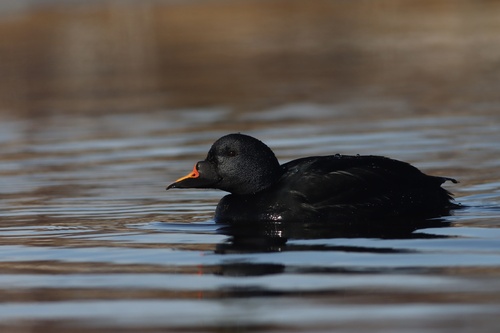
Common Scoter (Melanitta nigra) Common Scoter

Common Goldeneye (Bucephala clangula) Common Goldeneye

Media

Loading…

In short

The most reliable field mark between Common Scoter and Common Goldeneye is overall plumage pattern: adult male Common Scoter is entirely black with a large, bulbous bill, while male Common Goldeneye shows a dark greenish-glossed head with a distinctive white cheek patch and a white body. Females of both species are brown-headed, but female scoter has pale cheeks and a bulkier, darker look compared to the sleeker, gray-bodied female goldeneye. In flight or at rest, the scoter is larger and bulkier, with a proportionally larger bill. If you see a flock, scoters often form dense, tight groups on open water, while goldeneyes are more scattered. Immature and female plumages can be confusing, but bill shape and cheek pattern remain key.

Identification tips

  1. Adult male plumage is the clearest separator: Male Common Scoter is all black with a large, bulbous bill and no white anywhere; male Common Goldeneye has a dark greenish-glossed head, a round white cheek patch, white neck and belly, and a dark back.
  2. Bill shape and size: Common Scoter of both sexes has a noticeably large, swollen bill (especially in males, with yellow at the base), while goldeneye has a shorter, more triangular bill. This is often visible even at a distance.
  3. Female head and cheek pattern: Female scoter is brown with pale cheeks, giving a two-toned face, while female goldeneye has a brown head but a gray body and lacks the strong pale cheek patch.
  4. Body shape and jizz: Scoters are bulkier, with a more horizontal, low-in-the-water profile and a heavy, rounded head. Goldeneyes are more compact, with a steeper forehead and a more upright posture.
  5. Leg and foot color: Female goldeneye has orange-yellow legs and feet, which may be visible when preening or in flight; scoter's legs are not noted as distinctive.
  6. Flock structure: Large, dense, synchronized diving flocks offshore are typical of scoter; goldeneye flocks are smaller and more dispersed.
  7. Habitat context: On open sea, especially far from shore, scoter is much more likely. On freshwater or sheltered coastal waters, especially in smaller groups, goldeneye is more probable.
  8. Flight pattern: No distinctive upperwing pattern is described for either species in the notes, so rely on body shape and flocking behavior.
  9. Vocalizations: If heard, goldeneye may give sharp whistles, especially in flight, but this is not always present; scoters are usually silent in winter.
  10. Immature/female confusion: Both female and immature scoters and goldeneyes can appear brown-headed, but scoter is bulkier, with a larger bill and paler cheeks; goldeneye is more compact, with a gray body and brown head.
  11. No white in scoter: Unlike many diving ducks, Common Scoter (male) lacks any white in the plumage, which is a key mark against goldeneye and others.
  12. Bill color in males: Male scoter shows yellow at the base of the bill; goldeneye's bill is dark.
  13. Eye color: Goldeneye is named for its golden-yellow eyes, which can be visible at close range; scoter's eye color is less distinctive in the field.
  14. Seasonal context: Both species winter in the UK, but scoter is much more likely in large offshore flocks, while goldeneye is more often found on inland waters.
  15. When in doubt: Focus on bill size and head shape at a distance, and look for the presence or absence of white in the plumage when closer.

Size

Common Scoter is a large sea duck, typically 43–54 cm in length, and appears bulkier than Common Goldeneye. The goldeneye is medium-sized, with males 45–51 cm and females 40–50 cm, and an average adult mass of about 900 g. In the field, scoters look heavier and more robust, especially in the head and bill, while goldeneyes are more compact and less bulky overall.

Plumage

Plumage differences are most obvious in adult males: Common Scoter males are entirely black with a bulbous bill showing some yellow near the nostrils, and lack any white in the plumage. Male Common Goldeneye has a dark, greenish-glossed head with a round white patch below the eye, a white neck and belly, and a dark back. Females of both species have brown heads, but female scoter is overall darker brown with pale cheeks and a more uniform look, while female goldeneye has a brown head, gray body, and orange-yellow legs and feet. In all plumages, goldeneye shows a more contrasting pattern, especially in flight, while scoter is more uniform. No age-specific upperwing pattern is described for either species in the provided notes, so focus on head and body pattern for all ages.

Behaviour

Common Scoters often gather in large, dense flocks on open water, diving in synchrony for food. They are typically seen further offshore and may appear less approachable. Goldeneyes are also diving ducks but tend to be seen in smaller groups or scattered individuals, often closer to shore or in sheltered waters. Both species dive for food, but scoters are more likely to be observed in very large, tight flocks.

Habitat

Both are sea ducks, but Common Scoter is more strictly marine in winter, forming large flocks offshore along exposed coasts. Goldeneye is more versatile, wintering on both sheltered coastal waters and inland lakes or rivers. If you see a duck on a freshwater lake in winter, goldeneye is more likely; large rafts far offshore are more likely scoter.

Voice

Common Scoter and Common Goldeneye have diagnosably distinct vocalizations, but no details are provided here. In practice, scoter is usually silent in winter flocks, while goldeneye may give sharp, whistling calls, especially in flight, but this is not always reliable for field separation.

Submit a better description

Use the same sections as the comparison. Your text is published immediately.

The most reliable field mark between Common Scoter and Common Goldeneye is overall plumage pattern: adult male Common Scoter is entirely black with a large, bulbous bill, while male Common Goldeneye shows a dark greenish-glossed head with a distinctive white cheek patch and a white body. Females of both species are brown-headed, but female scoter has pale cheeks and a bulkier, darker look compared to the sleeker, gray-bodied female goldeneye. In flight or at rest, the scoter is larger and bulkier, with a proportionally larger bill. If you see a flock, scoters often form dense, tight groups on open water, while goldeneyes are more scattered. Immature and female plumages can be confusing, but bill shape and cheek pattern remain key.

  1. Adult male plumage is the clearest separator: Male Common Scoter is all black with a large, bulbous bill and no white anywhere; male Common Goldeneye has a dark greenish-glossed head, a round white cheek patch, white neck and belly, and a dark back.
  2. Bill shape and size: Common Scoter of both sexes has a noticeably large, swollen bill (especially in males, with yellow at the base), while goldeneye has a shorter, more triangular bill. This is often visible even at a distance.
  3. Female head and cheek pattern: Female scoter is brown with pale cheeks, giving a two-toned face, while female goldeneye has a brown head but a gray body and lacks the strong pale cheek patch.
  4. Body shape and jizz: Scoters are bulkier, with a more horizontal, low-in-the-water profile and a heavy, rounded head. Goldeneyes are more compact, with a steeper forehead and a more upright posture.
  5. Leg and foot color: Female goldeneye has orange-yellow legs and feet, which may be visible when preening or in flight; scoter's legs are not noted as distinctive.
  6. Flock structure: Large, dense, synchronized diving flocks offshore are typical of scoter; goldeneye flocks are smaller and more dispersed.
  7. Habitat context: On open sea, especially far from shore, scoter is much more likely. On freshwater or sheltered coastal waters, especially in smaller groups, goldeneye is more probable.
  8. Flight pattern: No distinctive upperwing pattern is described for either species in the notes, so rely on body shape and flocking behavior.
  9. Vocalizations: If heard, goldeneye may give sharp whistles, especially in flight, but this is not always present; scoters are usually silent in winter.
  10. Immature/female confusion: Both female and immature scoters and goldeneyes can appear brown-headed, but scoter is bulkier, with a larger bill and paler cheeks; goldeneye is more compact, with a gray body and brown head.
  11. No white in scoter: Unlike many diving ducks, Common Scoter (male) lacks any white in the plumage, which is a key mark against goldeneye and others.
  12. Bill color in males: Male scoter shows yellow at the base of the bill; goldeneye's bill is dark.
  13. Eye color: Goldeneye is named for its golden-yellow eyes, which can be visible at close range; scoter's eye color is less distinctive in the field.
  14. Seasonal context: Both species winter in the UK, but scoter is much more likely in large offshore flocks, while goldeneye is more often found on inland waters.
  15. When in doubt: Focus on bill size and head shape at a distance, and look for the presence or absence of white in the plumage when closer.

Common Scoter is a large sea duck, typically 43–54 cm in length, and appears bulkier than Common Goldeneye. The goldeneye is medium-sized, with males 45–51 cm and females 40–50 cm, and an average adult mass of about 900 g. In the field, scoters look heavier and more robust, especially in the head and bill, while goldeneyes are more compact and less bulky overall.

Plumage differences are most obvious in adult males: Common Scoter males are entirely black with a bulbous bill showing some yellow near the nostrils, and lack any white in the plumage. Male Common Goldeneye has a dark, greenish-glossed head with a round white patch below the eye, a white neck and belly, and a dark back. Females of both species have brown heads, but female scoter is overall darker brown with pale cheeks and a more uniform look, while female goldeneye has a brown head, gray body, and orange-yellow legs and feet. In all plumages, goldeneye shows a more contrasting pattern, especially in flight, while scoter is more uniform. No age-specific upperwing pattern is described for either species in the provided notes, so focus on head and body pattern for all ages.

Common Scoters often gather in large, dense flocks on open water, diving in synchrony for food. They are typically seen further offshore and may appear less approachable. Goldeneyes are also diving ducks but tend to be seen in smaller groups or scattered individuals, often closer to shore or in sheltered waters. Both species dive for food, but scoters are more likely to be observed in very large, tight flocks.

Both are sea ducks, but Common Scoter is more strictly marine in winter, forming large flocks offshore along exposed coasts. Goldeneye is more versatile, wintering on both sheltered coastal waters and inland lakes or rivers. If you see a duck on a freshwater lake in winter, goldeneye is more likely; large rafts far offshore are more likely scoter.

Common Scoter and Common Goldeneye have diagnosably distinct vocalizations, but no details are provided here. In practice, scoter is usually silent in winter flocks, while goldeneye may give sharp, whistling calls, especially in flight, but this is not always reliable for field separation.

Discard your changes?

You have unsaved edits. If you leave now, those changes will be lost.

Common Scoter · Common Goldeneye · My Tricky Birds