
Common Sandpiper vs Marsh Sandpiper
Actitis hypoleucos versus Tringa stagnatilis
Play a quiz with Common Sandpiper and Marsh Sandpiper
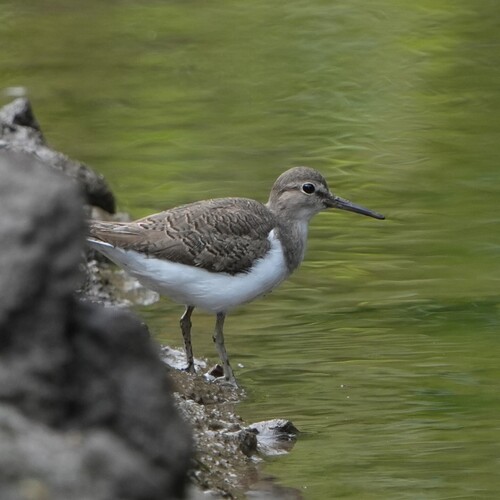 Common Sandpiper
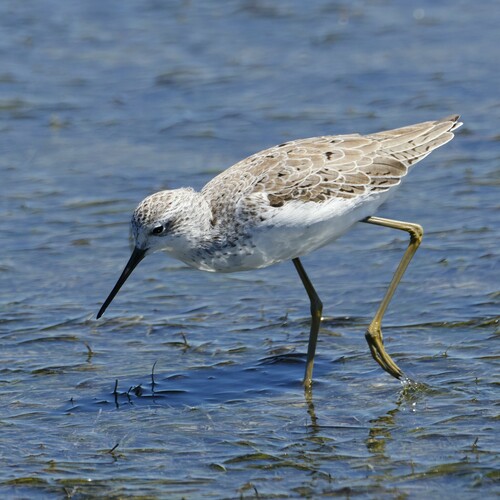 Marsh Sandpiper
In short
The most reliable field mark between Common Sandpiper and Marsh Sandpiper is leg color and structure: Common Sandpiper has short, dark-yellowish legs and a compact body, while Marsh Sandpiper shows very long, yellowish legs and a more elegant, slender build. In flight, Marsh Sandpiper reveals a white wedge up the back, lacking in Common Sandpiper. Juvenile Common Sandpipers are more heavily barred above, with buff-edged wing feathers, while Marsh Sandpiper juveniles are not described as showing such strong barring. Bill structure is also key: Marsh Sandpiper's bill is longer and finer. Both species are superficially similar in non-breeding plumage, but these structural and flight marks are decisive.
Identification tips
- Leg length and color: Marsh Sandpiper has very long, yellowish legs; Common Sandpiper's legs are short and dark-yellowish. This is often the quickest field clue, especially when birds are wading or walking.
- Bill shape: Marsh Sandpiper's bill is long and fine, straight and delicate, while Common Sandpiper's bill is shorter, with a pale base and dark tip. Bill structure is especially useful at medium range.
- Flight pattern and upperwing: Marsh Sandpiper shows a white wedge up the back in flight (all ages), which Common Sandpiper lacks. Common Sandpiper's flight is low and stiff-winged, with a crisper wing pattern but no white wedge.
- Juvenile plumage: Juvenile Common Sandpipers are heavily barred above with buff edges to the wing feathers, a feature not described for Marsh Sandpiper juveniles. Look for this barring in late summer and autumn.
- Body structure: Marsh Sandpiper is taller, slimmer, and more elegant, with a longer neck and legs. Common Sandpiper is compact and crouched, with a more horizontal posture.
- Tail movement: Common Sandpiper frequently pumps its tail and thrusts its head while foraging, a distinctive behavior rarely seen in Marsh Sandpiper.
- Plumage tone: Both are grey-brown above and white below, but Marsh Sandpiper is paler in winter and has a more diffuse, spotted breast in breeding plumage. Common Sandpiper is more crisply marked, especially on the wings in close views.
- Leg color in poor light: In dull conditions, Marsh Sandpiper's legs may appear less yellow, but their length still stands out compared to the short legs of Common Sandpiper.
- Habitat context: If seen in open, marshy wetlands or shallow pools, Marsh Sandpiper is more likely; along wooded streams, lakeshores, or riverbanks, Common Sandpiper is typical.
- Group size: Common Sandpiper is usually solitary or in small groups, rarely in large mixed flocks. Marsh Sandpiper may be found with other waders in open wetlands.
- Wingbar and upperwing in flight: Neither species has a strong contrasting wingbar like some Tringa, but Marsh Sandpiper's white wedge is diagnostic in flight.
- Voice: Not described in these notes, so do not rely on vocalizations for separation.
- Size impression: Marsh Sandpiper is larger and more elongated, but beware overlap with other Tringa; Common Sandpiper is distinctly small and compact.
- Seasonal changes: Both species become duller in winter, but structural differences (legs, bill, body shape) remain reliable throughout the year.
- Pitfall: In non-breeding plumage, both species are plain and grey-brown above, so rely on structure and flight pattern rather than overall color.
Size
Marsh Sandpiper is notably larger and more elongated: 22–26 cm in length, with a 55–59 cm wingspan and an average adult mass of about 72 g [wikidata]. Common Sandpiper is smaller and more compact, at 18–20 cm long and a 32–35 cm wingspan (no mass given, but clearly lighter and shorter-legged). In the field, Marsh Sandpiper's longer legs and overall taller stance are obvious, especially when both species are seen together.
Plumage
Juvenile Common Sandpipers are heavily barred above with buff-edged wing feathers, a pattern not described for Marsh Sandpiper juveniles. In all plumages, Common Sandpiper has greyish-brown upperparts and white underparts, with a crisp wing pattern in flight (though less contrasting than in some Tringa). In winter, Common Sandpiper is duller, with more visible barring on the wings at close range. Marsh Sandpiper, in breeding plumage, is a subdued light brown above with some darker mottling and diffuse small brownish spots on the breast and neck. In winter, it becomes paler. The key in flight is the Marsh Sandpiper's white wedge up the back, absent in Common Sandpiper. Leg color is also a strong clue: Common Sandpiper has short, dark-yellowish legs, while Marsh Sandpiper's legs are very long and yellowish. Bill color and shape differ: Marsh Sandpiper's is longer and finer, Common Sandpiper's is shorter with a pale base and dark tip.
Behaviour
Common Sandpiper is often seen alone or in small groups, rarely joining mixed flocks, and is known for its distinctive tail-pumping and head-thrusting movements while foraging. Its flight is stiff-winged and low over water. Marsh Sandpiper is not described in detail behaviorally here, but its genus is generally more upright and elegant, with a more shank-like gait and less tail-bobbing. Both species forage in shallow water, but Common Sandpiper's constant tail motion is a strong behavioral clue.
Habitat
Common Sandpiper is a widespread Palearctic wader, often found along freshwater edges, rivers, and lakes, sometimes in small groups but rarely in large mixed flocks. Marsh Sandpiper breeds in open grassy steppe and taiga wetlands, favoring more open, marshy habitats. In migration and winter, Marsh Sandpiper is more likely to be found in open wetlands and shallow pools, while Common Sandpiper prefers the margins of streams, rivers, and lakes with more cover.