

Motmot

Common Sandpiper vs Common Greenshank

Actitis hypoleucos versus Tringa nebularia

Play a quiz with Common Sandpiper and Common Greenshank
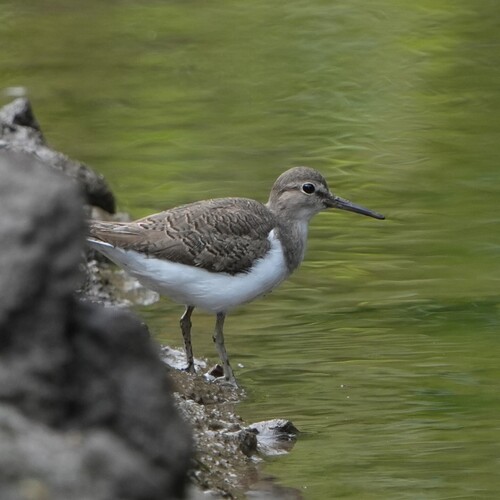
Common Sandpiper (Actitis hypoleucos) Common Sandpiper
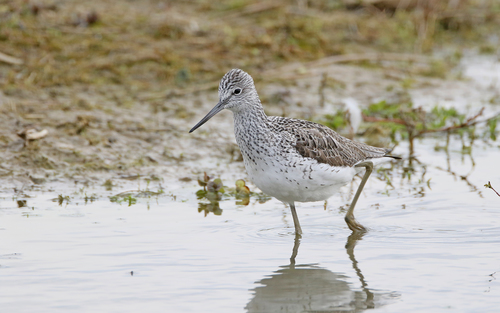
Common Greenshank (Tringa nebularia) Common Greenshank

Media

Loading…

In short

The most reliable field mark to separate Common Sandpiper from Common Greenshank is leg color and structure: Common Sandpiper has short, dark-yellowish legs and a compact body, while Common Greenshank shows long, greenish legs and a larger, lankier build. In flight, juvenile Common Sandpipers show crisp, buff-edged barring on the upperwing, while Common Greenshank has a distinctive white wedge up the back. Bill shape and length also differ: Sandpiper’s bill is short with a pale base, while Greenshank’s is long, slightly upturned, and grey-based. These differences hold in all seasons, but are especially useful when birds are in non-breeding or juvenile plumage, when overall coloration is similar and confusion is most likely.

Identification tips

  1. Leg color and length: Common Sandpiper has short, dark-yellowish legs; Common Greenshank’s legs are long and greenish. This is often visible even at a distance and is reliable for all ages and seasons.
  2. Bill shape and length: Sandpiper’s bill is short, straight, with a pale base and dark tip; Greenshank’s bill is long, slightly upturned, and grey-based. Look for the upturned shape and length in profile.
  3. Size and structure: Greenshank is much larger, with a taller, lankier build, longer neck, and stands higher above the water. Sandpiper is compact, low-slung, and small.
  4. Juvenile upperwing pattern: Juvenile Common Sandpiper shows crisp barring and buff edges on the wing feathers, especially visible in flight or at close range. Greenshank juveniles lack this; instead, look for the white wedge up the back in flight.
  5. Flight pattern: Sandpiper flies low over water with stiff, shallow wingbeats, often flicking its wings. Greenshank’s flight is more direct and less flickering, and the white wedge on the back is visible from behind.
  6. Plumage contrast: Sandpiper has greyish-brown upperparts with a sharp contrast to white underparts; greenshank is more uniformly brown or grey-brown, with less contrast.
  7. White wedge in flight: Greenshank shows a bold white wedge up the back in flight (all ages), a key mark not shown by sandpiper.
  8. Tail and rump: Sandpiper lacks the white wedge and has a more uniform tail and rump pattern; greenshank’s white wedge is diagnostic in flight.
  9. Feeding behavior: Sandpiper bobs its tail and forages with short, quick movements; greenshank is more likely to stride actively and wade into deeper water.
  10. Group size: Sandpiper is often solitary or in small groups, seldom in mixed flocks; greenshank can be found in larger groups, especially on migration.
  11. Habitat: Sandpiper prefers shorelines, riverbanks, and lake edges; greenshank is more likely in open marshes, estuaries, and larger wetlands.
  12. Voice: If you hear a fluty, repeated teu-teu-teu call, it is greenshank. Lack of this call does not confirm sandpiper, but its presence is a strong greenshank clue.
  13. Seasonal appearance: Both species become duller in winter, but the structural and flight marks remain reliable. Juvenile sandpipers are especially crisply marked above.
  14. Potential pitfalls: In dull light or at distance, size and structure may be hard to judge. Focus on leg color and length, and look for the white wedge in flight for greenshank, or the barred upperwing for juvenile sandpiper.
  15. When in doubt: Try to see the bird in flight and at rest, and compare multiple features—no single mark is infallible, but the combination of leg color, bill shape, size, and flight pattern is definitive.

Size

Common Greenshank is much larger and heavier than Common Sandpiper. While exact measurements for the sandpiper are not provided, the greenshank weighs about 173g [wikidata], making it robust and noticeably bigger in the field. The sandpiper is a small wader, compact and low to the ground, while the greenshank stands tall on its long legs, with a longer neck and bill. This size difference is usually obvious when both are seen together, but even singly, the greenshank’s proportions and height set it apart.

Plumage

Juvenile Common Sandpipers have heavily barred upperparts with buff edges to the wing feathers, giving a crisp and detailed look to the upperwing in flight or at rest. Adults in winter are duller, but still show some barring on the wings, though less pronounced. In contrast, Common Greenshank juveniles and adults lack this fine barring; instead, in flight, they show a bold white wedge up the back, a key feature visible from behind or above. The sandpiper’s upperparts are greyish-brown, with white underparts and a clear division between the two. Greenshank is brown in breeding plumage, turning grey-brown in winter, with less contrast and a more uniform appearance. Greenshank’s legs are always greenish, and the bill is longer and slightly upturned, while sandpiper’s legs are dark-yellowish and the bill is short and straight with a pale base. Both species have white underparts, but the sandpiper’s are cleaner and more sharply demarcated.

Behaviour

Common Sandpiper is usually seen alone or in small groups, often bobbing its tail and foraging with a characteristic pumping motion. It has a stiff-winged, low flight over water, often flicking its wings. Common Greenshank is less likely to bob its tail, moves with longer strides due to its long legs, and is often seen wading in deeper water. Greenshank’s feeding style is more active, sometimes chasing prey in shallow water, and it can be found in larger mixed flocks during migration. Sandpiper seldom joins multispecies flocks.

Habitat

Both species are waders, but Common Sandpiper prefers the edges of freshwater bodies, rivers, and lakes, often close to shore and on mud or gravel. Common Greenshank is more likely to be found in marshes, estuaries, and larger wetlands, often in more open or deeper water than the sandpiper. Greenshank’s habitat is generally more expansive and less tied to the immediate shoreline.

Voice

Common Greenshank’s usual call is a rapid series of three short, fluty notes: teu-teu-teu. There is no vocalization detail for Common Sandpiper in the notes, but the greenshank’s call is distinctive and carries well, often heard in flight or when flushed. If you hear this fluty, repeated call, it points strongly to greenshank.

Submit a better description

Use the same sections as the comparison. Your text is published immediately.

The most reliable field mark to separate Common Sandpiper from Common Greenshank is leg color and structure: Common Sandpiper has short, dark-yellowish legs and a compact body, while Common Greenshank shows long, greenish legs and a larger, lankier build. In flight, juvenile Common Sandpipers show crisp, buff-edged barring on the upperwing, while Common Greenshank has a distinctive white wedge up the back. Bill shape and length also differ: Sandpiper’s bill is short with a pale base, while Greenshank’s is long, slightly upturned, and grey-based. These differences hold in all seasons, but are especially useful when birds are in non-breeding or juvenile plumage, when overall coloration is similar and confusion is most likely.

  1. Leg color and length: Common Sandpiper has short, dark-yellowish legs; Common Greenshank’s legs are long and greenish. This is often visible even at a distance and is reliable for all ages and seasons.
  2. Bill shape and length: Sandpiper’s bill is short, straight, with a pale base and dark tip; Greenshank’s bill is long, slightly upturned, and grey-based. Look for the upturned shape and length in profile.
  3. Size and structure: Greenshank is much larger, with a taller, lankier build, longer neck, and stands higher above the water. Sandpiper is compact, low-slung, and small.
  4. Juvenile upperwing pattern: Juvenile Common Sandpiper shows crisp barring and buff edges on the wing feathers, especially visible in flight or at close range. Greenshank juveniles lack this; instead, look for the white wedge up the back in flight.
  5. Flight pattern: Sandpiper flies low over water with stiff, shallow wingbeats, often flicking its wings. Greenshank’s flight is more direct and less flickering, and the white wedge on the back is visible from behind.
  6. Plumage contrast: Sandpiper has greyish-brown upperparts with a sharp contrast to white underparts; greenshank is more uniformly brown or grey-brown, with less contrast.
  7. White wedge in flight: Greenshank shows a bold white wedge up the back in flight (all ages), a key mark not shown by sandpiper.
  8. Tail and rump: Sandpiper lacks the white wedge and has a more uniform tail and rump pattern; greenshank’s white wedge is diagnostic in flight.
  9. Feeding behavior: Sandpiper bobs its tail and forages with short, quick movements; greenshank is more likely to stride actively and wade into deeper water.
  10. Group size: Sandpiper is often solitary or in small groups, seldom in mixed flocks; greenshank can be found in larger groups, especially on migration.
  11. Habitat: Sandpiper prefers shorelines, riverbanks, and lake edges; greenshank is more likely in open marshes, estuaries, and larger wetlands.
  12. Voice: If you hear a fluty, repeated teu-teu-teu call, it is greenshank. Lack of this call does not confirm sandpiper, but its presence is a strong greenshank clue.
  13. Seasonal appearance: Both species become duller in winter, but the structural and flight marks remain reliable. Juvenile sandpipers are especially crisply marked above.
  14. Potential pitfalls: In dull light or at distance, size and structure may be hard to judge. Focus on leg color and length, and look for the white wedge in flight for greenshank, or the barred upperwing for juvenile sandpiper.
  15. When in doubt: Try to see the bird in flight and at rest, and compare multiple features—no single mark is infallible, but the combination of leg color, bill shape, size, and flight pattern is definitive.

Common Greenshank is much larger and heavier than Common Sandpiper. While exact measurements for the sandpiper are not provided, the greenshank weighs about 173g [wikidata], making it robust and noticeably bigger in the field. The sandpiper is a small wader, compact and low to the ground, while the greenshank stands tall on its long legs, with a longer neck and bill. This size difference is usually obvious when both are seen together, but even singly, the greenshank’s proportions and height set it apart.

Juvenile Common Sandpipers have heavily barred upperparts with buff edges to the wing feathers, giving a crisp and detailed look to the upperwing in flight or at rest. Adults in winter are duller, but still show some barring on the wings, though less pronounced. In contrast, Common Greenshank juveniles and adults lack this fine barring; instead, in flight, they show a bold white wedge up the back, a key feature visible from behind or above. The sandpiper’s upperparts are greyish-brown, with white underparts and a clear division between the two. Greenshank is brown in breeding plumage, turning grey-brown in winter, with less contrast and a more uniform appearance. Greenshank’s legs are always greenish, and the bill is longer and slightly upturned, while sandpiper’s legs are dark-yellowish and the bill is short and straight with a pale base. Both species have white underparts, but the sandpiper’s are cleaner and more sharply demarcated.

Common Sandpiper is usually seen alone or in small groups, often bobbing its tail and foraging with a characteristic pumping motion. It has a stiff-winged, low flight over water, often flicking its wings. Common Greenshank is less likely to bob its tail, moves with longer strides due to its long legs, and is often seen wading in deeper water. Greenshank’s feeding style is more active, sometimes chasing prey in shallow water, and it can be found in larger mixed flocks during migration. Sandpiper seldom joins multispecies flocks.

Both species are waders, but Common Sandpiper prefers the edges of freshwater bodies, rivers, and lakes, often close to shore and on mud or gravel. Common Greenshank is more likely to be found in marshes, estuaries, and larger wetlands, often in more open or deeper water than the sandpiper. Greenshank’s habitat is generally more expansive and less tied to the immediate shoreline.

Common Greenshank’s usual call is a rapid series of three short, fluty notes: teu-teu-teu. There is no vocalization detail for Common Sandpiper in the notes, but the greenshank’s call is distinctive and carries well, often heard in flight or when flushed. If you hear this fluty, repeated call, it points strongly to greenshank.

Discard your changes?

You have unsaved edits. If you leave now, those changes will be lost.

Common Sandpiper · Common Greenshank · My Tricky Birds