

Common Quail vs Harlequin Quail
Coturnix coturnix versus Coturnix delegorguei
Play a quiz with Common Quail and Harlequin Quail
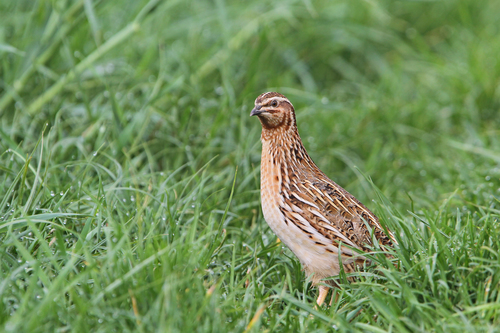 Common Quail
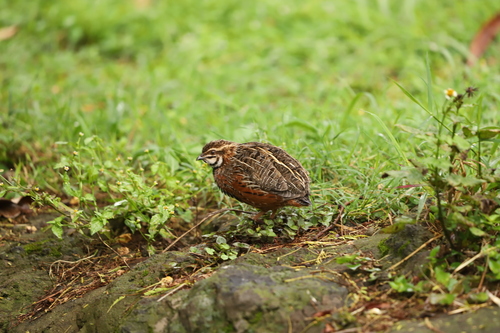 Harlequin Quail
In short
The most reliable field distinction between Common Quail and Harlequin Quail is the Common Quail’s combination of a white eyestripe and, in males, a white chin, along with its notably long wings—a feature tied to its migratory lifestyle. Harlequin Quail lacks detailed published field marks in the sources, but is generally similar in size and structure, with subtle differences more apparent in range and context than in plumage. Common Quail is migratory and widespread in Europe, North Africa, and parts of Asia, while Harlequin Quail is resident in sub-Saharan Africa and the Arabian Peninsula. When seen in the field, focus on the Common Quail’s white facial markings and relatively long wings, especially if observed in flight or during migration.
Identification tips
- White eyestripe (all ages, both sexes): Common Quail shows a clear white stripe above the eye, which is absent or much less distinct in Harlequin Quail.
- White chin (adult males): Male Common Quail has a white chin patch, a feature not described for Harlequin Quail.
- Wing length and shape: Common Quail has longer, more pointed wings than most quails, reflecting its migratory nature. This is best seen in flight or when perched with wings folded; Harlequin Quail is not noted for especially long wings.
- Facial pattern: Focus on the face—Common Quail’s white eyestripe and chin are the main field marks. Harlequin Quail’s face is less contrasting and lacks these white features.
- Flight jizz: Common Quail’s flight is strong, fast, and direct, with long wings. Harlequin Quail is likely to have a more typical, short-winged quail flight, but this is not detailed in the sources.
- Plumage streaking: Both species are brown and streaked, so overall body pattern is not a reliable separator.
- Juvenile/immature plumage: No distinctive juvenile or immature upperwing or body pattern differences are described between these two species in the sources.
- Call: If you hear the classic three-note Common Quail call, you can rule out Harlequin Quail. Harlequin Quail’s vocalizations are not described, but are stated to be distinct.
- Range and context: In Europe, North Africa, or western Asia, expect Common Quail. In sub-Saharan Africa or the Arabian Peninsula, Harlequin Quail is the default. Overlap is possible in northern Africa during migration, so use plumage and call as well.
- Seasonality: Common Quail is migratory, so large movements and sudden appearances in new areas (especially in spring and autumn) are typical. Harlequin Quail is resident.
- Sex differences: Only male Common Quail has a white chin; females lack this but retain the eyestripe. No sex-specific field marks are described for Harlequin Quail.
- Size: Both are similarly small and rounded; size is not a reliable field mark.
- Habitat: Both prefer open, grassy, or agricultural habitats, so habitat alone is not diagnostic unless combined with geography.
- Behavior: Both are secretive and flush at close range. Common Quail may be more likely to undertake long, sustained flights due to its migratory nature.
- Pitfalls: In poor light or at distance, the white eyestripe and chin may be hard to see. In such cases, rely on call and range as supporting clues.
Size
Both species are small, compact gamebirds in the Coturnix genus. The Common Quail is 16–18 cm in length with a wingspan of 32–35 cm and a weight that varies from 70 to 140 g, peaking before migration. Harlequin Quail has a reported average body mass of 75 g, placing it well within the lower range of Common Quail. In the field, size is not a reliable separator between these two, as overlap is substantial and both appear similarly small and rounded.
Plumage
For all ages, Common Quail shows a streaked brown body with a distinct white eyestripe and, in males, a white chin. Its wings are relatively long and pointed for a quail, reflecting its migratory habits. No detailed age-specific or upperwing pattern differences for juveniles or immatures are described in the sources for either species, so focus remains on facial and wing length features. Harlequin Quail’s plumage is not described in detail in the available sources, but it is implied to lack the Common Quail’s white chin and eyestripe. Both species are generally streaked brown and cryptic, but the facial markings of Common Quail are the most practical field clue.
Behaviour
Common Quail is migratory, often encountered in open fields or grasslands, and is more often heard than seen due to its secretive habits. It is known for its strong, direct flight on long wings. Harlequin Quail is resident in sub-Saharan Africa and the Arabian Peninsula, likely showing similar ground-dwelling and skulking behavior, but without the long-distance migratory flights. Both species are ground-nesting and tend to flush only when approached closely.
Habitat
Common Quail breeds in the Palearctic (Europe, North Africa, western Asia) and winters in Africa and southern India, favoring open fields, grasslands, and agricultural areas. Harlequin Quail is found in sub-Saharan Africa and the Arabian Peninsula, likely in similar open habitats but restricted to its African and Arabian range. Thus, geographic location is often the best context clue: Common Quail in Eurasia and North Africa, Harlequin Quail in sub-Saharan Africa and Arabia.
Voice
Common Quail is famous for its distinctive call: three repeated chirps in quick succession, often heard at dawn or dusk. This call is diagnostic and very different from the calls of other Coturnix species, including Harlequin Quail. Harlequin Quail’s vocalizations are not described in the sources, but are stated to be distinct from Common Quail’s, so if you hear the classic three-note Common Quail call, it is unlikely to be Harlequin Quail.