

Motmot

Common Crossbill vs Two-barred Crossbill

Loxia curvirostra versus Loxia leucoptera

Play a quiz with Common Crossbill and Two-barred Crossbill
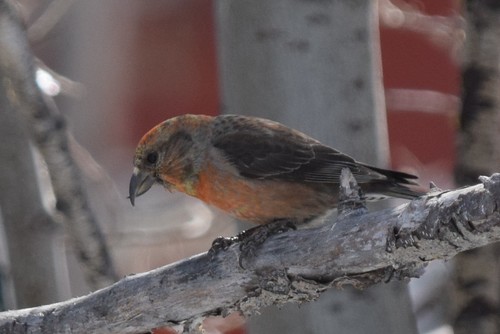
Common Crossbill (Loxia curvirostra) Common Crossbill
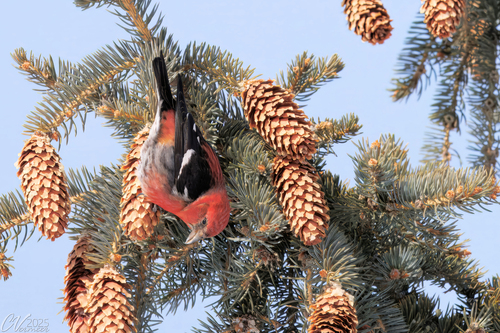
Two-barred Crossbill (Loxia leucoptera) Two-barred Crossbill

Media

Loading…

In short

The most reliable field mark to separate Common Crossbill from Two-barred Crossbill at any age or season is the presence of two bold white wingbars on Two-barred Crossbill, which are completely absent in Common Crossbill. This difference is especially obvious in flight or on perched birds with a clear view of the folded wing. Both species share the distinctive crossed bill, but Two-barred Crossbill also tends to be a brighter, pinker red in adult males and shows white tertial tips, while Common Crossbill males are usually duller red or orange. Beware that some Common Crossbills may show faint wing markings, but never the crisp, broad white bars of Two-barred. Both species are irruptive and may occur together in coniferous forests, so careful attention to wing pattern is essential.

Identification tips

  1. White wingbars (all ages): Two-barred Crossbill always shows two bold white wingbars across the greater and median coverts, plus white tertial tips. Common Crossbill never shows true white wingbars; any pale markings are faint and incomplete.
  2. Wing pattern in flight: In flight, Two-barred Crossbill's white wingbars and tertial tips are obvious and diagnostic. Common Crossbill's wings are uniformly dark.
  3. Perched birds: Even when perched, the white wingbars of Two-barred Crossbill are conspicuous on the folded wing. Always check for this mark before considering other features.
  4. Male plumage color: Adult male Two-barred Crossbills are a brighter, more raspberry-pink red, while Common Crossbill males are usually duller red or orange. However, color is variable and overlaps, so use with caution.
  5. Female and immature plumage: Females and juveniles of both species are greenish or yellowish, but only Two-barred shows white in the wings. Never rely on body color alone.
  6. Bill and head shape: Both have crossed mandibles, but bill size and shape are highly variable in Common Crossbill and not reliable for separation from Two-barred in the field.
  7. Voice: Two-barred Crossbill gives a weaker, higher-pitched chip call than Common Crossbill, but call types are variable and overlap. Use voice as supporting evidence only.
  8. Habitat and context: Both species occur in coniferous forests and may irrupt together. Do not use habitat alone for identification.
  9. Flocking: Both species may form mixed flocks, so always check each individual for wingbars.
  10. Beware pale-winged Common Crossbills: Some Common Crossbills may show faint pale lines on the wing, but these are never as bold or continuous as the true white wingbars of Two-barred.
  11. Juvenile/immature birds: Even young Two-barred Crossbills show white wingbars; Common Crossbill never does at any age.
  12. Season: Both species can be present at any time of year if food is available; season does not help separate them.
  13. Sex: Both sexes of Two-barred show the wingbars; do not rely on sex for identification.
  14. Mixed crossbill flocks: When encountering crossbill flocks, scan for white wingbars to pick out Two-barred among Commons.
  15. Summary tip: If you see a crossbill with two bold white wingbars, it is a Two-barred Crossbill. If the wings are plain and dark, it is a Common Crossbill.

Size

Both species are similar in overall size and proportions, with Two-barred Crossbill measuring 14.5–17 cm in length and weighing 25–40 g [wikipedia]. There is no strong size difference in the field; bill size and head shape are more variable within Common Crossbill populations than between these two species. Do not rely on size or bulk for separation.

Plumage

The key plumage difference at all ages is the wing pattern: Two-barred Crossbill (adult and juvenile) always shows two prominent white wingbars across the greater and median coverts, plus white tips to the tertials, creating a striking pattern in flight and at rest. Common Crossbill of all ages lacks these wingbars entirely; its wings are uniformly dark brownish-black. Adult male Two-barred Crossbills are a brighter raspberry-pink/red, while Common Crossbill males are usually duller red or orange. Females of both are greenish or yellowish, but again, only Two-barred shows white in the wings. Juvenile and immature birds follow the same pattern: Two-barred always has the white wingbars, while Common never does. Rarely, some Common Crossbills may show faint pale lines on the wing, but these are never as bold or continuous as in Two-barred. In summary, the presence or absence of white wingbars is diagnostic at all ages.

Behaviour

Both species are highly nomadic and irruptive, moving widely in search of conifer seeds. They often form flocks, sometimes mixed with each other or with other crossbill species. Feeding behavior is similar, with both using their crossed bills to extract seeds from cones. There are no consistent behavioral differences in flight style, feeding, or flocking that reliably separate the two in the field.

Habitat

Both species breed and forage in coniferous forests across the northern hemisphere, and both may appear outside their typical range in irruption years. Habitat is not a reliable separator where their ranges overlap, as both target areas with abundant conifer seed crops and may be found together in the same stands of spruce, pine, or larch.

Voice

The chip call of Two-barred Crossbill is described as weaker and higher-pitched than that of Common Crossbill. However, call variation within Common Crossbill is extensive, and field identification by voice alone is challenging without experience. Calls may help support identification, but are not as reliable as wing pattern.

Submit a better description

Use the same sections as the comparison. Your text is published immediately.

The most reliable field mark to separate Common Crossbill from Two-barred Crossbill at any age or season is the presence of two bold white wingbars on Two-barred Crossbill, which are completely absent in Common Crossbill. This difference is especially obvious in flight or on perched birds with a clear view of the folded wing. Both species share the distinctive crossed bill, but Two-barred Crossbill also tends to be a brighter, pinker red in adult males and shows white tertial tips, while Common Crossbill males are usually duller red or orange. Beware that some Common Crossbills may show faint wing markings, but never the crisp, broad white bars of Two-barred. Both species are irruptive and may occur together in coniferous forests, so careful attention to wing pattern is essential.

  1. White wingbars (all ages): Two-barred Crossbill always shows two bold white wingbars across the greater and median coverts, plus white tertial tips. Common Crossbill never shows true white wingbars; any pale markings are faint and incomplete.
  2. Wing pattern in flight: In flight, Two-barred Crossbill's white wingbars and tertial tips are obvious and diagnostic. Common Crossbill's wings are uniformly dark.
  3. Perched birds: Even when perched, the white wingbars of Two-barred Crossbill are conspicuous on the folded wing. Always check for this mark before considering other features.
  4. Male plumage color: Adult male Two-barred Crossbills are a brighter, more raspberry-pink red, while Common Crossbill males are usually duller red or orange. However, color is variable and overlaps, so use with caution.
  5. Female and immature plumage: Females and juveniles of both species are greenish or yellowish, but only Two-barred shows white in the wings. Never rely on body color alone.
  6. Bill and head shape: Both have crossed mandibles, but bill size and shape are highly variable in Common Crossbill and not reliable for separation from Two-barred in the field.
  7. Voice: Two-barred Crossbill gives a weaker, higher-pitched chip call than Common Crossbill, but call types are variable and overlap. Use voice as supporting evidence only.
  8. Habitat and context: Both species occur in coniferous forests and may irrupt together. Do not use habitat alone for identification.
  9. Flocking: Both species may form mixed flocks, so always check each individual for wingbars.
  10. Beware pale-winged Common Crossbills: Some Common Crossbills may show faint pale lines on the wing, but these are never as bold or continuous as the true white wingbars of Two-barred.
  11. Juvenile/immature birds: Even young Two-barred Crossbills show white wingbars; Common Crossbill never does at any age.
  12. Season: Both species can be present at any time of year if food is available; season does not help separate them.
  13. Sex: Both sexes of Two-barred show the wingbars; do not rely on sex for identification.
  14. Mixed crossbill flocks: When encountering crossbill flocks, scan for white wingbars to pick out Two-barred among Commons.
  15. Summary tip: If you see a crossbill with two bold white wingbars, it is a Two-barred Crossbill. If the wings are plain and dark, it is a Common Crossbill.

Both species are similar in overall size and proportions, with Two-barred Crossbill measuring 14.5–17 cm in length and weighing 25–40 g [wikipedia]. There is no strong size difference in the field; bill size and head shape are more variable within Common Crossbill populations than between these two species. Do not rely on size or bulk for separation.

The key plumage difference at all ages is the wing pattern: Two-barred Crossbill (adult and juvenile) always shows two prominent white wingbars across the greater and median coverts, plus white tips to the tertials, creating a striking pattern in flight and at rest. Common Crossbill of all ages lacks these wingbars entirely; its wings are uniformly dark brownish-black. Adult male Two-barred Crossbills are a brighter raspberry-pink/red, while Common Crossbill males are usually duller red or orange. Females of both are greenish or yellowish, but again, only Two-barred shows white in the wings. Juvenile and immature birds follow the same pattern: Two-barred always has the white wingbars, while Common never does. Rarely, some Common Crossbills may show faint pale lines on the wing, but these are never as bold or continuous as in Two-barred. In summary, the presence or absence of white wingbars is diagnostic at all ages.

Both species are highly nomadic and irruptive, moving widely in search of conifer seeds. They often form flocks, sometimes mixed with each other or with other crossbill species. Feeding behavior is similar, with both using their crossed bills to extract seeds from cones. There are no consistent behavioral differences in flight style, feeding, or flocking that reliably separate the two in the field.

Both species breed and forage in coniferous forests across the northern hemisphere, and both may appear outside their typical range in irruption years. Habitat is not a reliable separator where their ranges overlap, as both target areas with abundant conifer seed crops and may be found together in the same stands of spruce, pine, or larch.

The chip call of Two-barred Crossbill is described as weaker and higher-pitched than that of Common Crossbill. However, call variation within Common Crossbill is extensive, and field identification by voice alone is challenging without experience. Calls may help support identification, but are not as reliable as wing pattern.

Discard your changes?

You have unsaved edits. If you leave now, those changes will be lost.

Common Crossbill · Two-barred Crossbill · My Tricky Birds