

Cocha Antshrike vs Uniform Antshrike
Thamnophilus praecox versus Thamnophilus unicolor
Play a quiz with Cocha Antshrike and Uniform Antshrike
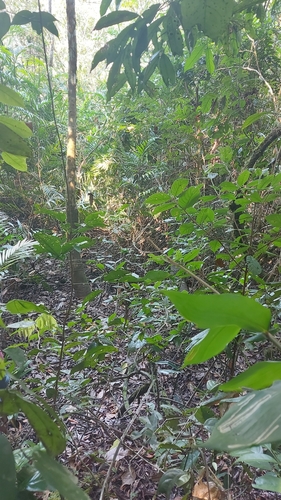 Cocha Antshrike
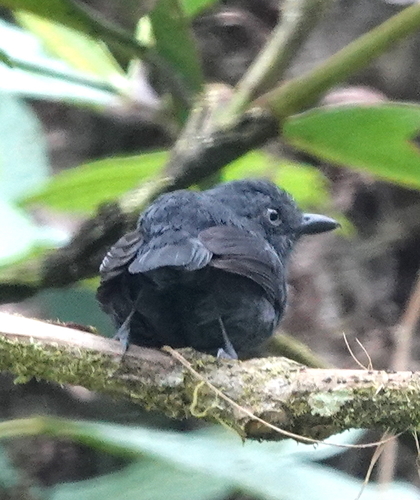 Uniform Antshrike
In short
The most reliable field mark between Cocha Antshrike and Uniform Antshrike is the male plumage: Cocha males are entirely black, while Uniform males are deep gray or blackish-gray, sometimes with white tail tips. Female Cocha Antshrikes have a striking black head and throat with rich cinnamon-rufous body, while Uniform females show a rufous crown, gray face, and more uniformly rufous-brown upperparts and pale rufous underparts. Immature Uniform Antshrikes resemble adult females, making confusion with female Cocha Antshrike more likely. Both species overlap in range and habitat, so careful attention to head pattern and overall coloration is essential.
Identification tips
- Adult male plumage: Cocha Antshrike males are entirely black (except for rarely-seen white underwing coverts); Uniform Antshrike males are deep gray to blackish-gray, sometimes with small white tips on the outer tail. In good light, the difference between jet black (Cocha) and deep gray (Uniform) is usually clear.
- Tail tips (males): If you see white tips on the outer tail feathers, especially in perched or fanned tail views, this favors Uniform Antshrike. Cocha Antshrike males lack this feature.
- Adult female head pattern: Female Cocha Antshrikes have a black head, throat, and upper breast, sharply contrasting with the cinnamon-rufous body. Uniform Antshrike females have a rufous crown and gray face, lacking the solid black head/throat of Cocha.
- Female upperparts: Cocha females are cinnamon-rufous above and below (with paler underparts), while Uniform females are rufous-brown above and pale rufous below, but with a gray face and rufous crown. Look for the face pattern, not just overall color.
- Female throat: Cocha females may show faint white streaks on the throat, but the throat is always black; Uniform females have a pale rufous throat matching the underparts.
- Immature birds: Immature Uniform Antshrikes look like adult females (rufous crown, gray face, rufous-brown upperparts). If you see a bird with a black head/throat, it is not a Uniform Antshrike of any age.
- Bill and structure: Both species have stout, hooked bills typical of Thamnophilus; bill shape is not a separator.
- Iris and bare parts: Uniform Antshrike has a gray-white to whitish gray iris, black bill, and gray or blue-gray legs and feet. Cocha Antshrike iris color is not described, so this is only useful if the iris is pale and the bird fits Uniform otherwise.
- Subspecies variation: Some Uniform Antshrike subspecies (e.g., T. u. grandior, T. u. caudatus) have more frequent white tail tips (males) or darker, more rufous females, but the gray face and rufous crown remain.
- Voice: If you hear a series of nasal "anh" notes or a rattled "kar'r'r'r", this points to Uniform Antshrike. Lack of vocal data for Cocha Antshrike means silence is not diagnostic.
- Foraging behavior: Both species forage low in dense vegetation, often singly or in pairs; behavior is not a reliable separator.
- Habitat and range: Both species overlap in Colombia, Ecuador, and Peru, so do not rely on location alone.
- White underwing (male Cocha): Cocha Antshrike males have white underwing coverts, but these are rarely visible in the field and not a practical field mark.
- Context: If you see a pair, check both birds; mixed pairs do not occur, so a black-headed female with a black male points to Cocha, while a rufous-crowned, gray-faced female with a grayish male points to Uniform.
- Lighting: In poor light, deep gray Uniform males may appear nearly black; look for subtle contrast with the environment and any white tail tips.
Size
Both species are similar in size, with Cocha Antshrike about 16 cm long and Uniform Antshrike ranging from 14.5 to 17 cm. Uniform Antshrike has a recorded mass of 24 g. There is no strong structural difference in size or shape between the two; both are typical, robust Thamnophilus antshrikes with stout, hooked bills.
Plumage
No distinctive juvenile or immature upperwing pattern is described for either species, so separation relies on overall coloration and head pattern.
- Adult males: Cocha Antshrike males are entirely black except for white underwing coverts (rarely visible), while Uniform Antshrike males are deep gray to blackish-gray, sometimes with small white tips on the outer tail feathers (especially in some subspecies).
- Adult females: Cocha females have a black head, throat, and upper breast, with the rest of the body, wings, and tail a rich cinnamon-rufous; underparts are paler than the back. Uniform Antshrike females have a rufous crown, gray face, rufous-brown upperparts, and pale rufous underparts. Subspecies variation in Uniform Antshrike can make females darker and more rufous, but the gray face and rufous crown remain distinctive.
- Immatures: Uniform Antshrike immatures resemble adult females, so look for the same rufous crown and gray face. Cocha Antshrike immature plumage is not described, but likely follows adult female pattern.
Behaviour
Both species forage in dense vegetation, often low to the ground. Uniform Antshrike is noted for foraging singly or in pairs, rarely joining mixed flocks, and sometimes feeding up to 8 meters high. Both hop among branches and glean prey, but there is no strong behavioral difference that is diagnostic in the field.
Habitat
Both species occur in Colombia, Ecuador, and Peru, and both inhabit dense, humid lowland forests. Habitat is not a reliable separator, as their ranges and preferred environments overlap extensively.
Voice
Uniform Antshrike's song is a short series of nasal notes ("anh, anh, anh") or a slightly accelerating, rising, slow series of 4–8 high, descending notes ("NYAH NYAH-nyah-nyah"). Calls include a rattled "kar'r'r'r", a descending whine, and a throaty, descending "raahhh". No vocal description is available for Cocha Antshrike in these notes, so voice is not a reliable separator unless Uniform Antshrike's distinctive calls are heard.