

Chilean Flamingo vs Lesser Flamingo
Phoenicopterus chilensis versus Phoeniconaias minor
Play a quiz with Chilean Flamingo and Lesser Flamingo
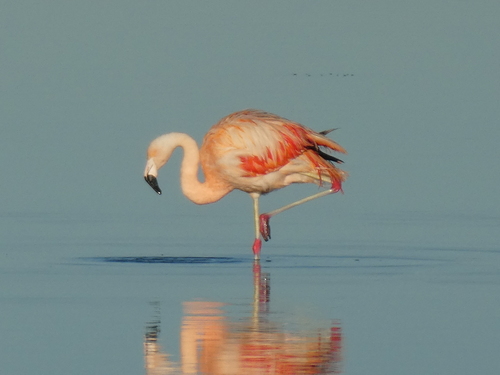 Chilean Flamingo
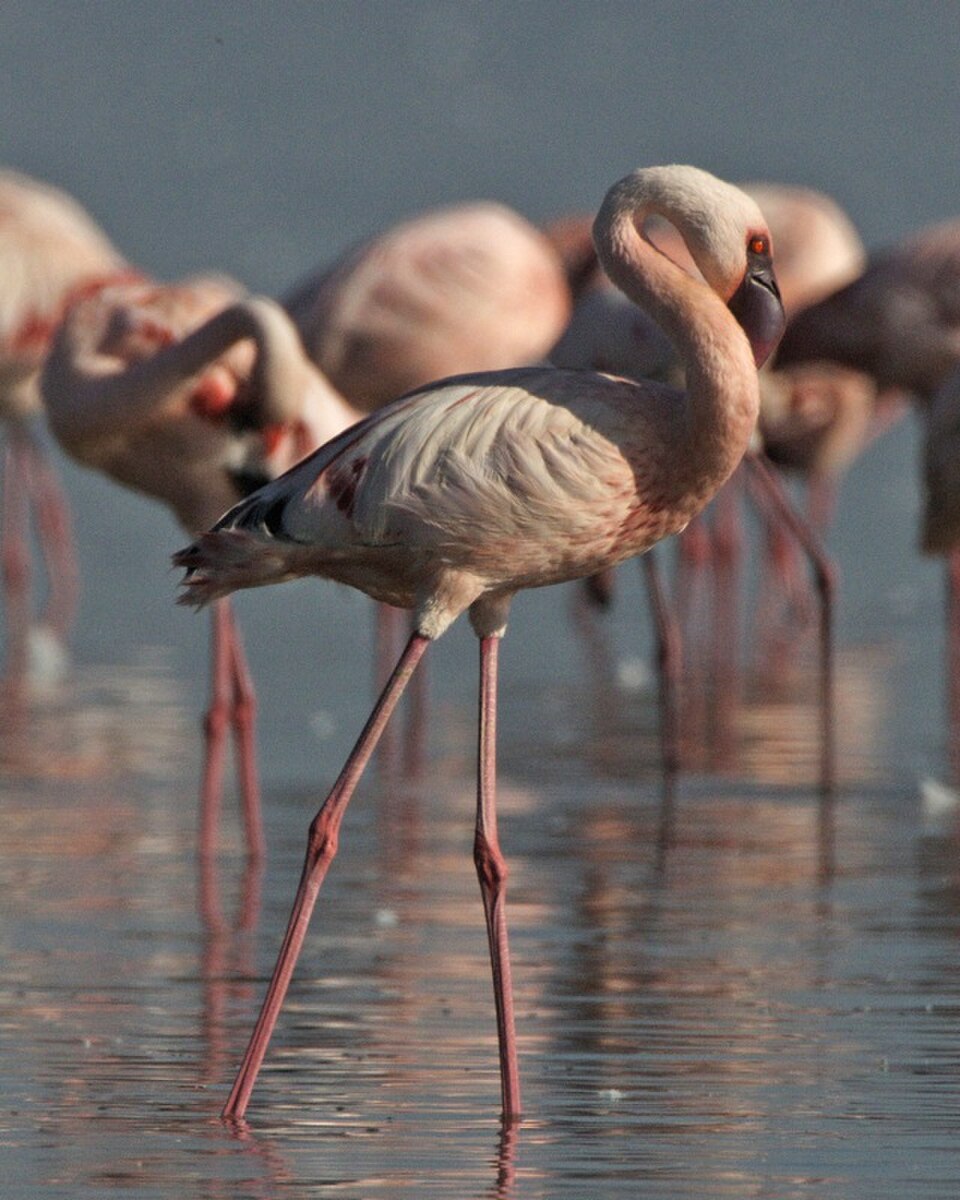 Lesser Flamingo
In short
The most reliable field mark between Chilean Flamingo and Lesser Flamingo is overall size: Chilean Flamingo is much taller and bulkier, while Lesser Flamingo is notably smaller and daintier. In adults, leg color is also key: Chilean Flamingo has grayish legs with contrasting pink joints, whereas Lesser Flamingo’s legs are a more uniform pink. Bill pattern helps—Chilean Flamingo shows more than half the bill black, while Lesser Flamingo’s bill is also deeply black but the shape is shorter and stubbier. Immature birds of both species are gray, but the size and leg color differences remain useful. Both species are pink, but Lesser Flamingo is paler and more delicate in build.
Identification tips
- Size is the fastest check: Chilean Flamingo is much taller (110–130 cm) than Lesser Flamingo (80–90 cm). If you see a flamingo that looks small and dainty, suspect Lesser.
- Leg color: Chilean Flamingo has grayish legs with obvious pink joints; Lesser Flamingo’s legs are a more uniform pink. This is visible in both adults and immatures.
- Bill pattern and shape: Both have a lot of black on the bill, but Chilean Flamingo’s bill is longer and more downcurved, with more than half black. Lesser Flamingo’s bill is shorter, stubbier, and also deeply black, but the overall head looks more compact.
- Plumage tone: Chilean Flamingo is a richer, deeper pink than the paler, pinkish-white Lesser Flamingo. However, this can be subtle and varies with diet and age.
- Juvenile/immature birds: Both are gray or dull peach when young, but size and leg color still separate them. No distinctive wing or flight pattern differences are noted for these ages.
- Flight views: Both show black primaries and secondaries in flight, so this is not diagnostic. Use size and leg color if visible.
- Neck length: Chilean Flamingo has a longer neck in proportion to its body, giving a more elongated look compared to the shorter-necked Lesser Flamingo.
- Jizz and posture: Chilean Flamingo appears more robust and upright; Lesser Flamingo is more delicate and compact.
- Habitat and range: If you are in South America, Chilean Flamingo is expected; in Africa or India, Lesser Flamingo is the default. Rare vagrancy does occur, so do not rely solely on range.
- Group composition: If you see a mixed flock, size difference will be obvious, with Lesser Flamingos much smaller. If only one bird is present, use multiple marks.
- Behavior: Both species feed and breed similarly; no reliable behavioral separation in the field.
- Voice: No distinguishing vocal differences are noted in these sources.
- Sex and season: No strong sexual dimorphism or seasonal plumage changes; all field marks apply year-round and to both sexes.
- Pitfalls: Do not rely on pinkness alone, as diet and age affect color. Always check size, leg color, and bill shape together.
- When in doubt: If only gray or peach birds are present, use size and leg color as your main clues, as plumage is not helpful in immatures.
Size
Chilean Flamingo is a large flamingo, standing 110–130 cm (43–51 in) tall, while Lesser Flamingo is much smaller at 80–90 cm (31–35 in) tall [wikipedia]. In the field, this difference is striking if seen side-by-side, but even alone, Lesser Flamingo appears noticeably shorter and less robust. Chilean Flamingo is also heavier and longer-necked. Lesser Flamingo’s wingspan and body length are both shorter (wingspan 90–105 cm vs. Chilean’s much longer wings). If only one bird is present, look for a more compact, delicate shape in Lesser Flamingo.
Plumage
Juvenile and immature flamingos of both species are gray or dull peach, lacking any pink. In these ages, focus on size and leg color: Chilean Flamingo immatures are much larger and have grayish legs with pink joints, while Lesser Flamingo immatures are smaller and legs are more uniformly pink. In adults, both species are pink, but Chilean Flamingo is a richer pink than Lesser Flamingo, which is paler and more whitish-pink overall. The bill of Chilean Flamingo has more than half black, with a longer, more downcurved profile; Lesser Flamingo’s bill is also deeply black but is shorter and stubbier. No distinctive upperwing or flight pattern differences are noted for immatures or adults in these sources, so rely on size and leg color for flying birds. Both species have black primary feathers in flight, but this is not diagnostic between them.
Behaviour
Both species feed by filter-feeding in shallow, alkaline or saline water, often standing on one leg. Chilean Flamingo may be seen stirring up sediment with its feet. Both species breed in large colonies and build mud nests. Social displays (head flagging, wing salutes) are typical for both. There is no diagnostic behavioral difference in the field, though Chilean Flamingo is more likely to be seen in South America and Lesser Flamingo in Africa or India.
Habitat
Chilean Flamingo is found in South America, from Ecuador and Peru to Chile, Argentina, and east to Brazil, mainly in coastal mudflats, estuaries, lagoons, and salt lakes. Lesser Flamingo occurs in sub-Saharan Africa and western India, almost always at highly alkaline or saline lakes. If observed in their typical ranges, habitat and geography are strong clues, but both can occur as vagrants. Both favor large, open, shallow water bodies with high salinity or alkalinity.