

Motmot

チリーフラミンゴ 対 コフラミンゴ

Phoenicopterus chilensis 対 Phoeniconaias minor

チリーフラミンゴとコフラミンゴのクイズ
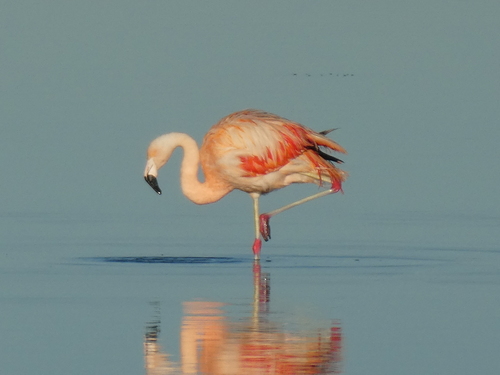
チリーフラミンゴ (Phoenicopterus chilensis) チリーフラミンゴ
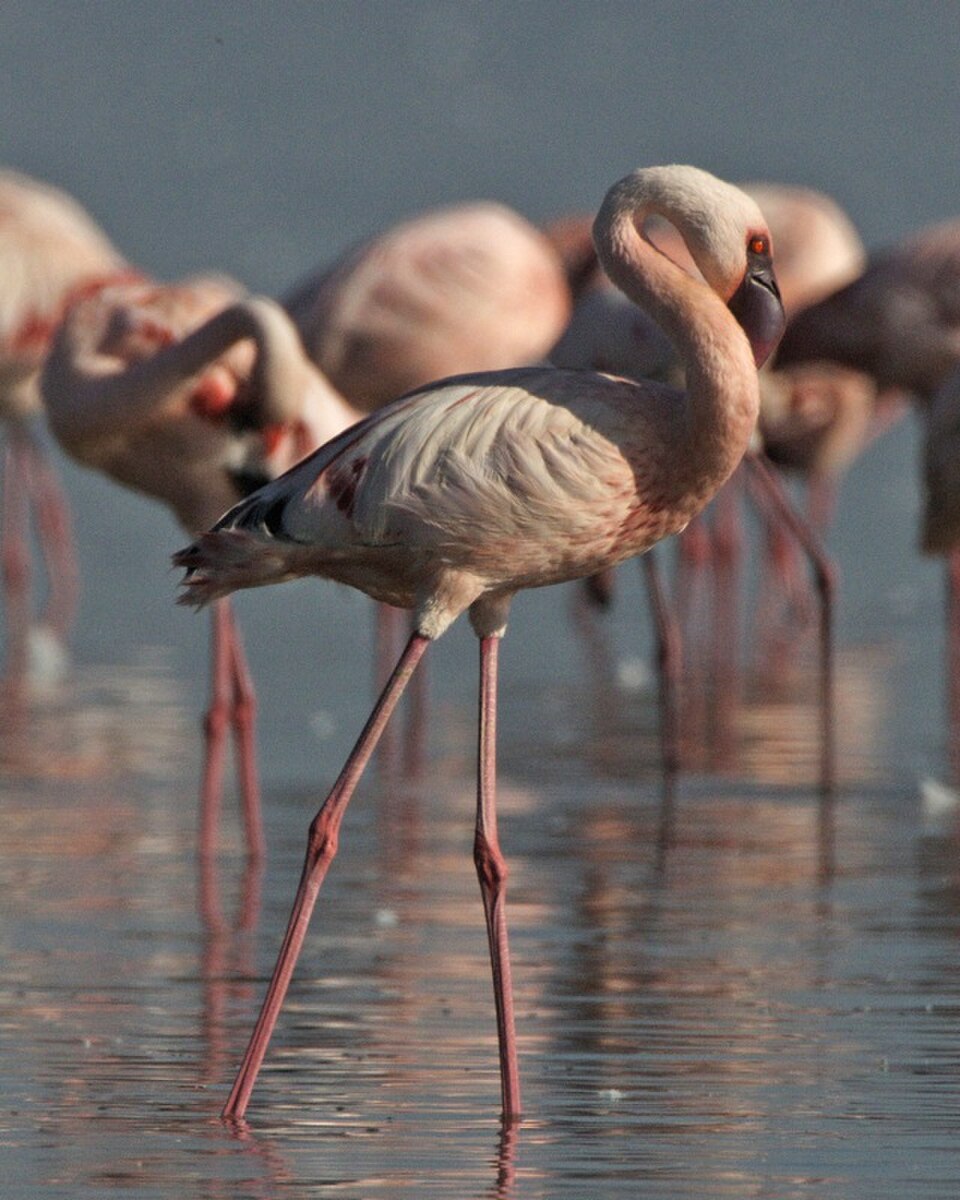
コフラミンゴ (Phoeniconaias minor) コフラミンゴ

メディア

読み込み中…

要点

チリーフラミンゴとコフラミンゴの最も信頼できるフィールドマークは全体のサイズです:チリーフラミンゴははるかに背が高く、がっしりしていますが、コフラミンゴは著しく小さく、繊細です。成鳥では、脚の色も重要です:チリーフラミンゴは灰色がかった脚を持ち、対照的なピンクの関節がありますが、コフラミンゴの脚はより均一なピンクです。くちばしのパターンも役立ちます—チリーフラミンゴはくちばしの半分以上が黒いのに対し、コフラミンゴのくちばしも深い黒ですが、形は短くて太めです。両種の幼鳥は灰色ですが、サイズと脚の色の違いは依然として有用です。両種はピンクですが、コフラミンゴはより淡く、構造がより繊細です。

識別のコツ

  1. Size is the fastest check: チリーフラミンゴはコフラミンゴよりもはるかに背が高い(110–130 cm)です。小さくて繊細に見えるフラミンゴを見たら、コフラミンゴを疑ってください。
  2. Leg color: チリーフラミンゴは明らかなピンクの関節を持つ灰色がかった脚を持っています;コフラミンゴの脚はより均一なピンクです。これは成鳥と幼鳥の両方に見られます。
  3. Bill pattern and shape: 両者ともくちばしに多くの黒がありますが、チリーフラミンゴのくちばしは長く、より下向きに曲がっており、半分以上が黒です。コフラミンゴのくちばしは短く、太めで、深い黒ですが、全体的に頭はよりコンパクトに見えます。
  4. Plumage tone: チリーフラミンゴはより豊かで深いピンクで、淡いピンクがかった白のコフラミンゴよりも色が濃いです。しかし、これは微妙で、食事や年齢によって変わることがあります。
  5. Juvenile/immature birds: 両者とも若いときは灰色または鈍い桃色ですが、サイズと脚の色で区別できます。これらの年齢においては、特に翼や飛行パターンの違いは確認されていません。
  6. Flight views: 両者とも飛行中に黒い初級羽と次級羽を示しますので、これは診断にはなりません。サイズと脚の色を使用してください。
  7. Neck length: チリーフラミンゴは体に対して長い首を持ち、短い首のコフラミンゴと比べてより細長い外観を与えます。
  8. Jizz and posture: チリーフラミンゴはより頑丈で直立して見えます;コフラミンゴはより繊細でコンパクトです。
  9. Habitat and range: 南アメリカにいる場合、チリーフラミンゴが期待されます;アフリカやインドではコフラミンゴがデフォルトです。稀な迷い鳥が発生することもあるので、範囲だけに頼らないでください。
  10. Group composition: 混合群れを見た場合、サイズの違いは明らかで、コフラミンゴははるかに小さいです。1羽だけが存在する場合は、複数のマークを使用してください。
  11. Behavior: 両種は同様に餌を取り、繁殖します;フィールドでの信頼できる行動の区別はありません。
  12. Voice: これらの情報源では、区別できる声の違いは確認されていません。
  13. Sex and season: 強い性的二形や季節的な羽毛の変化はありません;すべてのフィールドマークは年間を通じて両性に適用されます。
  14. Pitfalls: ピンクさだけに頼らないでください。食事や年齢が色に影響します。サイズ、脚の色、くちばしの形を常に一緒に確認してください。
  15. When in doubt: 灰色または桃色の鳥だけが存在する場合は、サイズと脚の色を主な手がかりとして使用してください。幼鳥では羽毛は役に立ちません。

大きさ

チリーフラミンゴは大きなフラミンゴで、110–130 cm(43–51 in)の高さがありますが、コフラミンゴは80–90 cm(31–35 in)とかなり小さいです[wikipedia]。フィールドでは、この違いは並んで見ると際立っていますが、単独でもコフラミンゴは明らかに短く、頑丈さが欠けています。チリーフラミンゴはまた、より重く、首が長いです。コフラミンゴの翼幅と体長はどちらも短く(翼幅90–105 cm対チリーフラミンゴのはるかに長い翼)なっています。1羽だけが存在する場合は、コフラミンゴのよりコンパクトで繊細な形を探してください。

羽色

両種の幼鳥と未成熟のフラミンゴは灰色または鈍い桃色で、ピンクはありません。これらの年齢では、サイズと脚の色に焦点を当ててください:チリーフラミンゴの未成熟ははるかに大きく、灰色がかった脚にピンクの関節がありますが、コフラミンゴの未成熟は小さく、脚はより均一なピンクです。成鳥では、両種はピンクですが、チリーフラミンゴはコフラミンゴよりも豊かなピンクで、全体的に淡く、白っぽいピンクです。チリーフラミンゴのくちばしは半分以上が黒で、より長く、下向きに曲がったプロファイルを持っています;コフラミンゴのくちばしも深い黒ですが、短くて太めです。これらの情報源では、幼鳥や成鳥における特有の上翼や飛行パターンの違いは確認されていないため、飛んでいる鳥のサイズと脚の色に頼ってください。両種は飛行中に黒い初級羽を持っていますが、これは彼らの間で診断にはなりません。

行動

両種は浅いアルカリ性または塩水でフィルターフィーディングを行い、しばしば片足で立っています。チリーフラミンゴは足で沈殿物をかき混ぜるのが見られることがあります。両種は大きなコロニーで繁殖し、泥の巣を作ります。社会的なディスプレイ(頭を振る、翼を広げる)は両者に典型的です。フィールドでの診断的な行動の違いはありませんが、チリーフラミンゴは南アメリカで見られる可能性が高く、コフラミンゴはアフリカやインドで見られます。

生息環境

チリーフラミンゴは南アメリカ、エクアドルやペルーからチリ、アルゼンチン、ブラジルの東部まで見られ、主に沿岸の泥干潟、河口、ラグーン、塩湖に生息しています。コフラミンゴはサハラ以南のアフリカと西インドに生息し、ほぼ常に非常にアルカリ性または塩水の湖にいます。典型的な範囲で観察された場合、ハビタットと地理は強い手がかりですが、両者とも迷い鳥として出現することがあります。両者は高い塩分またはアルカリ性を持つ大きく開けた浅い水域を好みます。

より良い説明を送る

比較と同じ項目を使ってください。文章はすぐに公開されます。

The most reliable field mark between Chilean Flamingo and Lesser Flamingo is overall size: Chilean Flamingo is much taller and bulkier, while Lesser Flamingo is notably smaller and daintier. In adults, leg color is also key: Chilean Flamingo has grayish legs with contrasting pink joints, whereas Lesser Flamingo’s legs are a more uniform pink. Bill pattern helps—Chilean Flamingo shows more than half the bill black, while Lesser Flamingo’s bill is also deeply black but the shape is shorter and stubbier. Immature birds of both species are gray, but the size and leg color differences remain useful. Both species are pink, but Lesser Flamingo is paler and more delicate in build.

  1. Size is the fastest check: Chilean Flamingo is much taller (110–130 cm) than Lesser Flamingo (80–90 cm). If you see a flamingo that looks small and dainty, suspect Lesser.
  2. Leg color: Chilean Flamingo has grayish legs with obvious pink joints; Lesser Flamingo’s legs are a more uniform pink. This is visible in both adults and immatures.
  3. Bill pattern and shape: Both have a lot of black on the bill, but Chilean Flamingo’s bill is longer and more downcurved, with more than half black. Lesser Flamingo’s bill is shorter, stubbier, and also deeply black, but the overall head looks more compact.
  4. Plumage tone: Chilean Flamingo is a richer, deeper pink than the paler, pinkish-white Lesser Flamingo. However, this can be subtle and varies with diet and age.
  5. Juvenile/immature birds: Both are gray or dull peach when young, but size and leg color still separate them. No distinctive wing or flight pattern differences are noted for these ages.
  6. Flight views: Both show black primaries and secondaries in flight, so this is not diagnostic. Use size and leg color if visible.
  7. Neck length: Chilean Flamingo has a longer neck in proportion to its body, giving a more elongated look compared to the shorter-necked Lesser Flamingo.
  8. Jizz and posture: Chilean Flamingo appears more robust and upright; Lesser Flamingo is more delicate and compact.
  9. Habitat and range: If you are in South America, Chilean Flamingo is expected; in Africa or India, Lesser Flamingo is the default. Rare vagrancy does occur, so do not rely solely on range.
  10. Group composition: If you see a mixed flock, size difference will be obvious, with Lesser Flamingos much smaller. If only one bird is present, use multiple marks.
  11. Behavior: Both species feed and breed similarly; no reliable behavioral separation in the field.
  12. Voice: No distinguishing vocal differences are noted in these sources.
  13. Sex and season: No strong sexual dimorphism or seasonal plumage changes; all field marks apply year-round and to both sexes.
  14. Pitfalls: Do not rely on pinkness alone, as diet and age affect color. Always check size, leg color, and bill shape together.
  15. When in doubt: If only gray or peach birds are present, use size and leg color as your main clues, as plumage is not helpful in immatures.

Chilean Flamingo is a large flamingo, standing 110–130 cm (43–51 in) tall, while Lesser Flamingo is much smaller at 80–90 cm (31–35 in) tall [wikipedia]. In the field, this difference is striking if seen side-by-side, but even alone, Lesser Flamingo appears noticeably shorter and less robust. Chilean Flamingo is also heavier and longer-necked. Lesser Flamingo’s wingspan and body length are both shorter (wingspan 90–105 cm vs. Chilean’s much longer wings). If only one bird is present, look for a more compact, delicate shape in Lesser Flamingo.

Juvenile and immature flamingos of both species are gray or dull peach, lacking any pink. In these ages, focus on size and leg color: Chilean Flamingo immatures are much larger and have grayish legs with pink joints, while Lesser Flamingo immatures are smaller and legs are more uniformly pink. In adults, both species are pink, but Chilean Flamingo is a richer pink than Lesser Flamingo, which is paler and more whitish-pink overall. The bill of Chilean Flamingo has more than half black, with a longer, more downcurved profile; Lesser Flamingo’s bill is also deeply black but is shorter and stubbier. No distinctive upperwing or flight pattern differences are noted for immatures or adults in these sources, so rely on size and leg color for flying birds. Both species have black primary feathers in flight, but this is not diagnostic between them.

Both species feed by filter-feeding in shallow, alkaline or saline water, often standing on one leg. Chilean Flamingo may be seen stirring up sediment with its feet. Both species breed in large colonies and build mud nests. Social displays (head flagging, wing salutes) are typical for both. There is no diagnostic behavioral difference in the field, though Chilean Flamingo is more likely to be seen in South America and Lesser Flamingo in Africa or India.

Chilean Flamingo is found in South America, from Ecuador and Peru to Chile, Argentina, and east to Brazil, mainly in coastal mudflats, estuaries, lagoons, and salt lakes. Lesser Flamingo occurs in sub-Saharan Africa and western India, almost always at highly alkaline or saline lakes. If observed in their typical ranges, habitat and geography are strong clues, but both can occur as vagrants. Both favor large, open, shallow water bodies with high salinity or alkalinity.

変更を破棄しますか?

保存していない編集があります。今離れると失われます。

チリーフラミンゴ · コフラミンゴ · 苦手な鳥