

Motmot

Chilean Flamingo vs Greater Flamingo

Phoenicopterus chilensis versus Phoenicopterus roseus

Play a quiz with Chilean Flamingo and Greater Flamingo
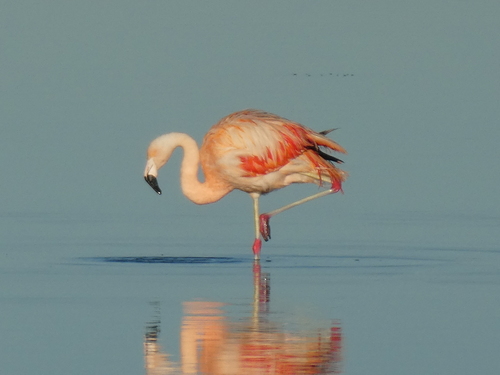
Chilean Flamingo (Phoenicopterus chilensis) Chilean Flamingo
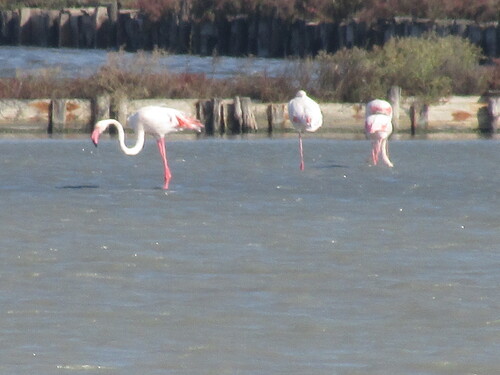
Greater Flamingo (Phoenicopterus roseus) Greater Flamingo

Media

Loading…

In short

The most reliable field mark to separate Chilean Flamingo from Greater Flamingo is the color of the legs and the amount of black on the bill: Chilean Flamingo shows grayish legs with distinct pink joints and a bill that is black over more than half its length, while Greater Flamingo has entirely pink legs and a mostly pink bill with only a black tip. Both species have similar overall shape and pinkish plumage, but Greater Flamingo is larger and paler, and subtle differences in bill and leg coloration are critical for field ID. Juveniles of both are gray and lack pink, so structure and bare part color are especially important for young birds. In flight, both show similar wing patterns, so focus on standing birds for the best separation.

Identification tips

  1. Leg color is key: Adult Chilean Flamingos have grayish legs with distinct pink joints, while Greater Flamingos have entirely pink legs. This is the single most reliable field mark in adults.
  2. Bill pattern: Chilean Flamingo's bill is black over more than half its length, while Greater Flamingo's bill is mostly pink with only a black tip. Look for this in close views or photos.
  3. Overall color: Chilean Flamingo is pinker overall than Greater Flamingo, but not as deep as American Flamingo. Greater Flamingo is paler, often appearing pinkish-white. Use this with caution, as light and diet can affect color.
  4. Size: Greater Flamingo is larger and taller (average 132.5 cm) than Chilean Flamingo (110–130 cm), but size overlap occurs, so use only as supporting evidence.
  5. Juvenile confusion: Both species' juveniles are gray and lack pink, making them nearly impossible to separate by plumage alone. Focus on structure and leg color if possible, but expect overlap in subadults.
  6. Wing pattern in flight: Both species show black primaries and secondaries with red or pink wing coverts. This is not diagnostic between the two.
  7. Leg color in subadults: Subadult Greater Flamingos can have dark legs, resembling Chilean, so leg color is most reliable in full adults.
  8. Bill shape: Both have the classic flamingo bill, but the extent of black is more useful than shape for separation.
  9. Habitat and range: In the wild, location is a strong clue—Greater Flamingo in the Old World, Chilean in South America. In captivity or vagrancy, rely on bare part color.
  10. Courtship and feeding behavior: Both species show similar behaviors, so do not use these for separation.
  11. Voice: Only Greater Flamingo is described as giving a goose-like honk, but this is not a reliable separation mark.
  12. Plumage pitfalls: Both species can appear paler when feeding chicks or in poor light; do not rely solely on overall pinkness.
  13. Flock composition: If you see mixed flamingo flocks in captivity, check each bird's leg and bill color carefully, as both species can occur together in zoos.
  14. Sex and season: No strong sexual dimorphism or seasonal plumage difference is noted for either species that aids separation.
  15. Photos vs. field: Bare part color (legs and bill) is often easier to assess in photos than through binoculars at a distance—take pictures if possible for later review.

Size

Greater Flamingo is the larger of the two, with an average body length of about 132.5 cm [wikidata], compared to Chilean Flamingo's typical height of 110–130 cm [wikipedia]. In the field, this means Greater Flamingo often appears taller and bulkier, but overlap is possible, so size alone is not always reliable. Both are large, long-legged waders, but Greater Flamingo can look especially lanky and long-necked when standing among other flamingos.

Plumage

Juvenile and immature birds of both species are gray and lack the characteristic pink tones, making them difficult to separate by plumage alone at this age. Adult Chilean Flamingos are generally a richer pink than Greater Flamingos, but not as deep as American Flamingos. Greater Flamingos are paler, with pinkish-white body plumage and red wing coverts, and their legs are entirely pink. Chilean Flamingos have grayish legs with clear pink joints, and their bill is black over more than half its length, while Greater Flamingo's bill is mostly pink with only a black tip. Both species show black primary and secondary flight feathers in the wing, so flight views are not diagnostic. Subadults of Greater Flamingo are paler with dark legs, which can overlap with Chilean, so leg color is most useful in adults.

Behaviour

Both species feed by filter-feeding in shallow water, often with their heads upside down. They may be seen stirring up mud with their feet and standing on one leg, a behavior common to all flamingos. Courtship displays are elaborate in both, involving synchronized head movements and wing salutes. There is no strong behavioral difference in the field that reliably separates the two, though Greater Flamingo may appear in larger, more dispersed flocks in its range.

Habitat

Chilean Flamingo is native to South America, breeding from Ecuador and Peru south to Chile and Argentina, and east to Brazil. Greater Flamingo is found in the Old World: Africa, southern Europe, the Middle East, and South and Central Asia. Their habitats overlap only rarely in captivity or vagrancy; both favor shallow saline lakes, mudflats, and lagoons. If you are in Europe, Africa, or Asia, you are almost certainly seeing Greater Flamingo; in South America, Chilean Flamingo is the default.

Voice

Greater Flamingo is noted for a goose-like honking call. No distinctive vocal difference is noted for Chilean Flamingo in the sources, so voice is not a reliable field mark for separation.

Submit a better description

Use the same sections as the comparison. Your text is published immediately.

The most reliable field mark to separate Chilean Flamingo from Greater Flamingo is the color of the legs and the amount of black on the bill: Chilean Flamingo shows grayish legs with distinct pink joints and a bill that is black over more than half its length, while Greater Flamingo has entirely pink legs and a mostly pink bill with only a black tip. Both species have similar overall shape and pinkish plumage, but Greater Flamingo is larger and paler, and subtle differences in bill and leg coloration are critical for field ID. Juveniles of both are gray and lack pink, so structure and bare part color are especially important for young birds. In flight, both show similar wing patterns, so focus on standing birds for the best separation.

  1. Leg color is key: Adult Chilean Flamingos have grayish legs with distinct pink joints, while Greater Flamingos have entirely pink legs. This is the single most reliable field mark in adults.
  2. Bill pattern: Chilean Flamingo's bill is black over more than half its length, while Greater Flamingo's bill is mostly pink with only a black tip. Look for this in close views or photos.
  3. Overall color: Chilean Flamingo is pinker overall than Greater Flamingo, but not as deep as American Flamingo. Greater Flamingo is paler, often appearing pinkish-white. Use this with caution, as light and diet can affect color.
  4. Size: Greater Flamingo is larger and taller (average 132.5 cm) than Chilean Flamingo (110–130 cm), but size overlap occurs, so use only as supporting evidence.
  5. Juvenile confusion: Both species' juveniles are gray and lack pink, making them nearly impossible to separate by plumage alone. Focus on structure and leg color if possible, but expect overlap in subadults.
  6. Wing pattern in flight: Both species show black primaries and secondaries with red or pink wing coverts. This is not diagnostic between the two.
  7. Leg color in subadults: Subadult Greater Flamingos can have dark legs, resembling Chilean, so leg color is most reliable in full adults.
  8. Bill shape: Both have the classic flamingo bill, but the extent of black is more useful than shape for separation.
  9. Habitat and range: In the wild, location is a strong clue—Greater Flamingo in the Old World, Chilean in South America. In captivity or vagrancy, rely on bare part color.
  10. Courtship and feeding behavior: Both species show similar behaviors, so do not use these for separation.
  11. Voice: Only Greater Flamingo is described as giving a goose-like honk, but this is not a reliable separation mark.
  12. Plumage pitfalls: Both species can appear paler when feeding chicks or in poor light; do not rely solely on overall pinkness.
  13. Flock composition: If you see mixed flamingo flocks in captivity, check each bird's leg and bill color carefully, as both species can occur together in zoos.
  14. Sex and season: No strong sexual dimorphism or seasonal plumage difference is noted for either species that aids separation.
  15. Photos vs. field: Bare part color (legs and bill) is often easier to assess in photos than through binoculars at a distance—take pictures if possible for later review.

Greater Flamingo is the larger of the two, with an average body length of about 132.5 cm [wikidata], compared to Chilean Flamingo's typical height of 110–130 cm [wikipedia]. In the field, this means Greater Flamingo often appears taller and bulkier, but overlap is possible, so size alone is not always reliable. Both are large, long-legged waders, but Greater Flamingo can look especially lanky and long-necked when standing among other flamingos.

Juvenile and immature birds of both species are gray and lack the characteristic pink tones, making them difficult to separate by plumage alone at this age. Adult Chilean Flamingos are generally a richer pink than Greater Flamingos, but not as deep as American Flamingos. Greater Flamingos are paler, with pinkish-white body plumage and red wing coverts, and their legs are entirely pink. Chilean Flamingos have grayish legs with clear pink joints, and their bill is black over more than half its length, while Greater Flamingo's bill is mostly pink with only a black tip. Both species show black primary and secondary flight feathers in the wing, so flight views are not diagnostic. Subadults of Greater Flamingo are paler with dark legs, which can overlap with Chilean, so leg color is most useful in adults.

Both species feed by filter-feeding in shallow water, often with their heads upside down. They may be seen stirring up mud with their feet and standing on one leg, a behavior common to all flamingos. Courtship displays are elaborate in both, involving synchronized head movements and wing salutes. There is no strong behavioral difference in the field that reliably separates the two, though Greater Flamingo may appear in larger, more dispersed flocks in its range.

Chilean Flamingo is native to South America, breeding from Ecuador and Peru south to Chile and Argentina, and east to Brazil. Greater Flamingo is found in the Old World: Africa, southern Europe, the Middle East, and South and Central Asia. Their habitats overlap only rarely in captivity or vagrancy; both favor shallow saline lakes, mudflats, and lagoons. If you are in Europe, Africa, or Asia, you are almost certainly seeing Greater Flamingo; in South America, Chilean Flamingo is the default.

Greater Flamingo is noted for a goose-like honking call. No distinctive vocal difference is noted for Chilean Flamingo in the sources, so voice is not a reliable field mark for separation.

Discard your changes?

You have unsaved edits. If you leave now, those changes will be lost.

Chilean Flamingo · Greater Flamingo · My Tricky Birds