

Chestnut-throated Apalis vs Tawny-flanked Prinia
Apalis porphyrolaema versus Prinia subflava
Play a quiz with Chestnut-throated Apalis and Tawny-flanked Prinia
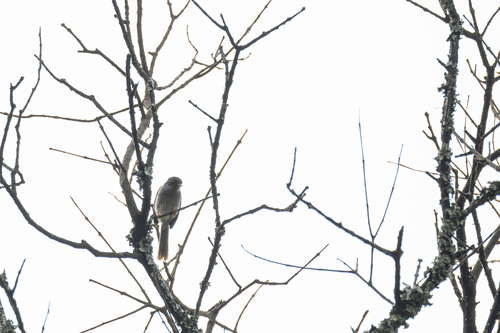 Chestnut-throated Apalis
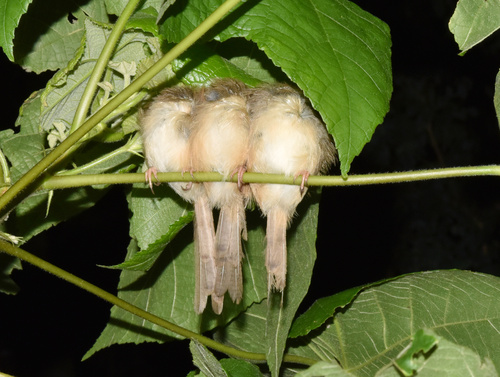 Tawny-flanked Prinia
In short
The most reliable field mark is the throat and underpart color: Chestnut-throated Apalis (except Kabobo subspecies) has a rich chestnut throat, while Tawny-flanked Prinia shows a whitish throat and breast with warm buff flanks. Juvenile Tawny-flanked Prinias have pale yellow underparts and a yellowish bill, which Apalis never shows. Structurally, Tawny-flanked Prinia is more slender with a longer, often cocked tail, and a more active, restless jizz. Both are small, greyish birds, but the Apalis is slightly bulkier and lacks the rufous and buff tones of the prinia. Watch for the tail pattern and behavior as additional clues.
Identification tips
- Throat color (adults): Chestnut-throated Apalis (nominate and affinis) shows a deep chestnut throat; Tawny-flanked Prinia always has a whitish throat and breast. This is the single best mark for adults except Kabobo Apalis.
- Juvenile underparts: Juvenile Tawny-flanked Prinias have pale yellow underparts and a yellowish bill, never shown by Apalis of any age.
- Tail structure and behavior: Tawny-flanked Prinia has a long, narrow, graduated tail that is often cocked or waved side to side. Apalis has a shorter, less expressive tail, usually held straight.
- Tail pattern: Prinia's tail feathers are tipped white with a dark subterminal band, visible when the tail is spread or flicked. Apalis lacks this tail pattern.
- Supercilium and lores: Tawny-flanked Prinia has a whitish stripe above the eye (supercilium) and dark lores, giving a more marked face. Apalis has a plainer face without strong supercilium or lores contrast.
- Rufous tones: Prinia shows rufous-brown edges to the flight feathers and a rufous tinge to the rump, plus warm buff flanks and vent. Apalis is mostly grey and lacks these warm tones.
- Overall jizz: Prinia is more slender and restless, often in small flocks, and frequently flicks its tail. Apalis is more compact and less active in its movements.
- Bill: Prinia has a fairly long, slender bill; Apalis's bill is proportionally shorter and stubbier.
- Habitat: In open, disturbed, or man-made habitats, expect Tawny-flanked Prinia. In more forested or undisturbed areas, Apalis is more likely.
- Vocalizations: If you hear a short, wheezy, rapidly repeated call or a monotonous shrill song from an exposed perch, it's likely a prinia. Apalis voice is not described here, so use this only for positive prinia ID.
- Sexes: Both species are similar between sexes, so do not rely on sexual dimorphism.
- Subspecies confusion: Kabobo Apalis lacks the chestnut throat and has paler underparts, which could overlap with prinia, but still lacks the buff flanks and tail pattern of prinia.
- Flight views: In flight, look for the prinia's white-tipped tail and rufous tones; Apalis will appear more uniformly grey.
- Perched views: Focus on throat and underpart color, tail length and carriage, and facial markings.
- Pitfalls: Beware of worn or molting prinias, which may lose some buff tones, but the tail pattern and supercilium usually remain. Juvenile prinias are yellowish below, unlike any Apalis.
Size
Both species are similar in length (11–12 cm for both), but Tawny-flanked Prinia is slightly lighter (8.7 g). The Apalis may appear a bit bulkier and more compact, while the prinia is more slender with a longer, graduated tail that is often held erect or waved. In the field, the prinia's tail gives it a more elongated and active appearance, especially when foraging or perched.
Plumage
- Juveniles: Tawny-flanked Prinia juveniles have pale yellow underparts and a yellowish bill, a combination not found in any age of Chestnut-throated Apalis.
- Adults: Chestnut-throated Apalis (nominate and affinis) shows a distinctive chestnut throat against mostly grey plumage, while the Kabobo subspecies has a grey throat but paler underparts. Tawny-flanked Prinia adults have grey-brown upperparts, rufous-brown edges to the flight feathers, a rufous tinge to the rump, whitish throat and breast, and warm buff flanks and vent. The prinia also has a whitish supercilium and dark lores, with tail feathers tipped white and a dark subterminal band—features not present in Apalis. The Apalis lacks the rufous and buff tones and the strong tail pattern of the prinia.
Behaviour
Tawny-flanked Prinia is notably active, often seen foraging in small flocks, moving restlessly through shrubs and undergrowth, and frequently flicking or cocking its long tail. The male often sings from exposed perches. Chestnut-throated Apalis is less described in terms of behavior here, but generally apalises are less frenetic and more likely to move singly or in pairs, often staying within mid-level foliage. The prinia's tail-waving and flocking behavior can be a strong behavioral clue.
Habitat
Tawny-flanked Prinia is highly adaptable, found in a wide range of habitats across sub-Saharan Africa, including woodland, savanna, cultivated areas, and even man-made habitats. It avoids only the driest and wettest regions. Chestnut-throated Apalis's habitat is not detailed here, but it is generally more restricted and less likely to be found in open or heavily altered habitats compared to the ubiquitous prinia. If seen in dense, undisturbed forest, Apalis is more likely; in open scrub, gardens, or farmland, expect the prinia.
Voice
Tawny-flanked Prinia gives a short, wheezy, rapidly repeated call and a monotonous series of shrill notes as its song, often delivered from an exposed perch. No vocal information is provided for Chestnut-throated Apalis here, so voice is only diagnostic if the typical prinia song or call is heard.
Chestnut-throated Apalis · Tawny-flanked Prinia · My Tricky Birds