

Motmot

Chestnut-tailed Starling vs Spot-winged Grosbeak

Sturnia malabarica versus Mycerobas melanozanthos

Play a quiz with Chestnut-tailed Starling and Spot-winged Grosbeak
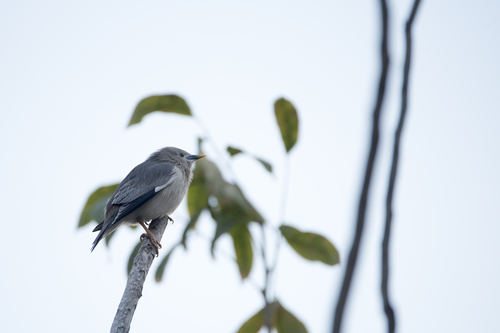
Chestnut-tailed Starling (Sturnia malabarica) Chestnut-tailed Starling
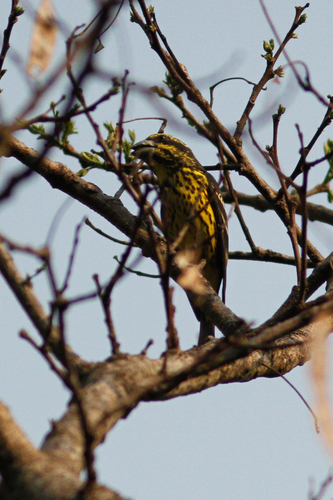
Spot-winged Grosbeak (Mycerobas melanozanthos) Spot-winged Grosbeak

Media

Loading…

In short

The most reliable field mark between Chestnut-tailed Starling and Spot-winged Grosbeak is overall structure and bill shape: the starling is slender with a long, pointed bill, while the grosbeak is chunkier with a massive, conical bill. Chestnut-tailed Starlings show grey upperparts and a pale grey, streaked head, with rufous or whitish underparts depending on subspecies and age, and a distinct chestnut tail tip in adults. Spot-winged Grosbeaks, in contrast, are robust finches with a thick neck and heavy bill, and their plumage is not described in detail here but lacks the starling's sleek look and chestnut tail. Juvenile starlings have pale underparts and only chestnut tips to the tail, which can confuse, but the grosbeak's structure remains distinctive. In flight or perched, focus on bill size and head shape for quick separation.

Identification tips

  1. Bill shape and size: Chestnut-tailed Starling has a long, slender, pointed bill with a yellow tip and pale blue base; Spot-winged Grosbeak has a massive, conical, finch-like bill that is much deeper and stubbier. This is the fastest way to separate them at any age or season.
  2. Head pattern: Adult starlings have a pale grey head with whitish streaking (especially on the crown and collar), which is never shown by the grosbeak. Juvenile starlings have a paler head but still lack the heavy, thickset look of the grosbeak.
  3. Tail color: Adult Chestnut-tailed Starlings have a distinctive chestnut tail, especially obvious when perched or in flight. Juveniles only have chestnut tips to the tail feathers, which can be subtle, but the grosbeak never shows this feature.
  4. Underparts: Starlings (adults) have rufous or rufous-tinged underparts (depending on subspecies), while juveniles are whitish below. Spot-winged Grosbeak lacks this rufous or chestnut wash and is generally more uniform below.
  5. Body shape and posture: Starlings are slim, with a long tail and upright posture; grosbeaks are chunky, thick-necked, and heavy-bodied, with a shorter, squarer tail and a more hunched stance.
  6. Flocking and behavior: Starlings often move in tight, agile flocks, especially in flight, and are highly social. Grosbeaks are less gregarious, usually in pairs or small groups, and move more deliberately.
  7. Habitat context: Seeing the bird in open woodland or near cultivation at low to mid elevations points to Chestnut-tailed Starling; in montane or higher elevation forest, especially in the Himalayas or Southeast Asian highlands, Spot-winged Grosbeak is more likely.
  8. Iris color: Chestnut-tailed Starling has white irises, which can be a subtle but useful mark at close range. Grosbeak's iris color is not specified here.
  9. Sexes: Both species have similar sexes in plumage, so sex is not a reliable separator.
  10. Juvenile confusion: Juvenile starlings can be paler below and lack the full chestnut tail, but still show a slender bill and pale head; juvenile grosbeaks remain thick-billed and chunky.
  11. Flight silhouette: In flight, starlings appear sleek and pointed with long tails, while grosbeaks look broad-winged, short-tailed, and heavy-bodied.
  12. Bill color: The starling's bill is yellow with a pale blue base, a subtle but distinctive feature if seen well. Grosbeak's bill is not described in detail but is likely pale and massive.
  13. Upperwing pattern: No distinctive upperwing marks are described for either species, so rely on structure and tail color in flight.
  14. Voice: Not described here; do not rely on vocalizations for separation with the given information.
  15. Seasonality: Starlings may be winter visitors in some regions, but both species can overlap in range; use structure and plumage for separation.

Size

Spot-winged Grosbeak is noticeably heavier (62g) than Chestnut-tailed Starling (40g) [wikidata], and appears bulkier and more robust in the field. The starling is more slender and elongated, with a proportionally longer tail and slimmer body. The grosbeak's thickset build and massive bill give it a much more powerful appearance, even if overall length is similar.

Plumage

Juvenile Chestnut-tailed Starlings have whitish underparts and only chestnut tips to the tail feathers, lacking the full rufous or chestnut wash of adults. Adults (nominate and blythii) show grey upperparts, a pale grey head with whitish streaking (especially on the crown and collar), and rufous underparts and undertail, with a distinctive chestnut tail. The nemoricola subspecies has paler, whitish underparts tinged rufous, especially on the flanks and crissum. Both sexes are similar. Spot-winged Grosbeak's plumage is not described in detail here, but it lacks the starling's grey head, chestnut tail, and rufous underparts. The grosbeak does not show the pale head streaking or the chestnut tail tip at any age. In all ages, the grosbeak's plumage is generally more uniform and lacks the starling's contrast between head, body, and tail.

Behaviour

Chestnut-tailed Starlings are often seen in tight, synchronized flocks, flying rapidly and changing direction together. They are social and active, often foraging in groups in open woodland or cultivated areas. Spot-winged Grosbeaks, as finches, tend to move in smaller groups or pairs and are less likely to show the same tight flocking behavior. Their movements are more deliberate and less acrobatic than starlings.

Habitat

Chestnut-tailed Starling is found in wooded habitats, including open woodland and areas with cultivation, mostly at lower to mid elevations in India and Southeast Asia. Spot-winged Grosbeak prefers subtropical or tropical dry forests and moist montane forests, typically at middle to higher elevations. Thus, encountering a chunky, heavy-billed finch in montane forest is more likely to be a Spot-winged Grosbeak, while a slender, pale-headed bird in open woodland or near cultivation is more likely a Chestnut-tailed Starling.

Submit a better description

Use the same sections as the comparison. Your text is published immediately.

The most reliable field mark between Chestnut-tailed Starling and Spot-winged Grosbeak is overall structure and bill shape: the starling is slender with a long, pointed bill, while the grosbeak is chunkier with a massive, conical bill. Chestnut-tailed Starlings show grey upperparts and a pale grey, streaked head, with rufous or whitish underparts depending on subspecies and age, and a distinct chestnut tail tip in adults. Spot-winged Grosbeaks, in contrast, are robust finches with a thick neck and heavy bill, and their plumage is not described in detail here but lacks the starling's sleek look and chestnut tail. Juvenile starlings have pale underparts and only chestnut tips to the tail, which can confuse, but the grosbeak's structure remains distinctive. In flight or perched, focus on bill size and head shape for quick separation.

  1. Bill shape and size: Chestnut-tailed Starling has a long, slender, pointed bill with a yellow tip and pale blue base; Spot-winged Grosbeak has a massive, conical, finch-like bill that is much deeper and stubbier. This is the fastest way to separate them at any age or season.
  2. Head pattern: Adult starlings have a pale grey head with whitish streaking (especially on the crown and collar), which is never shown by the grosbeak. Juvenile starlings have a paler head but still lack the heavy, thickset look of the grosbeak.
  3. Tail color: Adult Chestnut-tailed Starlings have a distinctive chestnut tail, especially obvious when perched or in flight. Juveniles only have chestnut tips to the tail feathers, which can be subtle, but the grosbeak never shows this feature.
  4. Underparts: Starlings (adults) have rufous or rufous-tinged underparts (depending on subspecies), while juveniles are whitish below. Spot-winged Grosbeak lacks this rufous or chestnut wash and is generally more uniform below.
  5. Body shape and posture: Starlings are slim, with a long tail and upright posture; grosbeaks are chunky, thick-necked, and heavy-bodied, with a shorter, squarer tail and a more hunched stance.
  6. Flocking and behavior: Starlings often move in tight, agile flocks, especially in flight, and are highly social. Grosbeaks are less gregarious, usually in pairs or small groups, and move more deliberately.
  7. Habitat context: Seeing the bird in open woodland or near cultivation at low to mid elevations points to Chestnut-tailed Starling; in montane or higher elevation forest, especially in the Himalayas or Southeast Asian highlands, Spot-winged Grosbeak is more likely.
  8. Iris color: Chestnut-tailed Starling has white irises, which can be a subtle but useful mark at close range. Grosbeak's iris color is not specified here.
  9. Sexes: Both species have similar sexes in plumage, so sex is not a reliable separator.
  10. Juvenile confusion: Juvenile starlings can be paler below and lack the full chestnut tail, but still show a slender bill and pale head; juvenile grosbeaks remain thick-billed and chunky.
  11. Flight silhouette: In flight, starlings appear sleek and pointed with long tails, while grosbeaks look broad-winged, short-tailed, and heavy-bodied.
  12. Bill color: The starling's bill is yellow with a pale blue base, a subtle but distinctive feature if seen well. Grosbeak's bill is not described in detail but is likely pale and massive.
  13. Upperwing pattern: No distinctive upperwing marks are described for either species, so rely on structure and tail color in flight.
  14. Voice: Not described here; do not rely on vocalizations for separation with the given information.
  15. Seasonality: Starlings may be winter visitors in some regions, but both species can overlap in range; use structure and plumage for separation.

Spot-winged Grosbeak is noticeably heavier (62g) than Chestnut-tailed Starling (40g) [wikidata], and appears bulkier and more robust in the field. The starling is more slender and elongated, with a proportionally longer tail and slimmer body. The grosbeak's thickset build and massive bill give it a much more powerful appearance, even if overall length is similar.

Juvenile Chestnut-tailed Starlings have whitish underparts and only chestnut tips to the tail feathers, lacking the full rufous or chestnut wash of adults. Adults (nominate and blythii) show grey upperparts, a pale grey head with whitish streaking (especially on the crown and collar), and rufous underparts and undertail, with a distinctive chestnut tail. The nemoricola subspecies has paler, whitish underparts tinged rufous, especially on the flanks and crissum. Both sexes are similar. Spot-winged Grosbeak's plumage is not described in detail here, but it lacks the starling's grey head, chestnut tail, and rufous underparts. The grosbeak does not show the pale head streaking or the chestnut tail tip at any age. In all ages, the grosbeak's plumage is generally more uniform and lacks the starling's contrast between head, body, and tail.

Chestnut-tailed Starlings are often seen in tight, synchronized flocks, flying rapidly and changing direction together. They are social and active, often foraging in groups in open woodland or cultivated areas. Spot-winged Grosbeaks, as finches, tend to move in smaller groups or pairs and are less likely to show the same tight flocking behavior. Their movements are more deliberate and less acrobatic than starlings.

Chestnut-tailed Starling is found in wooded habitats, including open woodland and areas with cultivation, mostly at lower to mid elevations in India and Southeast Asia. Spot-winged Grosbeak prefers subtropical or tropical dry forests and moist montane forests, typically at middle to higher elevations. Thus, encountering a chunky, heavy-billed finch in montane forest is more likely to be a Spot-winged Grosbeak, while a slender, pale-headed bird in open woodland or near cultivation is more likely a Chestnut-tailed Starling.

Discard your changes?

You have unsaved edits. If you leave now, those changes will be lost.

Chestnut-tailed Starling · Spot-winged Grosbeak · My Tricky Birds