

Motmot

Cerulean Warbler vs Northern Parula

Setophaga cerulea versus Setophaga americana

Play a quiz with Cerulean Warbler and Northern Parula
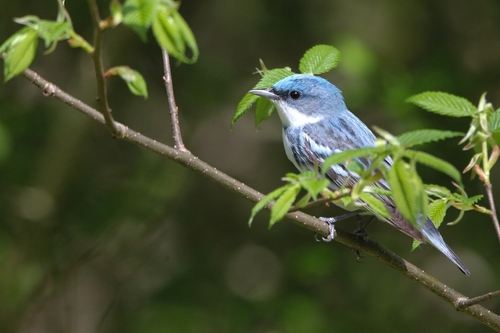
Cerulean Warbler (Setophaga cerulea) Cerulean Warbler
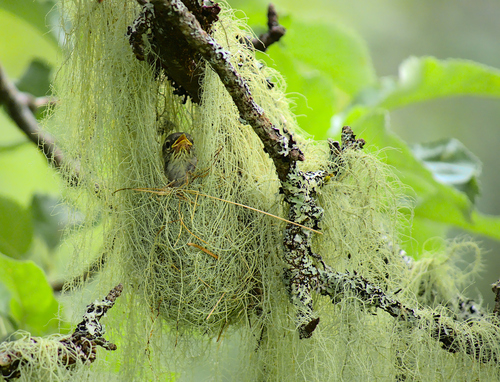
Northern Parula (Setophaga americana) Northern Parula

Media

Loading…

In short

The most reliable field mark to separate Cerulean Warbler from Northern Parula is the overall coloration and pattern of the underparts: adult male Ceruleans are crisp white below with a dark blue or black 'necklace' and bold flank streaks, while Northern Parula males show a yellow throat and breast with a broken bluish and rufous breast band. Females and immatures of both species are trickier, but Cerulean Warbler females/immatures are yellowish below with a distinct pale supercilium and lack any breast band, while Northern Parula females/immatures are yellowish on the throat and breast, fading to white on the belly, and may show a faint or absent breast band but always have white eye crescents. Both have two white wing bars, but Cerulean's are often bolder. In flight or perched, Cerulean appears longer-winged and more slender, while Northern Parula is compact and short-tailed. Habitat can help: Cerulean prefers high canopy in mature hardwood forests, while Parula is often lower in humid woods with Spanish moss or lichen.

Identification tips

  1. Underparts color and pattern (adults): Male Cerulean is white below with a dark blue or black necklace and bold black flank streaks; male Parula is yellow on throat and breast with a broken blue and rufous breast band, white belly, and no flank streaks.
  2. Breast band: Cerulean's 'necklace' is a single, continuous band across the upper chest (males only); Parula's breast band is broken and multicolored (blue and rufous), and may be faint or absent in females/immatures.
  3. Flank streaking: Only Cerulean (especially adult males) shows strong black streaks on the flanks; Parula never does.
  4. Supercilium vs. eye crescents: Female and immature Cerulean have a bold pale supercilium (eyebrow), while Parula of all ages shows white arcs above and below the eye (eye crescents), not a continuous stripe.
  5. Back color: Cerulean males are sky blue above, females/immatures blue-green; Parula is blue-gray above with a greenish patch in the middle of the back (all ages).
  6. Wing bars: Both have two white wing bars, but Cerulean's are often brighter and crisper, especially in adults.
  7. Tail spots: Both species have white spots on the tail, but this is not a strong separator between them.
  8. Bill color: Adult male Cerulean has a black bill; female's is dark gray to brownish; Parula's bill is not described as diagnostic.
  9. Leg color: Cerulean adults have black legs; juveniles have dark brown legs. Not a strong field mark unless seen very well.
  10. Body shape: Cerulean is longer-winged and more slender, with a proportionally longer tail; Parula is compact, short-tailed, and rounded.
  11. Foraging height: Cerulean is almost always high in the canopy; Parula is more often lower or mid-story, especially where moss or lichen is present.
  12. Habitat: Cerulean prefers mature, continuous hardwood forests; Parula is found in humid woods with Spanish moss or lichen, often near water.
  13. Behavior: Cerulean moves more deliberately and is less acrobatic; Parula is active, often hanging or hovering.
  14. Voice: Cerulean's song is a buzzy, accelerating series; Parula's song (not described here) is different, but Cerulean's is more likely to be heard high in the canopy.
  15. Seasonal changes: After breeding, Parula molts into a duller version of its plumage, but the basic pattern remains; Cerulean's plumage differences are more between sexes and age than season.

Size

Cerulean Warbler is slightly larger and longer-winged: about 11 cm long with a 20 cm wingspan and weighing 8–10 g. Northern Parula is a touch smaller and more compact, at 10.8–12.4 cm long, 16–18 cm wingspan, and 5–11 g. In the field, Cerulean may look slimmer and longer-tailed, while Parula is more rounded and stubby-tailed. Both are among the smallest warblers, but Cerulean's proportions are more elongated.

Plumage

For all ages, both species have two white wing bars, but Cerulean's are typically brighter and more sharply defined. Juvenile and immature Cerulean Warblers resemble adult females: bluish-green above, yellowish below, with a bold pale supercilium and no streaking or breast band. Northern Parula immatures are also duller but retain a yellow throat and breast, fading to white belly, and show white eye crescents rather than a supercilium. Adult male Cerulean is sky blue above with a blackish necklace and strong black streaks on the flanks, white below. Adult male Parula is blue-gray above with a greenish back patch, yellow throat and breast, white belly, and a broken blue and rufous breast band. Female Cerulean is blue-green above, yellowish below, with a pale supercilium and no breast band; female Parula is similar but duller, with yellow throat and breast, fading to white, and white eye crescents. In all ages, Cerulean lacks the greenish back patch and rufous tones of Parula, and Parula never shows Cerulean's strong flank streaking or necklace.

Behaviour

Cerulean Warbler forages high in the canopy, often staying in the treetops and moving deliberately along branches. Northern Parula is more likely to be seen lower in the forest, especially in areas with Spanish moss or lichen, and is more active and acrobatic, often hanging upside down or hovering to glean insects. Cerulean is more territorial and less likely to join mixed flocks, while Parula is frequently found in mixed-species groups.

Habitat

Both species breed in eastern North America, but Cerulean Warbler is strongly tied to mature hardwood forests with tall, unbroken canopy, often in hilly or upland terrain. Northern Parula prefers humid woodlands, especially those with abundant Spanish moss or Old Man's Beard lichen, and is often found near water. Cerulean is almost always high in the canopy, while Parula can be found from mid-levels to lower branches.

Voice

Cerulean Warbler's song is a buzzy, accelerating series (zray zray zray zray zeeee), while its call is a metallic, buzzy zzee. Northern Parula's song is not described in the notes, but is not likely to be confused with Cerulean's accelerating buzz. Cerulean males sing more frequently and females rarely sing, but both sexes may call. If you hear a buzzy, accelerating song high in the canopy, Cerulean is more likely.

Submit a better description

Use the same sections as the comparison. Your text is published immediately.

The most reliable field mark to separate Cerulean Warbler from Northern Parula is the overall coloration and pattern of the underparts: adult male Ceruleans are crisp white below with a dark blue or black 'necklace' and bold flank streaks, while Northern Parula males show a yellow throat and breast with a broken bluish and rufous breast band. Females and immatures of both species are trickier, but Cerulean Warbler females/immatures are yellowish below with a distinct pale supercilium and lack any breast band, while Northern Parula females/immatures are yellowish on the throat and breast, fading to white on the belly, and may show a faint or absent breast band but always have white eye crescents. Both have two white wing bars, but Cerulean's are often bolder. In flight or perched, Cerulean appears longer-winged and more slender, while Northern Parula is compact and short-tailed. Habitat can help: Cerulean prefers high canopy in mature hardwood forests, while Parula is often lower in humid woods with Spanish moss or lichen.

  1. Underparts color and pattern (adults): Male Cerulean is white below with a dark blue or black necklace and bold black flank streaks; male Parula is yellow on throat and breast with a broken blue and rufous breast band, white belly, and no flank streaks.
  2. Breast band: Cerulean's 'necklace' is a single, continuous band across the upper chest (males only); Parula's breast band is broken and multicolored (blue and rufous), and may be faint or absent in females/immatures.
  3. Flank streaking: Only Cerulean (especially adult males) shows strong black streaks on the flanks; Parula never does.
  4. Supercilium vs. eye crescents: Female and immature Cerulean have a bold pale supercilium (eyebrow), while Parula of all ages shows white arcs above and below the eye (eye crescents), not a continuous stripe.
  5. Back color: Cerulean males are sky blue above, females/immatures blue-green; Parula is blue-gray above with a greenish patch in the middle of the back (all ages).
  6. Wing bars: Both have two white wing bars, but Cerulean's are often brighter and crisper, especially in adults.
  7. Tail spots: Both species have white spots on the tail, but this is not a strong separator between them.
  8. Bill color: Adult male Cerulean has a black bill; female's is dark gray to brownish; Parula's bill is not described as diagnostic.
  9. Leg color: Cerulean adults have black legs; juveniles have dark brown legs. Not a strong field mark unless seen very well.
  10. Body shape: Cerulean is longer-winged and more slender, with a proportionally longer tail; Parula is compact, short-tailed, and rounded.
  11. Foraging height: Cerulean is almost always high in the canopy; Parula is more often lower or mid-story, especially where moss or lichen is present.
  12. Habitat: Cerulean prefers mature, continuous hardwood forests; Parula is found in humid woods with Spanish moss or lichen, often near water.
  13. Behavior: Cerulean moves more deliberately and is less acrobatic; Parula is active, often hanging or hovering.
  14. Voice: Cerulean's song is a buzzy, accelerating series; Parula's song (not described here) is different, but Cerulean's is more likely to be heard high in the canopy.
  15. Seasonal changes: After breeding, Parula molts into a duller version of its plumage, but the basic pattern remains; Cerulean's plumage differences are more between sexes and age than season.

Cerulean Warbler is slightly larger and longer-winged: about 11 cm long with a 20 cm wingspan and weighing 8–10 g. Northern Parula is a touch smaller and more compact, at 10.8–12.4 cm long, 16–18 cm wingspan, and 5–11 g. In the field, Cerulean may look slimmer and longer-tailed, while Parula is more rounded and stubby-tailed. Both are among the smallest warblers, but Cerulean's proportions are more elongated.

For all ages, both species have two white wing bars, but Cerulean's are typically brighter and more sharply defined. Juvenile and immature Cerulean Warblers resemble adult females: bluish-green above, yellowish below, with a bold pale supercilium and no streaking or breast band. Northern Parula immatures are also duller but retain a yellow throat and breast, fading to white belly, and show white eye crescents rather than a supercilium. Adult male Cerulean is sky blue above with a blackish necklace and strong black streaks on the flanks, white below. Adult male Parula is blue-gray above with a greenish back patch, yellow throat and breast, white belly, and a broken blue and rufous breast band. Female Cerulean is blue-green above, yellowish below, with a pale supercilium and no breast band; female Parula is similar but duller, with yellow throat and breast, fading to white, and white eye crescents. In all ages, Cerulean lacks the greenish back patch and rufous tones of Parula, and Parula never shows Cerulean's strong flank streaking or necklace.

Cerulean Warbler forages high in the canopy, often staying in the treetops and moving deliberately along branches. Northern Parula is more likely to be seen lower in the forest, especially in areas with Spanish moss or lichen, and is more active and acrobatic, often hanging upside down or hovering to glean insects. Cerulean is more territorial and less likely to join mixed flocks, while Parula is frequently found in mixed-species groups.

Both species breed in eastern North America, but Cerulean Warbler is strongly tied to mature hardwood forests with tall, unbroken canopy, often in hilly or upland terrain. Northern Parula prefers humid woodlands, especially those with abundant Spanish moss or Old Man's Beard lichen, and is often found near water. Cerulean is almost always high in the canopy, while Parula can be found from mid-levels to lower branches.

Cerulean Warbler's song is a buzzy, accelerating series (zray zray zray zray zeeee), while its call is a metallic, buzzy zzee. Northern Parula's song is not described in the notes, but is not likely to be confused with Cerulean's accelerating buzz. Cerulean males sing more frequently and females rarely sing, but both sexes may call. If you hear a buzzy, accelerating song high in the canopy, Cerulean is more likely.

Discard your changes?

You have unsaved edits. If you leave now, those changes will be lost.

Cerulean Warbler · Northern Parula · My Tricky Birds