

Motmot

Castelnau's Antshrike vs Uniform Antshrike

Thamnophilus cryptoleucus versus Thamnophilus unicolor

Play a quiz with Castelnau's Antshrike and Uniform Antshrike
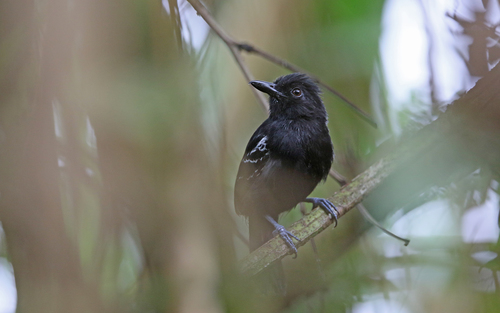
Castelnau's Antshrike (Thamnophilus cryptoleucus) Castelnau's Antshrike
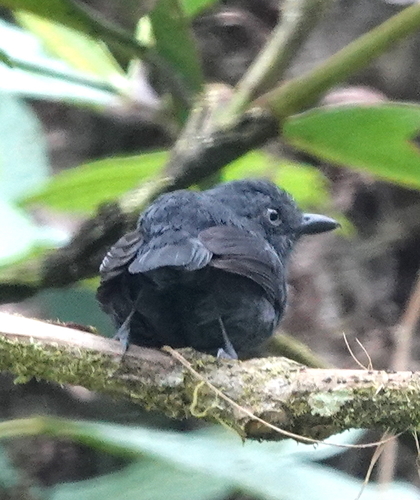
Uniform Antshrike (Thamnophilus unicolor) Uniform Antshrike

Media

Loading…

In short

The most reliable way to separate Castelnau's Antshrike from Uniform Antshrike is by focusing on adult male plumage: Castelnau's males are mostly black with white-tipped scapulars and wing coverts, while Uniform males are deep gray or blackish-gray and lack the white scapular and covert markings. Females are also quite different: Castelnau's females are black above, while Uniform females show a rufous crown and upperparts with pale rufous underparts. Immatures of both species resemble their respective females, but Uniform Antshrike immatures are browner and more rufous. Castelnau's is distinctly heavier and slightly longer. Vocalizations differ in quality and pattern, and the two overlap in range but may prefer subtly different microhabitats.

Identification tips

  1. Adult male plumage: Castelnau's Antshrike males are mostly black with white-tipped scapulars and wing coverts; Uniform Antshrike males are deep gray or blackish-gray without white scapular/wing covert tips. This is the single best field mark for adult males.
  2. Adult female plumage: Uniform Antshrike females have a rufous crown, rufous brown upperparts, and pale rufous underparts—very different from Castelnau's females, which are black above and lack any rufous tones.
  3. Immature/juvenile plumage: Immature Uniform Antshrikes resemble adult females (rufous and brownish), while immature Castelnau's are similar to their females but browner—not rufous. This is a subtle but useful distinction in the field.
  4. Scapular and wing covert markings: Only Castelnau's males show white tips on scapulars and wing coverts; Uniform Antshrike never does. Females of both lack these marks, but Uniform females are much browner and rufous overall.
  5. Tail pattern: Uniform Antshrike males sometimes have small white tips on outer tail feathers; Castelnau's does not have this feature described. This is a minor but supporting mark.
  6. Iris color: Castelnau's has a brown iris; Uniform Antshrike's is gray-white to whitish gray. This is subtle and best seen in good light.
  7. Bill and leg color: Both have black bills and blue-gray to gray legs and feet; not useful for separation.
  8. Size and structure: Castelnau's is distinctly larger and heavier (32 g vs 24 g; 16–18 cm vs 14.5–17 cm). With experience, this can be apparent, but overlap in length means it's not always reliable on its own.
  9. Vocalizations: Castelnau's song is a fast, accelerating, descending series of nasal notes; Uniform's is a simpler, slower, and sometimes rising series of nasal notes, or a slow, descending series. Calls differ in quality—Castelnau's are more cawing and bouncing, Uniform's more rattled and whiny.
  10. Foraging height: Castelnau's often forages higher (1–3 m, up to 9 m); Uniform Antshrike is usually very low but can go up to 8 m. Overlap is substantial, so this is not a strong separator.
  11. Habitat: Both occur in similar dense vegetation in overlapping ranges; habitat is not a reliable separator unless you are in Brazil, where only Castelnau's occurs.
  12. Sexual dimorphism: Uniform Antshrike shows more pronounced sexual dimorphism, especially in the rufous female plumage, while Castelnau's sexes are more similar (both mostly black above).
  13. Geographic range: If in Brazil, only Castelnau's is possible. Elsewhere, both may occur.
  14. Mixed flocks: Both species rarely join mixed-species flocks, so flocking behavior is not helpful.
  15. General impression: Castelnau's appears bulkier and blacker, Uniform is slimmer and grayer or rufous, especially in females and immatures.

Size

Castelnau's Antshrike is noticeably larger and heavier, averaging 32 g and 16–18 cm in length, compared to Uniform Antshrike's 24 g and 14.5–17 cm. This size difference is most obvious in direct comparison or with experience, but can be subtle in the field. Both have similarly robust, hooked bills typical of Thamnophilus antshrikes.

Plumage

No distinctive juvenile or immature upperwing patterns are described for either species, so focus is on adult and immature body and wing markings.

Adult male Castelnau's Antshrike is mostly black, with a mostly hidden white scapular patch, white tips on the scapulars and wing coverts, and sometimes tiny white tips on flight feathers. Its flanks and belly are dark gray. Adult female Castelnau's is similar but has all-black scapulars and wing coverts (no white), and both sexes have a brown iris.

Uniform Antshrike adult males are deep gray to blackish-gray, sometimes with small white tips on the outer tail feathers but lacking the white scapular and covert markings of Castelnau's. Adult females are strikingly different: they have a rufous crown, gray face, rufous brown upperparts, and pale rufous brown underparts. Immatures of both sexes in Uniform Antshrike resemble the female, with a generally browner and more rufous tone than any Castelnau's plumage. Uniform Antshrike's iris is gray-white to whitish gray, a subtle but sometimes visible difference.

Behaviour

Both species forage singly or in pairs, hopping among branches and gleaning prey from foliage. Castelnau's typically forages 1–3 m above ground but can go as high as 9 m, while Uniform Antshrike usually stays very low but may reach up to 8 m. Both rarely join mixed-species flocks and use similar foraging techniques, making behavior a poor separator in most field situations.

Habitat

Both species occur in Colombia, Ecuador, and Peru, but Castelnau's also ranges into Brazil. There is no strong evidence for habitat separation in the notes, but microhabitat preferences may exist. Both are found in dense vegetation, with Uniform Antshrike perhaps favoring denser, lower growth. Habitat alone is not diagnostic where ranges overlap.

Voice

Castelnau's Antshrike gives a short, fast, accelerating series of nasal, bouncing notes (e.g., 'keoh, keoh, kuh-kuh-kuhkuhkuhkuhkuh'), often descending. Calls are drawn-out, cawing, or rattled. Uniform Antshrike's song is a simple, short series of nasal notes, sometimes with rising inflection ('anh, anh, anh'), or a slow, slightly accelerating series of high, descending notes. Its calls include a rattled 'kar'r'r'r', a descending whine, and a throaty, descending caw. Uniform's song is generally simpler, slower, and higher-pitched (in some subspecies), while Castelnau's is more rapid and accelerating.

Submit a better description

Use the same sections as the comparison. Your text is published immediately.

The most reliable way to separate Castelnau's Antshrike from Uniform Antshrike is by focusing on adult male plumage: Castelnau's males are mostly black with white-tipped scapulars and wing coverts, while Uniform males are deep gray or blackish-gray and lack the white scapular and covert markings. Females are also quite different: Castelnau's females are black above, while Uniform females show a rufous crown and upperparts with pale rufous underparts. Immatures of both species resemble their respective females, but Uniform Antshrike immatures are browner and more rufous. Castelnau's is distinctly heavier and slightly longer. Vocalizations differ in quality and pattern, and the two overlap in range but may prefer subtly different microhabitats.

  1. Adult male plumage: Castelnau's Antshrike males are mostly black with white-tipped scapulars and wing coverts; Uniform Antshrike males are deep gray or blackish-gray without white scapular/wing covert tips. This is the single best field mark for adult males.
  2. Adult female plumage: Uniform Antshrike females have a rufous crown, rufous brown upperparts, and pale rufous underparts—very different from Castelnau's females, which are black above and lack any rufous tones.
  3. Immature/juvenile plumage: Immature Uniform Antshrikes resemble adult females (rufous and brownish), while immature Castelnau's are similar to their females but browner—not rufous. This is a subtle but useful distinction in the field.
  4. Scapular and wing covert markings: Only Castelnau's males show white tips on scapulars and wing coverts; Uniform Antshrike never does. Females of both lack these marks, but Uniform females are much browner and rufous overall.
  5. Tail pattern: Uniform Antshrike males sometimes have small white tips on outer tail feathers; Castelnau's does not have this feature described. This is a minor but supporting mark.
  6. Iris color: Castelnau's has a brown iris; Uniform Antshrike's is gray-white to whitish gray. This is subtle and best seen in good light.
  7. Bill and leg color: Both have black bills and blue-gray to gray legs and feet; not useful for separation.
  8. Size and structure: Castelnau's is distinctly larger and heavier (32 g vs 24 g; 16–18 cm vs 14.5–17 cm). With experience, this can be apparent, but overlap in length means it's not always reliable on its own.
  9. Vocalizations: Castelnau's song is a fast, accelerating, descending series of nasal notes; Uniform's is a simpler, slower, and sometimes rising series of nasal notes, or a slow, descending series. Calls differ in quality—Castelnau's are more cawing and bouncing, Uniform's more rattled and whiny.
  10. Foraging height: Castelnau's often forages higher (1–3 m, up to 9 m); Uniform Antshrike is usually very low but can go up to 8 m. Overlap is substantial, so this is not a strong separator.
  11. Habitat: Both occur in similar dense vegetation in overlapping ranges; habitat is not a reliable separator unless you are in Brazil, where only Castelnau's occurs.
  12. Sexual dimorphism: Uniform Antshrike shows more pronounced sexual dimorphism, especially in the rufous female plumage, while Castelnau's sexes are more similar (both mostly black above).
  13. Geographic range: If in Brazil, only Castelnau's is possible. Elsewhere, both may occur.
  14. Mixed flocks: Both species rarely join mixed-species flocks, so flocking behavior is not helpful.
  15. General impression: Castelnau's appears bulkier and blacker, Uniform is slimmer and grayer or rufous, especially in females and immatures.

Castelnau's Antshrike is noticeably larger and heavier, averaging 32 g and 16–18 cm in length, compared to Uniform Antshrike's 24 g and 14.5–17 cm. This size difference is most obvious in direct comparison or with experience, but can be subtle in the field. Both have similarly robust, hooked bills typical of Thamnophilus antshrikes.

No distinctive juvenile or immature upperwing patterns are described for either species, so focus is on adult and immature body and wing markings.

Adult male Castelnau's Antshrike is mostly black, with a mostly hidden white scapular patch, white tips on the scapulars and wing coverts, and sometimes tiny white tips on flight feathers. Its flanks and belly are dark gray. Adult female Castelnau's is similar but has all-black scapulars and wing coverts (no white), and both sexes have a brown iris.

Uniform Antshrike adult males are deep gray to blackish-gray, sometimes with small white tips on the outer tail feathers but lacking the white scapular and covert markings of Castelnau's. Adult females are strikingly different: they have a rufous crown, gray face, rufous brown upperparts, and pale rufous brown underparts. Immatures of both sexes in Uniform Antshrike resemble the female, with a generally browner and more rufous tone than any Castelnau's plumage. Uniform Antshrike's iris is gray-white to whitish gray, a subtle but sometimes visible difference.

Both species forage singly or in pairs, hopping among branches and gleaning prey from foliage. Castelnau's typically forages 1–3 m above ground but can go as high as 9 m, while Uniform Antshrike usually stays very low but may reach up to 8 m. Both rarely join mixed-species flocks and use similar foraging techniques, making behavior a poor separator in most field situations.

Both species occur in Colombia, Ecuador, and Peru, but Castelnau's also ranges into Brazil. There is no strong evidence for habitat separation in the notes, but microhabitat preferences may exist. Both are found in dense vegetation, with Uniform Antshrike perhaps favoring denser, lower growth. Habitat alone is not diagnostic where ranges overlap.

Castelnau's Antshrike gives a short, fast, accelerating series of nasal, bouncing notes (e.g., 'keoh, keoh, kuh-kuh-kuhkuhkuhkuhkuh'), often descending. Calls are drawn-out, cawing, or rattled. Uniform Antshrike's song is a simple, short series of nasal notes, sometimes with rising inflection ('anh, anh, anh'), or a slow, slightly accelerating series of high, descending notes. Its calls include a rattled 'kar'r'r'r', a descending whine, and a throaty, descending caw. Uniform's song is generally simpler, slower, and higher-pitched (in some subspecies), while Castelnau's is more rapid and accelerating.

Discard your changes?

You have unsaved edits. If you leave now, those changes will be lost.

Castelnau's Antshrike · Uniform Antshrike · My Tricky Birds