

Motmot

Caspian Plover vs Siberian Sand Plover

Anarhynchus asiaticus versus Anarhynchus mongolus

Play a quiz with Caspian Plover and Siberian Sand Plover
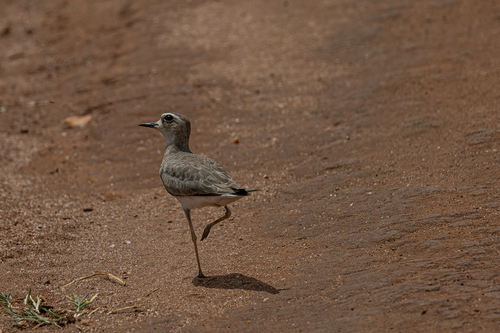
Caspian Plover (Anarhynchus asiaticus) Caspian Plover
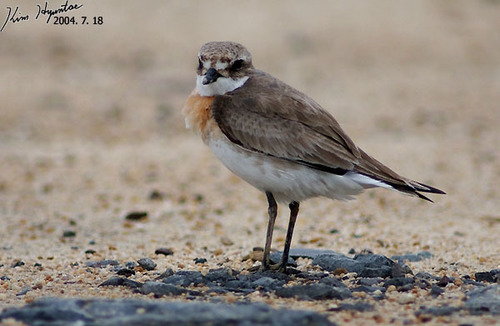
Siberian Sand Plover (Anarhynchus mongolus) Siberian Sand Plover

Media

Loading…

In short

Caspian Plover and Siberian Sand Plover are both long-legged, slim plovers, but Caspian stands out with its strong white supercilium and overall slimmer, longer-legged look, while Siberian Sand Plover appears chunkier and more compact. In breeding plumage, Caspian males show a crisp white face and belly with a chestnut breast bordered below by black, whereas Siberian Sand Plover males have a chestnut breast, forehead, and nape, plus a black eye mask. Non-breeding and immature birds are trickier, but Caspian Plover lacks the white wing bar and white tail sides seen in sand plovers, and its supercilium remains stronger. Structure and leg color are also helpful: Caspian Plover is slimmer with longer legs, while Siberian Sand Plover is chunkier with dark legs and a shorter bill. Habitat and range overlap only on rare occasions, so context can help, but field marks are essential for vagrant or non-breeding birds.

Identification tips

  1. Wing pattern in flight (all ages): Caspian Plover lacks a white wing bar and white tail sides, while Siberian Sand Plover shows a more obvious white wing bar and often white on the tail sides. This is a key separation in flight or when birds are stretching wings.
  2. Supercilium (all ages): Caspian Plover always shows a strong, broad white supercilium, much more prominent than on Siberian Sand Plover, which may show only a faint or broken line.
  3. Structure (all ages): Caspian Plover is slimmer and longer-legged, with a more upright stance. Siberian Sand Plover is chunkier and more compact, with a proportionally shorter bill and legs.
  4. Bill shape (all ages): Caspian Plover has a longer, thinner bill compared to the shorter, stubbier bill of Siberian Sand Plover. This is subtle but can help with good views.
  5. Breeding male plumage: Caspian Plover males have a white face and belly, a sharply defined chestnut breast bordered below by black. Siberian Sand Plover males have a chestnut breast, forehead, and nape, with a black eye mask and grey back.
  6. Non-breeding/immature plumage: Caspian Plover shows a grey-brown breast band, but the face remains clean and white. Siberian Sand Plover in non-breeding or juvenile plumage is duller, with only a faint rufous wash on the head, and lacks strong chestnut.
  7. Leg color: Siberian Sand Plover usually has dark (black to grey) legs. Caspian Plover's leg color is less emphasized but appears paler and longer.
  8. Face pattern: Caspian Plover's white face and supercilium are always more striking, even in dull plumages. Siberian Sand Plover's face is plainer except in breeding males.
  9. Breast band shape: Caspian Plover's breast band is more sharply defined and bordered below by black in breeding males; Siberian Sand Plover's chestnut breast merges into the white belly without a sharp lower border.
  10. Habitat context: Caspian Plover is more likely on inland grassland, steppe, or dry floodplains; Siberian Sand Plover prefers coastal beaches. Use this only as a supporting clue, especially for vagrants.
  11. Vocalization: If heard, Caspian Plover gives a sharp 'chip', while Siberian Sand Plover gives a hard trill. Calls are rarely diagnostic unless birds are vocalizing.
  12. Comparison with sand plovers: Caspian Plover lacks the white wing bar and tail sides typical of sand plovers, including Siberian. This is a critical check in any mixed flock.
  13. Pitfalls: Lone birds in non-breeding or immature plumage are most challenging; rely on wing pattern, supercilium, and structure rather than color alone.
  14. Sex differences: Female Caspian Plover may show a faint chestnut wash but never the full chestnut and black-bordered breast of the male. Female Siberian Sand Plover is always duller than the male, with less chestnut.
  15. Mixed flocks: If seen with other sand plovers, Caspian will stand out as slimmer, longer-legged, and with a stronger supercilium, but size is not always reliable without direct comparison.

Size

Caspian Plover is slightly larger and slimmer than Siberian Sand Plover, with a longer-legged appearance. Siberian Sand Plover is described as chunky and compact, but size alone is unreliable unless both are seen together. Both are in the small-to-medium plover range, but Caspian's proportions (slimmer, longer legs) are more distinctive than any absolute size difference.

Plumage

Juvenile and non-breeding plumages are subtle, but Caspian Plover lacks the white wing bar and white tail sides typical of sand plovers, including Siberian. Its supercilium is always stronger and more obvious. Breeding Caspian males have a white face and belly with a sharply defined chestnut breast bordered below by black; females may show a faint chestnut wash. Siberian Sand Plover breeding males have a chestnut breast, forehead, and nape, with a black eye mask, and their backs are grey. Females and non-breeding/immature Siberian Sand Plovers are duller, with only a hint of rufous on the head and no strong chestnut. Both species have grey-brown upperparts outside breeding, but Caspian's face pattern remains more contrasting. In flight, Caspian Plover's lack of a white wing bar and white tail sides is a key difference from Siberian Sand Plover.

Behaviour

Both species feed by picking prey from the ground, but Siberian Sand Plover uses a run-and-pause technique with shorter pauses and fewer steps than Greater Sand Plover (not Caspian). Caspian Plover's feeding is typical of plovers, picking insects and small prey from open ground. No major behavioral differences are noted that would separate these two in the field.

Habitat

Caspian Plover breeds on open grassland, steppes, and desert verges in central Asia, wintering in dry grassland, floodplains, and sometimes cultivated land in Africa. Siberian Sand Plover breeds on bare coastal plains in northeastern Siberia and winters on sandy beaches in East and Southeast Asia and Australia. Their ranges and habitats overlap only as rare vagrants, so context is usually helpful: Caspian is more likely inland on dry grassland or steppe, Siberian on coastal beaches.

Voice

Caspian Plover gives a sharp 'chip' call. Siberian Sand Plover's flight call is a hard trill. These calls are quite different, but both are unlikely to be heard from silent, resting birds or in mixed flocks.

Submit a better description

Use the same sections as the comparison. Your text is published immediately.

Caspian Plover and Siberian Sand Plover are both long-legged, slim plovers, but Caspian stands out with its strong white supercilium and overall slimmer, longer-legged look, while Siberian Sand Plover appears chunkier and more compact. In breeding plumage, Caspian males show a crisp white face and belly with a chestnut breast bordered below by black, whereas Siberian Sand Plover males have a chestnut breast, forehead, and nape, plus a black eye mask. Non-breeding and immature birds are trickier, but Caspian Plover lacks the white wing bar and white tail sides seen in sand plovers, and its supercilium remains stronger. Structure and leg color are also helpful: Caspian Plover is slimmer with longer legs, while Siberian Sand Plover is chunkier with dark legs and a shorter bill. Habitat and range overlap only on rare occasions, so context can help, but field marks are essential for vagrant or non-breeding birds.

  1. Wing pattern in flight (all ages): Caspian Plover lacks a white wing bar and white tail sides, while Siberian Sand Plover shows a more obvious white wing bar and often white on the tail sides. This is a key separation in flight or when birds are stretching wings.
  2. Supercilium (all ages): Caspian Plover always shows a strong, broad white supercilium, much more prominent than on Siberian Sand Plover, which may show only a faint or broken line.
  3. Structure (all ages): Caspian Plover is slimmer and longer-legged, with a more upright stance. Siberian Sand Plover is chunkier and more compact, with a proportionally shorter bill and legs.
  4. Bill shape (all ages): Caspian Plover has a longer, thinner bill compared to the shorter, stubbier bill of Siberian Sand Plover. This is subtle but can help with good views.
  5. Breeding male plumage: Caspian Plover males have a white face and belly, a sharply defined chestnut breast bordered below by black. Siberian Sand Plover males have a chestnut breast, forehead, and nape, with a black eye mask and grey back.
  6. Non-breeding/immature plumage: Caspian Plover shows a grey-brown breast band, but the face remains clean and white. Siberian Sand Plover in non-breeding or juvenile plumage is duller, with only a faint rufous wash on the head, and lacks strong chestnut.
  7. Leg color: Siberian Sand Plover usually has dark (black to grey) legs. Caspian Plover's leg color is less emphasized but appears paler and longer.
  8. Face pattern: Caspian Plover's white face and supercilium are always more striking, even in dull plumages. Siberian Sand Plover's face is plainer except in breeding males.
  9. Breast band shape: Caspian Plover's breast band is more sharply defined and bordered below by black in breeding males; Siberian Sand Plover's chestnut breast merges into the white belly without a sharp lower border.
  10. Habitat context: Caspian Plover is more likely on inland grassland, steppe, or dry floodplains; Siberian Sand Plover prefers coastal beaches. Use this only as a supporting clue, especially for vagrants.
  11. Vocalization: If heard, Caspian Plover gives a sharp 'chip', while Siberian Sand Plover gives a hard trill. Calls are rarely diagnostic unless birds are vocalizing.
  12. Comparison with sand plovers: Caspian Plover lacks the white wing bar and tail sides typical of sand plovers, including Siberian. This is a critical check in any mixed flock.
  13. Pitfalls: Lone birds in non-breeding or immature plumage are most challenging; rely on wing pattern, supercilium, and structure rather than color alone.
  14. Sex differences: Female Caspian Plover may show a faint chestnut wash but never the full chestnut and black-bordered breast of the male. Female Siberian Sand Plover is always duller than the male, with less chestnut.
  15. Mixed flocks: If seen with other sand plovers, Caspian will stand out as slimmer, longer-legged, and with a stronger supercilium, but size is not always reliable without direct comparison.

Caspian Plover is slightly larger and slimmer than Siberian Sand Plover, with a longer-legged appearance. Siberian Sand Plover is described as chunky and compact, but size alone is unreliable unless both are seen together. Both are in the small-to-medium plover range, but Caspian's proportions (slimmer, longer legs) are more distinctive than any absolute size difference.

Juvenile and non-breeding plumages are subtle, but Caspian Plover lacks the white wing bar and white tail sides typical of sand plovers, including Siberian. Its supercilium is always stronger and more obvious. Breeding Caspian males have a white face and belly with a sharply defined chestnut breast bordered below by black; females may show a faint chestnut wash. Siberian Sand Plover breeding males have a chestnut breast, forehead, and nape, with a black eye mask, and their backs are grey. Females and non-breeding/immature Siberian Sand Plovers are duller, with only a hint of rufous on the head and no strong chestnut. Both species have grey-brown upperparts outside breeding, but Caspian's face pattern remains more contrasting. In flight, Caspian Plover's lack of a white wing bar and white tail sides is a key difference from Siberian Sand Plover.

Both species feed by picking prey from the ground, but Siberian Sand Plover uses a run-and-pause technique with shorter pauses and fewer steps than Greater Sand Plover (not Caspian). Caspian Plover's feeding is typical of plovers, picking insects and small prey from open ground. No major behavioral differences are noted that would separate these two in the field.

Caspian Plover breeds on open grassland, steppes, and desert verges in central Asia, wintering in dry grassland, floodplains, and sometimes cultivated land in Africa. Siberian Sand Plover breeds on bare coastal plains in northeastern Siberia and winters on sandy beaches in East and Southeast Asia and Australia. Their ranges and habitats overlap only as rare vagrants, so context is usually helpful: Caspian is more likely inland on dry grassland or steppe, Siberian on coastal beaches.

Caspian Plover gives a sharp 'chip' call. Siberian Sand Plover's flight call is a hard trill. These calls are quite different, but both are unlikely to be heard from silent, resting birds or in mixed flocks.

Discard your changes?

You have unsaved edits. If you leave now, those changes will be lost.

Caspian Plover · Siberian Sand Plover · My Tricky Birds