

Capped Heron vs Whistling Heron
Pilherodius pileatus versus Syrigma sibilatrix
Play a quiz with Capped Heron and Whistling Heron
 Capped Heron
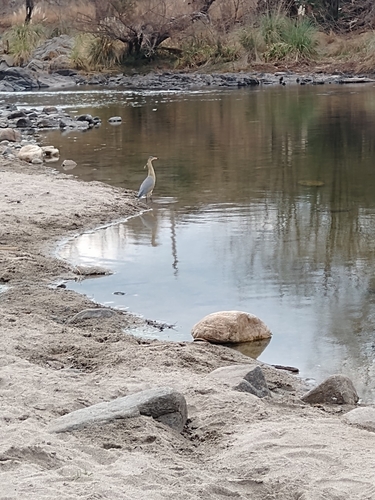 Whistling Heron
In short
The most reliable field mark to separate Capped Heron from Whistling Heron is the Capped Heron's unique combination of a solid black crown, blue face and bill, and long white nape plumes, which are never shown by Whistling Heron. In flight or at rest, Capped Heron is strikingly pale overall with a blue face, while Whistling Heron appears grayish with a contrasting black or slate crown, a pink-based bill, and cinnamon or honey-toned upperwing coverts. Juvenile plumages of both species are similar to their respective adults but duller, so age does not radically alter the main field marks. Both species are medium-sized herons, but Whistling Heron is slightly heavier on average. Behaviorally, Capped Heron is more likely to be seen alone in forested wetlands, while Whistling Heron often forages in open country and is more terrestrial.
Identification tips
- Crown and face color: Capped Heron always shows a solid black crown and a bright blue face and bill; Whistling Heron has a black or slate-gray crown and crest, but the face is pale with a large bare bluish area around the eye and a pink-based bill.
- Nape plumes: Capped Heron has three to four long, white nape plumes extending from the crown, visible at all ages; Whistling Heron has a short crest of black or slate plumes but never long white nape feathers.
- Bill color: Capped Heron's bill is entirely blue, matching the face; Whistling Heron's bill is pink with a blue/violet base and a black tip, never solid blue.
- Overall plumage: Capped Heron is pale overall—white wings and back, yellowish-cream neck and underparts; Whistling Heron is grayish with blue-gray upperparts, white lower back, and cinnamon or honey-toned upperwing coverts.
- Juvenile differences: Juvenile Capped Herons are slightly grayer but still show the black crown and blue face; juvenile Whistling Herons are duller than adults, with a lighter crown and unstained white throat, but retain the same pattern as adults.
- Flight appearance: Capped Heron is pale in flight, with no strong contrast in the wings; Whistling Heron shows white rear parts and contrasting colored upperwing coverts, and its flight is fast and duck-like, with the neck not fully retracted.
- Leg color: Capped Heron has no specific leg color mentioned, but Whistling Heron's legs are greenish and relatively short.
- Behavior: Capped Heron is solitary, slow-moving, and usually found in shaded, forested wetlands; Whistling Heron is often seen walking in open fields and is more terrestrial.
- Habitat: If the bird is in dense rainforest or along a shaded river, Capped Heron is more likely; in open grassland, savanna, or agricultural land, expect Whistling Heron.
- Voice: Only Whistling Heron gives loud, melodious whistles or harsh alarm calls; Capped Heron is essentially silent.
- Size: Both are similar in size, but Whistling Heron may appear slightly heavier and longer, though this is not reliable in the field.
- Sex and season: No sexual dimorphism or strong seasonal changes in either species; field marks are reliable year-round and for both sexes.
- Pitfalls: Do not confuse the black crown of Capped Heron for the black or slate crest of Whistling Heron—look for the blue face and long white nape plumes for Capped Heron. The pink bill and cinnamon/honey wing coverts are unique to Whistling Heron.
- Perched vs. in flight: Capped Heron is always pale and shows blue face and bill, perched or flying; Whistling Heron shows more contrast in flight, especially the white rear and colored coverts.
- Group size: Capped Heron is usually alone; Whistling Heron may be seen in pairs or small groups, especially when nesting.
Size
Both species are medium-sized herons with overlapping length ranges: Capped Heron measures 51–59 cm in length, while Whistling Heron is slightly longer at 53–64 cm. However, Whistling Heron is somewhat heavier (adult mass 521–546 g vs. Capped Heron's 444–632 g, though the median is similar). Bill and tarsus lengths are not directly compared, but Whistling Heron is noted for a shorter bill relative to body size in its southern subspecies. In the field, size alone is not a reliable separator.
Plumage
Juvenile and adult Capped Herons are very similar, with the main difference being that juveniles have slightly grayer white feathers. The key field mark at all ages is the solid black crown, blue face and bill, and long white nape plumes. The rest of the plumage is pale: yellowish-white or cream on the neck and underparts, and pure white on the wings and back. In contrast, Whistling Heron adults have a black (nominate) or slate-gray (fostersmithi) crown and crest, with upperparts blue-gray except for a white lower back. The upper wing coverts are cinnamon or honey-colored, and the bill is pink with a blue/violet base and black tip. The legs are greenish. Juveniles are duller, with a lighter crown and unstained white throat and sides, but retain the same pattern. In flight, Whistling Heron shows fast, duck-like wingbeats and white rear parts, while Capped Heron remains pale overall with no contrasting upperwing panels or coverts.
Behaviour
Capped Heron is typically solitary, foraging slowly and deliberately in forested wetlands, often during the day or at twilight. It is more aquatic in its habits, hunting mainly for fish and aquatic insects. Whistling Heron, by contrast, is often seen walking in open fields or savannas, sometimes far from water, and is more terrestrial. Its flight is distinctive for fast, duck-like wingbeats and a neck that is not fully retracted, unlike most herons. Whistling Heron may also be seen nesting alone in tall trees, while Capped Heron's breeding behavior is less well known but likely involves family groups.
Habitat
Capped Heron is a bird of rainforest wetlands, ranging from Panama to southern Brazil, and is usually found along forested rivers, ponds, and swamps. It prefers shaded, densely vegetated habitats and is rarely seen in open country. Whistling Heron, on the other hand, is often found in open landscapes such as savannas, grasslands, and agricultural fields, sometimes far from water. It is much more terrestrial and tolerant of disturbed or open habitats.
Voice
Capped Heron is generally silent and not known for distinctive calls. Whistling Heron is named for its loud, melodious, far-carrying whistles, described as 'kee, kee, kee' or 'wueeee,' which are easily imitated and often given in series. It also gives a harsh alarm call ('quah-h-h'). If you hear a heron giving a whistled or flute-like call, it is almost certainly a Whistling Heron.