

Cape Batis vs Chinspot Batis
Batis capensis versus Batis molitor
Play a quiz with Cape Batis and Chinspot Batis
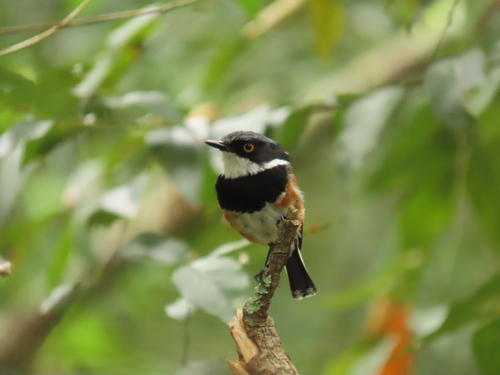 Cape Batis
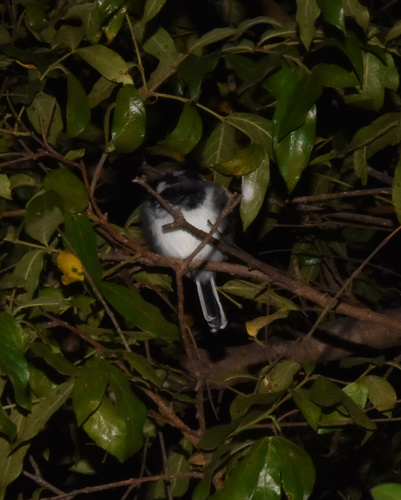 Chinspot Batis
In short
The most reliable field mark to separate Cape Batis from Chinspot Batis is the presence of rufous (rusty) tones on the wings and flanks of Cape Batis, which are absent in Chinspot Batis. Adult male Cape Batis shows a broad black breast band and rufous flanks, while Chinspot Batis males have a black breast band but lack rufous anywhere, instead showing a white wing stripe. Females and juveniles of both species have paler, chestnut or rufous breast bands, but only Cape Batis females and juveniles have a rufous patch on the throat and rufous in the wings and flanks. Structure and behavior are similar, but Cape Batis is slightly heavier and more restricted to Afromontane forests, whereas Chinspot Batis is widespread in woodlands. Vocalizations are similar but differ subtly in phrasing.
Identification tips
- Rufous on wings and flanks (Cape Batis only): Look for obvious rufous or rusty coloring on the wings and flanks, present in all ages and sexes of Cape Batis but never in Chinspot Batis.
- White wing stripe (Chinspot Batis only): Chinspot Batis of all ages and sexes shows a prominent white wing stripe, lacking any rufous tones. Cape Batis lacks this white wing stripe.
- Breast band color and width: Adult male Cape Batis has a broad black breast band with rufous flanks, while male Chinspot Batis has a black breast band but no rufous. Female and juvenile Cape Batis have a narrower, rufous breast band and a small rufous throat patch; female Chinspot Batis has a chestnut (not rufous) breast band and a chestnut spot on the throat, but no rufous in the wings or flanks.
- Throat patch: Female and juvenile Cape Batis have a small rufous patch on the throat; female and juvenile Chinspot Batis have a chestnut (tawny) spot, but this is less extensive and not accompanied by rufous elsewhere.
- Back color: Cape Batis has a brown back, black rump and tail; Chinspot Batis has grey upperparts and lacks brown or black on the rump.
- Crown and mask: Both have a grey crown and black mask, but Cape Batis's mask is broader and the crown may appear more slate-grey; Chinspot Batis has a short white eyestripe above the mask.
- Flank color: Rufous flanks are unique to Cape Batis; Chinspot Batis flanks are white.
- Bill and legs: Both species have black bills and legs; these are not useful for separation.
- Eye color: Chinspot Batis has yellow eyes, but this is not mentioned for Cape Batis and may not be reliable in the field.
- Behavior: Chinspot Batis may be seen in small groups in winter/spring, displaying with wing-flicking and calls; Cape Batis is more solitary or in pairs.
- Habitat: Dense, moist Afromontane forest strongly favors Cape Batis; open woodland, bushveld, or forest edge is more likely to host Chinspot Batis.
- Vocalization: Both species give three-note whistles, but Cape Batis's is less descending; use with caution unless familiar with both.
- Size: Cape Batis is slightly heavier (11.7g vs 8.7g), but this is not easily judged in the field.
- Geographic range: If north of southern Africa's Afromontane forests, Chinspot Batis is much more likely.
- Juvenile confusion: Juvenile and female Cape Batis always show some rufous in wing/flank, while juvenile Chinspot Batis never does; the white wing stripe is a reliable Chinspot mark at all ages.
Size
Cape Batis is slightly heavier (11.7g vs 8.7g) than Chinspot Batis, but both are small, stout birds and look similar in the field. This difference is subtle and not easily judged without direct comparison. Both species are compact and short-billed, so size alone is rarely diagnostic.
Plumage
Juvenile and female Cape Batis are best told from Chinspot Batis by the presence of rufous on the wings and flanks, and a small rufous throat patch—these features are not present in Chinspot Batis of any age or sex. Adult male Cape Batis has a grey crown, black mask, white throat, brown back, black rump and tail, rufous wings, white underparts with a broad black breast band, and rufous flanks. In contrast, adult male Chinspot Batis has a grey cap, black mask, short white eyestripe, white throat, grey upperparts with a prominent white wing stripe, and white underparts with a black breast band, but no rufous or brown tones. Female Chinspot Batis has a chestnut (not rufous) breast band and a chestnut spot on the throat, but the wings and flanks remain grey, not rufous. Young Chinspot Batis resemble females but the breast band and throat spot are tawny. The white wing stripe of Chinspot Batis is a useful mark in all plumages, contrasting with the rufous wing of Cape Batis.
Behaviour
Both species are active and often seen singly or in pairs, flicking their tails and wings, and searching for prey in the canopy. Chinspot Batis is noted for forming small groups ('parliaments') in winter and spring, displaying with wing-flicking and calls, and being territorial year-round. Cape Batis is less sociable and more restricted to dense forest, while Chinspot Batis is more likely to be seen in open woodland and edge habitats. Both species forage by gleaning insects from foliage and sometimes hawking in the air.
Habitat
Cape Batis is endemic to Afromontane forests of southern Africa and is typically found in dense, moist forest habitats. Chinspot Batis is much more widespread, occurring in a variety of woodlands from the Eastern Cape north to Kenya and Gabon, and is common in drier, more open woodland and forest edge. If you are in dense, high-altitude forest, Cape Batis is more likely; in open woodland or bushveld, Chinspot Batis is expected.
Voice
Both species give a three-note whistle, but Cape Batis's song is described as a triple whistle ('cherra-warra-warra' or 'foo-foo-foo'), while Chinspot Batis's call is a descending three-note whistle, often given from a prominent perch. Both sexes may duet in Chinspot Batis. The differences are subtle and may be hard to separate by ear unless familiar with both.